.svg)
.svg)
.svg)
APR Audit vs Statutory Audit for Overseas Subsidiaries
Learn the difference between APR Audit and statutory audit for overseas subsidiary audit, FEMA reporting, and ODI compliance.

Accorp Compliance Team
Our team of compliance experts specializes in PCI DSS, SOC 2, and other security frameworks to help businesses achieve and maintain compliance.
Many Indian companies operating international subsidiaries believe that once their foreign entity completes a statutory audit, all global compliance requirements are covered. In reality, that is only part of the compliance process. For businesses with overseas investments, an APR Audit serves a completely different purpose from a local statutory audit conducted in the foreign country.
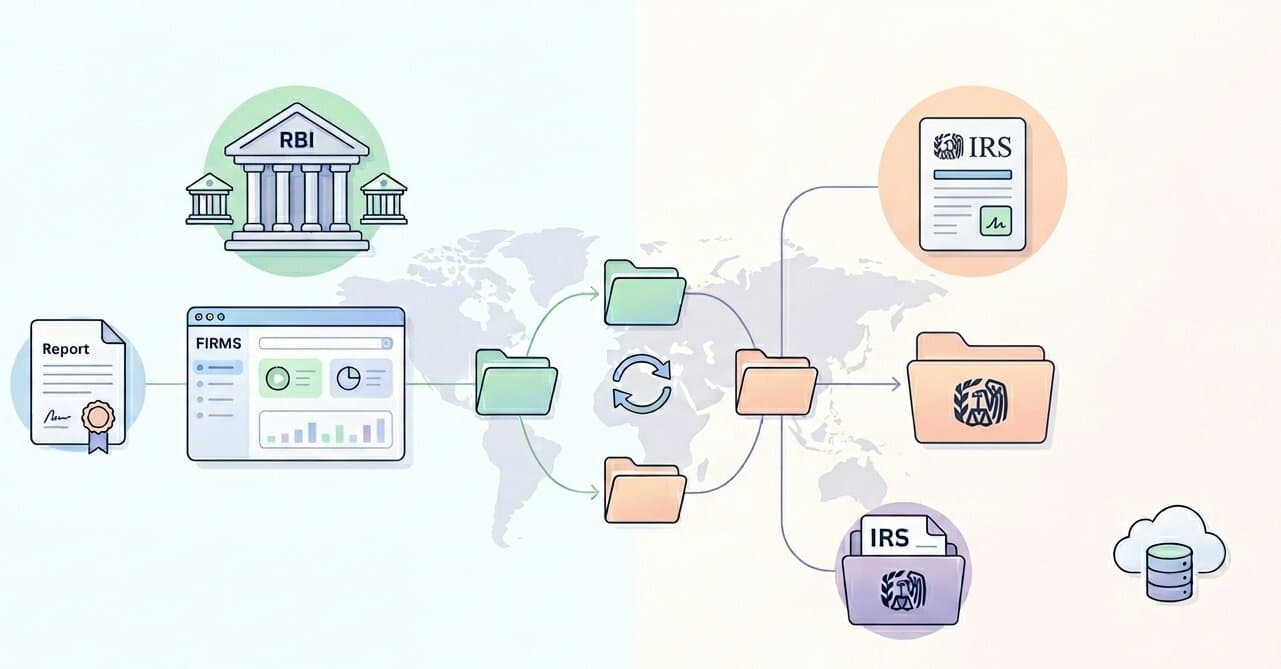
This distinction becomes extremely important during APR filing India under FEMA and Overseas Direct Investment (ODI) regulations. While a statutory audit focuses on local accounting and legal requirements, an APR Audit is designed to help the Reserve Bank of India (RBI) monitor overseas investments, financial commitments, and cross-border compliance obligations.
Confusion between these two audit processes often leads to incomplete disclosures, delayed filings, and foreign subsidiary audit compliance issues. Understanding how APR audits differ from statutory audits helps businesses manage overseas operations more effectively and avoid RBI scrutiny.
Why Indian Companies Need Both APR Audit and Statutory Audit
When an Indian business owns a foreign subsidiary, two separate compliance frameworks usually apply:
1. Local Country Compliance
The overseas entity must comply with:
Local accounting standards
Corporate laws
Tax regulations
Statutory audit requirements
2. Indian FEMA and ODI Compliance
The Indian parent company must comply with:
APR filing India obligations
RBI reporting requirements
ODI compliance regulations
FEMA disclosure norms
Even if the overseas subsidiary completes a successful local audit, RBI may still require additional disclosures and compliance review through the APR filing process.
What Is a Statutory Audit for Overseas Subsidiaries?
A statutory audit is a legally required audit conducted under the laws of the country where the subsidiary operates.
For example:
US entities may be audited by a US CPA for APR filing
UK subsidiaries may work with a UK auditor for APR filing
Singapore or Australian entities follow their own local audit frameworks
The statutory audit primarily evaluates:
Accuracy of financial statements
Compliance with local accounting standards
Tax reporting correctness
Internal financial controls
Fair presentation of accounts
The objective is to ensure compliance with local corporate and accounting laws.
What Is an APR Audit Under FEMA?
An APR Audit focuses on RBI reporting and overseas investment monitoring under FEMA regulations.
APR stands for Annual Performance Report, which Indian companies must file for overseas subsidiaries or joint ventures.
APR filing for foreign subsidiaries generally includes:
Audited financial statements
Net worth details
Turnover and profitability
Shareholding information
Loan and guarantee disclosures
Related-party transaction reporting
The RBI uses this information to track overseas investments and ensure ODI compliance.
The Core Difference Between APR Audit and Statutory Audit
1. Statutory Audit Focuses on Local Compliance
A statutory audit reviews whether the overseas company complies with:
Local accounting standards
Tax regulations
Corporate reporting laws
Its scope is limited to the foreign jurisdictions.
2. APR Audit Focuses on RBI and FEMA Reporting
An APR Audit evaluates:
Overseas investment reporting
ODI exposure
Parent company funding
Inter-company transactions
FEMA disclosure accuracy
Its focus is on Indian regulatory compliance rather than local statutory reporting.
Why Statutory Audits Alone Are Not Enough for RBI Compliance
Many businesses assume that audited foreign financial statements automatically satisfy RBI requirements. However, RBI often expects additional disclosures not covered in local audits.
Examples include:
ODI investment tracking
Overseas remittance verification
Loan and guarantee disclosures
Parent-subsidiary funding analysis
FEMA-specific documentation
This is where foreign subsidiary audit compliance gaps commonly arise.
Common Areas Where APR and Statutory Audits Differ
Treatment of Related-Party Transactions
Local audits may disclose related-party transactions differently from FEMA reporting expectations.
RBI often requires detailed disclosure of:
Inter-company loans
Management fees
Capital contributions
Corporate guarantees
Currency Conversion Requirements
Foreign subsidiaries maintain accounts in local currencies such as:
USD
GBP
CAD
SGD
APR filing India often requires INR-based reporting and reconciliation.
Improper conversion methods can create reporting inconsistencies.
ODI Compliance Monitoring
Statutory auditors generally do not evaluate:
ODI limits
FEMA regulations
RBI filing obligations
This review becomes part of the APR Audit process.
Common Mistakes Businesses Make
1. Delaying APR Preparation
Many companies wait until after the statutory audit is complete before reviewing FEMA compliance.
This often creates:
Filing delays
Reconciliation issues
Missing disclosures
2. Incomplete Documentation
Businesses frequently fail to maintain:
ODI approvals
Share allotment records
Loan agreements
Board resolutions
Remittance proofs
Documentation gaps increase RBI clarification risks.
3. Assuming Foreign Auditors Handle FEMA Compliance
Even experienced foreign auditors may not fully understand RBI-specific reporting obligations.
A US CPA for APR filing or UK auditor for APR filing may certify financial statements under local law, but FEMA compliance still requires separate review.
Best Practices for Managing APR Audit Successfully
Build a Centralized Compliance System
Maintain organized records for:
Overseas investments
Financial statements
Inter-company transactions
ODI filings
Currency conversions
This improves reporting accuracy.
Coordinate Global Finance Teams
Indian and overseas finance teams should regularly reconcile:
Funding records
Loans
Capital contributions
Revenue reporting
Early coordination reduces filing errors.
Conduct FEMA Reviews Independently
Businesses should separately evaluate:
RBI reporting obligations
ODI disclosures
APR filing requirements
instead of relying solely on local statutory audits.
Work With Cross-Border Compliance Experts
Professional advisors help businesses:
Prepare APR filings
Coordinate with overseas auditors
Review FEMA disclosures
Resolve RBI queries
Improve foreign subsidiary audit compliance
This becomes increasingly important for companies managing multiple international subsidiaries.
Why Accurate APR Filing Matters
A properly managed APR Audit supports:
Strong ODI compliance history
Faster overseas approvals
Better banking relationships
Improved regulatory credibility
Smoother global expansion
Poor reporting can create long-term compliance complications under FEMA.
Conclusion
Although both processes involve financial review, an APR Audit and a statutory audit serve very different purposes for overseas subsidiaries. Statutory audits focus on local legal and accounting compliance, while APR filing India focuses on FEMA reporting, ODI compliance, and RBI monitoring of overseas investments.
Businesses operating international subsidiaries must understand that completing a local audit alone is not enough to ensure foreign subsidiary audit compliance. Whether companies work with a US CPA for APR filing or a UK auditor for APR filing, FEMA-specific reporting obligations still require separate attention.
Companies that proactively manage APR reporting, maintain strong documentation, and coordinate global compliance processes can significantly reduce regulatory risks and support long-term international growth.
Also Read: Common APR Filing Mistakes Indian Companies Make With US Subsidiaries
FAQS
Q1. My overseas subsidiary already has a statutory audit done. Isn't that enough for RBI compliance?
No. A statutory audit only covers local compliance. RBI needs additional disclosures — ODI details, FEMA reporting, loan and guarantee information — which a local audit doesn't include. You still need to file an APR separately.
Q2. What's the simple difference between an APR audit and a statutory audit?
Statutory audit = for the foreign country's laws. APR audit = for India's RBI and FEMA rules. Both are needed, but they serve completely different purposes. One doesn't replace the other.
Q3. Does my US CPA or UK auditor handle the APR audit too?
No. They handle the local statutory audit only. APR-specific requirements — FEMA disclosures, ODI reporting, INR conversion — need to be handled separately by an Indian compliance expert familiar with RBI rules.
Q4. Why does RBI need a separate APR if my foreign subsidiary is already fully audited locally?
Because the RBI wants to monitor how Indian money is being used abroad. A local audit doesn't show them overseas remittances, ODI limits, inter-company loans, or shareholding changes — all of which RBI tracks through the APR.