.svg)
.svg)
.svg)
APR Filing Last Date for Indian Companies with Overseas Entities
Know the APR filing India deadline, process, and common mistakes. Stay compliant with ODI rules and avoid penalties with expert APR audit guidance.

Accorp Compliance Team
Our team of compliance experts specializes in PCI DSS, SOC 2, and other security frameworks to help businesses achieve and maintain compliance.
When your business operates across borders, compliance timelines become just as important as financial performance. One missed deadline can disrupt your entire overseas investment strategy. This is especially true for the APR audit, a mandatory annual requirement for Indian companies with foreign subsidiaries.
Understanding the APR filing India deadline is critical to maintaining smooth ODI compliance and avoiding penalties. Whether you’re managing a single overseas entity or multiple global subsidiaries, timely APR filing for foreign subsidiaries ensures your business remains in good standing with regulators.
In this guide, we explain the APR filing last date, key compliance requirements, and how to complete the process efficiently.
What is APR Audit and Why the Deadline Matters?
The APR audit (Annual Performance Report) is a mandatory filing under India’s Overseas Direct Investment regulations. It provides the Reserve Bank of India (RBI) with detailed financial information about your overseas investments.
Why Timely APR Filing Is Crucial
Ensures compliance with foreign subsidiary audit compliance norms
Maintains eligibility for future overseas investments
Prevents penalties and regulatory scrutiny
Strengthens your company’s financial credibility
Delays in APR filing India can create compliance gaps that may affect your ability to expand globally.
APR Filing Last Date in India
Official Due Date
For Indian companies, the deadline for submitting the APR is:
December 31 every year
Reporting Period
Covers the financial year ending March 31
This means companies must complete their APR audit and submit the report within nine months from the end of the financial year.
Important Note
Even if your foreign subsidiary:
Has no revenue
Is inactive
Is in the early stage
You are still required to complete APR filing for foreign subsidiaries on time.
Key Steps to Complete APR Audit Before the Deadline
Meeting the deadline requires planning and coordination, especially if your overseas entity operates in different jurisdictions.
Step 1: Start Early with Financial Data Collection
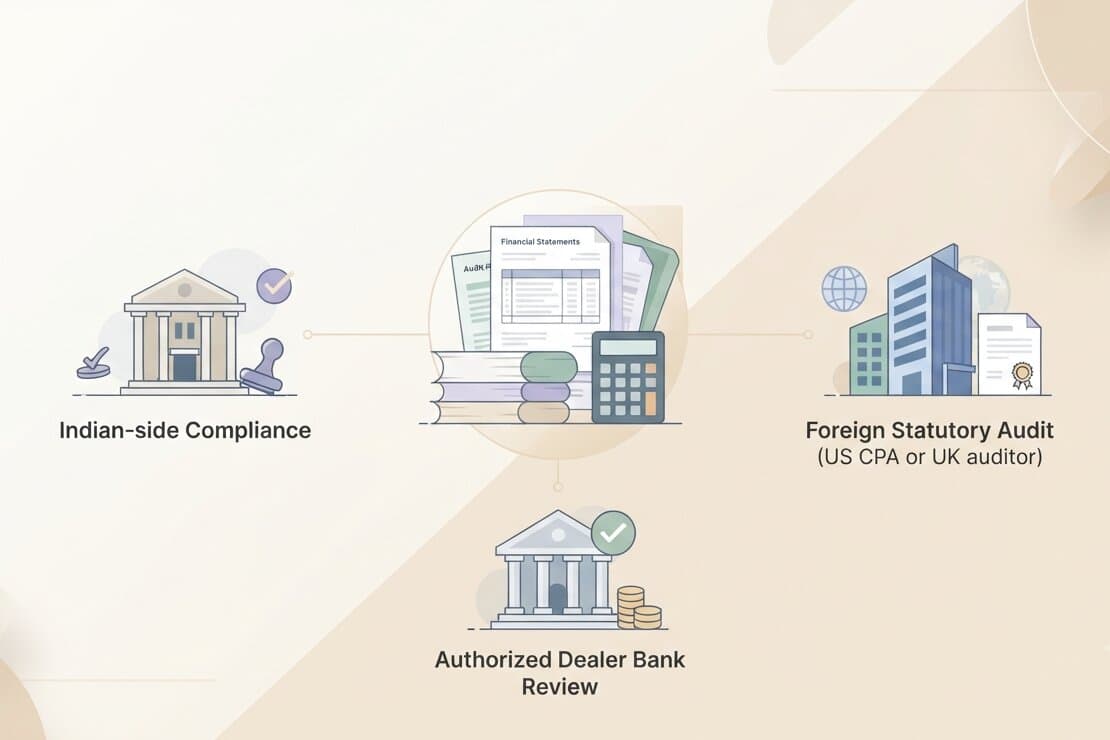
Begin by collecting audited financial statements of your foreign entity. If your subsidiary is in the US or UK, working with a US CPA for APR filing or UK auditor for APR filing helps ensure accuracy and compliance with local regulations.
Step 2: Conduct Overseas Subsidiary Audit
An effective overseas subsidiary audit ensures:
Financial data is accurate
Records match ODI filings
Compliance requirements are met
This step is essential for strong foreign subsidiary audit compliance.
Step 3: Verify ODI Details
Before filing, confirm:
ODI registration number
Investment amount
Shareholding structure
Errors here can delay your APR filing India submission.
Step 4: Prepare and Review APR Form
Ensure that:
All financial details are correctly entered
Data is consistent with audited reports
Any changes in investment are properly disclosed
Step 5: Obtain Required Certifications
The APR must be certified by:
An Indian Chartered Accountant
A foreign auditor if applicable (such as a US CPA for APR filing)
This step ensures credibility and compliance across jurisdictions.
Step 6: Submit via Authorised Dealer Bank
File the APR through your AD bank on the RBI portal before the deadline. Double-check all documents to avoid rejection.
Consequences of Missing the APR Filing Deadline
Failing to complete the APR audit on time can have serious implications.
Possible Penalties
Monetary fines under FEMA regulations
Delays in approval for future ODI transactions
Increased scrutiny from regulators
Operational Impact
Restrictions on further overseas investments
Compliance notices and follow-ups
Reputational risk for your business
Timely APR filing for foreign subsidiaries helps avoid these complications and keeps your global operations running smoothly.
Common Mistakes to Avoid in APR Audit
Even companies with strong compliance teams can make errors. Here are key mistakes to watch out for:
1. Waiting Until the Last Minute
Late preparation can lead to rushed filings and errors.
2. Incomplete Financial Statements
Submitting unaudited or partial financials can result in rejection.
3. Ignoring Local Audit Requirements
Not engaging a UK auditor for APR filing or US CPA for APR filing when required can weaken compliance.
4. Incorrect ODI Information
Mismatch in investment details can delay approval.
5. Poor Coordination Between Teams
Lack of communication between Indian and overseas teams can slow down the process.
Avoiding these mistakes ensures smooth overseas subsidiary audit and timely filing.
How Professional Services Help You Meet APR Deadlines
Managing APR filing India internally can be complex, especially when dealing with multiple jurisdictions and auditors.
Benefits of Professional APR Filing Support
Timely completion of APR audit
Coordination with international auditors
Accurate documentation and filing
Strong foreign subsidiary audit compliance
Reduced risk of penalties
Experts can streamline APR filing for foreign subsidiaries, ensuring your business meets all regulatory deadlines without stress.
Best Practices to Stay Compliant Year-Round
Maintain Updated Financial Records
Keep your overseas entity’s financials organized and updated throughout the year.
Schedule Audits in Advance
Plan your overseas subsidiary audit well before the deadline to avoid last-minute delays.
Work with Global Experts
Engage professionals such as a US CPA for APR filing or UK auditor for APR filing for seamless compliance.
Monitor ODI Compliance Regularly
Track all ODI-related transactions and updates to ensure smooth filing.
Conclusion
The APR audit is a critical compliance requirement that Indian companies with overseas investments cannot afford to overlook. With a fixed deadline of December 31, timely preparation and accurate filing are essential for maintaining strong ODI compliance.
By understanding the APR filing India process, avoiding common mistakes, and leveraging expert support, businesses can ensure seamless APR filing for foreign subsidiaries year after year.
If your company operates globally, now is the time to take control of your compliance process. A proactive approach to overseas subsidiary audit and APR filing will not only help you meet deadlines but also strengthen your foundation for future international growth.