.svg)
.svg)
.svg)
CPA vs Auditor for APR Filing – What Indian Banks Require APR Filing Audit Requirements for USA and UK Companies
Not sure if you need a CPA or auditor for APR filing? Learn requirements for US & UK entities and ensure smooth ODI compliance.

Accorp Compliance Team
Our team of compliance experts specializes in PCI DSS, SOC 2, and other security frameworks to help businesses achieve and maintain compliance.
When it comes to overseas investments, compliance is not just about filing forms—it’s about filing them correctly. One of the most common areas of confusion for Indian companies is whether they need a CPA or a local auditor for their APR audit.
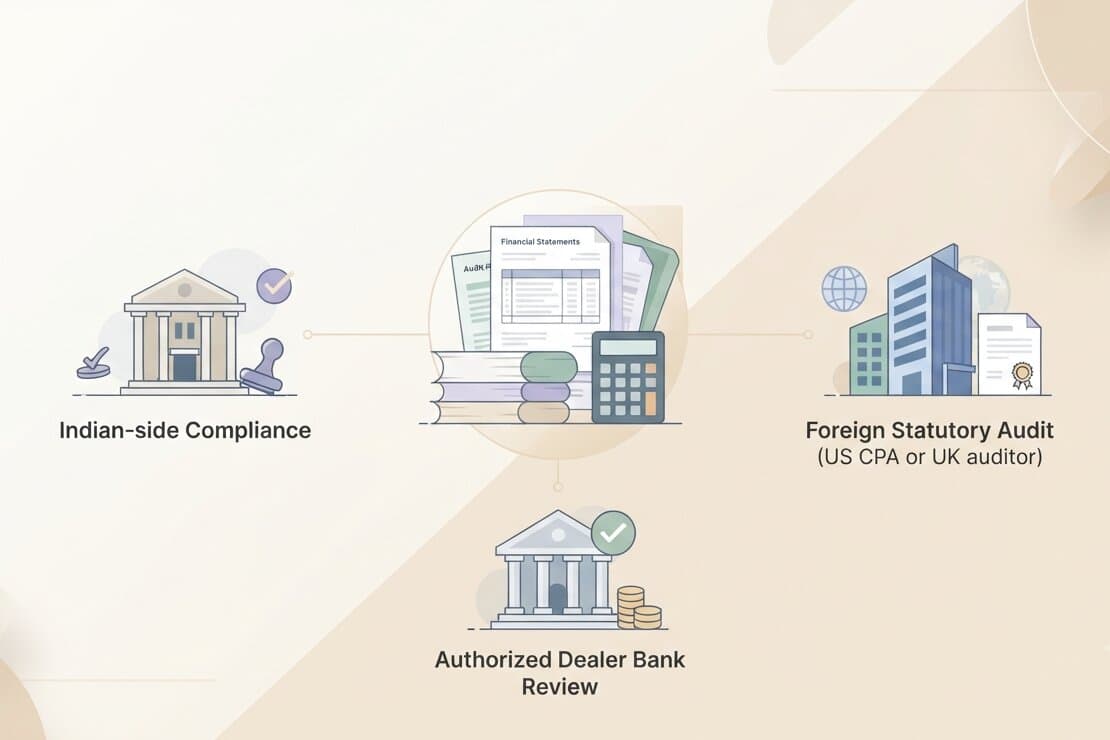
Indian banks and regulators have specific expectations when it comes to APR filing India, especially if your overseas subsidiary operates in countries like the United States or the United Kingdom. Choosing between a US CPA for APR filing and a UK auditor for APR filing can directly impact your compliance status.
Understanding APR Audit Requirements in India
The APR audit is a mandatory requirement under the Overseas Direct Investment (ODI) framework governed by the Reserve Bank of India (RBI).
What Indian Banks Expect
Authorized Dealer (AD) banks play a key role in processing APR filing India submissions. They typically require:
Audited financial statements of the foreign subsidiary
Certification by an Indian Chartered Accountant
FEMA complianceSupporting documents for investment and performance
To ensure proper foreign subsidiary audit compliance, banks may also require validation from a qualified auditor in the country where the subsidiary operates.
CPA vs Auditor for APR Audit: What’s the Difference?
Understanding the distinction between a CPA and an auditor is essential for meeting APR audit requirements.
What is a US CPA for APR Filing?
A US CPA for APR filing is a licensed Certified Public Accountant authorized to audit and certify financial statements in the United States.
Key Advantages
Recognized under US accounting standards (GAAP)
Trusted by Indian banks for US-based subsidiaries
Ensures accurate and compliant financial reporting
What is a UK Auditor for APR Filing?
A UK auditor for APR filing is a certified professional authorized to audit financial statements in the United Kingdom.
Key Advantages
Familiar with UK accounting standards (IFRS/UK GAAP)
Required for companies registered in the UK
Supports strong overseas subsidiary audit practices
Key Difference at a Glance
US CPA → Required/preferred for US-based entities
UK Auditor → Required/preferred for UK-based entities
Both play a crucial role in maintaining foreign subsidiary audit compliance.
What Indian Banks Require for APR Filing
Indian banks focus on accuracy, authenticity, and compliance when reviewing APR filing for foreign subsidiaries.
Core Requirements
Audited financial statements from the overseas entity
Certification by an Indian Chartered Accountant
Supporting audit reports from the foreign jurisdiction
When is a CPA or UK Auditor Mandatory?
If local laws require audited financials
If the entity operates in regulated sectors
If the AD bank specifically requests foreign certification
In practice, banks often expect a US CPA for APR filing or UK auditor for APR filing to validate financials for better credibility.
APR Filing Audit Requirements for USA Companies
If your overseas subsidiary is based in the US, the APR audit process involves additional steps.
Key Requirements
Financial statements audited or reviewed by a US CPA for APR filing
Compliance with US GAAP standards
Supporting documentation for investments and transactions
Why CPA Certification Matters
A US CPA certification:
Enhances trust with Indian banks
Reduces chances of rejection or queries
Strengthens overall ODI compliance
APR Filing Audit Requirements for UK Companies
For UK-based subsidiaries, the APR audit must align with local compliance standards.
Key Requirements
Financial statements audited by a UK auditor for APR filing
Compliance with UK GAAP or IFRS
Proper documentation of financial performance
Importance of UK Auditor Certification
A UK auditor ensures:
Alignment with local regulations
Smooth acceptance by Indian banks
Strong foreign subsidiary audit compliance
Step-by-Step APR Audit Process with CPA/Auditor Involvement
Step 1: Collect Financial Statements
Gather financial data from your overseas entity and ensure it is prepared according to local standards.
Step 2: Engage Local Auditor or CPA
Hire a US CPA for APR filing or UK auditor for APR filing depending on your entity’s location.
Step 3: Conduct Overseas Subsidiary Audit
The overseas subsidiary audit ensures:
Accuracy of financial data
Compliance with local and Indian regulations
Step 4: Indian CA Certification
An Indian Chartered Accountant reviews and certifies the APR before submission.
Step 5: Submit APR via AD Bank
File the APR through your Authorized Dealer bank before the deadline (December 31).
Common Mistakes in APR Audit Related to CPA/Auditor Selection
1. Using Unqualified Professionals
Engaging non-certified auditors can lead to rejection.
2. Ignoring Local Compliance
Skipping CPA or UK auditor involvement where required weakens compliance.
3. Delayed Coordination
Late communication between Indian and foreign auditors delays filing.
4. Inconsistent Financial Data
Mismatch between local audit and APR submission creates issues.
Avoiding these mistakes ensures smooth APR filing India.
Why Professional Support is Essential for APR Filing
Handling APR filing for foreign subsidiaries without expert help can be risky.
Benefits of Professional Services
Proper coordination with US CPA for APR filing and UK auditor for APR filing
Accurate and timely APR audit
Strong foreign subsidiary audit compliance
Reduced risk of penalties and delays
Professionals streamline the entire process, making ODI compliance easier and more reliable.
Conclusion
The APR audit is a critical compliance requirement for Indian companies with overseas investments. Choosing between a CPA and a local auditor is not just a technical decision—it directly affects the success of your APR filing India.
For US entities, working with a US CPA for APR filing is essential, while UK-based subsidiaries require a qualified UK auditor for APR filing. Combined with Indian CA certification, this ensures complete foreign subsidiary audit compliance.
If your goal is smooth, error-free APR filing for foreign subsidiaries, partnering with experienced professionals is the smartest move. With the right guidance, you can meet all ODI compliance requirements confidently and focus on growing your global business.