.svg)
.svg)
.svg)
FEMA Compounding vs Late Submission Fee for APR: Which Route Should You Take and When
Understand when APR audit delays require FEMA compounding or late submission fees and how to manage overseas subsidiary compliance correctly.

Accorp Compliance Team
Our team of compliance experts specializes in PCI DSS, SOC 2, and other security frameworks to help businesses achieve and maintain compliance.
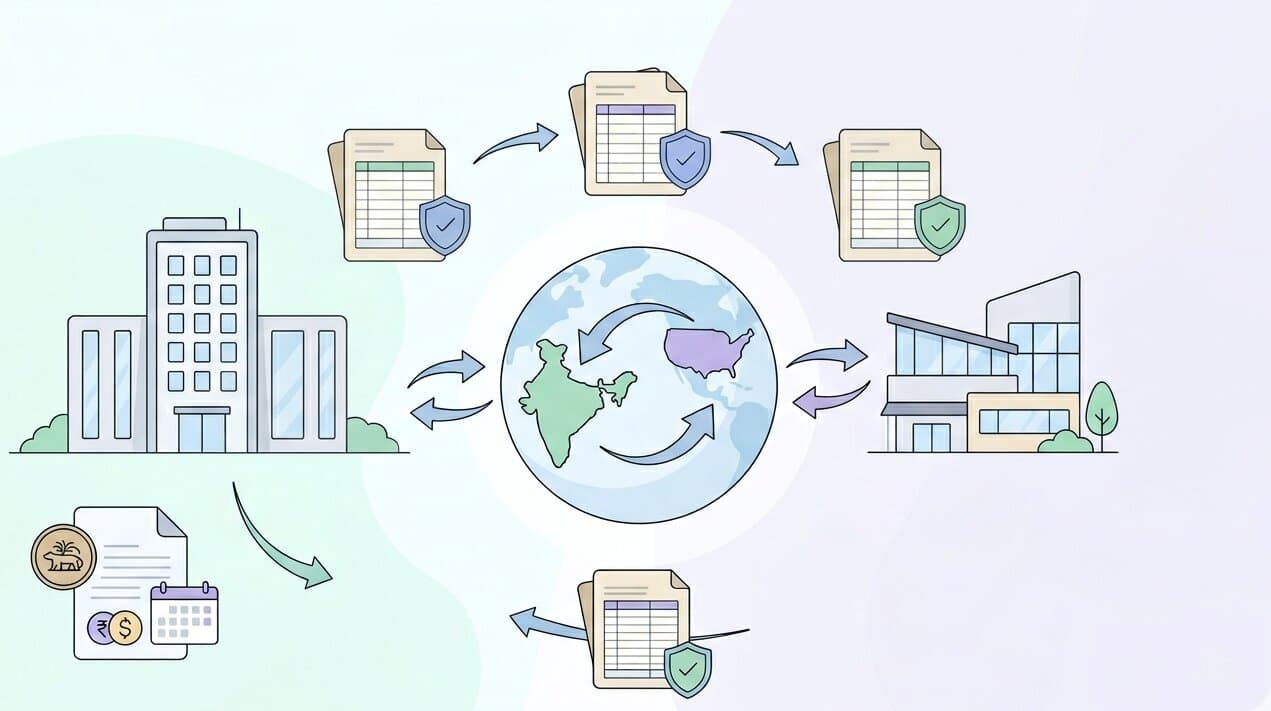
Missing an overseas reporting deadline can place businesses in a difficult position. One delayed filing often triggers immediate questions about penalties, regulatory exposure, and the next compliance step. For companies managing overseas subsidiaries, understanding whether to opt for a Late Submission Fee (LSF) or proceed with FEMA compounding is critical for maintaining financial discipline and avoiding long-term compliance issues.
This is where an APR audit becomes especially important. A properly reviewed APR audit helps companies identify filing gaps early, assess the seriousness of the default, and determine the correct corrective route under FEMA compliance.
The confusion between late submission fees and compounding often leads businesses to take the wrong action. Some unnecessarily initiate compounding proceedings, while others attempt to pay late fees for violations that require formal regulatory regularization.
This guide explains how both routes work, when each applies, and how businesses can use strong APR audit practices to maintain better overseas investment compliance and reduce future reporting risks.
Why APR Audit Matters When Filing Delays Occur
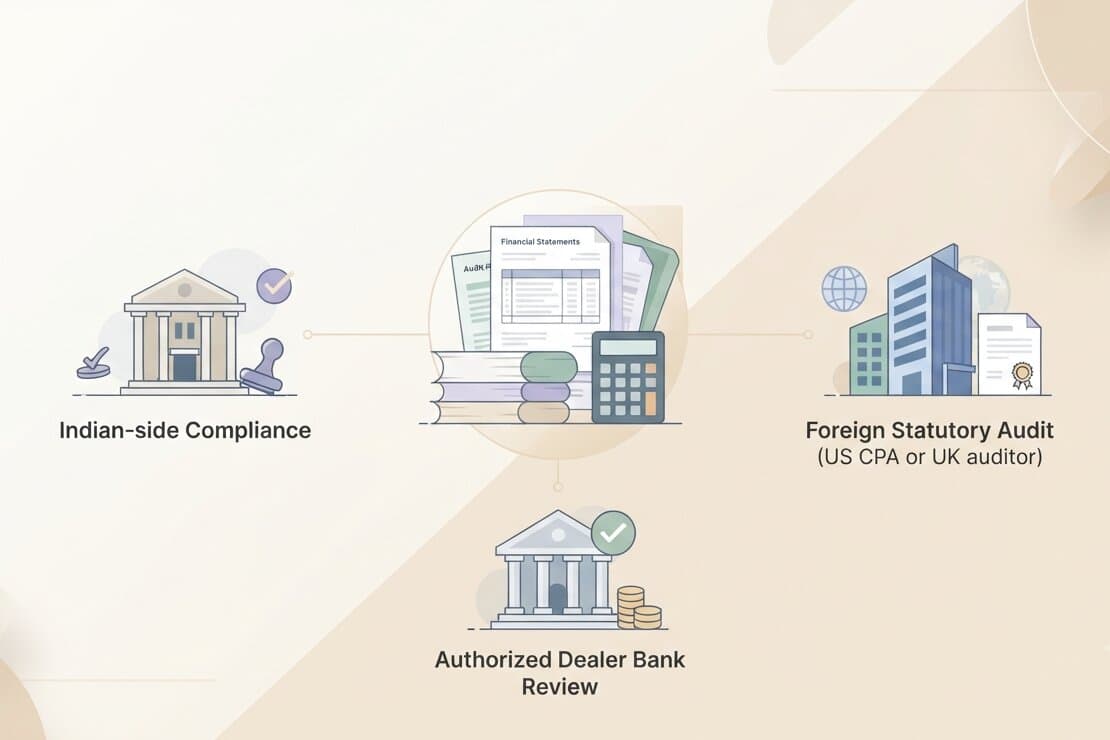
An APR audit serves as more than a routine financial review.
It helps validate:
Reporting accuracy
Financial disclosure consistency
Overseas subsidiary performance
Regulatory reporting readiness
When delays happen, the APR audit becomes the foundation for evaluating whether the non-compliance is procedural or substantive.
This distinction determines whether the company should proceed with:
Late Submission Fee payment, or
FEMA compounding application
A properly conducted overseas subsidiary audit often reveals issues before they escalate into regulatory complications.
Understanding Late Submission Fee in Overseas Reporting
The Late Submission Fee mechanism is designed to address delayed compliance submissions without requiring full compounding proceedings.
It applies when:
Reporting has been delayed
The underlying transaction is otherwise compliant
The default is procedural rather than structural
For businesses handling annual compliance for foreign subsidiaries, this route offers a faster path to regularization.
It allows companies to:
Rectify delayed reporting
Submit pending documentation
Restore filing status efficiently
This route is commonly used where APR timelines are missed but the underlying overseas investment remains fully compliant.
When FEMA Compounding Becomes Necessary
FEMA compounding applies to more serious compliance breaches.
This process is required when the issue goes beyond simple delayed submission and involves substantive regulatory non-compliance.
Examples include:
Incorrect overseas investment reporting
Unreported capital infusion
Breach of ODI compliance limits
Misclassification of foreign investment transactions
Inaccurate subsidiary compliance reporting
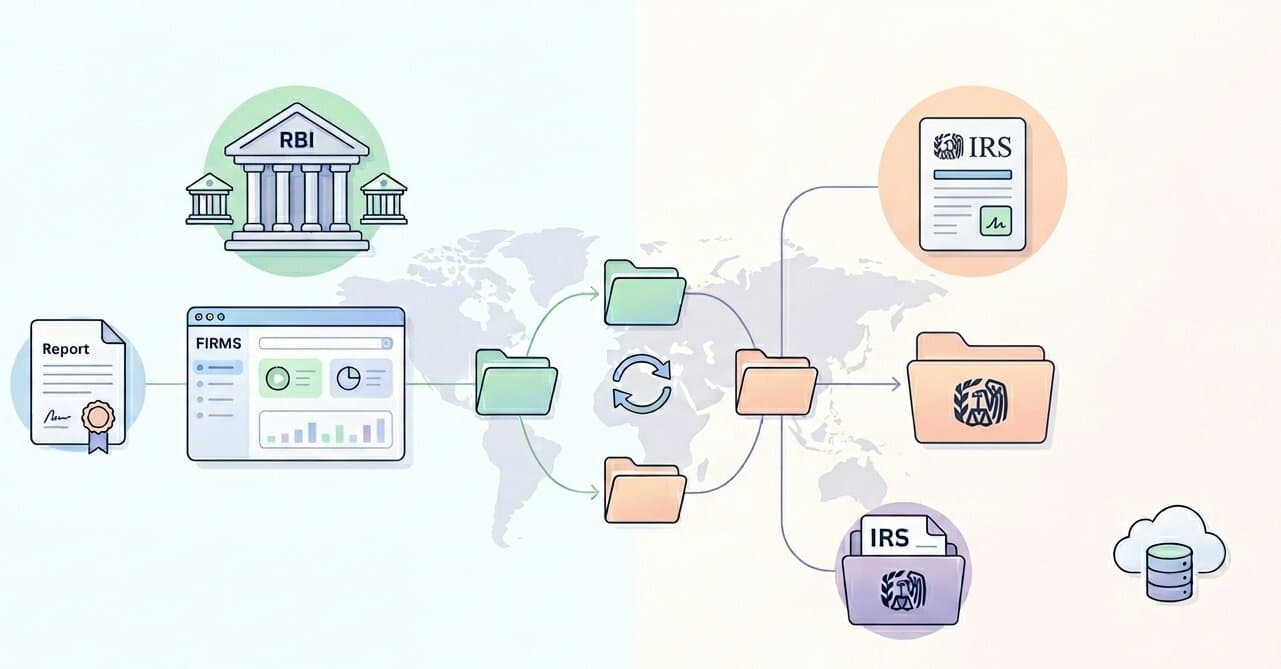
Compounding is a formal legal regularization process involving regulatory review.
It generally requires:
Detailed application
Supporting documentation
Financial disclosures
Explanation of the contravention
An APR audit often helps identify these deeper compliance gaps.
Key Difference Between the Two Routes
1. Late Submission Fee Corrects Timing Delays
LSF addresses delayed reporting where the transaction itself remains compliant.
It focuses on administrative correction.
2. FEMA Compounding Resolves Regulatory Violations
Compounding addresses substantive breaches of FEMA compliance.
It focuses on legal regularization.
This distinction is essential when assessing overseas investment compliance.
How APR Audit Helps Determine the Correct Route
A strong APR audit evaluates financial and reporting consistency across multiple areas.
1. Reviewing Historical Reporting Accuracy
The audit checks:
Past annual filings
Disclosure continuity
Investment reporting records
Capital movement history
This reveals whether the issue is isolated or systemic.
2. Examining Transaction Compliance
The audit reviews:
Foreign remittances
Share allotment records
Inter-company funding
Financial commitment reporting
These findings help identify whether compounding is necessary.
3. Identifying Documentation Gaps
An overseas subsidiary audit also highlights:
Missing certifications
Incomplete financial records
Unreconciled transactions
These issues often influence corrective strategy.
Situations Where Late Submission Fee Is Usually Appropriate
Late submission fee is generally suitable when:
APR reporting was delayed due to operational oversight
Financial disclosures are complete
No FEMA breach exists
Overseas investment structure remains compliant
Documentation can be promptly regularized
Many companies using a US CPA for APR filing or UK auditor for APR filing encounter timing delays due to overseas coordination issues.
These are often manageable through LSF.
Situations That Typically Require FEMA Compounding
Compounding becomes necessary where:
Investments exceeded approved limits
Reporting was materially inaccurate
Capital infusion was not properly disclosed
ODI compliance conditions were violated
Financial information materially conflicts with regulatory filings
These situations require deeper regulatory review.
Common Errors Businesses Make
Choosing Late Submission Fee Without Full Audit Review
Some businesses assume every delay qualifies for LSF.
Without an APR audit, hidden compliance violations may remain undiscovered.
Delaying Corrective Action
Waiting too long can worsen:
Regulatory scrutiny
Documentation challenges
Future approval complications
Prompt assessment is critical.
Incomplete Overseas Documentation
Missing:
Auditor certification
Financial statements
Capital proof
Investment records
can complicate both correction routes.
Best Practices for Managing Compliance Defaults
Conduct Immediate APR Audit Review
The first step after identifying delay should be a detailed APR audit assessment.
This helps determine exposure accurately.
Coordinate With Compliance Experts
Professional advisors help assess:
FEMA compliance status
Corrective filing route
Documentation requirements
Regulatory communication strategy
Maintain Better Annual Compliance Controls
Strong internal systems improve:
International business compliance
Foreign investment reporting accuracy
Reporting timelines
This reduces future default risks.
Why Proactive APR Audit Planning Matters
Regular audit discipline supports:
Better overseas investment compliance
Faster annual reporting
Lower regulatory risk
Improved financial transparency
Stronger future expansion readiness
An APR audit should be treated as a strategic compliance checkpoint rather than a year-end obligation.
Conclusion
Choosing between FEMA compounding and late submission fee depends entirely on the nature of the compliance issue. Timing delays often qualify for simpler correction, while deeper regulatory breaches require formal regularization. A thorough APR audit helps businesses make this distinction confidently by identifying reporting gaps, validating financial disclosures, and assessing overall compliance health.
Whether supported by a US CPA for APR filing or a UK auditor for APR filing, companies that prioritize timely overseas subsidiary audit reviews are better positioned to manage foreign subsidiary audit compliance and maintain stronger long-term regulatory confidence.
Also Read: Small Company Audit Exemption Under UK Companies Act vs RBI's Mandatory Audit for Controlled Entities — The Conflict Explained
FAQs
Q1. I missed my APR deadline. Do I automatically need to go through FEMA compounding?
Not always. If your filing was just delayed but everything else is compliant, you can simply pay the Late Submission Fee of ₹7,500. Compounding is only needed when there's an actual FEMA violation — not just a timing delay.
Q2. What's the simple difference between LSF and FEMA compounding?
LSF = you filed late but did nothing wrong. Compounding = you breached a FEMA rule and need formal regulatory approval to fix it. One is a small fee, the other is a full legal process.
Q3. How do I know which route applies to my situation?
Get an APR audit done first. It will tell you whether your delay was just procedural or whether there are deeper issues like unreported capital infusion, wrong ODI classification, or missing disclosures. Don't guess — the wrong route makes things worse.
Q4. What kind of violations require FEMA compounding instead of just paying LSF?
Situations like investing beyond approved ODI limits, not reporting capital infusion, misclassifying loans as equity, or having financials that don't match your RBI filings. These can't be fixed with a simple late fee.
Q5. We've been delaying our APR for two years. Is it too late to fix it?
No, but act quickly. The longer you wait, the higher the penalties and the more likely compounding becomes mandatory. Start with an APR audit to assess your exact exposure, then take the right corrective route with professional guidance.