.svg)
.svg)
.svg)
Legal Checklist to Issue ESOPs in India: MCA & SEBI Compliance
Follow ESOP in India legal checklist with MCA and SEBI compliance, employee stock option plan rules, ESOP valuation, taxation, and ownership.

Accorp Compliance Team
Our team of compliance experts specializes in PCI DSS, SOC 2, and other security frameworks to help businesses achieve and maintain compliance.
For Indian startups and private limited companies, launching an ESOP (Employee Stock Option Plan) is a strategic move to attract and retain talent. However, issuing ESOPs is not just about designing benefits—it requires strict legal compliance under Indian corporate laws.
From approvals to filings, companies must follow a clear checklist to ensure their employee stock option scheme is legally valid. Non-compliance can lead to penalties and complications during funding or audits.
This guide provides a practical legal checklist for issuing ESOP in India, covering MCA and SEBI compliance, taxation, and real-world insights.
What is ESOP in India?
An Employee Stock Option Plan (ESOP) allows employees to purchase company shares at a fixed price after a vesting period. It is widely used to build employee ownership and align employee interests with business growth.
Legal Framework:
Governed by Companies Act, 2013
Covered under Rule 12 of Companies (Share Capital and Debentures) Rules, 2014
Applicability:
ESOP for private limited company in India falls under MCA regulations
Listed companies must also comply with SEBI regulations
Key Benefits:
Encourages long-term employee stock ownership
Builds strong retention in startups and esop companies
Step-by-Step ESOP Issuance Process
Below is a practical checklist for implementing a compliant employee stock option plan:
1. Draft ESOP Scheme
Prepare a detailed ESOP scheme including:
Eligibility criteria
Vesting schedule
Exercise price
Number of stock options for employees
Terms for exit, resignation, or termination
2. Board Resolution
Pass a board resolution approving the employee stock option scheme
Authorize issuance of ESOPs
3. Shareholder Approval (Special Resolution)
Mandatory under Companies Act
Required for granting share options for employees
4. Filing of MGT-14
File the special resolution with ROC within 30 days
This is a key MCA compliance requirement
5. Grant of ESOPs
Issue ESOPs to eligible employees
Provide grant letters with clear terms
6. Vesting of ESOPs
Employees earn rights over time
Follow cliff or graded vesting as defined
7. Exercise of Options
Employees convert options into shares
Pay exercise price
8. Filing of PAS-3
File PAS-3 after allotment of shares
Required for updating share capital
9. Maintain Statutory Registers
Maintain records of:
ESOP grants
Vesting schedules
Employee details
Share allotments
SEBI Compliance (For Listed Companies)
While private companies follow MCA rules, listed companies must also comply with SEBI regulations.
Key Requirements:
Follow SEBI (Share Based Employee Benefits) Regulations
Disclosures in annual reports
Approval from compensation committee
Fair and transparent employee ownership plan
Practical Insight
A startup planning IPO must align its ESOP structure with SEBI requirements in advance to avoid restructuring later.
ESOP Valuation in India
ESOP valuation is a critical part of compliance.
Key Points:
Fair Market Value (FMV) must be determined
Conducted by a registered valuer or merchant banker
Why It Matters:
Required for taxation
Ensures fairness in employee share ownership plans
Builds trust among employees and investors
Taxation of ESOPs in India
Understanding ESOP taxation in India is essential for both employers and employees.
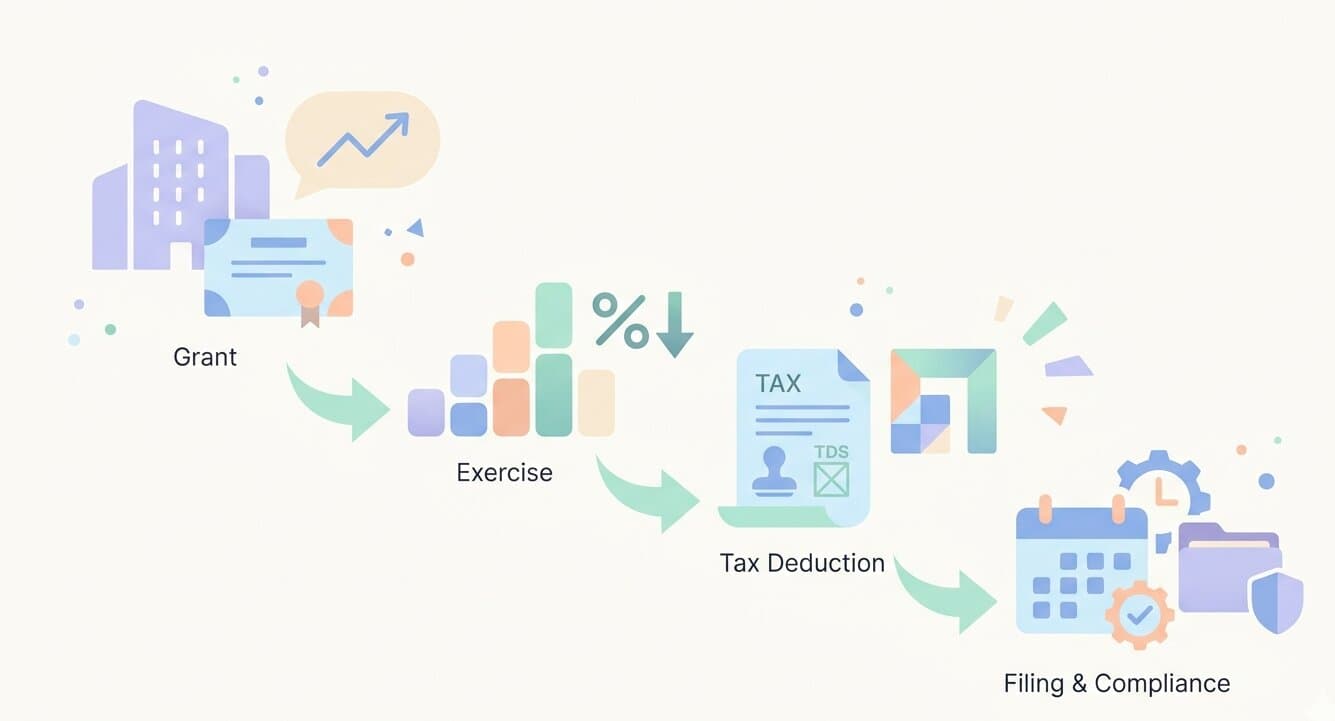
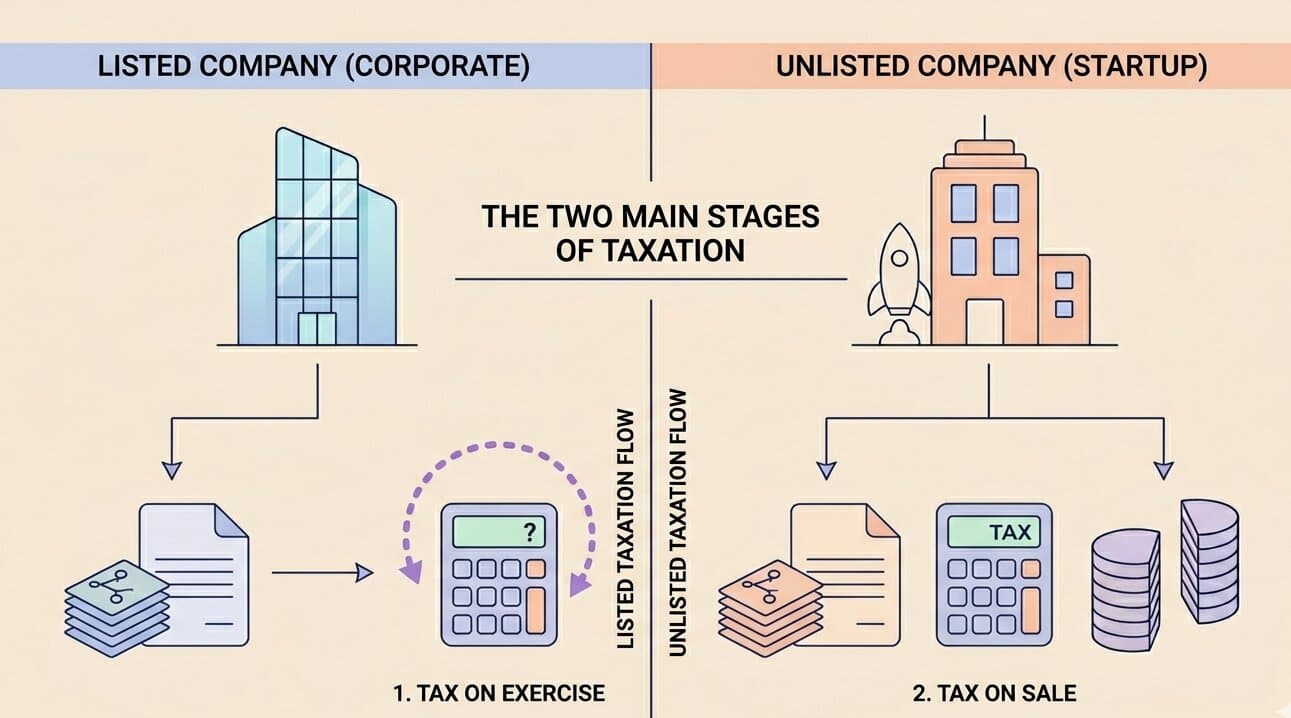
1. Tax at Exercise Stage (Perquisite Tax)
FMV – Exercise Price = Taxable income
Taxed as salary
Example:
Exercise Price: ₹100
FMV: ₹300
Taxable Income: ₹200
Employer deducts TDS.
2. Tax at Sale Stage (Capital Gains Tax)
Applies when shares are sold
Types:
Short-Term Capital Gains (STCG)
Long-Term Capital Gains (LTCG)
3. Income Tax Implications
No tax at grant stage
Tax arises at exercise and sale stages
Key Compliance Requirements
To ensure a fully compliant ESOP for private limited company in India, follow this checklist:
Legal Compliance
Follow Companies Act, 2013
Adhere to Rule 12 provisions
MCA Filings
MGT-14 (special resolution)
PAS-3 (share allotment)
Documentation
Maintain:
ESOP scheme
Grant letters
Exercise records
Employee eligibility details
Accounting Compliance
Record ESOP expenses
Follow applicable accounting standards
SEBI Compliance (if applicable)
Follow SEBI regulations for listed companies
Ensure proper disclosures
Common Mistakes to Avoid
Skipping shareholder approval
Delayed filing of MGT-14 or PAS-3
Incorrect ESOP valuation
Poor documentation of employee stock ownership plans
Ignoring SEBI compliance before IPO
Practical Example
A Mumbai-based startup issues ESOPs:
Drafts a detailed ESOP scheme
Gets board and shareholder approval
Files MGT-14
Grants ESOP stock to employees
Files PAS-3 after allotment
By following this checklist, the company ensures smooth compliance and avoids legal issues.
Conclusion
Issuing ESOPs in India requires careful planning and strict compliance with MCA and, where applicable, SEBI regulations. From drafting the employee stock option plan to filing forms like MGT-14 and PAS-3, every step plays a critical role.For startups and private limited companies, a well-executed ESOP scheme not only ensures legal compliance but also strengthens employee ownership and long-term growth.By following this legal checklist, ensuring proper ESOP valuation, and understanding ESOP taxation in India, companies can build a transparent, compliant, and effective employee ownership plan that benefits both employees and the organization.
Issuing ESOPs in India requires strict compliance with MCA and SEBI regulations, along with proper documentation, valuation, and timely filings. Missing even a single step can lead to legal and financial complications.Work with Accorp Partners to design, implement, and manage fully compliant ESOP plans with end-to-end expert support.