.svg)
.svg)
.svg)
Wholly Owned Subsidiary (WOS) in India – Complete Checklist for UK, UAE, Singapore, Japan & Germany Companies
Complete checklist to incorporate a wholly owned subsidiary in India for UK, UAE, Singapore, Japan & Germany companies. Process, docs & compliance.

Accorp Compliance Team
Our team of compliance experts specializes in PCI DSS, SOC 2, and other security frameworks to help businesses achieve and maintain compliance.
India has become a top destination for global expansion due to its large market, skilled workforce, and ease of doing business. One of the most preferred entry strategies for foreign companies is setting up a Wholly Owned Subsidiary (WOS).
For companies based in the UK, UAE, Singapore, Japan, and Germany, India offers a structured and fully digital incorporation process. This guide provides a complete, step-by-step checklist to help you set up your subsidiary smoothly and compliantly.
What Is a Wholly Owned Subsidiary?
A wholly owned subsidiary is an Indian company where 100% ownership is held by a foreign parent company.
Key Benefits
Full ownership and control
Separate legal entity in India
Limited liability protection
Access to Indian market directly
Most WOS entities are registered as private limited companies in India.
Process for UK, UAE, Singapore, Japan & Germany Companies
The incorporation process is the same for all foreign countries.
Key Rules
100% FDI allowed in most sectors under automatic route
At least 1 resident director in India is mandatory
Compliance with FEMA and RBI regulations required
No need to visit India physically — the process can be done remotely.
Pre-Incorporation Checklist
1. Choose the Right Business Structure
Private Limited Company (most preferred)
Offers scalability and investor confidence
Suitable for long-term expansion
2. Minimum Requirements
To incorporate a WOS in India:
Minimum 2 directors (1 must be Indian resident)
Minimum 1 shareholder (foreign parent company allowed)
Registered office address in India
3. Documents Required for Foreign Companies
Parent Company Documents
Certificate of Incorporation
Memorandum & Articles of Association
Board Resolution for investment
Director Documents
Passport (mandatory)
Address proof
Photograph
All foreign documents must be notarized and apostilled.
Step-by-Step Incorporation Process
4. Obtain Digital Signature Certificate (DSC)
Required for all directors
Used for signing online documents
5. Apply for Director Identification Number (DIN)
Mandatory for directors
Issued by MCA
6. Company Name Approval
Apply through MCA portal
Must be unique and compliant
Should reflect business activity
7. File Incorporation Forms (SPICe+)
Submit:
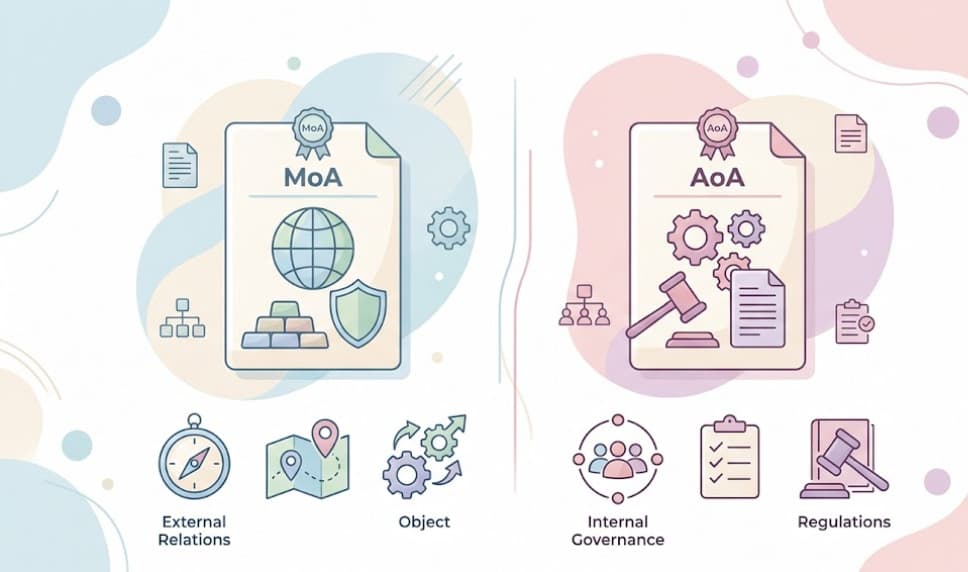
MoA (Memorandum of Association)
AoA (Articles of Association)
Director & shareholder details
8. Certificate of Incorporation
Issued by Registrar of Companies (ROC)
Confirms legal existence of company
At this stage, your WOS is officially registered.
Post-Incorporation Checklist
9. Open Company Bank Account
Required to receive foreign investment
Must comply with RBI banking norms
10. FEMA & FDI Compliance
Receive funds through authorized channels
Issue shares to parent company
File FC-GPR after allotment
11. Apply for PAN, TAN & GST
PAN & TAN for taxation
GST (if applicable based on business)
12. Maintain Ongoing Compliance
Annual filings with MCA
Board meetings
Maintain statutory registers
File FLA return annually
Why Investors from UK, UAE, Singapore, Japan & Germany Prefer India
Key Benefits
Large and growing consumer market
Cost-effective operations
Strong startup ecosystem
100% FDI in most sectors
Digital incorporation process
Common Challenges
Understanding FEMA compliance
Managing documentation across countries
Appointing a resident director
With proper planning, these challenges can be easily managed.
Benefits of Using Professional Incorporation Services
Many foreign companies prefer expert assistance for smoother setup.
Advantages
Faster approvals
Accurate documentation
End-to-end compliance support
Remote incorporation without travel
This reduces risk and saves time.
Conclusion
Setting up a wholly owned subsidiary in India is one of the most effective ways for global companies to enter the Indian market.
For businesses in the UK, UAE, Singapore, Japan, and Germany, the process is streamlined, digital, and investor-friendly. By following this checklist and ensuring proper compliance, you can establish a strong and scalable presence in India.
Looking to register a company in India? Visit our India Incorporation Services page for expert guidance.
FAQs (Frequently Asked Question)
1. Can a foreign company own 100% of an Indian subsidiary?
Yes, 100% foreign ownership is allowed in most sectors under the automatic route.
2. Is a resident director mandatory for WOS?
Yes, at least one resident director in India is legally required.
3. Do foreign directors need to visit India for incorporation?
No, the entire process can be completed remotely with proper documentation.
4. How long does it take to incorporate a WOS in India?
Typically, it takes around 7–15 working days, depending on documentation.
5. What is the most important compliance after incorporation?
FEMA compliance, including FC-GPR filing and annual FLA return, is critical.