.svg)
.svg)
.svg)
Do You Need an OIDAR GST Registration Before You Even Incorporate in India?
Find out when foreign SaaS and digital businesses need OIDAR GST registration in India, why it can precede incorporation, and key compliance steps.

Accorp Compliance Team
Our team of compliance experts specializes in PCI DSS, SOC 2, and other security frameworks to help businesses achieve and maintain compliance.
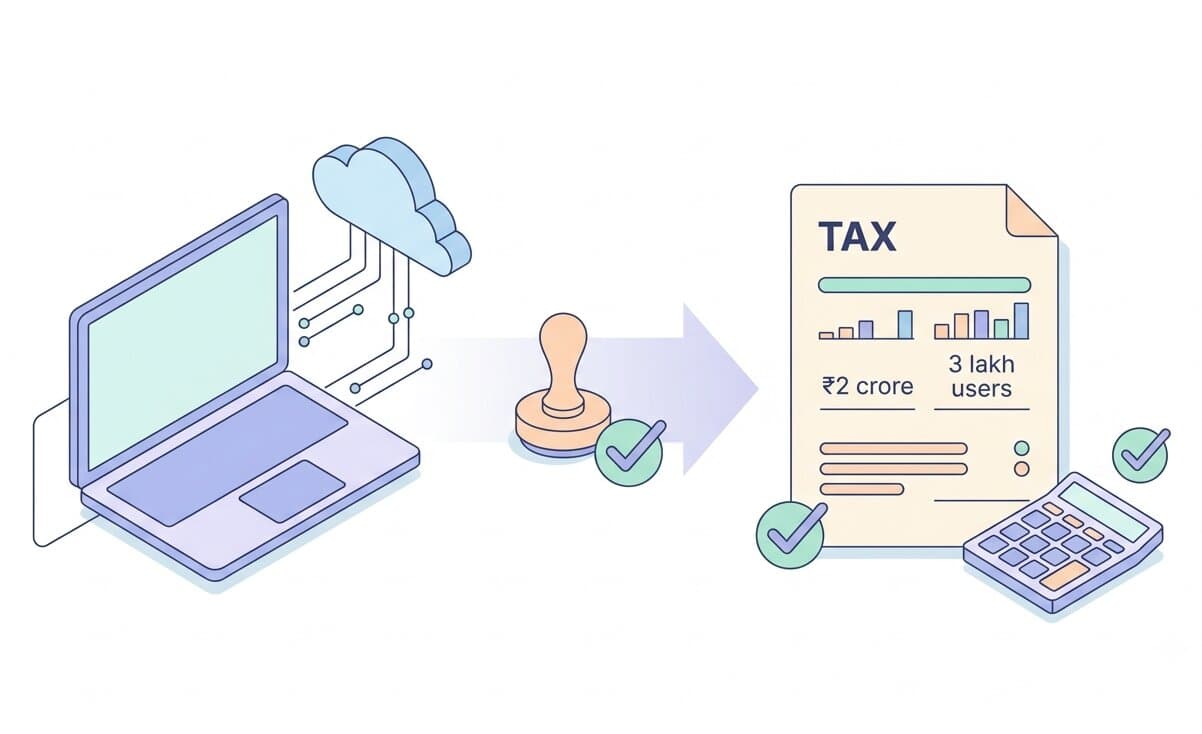
Every few weeks, a foreign SaaS founder or digital services company reaches out with some version of the same question: "We're selling to Indian customers online; do we need to go through online registration of company in India first?" The honest answer surprises most of them — you might owe India GST registration months, or even years, before India incorporation is anywhere on the table. If your business delivers software, streaming content, cloud services, e-books, or any other automated digital product to Indian users over the internet, India's GST law has a category built specifically for you, and it doesn't care whether you've set foot in the country or completed India online company registration at all.
This piece walks through what OIDAR actually means, why the registration obligation can precede incorporation entirely, and how foreign digital businesses typically sequence the two — including when it actually makes sense to look into how to register a company in India.
What OIDAR Actually Means Under Indian Tax Law
OIDAR stands for Online Information and Database Access or Retrieval services — a specific, defined category under Section 2(17) of the IGST Act covering services delivered over the internet with minimal human intervention and essentially impossible to provide without information technology. In practice, this covers a genuinely broad slice of the modern digital economy: cloud software and SaaS platforms, streaming video and audio, online gaming, e-books and digital publications, web hosting, online advertising, and data storage or retrieval services delivered electronically.
If your business model fits this description and Indian users are consuming your service, the law treats you as a supplier making a taxable supply in India — regardless of where your company is incorporated, regardless of whether you have any office, employee, or bank account in the country, and critically, regardless of how small your Indian revenue actually is.
Why This Registration Obligation Has No Turnover Threshold
This is the detail that catches foreign founders completely off guard. Most GST registration triggers in India come with a turnover threshold — a business only needs to register once it crosses a certain revenue figure. OIDAR doesn't work that way for foreign providers. Under Section 24 of the CGST Act, GST registration is mandatory for foreign OIDAR service providers irrespective of turnover. A single Indian customer paying for a single subscription can be enough to trigger the obligation. There's no grace period based on company size, no exemption for early-stage or bootstrapped businesses, and no "wait until it becomes material" carve-out, as there is for most other tax registrations.
This is precisely why the registration question so often arrives before company incorporation services in India are even a serious consideration. A foreign SaaS company running a self-serve signup flow, with no sales team targeting India specifically, can end up with GST exposure the moment an Indian credit card completes a checkout — long before anyone on the team has thought about setting up an Indian entity.
Who the Obligation Actually Falls On
The registration requirement applies specifically when a foreign OIDAR provider is supplying to a non-taxable online recipient — essentially, an individual consumer in India, or an unregistered entity, rather than a GST-registered Indian business. Where the supply is to an unregistered person in India, the liability to register and pay GST sits with the foreign service provider directly.
The picture changes for B2B transactions. If a GST-registered Indian business purchases your OIDAR service, the reverse charge mechanism kicks in instead — the Indian business itself accounts for and pays the GST, and your company doesn't need to separately register or file for that specific supply. This distinction matters enormously for how a foreign digital company should actually assess its exposure: a B2B-only SaaS product selling exclusively to registered Indian companies carries a meaningfully different compliance profile than a consumer-facing app or streaming service billing individual Indian users directly.
How the Registration Process Actually Works
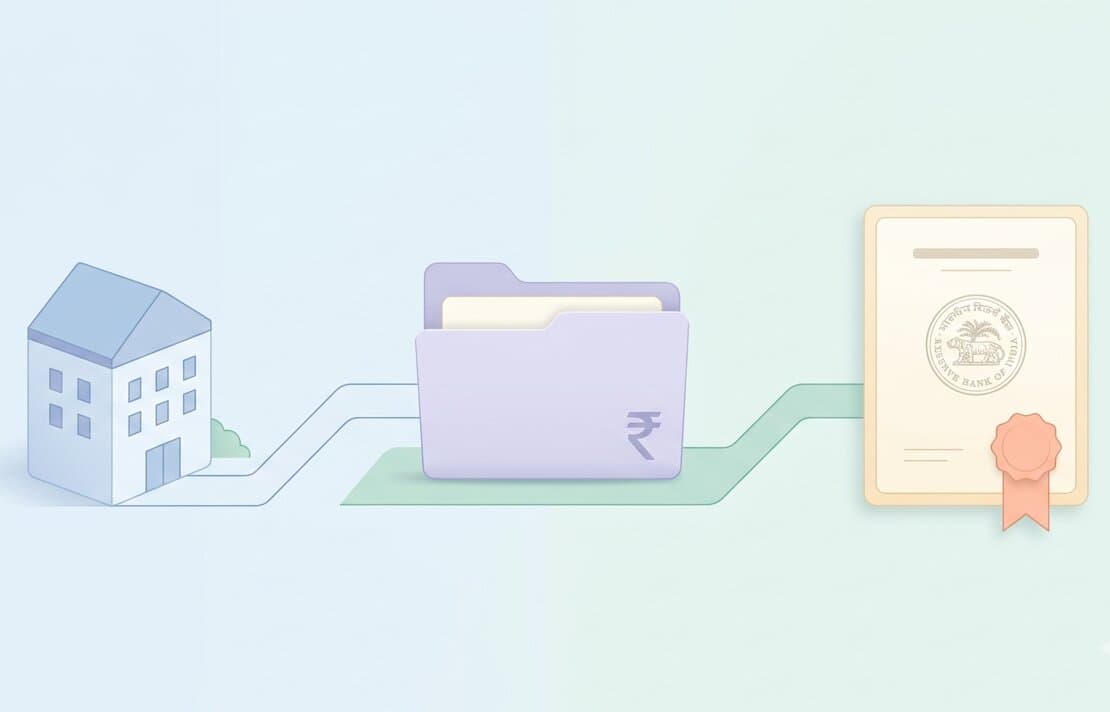
Foreign OIDAR providers use a simplified registration pathway distinct from standard online registration procedures used by Indian-incorporated businesses — filed through Form GST REG-10, rather than the regular registration route. A few practical features make this route genuinely lighter than standing up a full Indian entity:
Single centralised registration. Unlike domestic businesses that often need state-by-state GST registration depending on where they operate, a non-resident OIDAR provider gets one registration valid across all of India.
An Indian authorised signatory, not necessarily an Indian entity. The provider needs to designate a resident of India holding a valid PAN to handle GST compliance on their behalf — but this doesn't require incorporating a company; it can be an appointed representative or professional service provider.
No input tax credit. Non-resident OIDAR registrants can't claim ITC under current provisions, which is a real cost consideration, since the 18% IGST charged on most OIDAR services (5% specifically for e-books) becomes a genuine cost of doing business in India rather than a recoverable credit.
Monthly GSTR-5A filing. Registered non-resident providers file this specific return by the 20th of each month, and — this trips people up — a nil return is mandatory even in months with zero Indian revenue. Skipping the filing because there was nothing to report is a common, avoidable compliance gap.
Why This Precedes Incorporation Rather Than Following It
India incorporation — setting up a Private Limited subsidiary or any other entity — is a deliberate, strategic decision usually made once a foreign business has meaningful, sustained India operations: local hiring, India-specific contracts, physical presence, or a genuine need for an Indian legal entity to transact with local vendors and customers. OIDAR GST registration is a completely different kind of obligation. It's not a strategic choice about market entry — it's a compliance trigger based purely on the fact that Indian consumers are using your digital product, which can happen entirely organically through global self-serve signups, with zero deliberate India go-to-market effort behind it.
This is exactly why a foreign SaaS company can find itself needing OIDAR registration well before india online company registration makes any commercial sense. Setting up a full Indian subsidiary is a meaningful undertaking — resident director requirements, registered office, ongoing ROC and FEMA compliance — and most foreign digital businesses shouldn't rush into that just because a handful of Indian users signed up. The OIDAR registration route exists precisely so a foreign provider can meet its GST obligation without needing to incorporate anything in India at all.
What Happens If a Foreign Provider Ignores This
The consequences aren't theoretical. Non-compliance exposes a foreign OIDAR provider to penalties under Section 122 of the CGST Act, along with recovery provisions that can, in practice, make it difficult to operate cleanly in the Indian market longer term — payment processors and app store platforms increasingly ask digital service providers to confirm Indian tax compliance status, and Indian tax authorities have become considerably more active in cross-referencing payment data against registered OIDAR providers since the exemption for supplies to individual consumers was removed in October 2023.
When Incorporation Actually Becomes the Right Next Step
OIDAR registration and full India incorporation aren't mutually exclusive — they're sequential steps that make sense at different stages of a foreign digital business's India trajectory. A foreign SaaS company might operate for years on OIDAR registration alone, serving Indian customers remotely with no local entity. Understanding how to register a company in India properly typically becomes relevant once the business wants to hire in India directly, needs an Indian bank account to receive local payments efficiently, wants to participate in India-specific government or enterprise procurement that requires a local entity, or reaches a scale where the tax efficiency of a proper Indian subsidiary — including the ability to claim input tax credit that OIDAR registration alone doesn't allow — outweighs the administrative simplicity of remaining unincorporated.
Getting the Sequencing Right From the Start
The practical mistake to avoid is treating these as the same question. A foreign company assuming "we'll deal with Indian compliance once we incorporate" can quietly accumulate months of unregistered OIDAR exposure in the meantime, since the registration trigger has nothing to do with whether online registration of company has happened yet. Conversely, a company that rushes into full incorporation the moment Indian revenue appears, without first assessing whether a lighter OIDAR registration would suffice for its current stage, takes on compliance overhead — resident director, registered office, ongoing secretarial filings — that isn't yet justified by the business's actual India footprint.
Getting this sequencing right starts with an honest assessment of what your digital product actually is under OIDAR's definition, who your Indian customers are — consumers or GST-registered businesses — and how much genuine India-specific operational infrastructure your business actually needs right now versus later. Accorp Partners' company incorporation services India team works with foreign SaaS and digital service companies through exactly this assessment, helping determine whether OIDAR registration alone covers the current stage of India exposure, and guiding the transition to full company registration once the business genuinely needs it, rather than defaulting to one path without weighing the other.
Frequently Asked Questions
1. Does a foreign company need to incorporate in India before registering for OIDAR GST?
No — OIDAR registration is specifically designed for foreign providers without any Indian entity, using an appointed Indian authorised signatory instead of requiring incorporation.
2. Is there a minimum revenue threshold before OIDAR registration becomes mandatory?
No. Unlike most GST triggers, foreign OIDAR providers must register regardless of turnover, even for a single Indian transaction.
3. Does selling only to GST-registered Indian businesses avoid the registration requirement?
Largely yes for those specific transactions — reverse charge shifts the GST liability to the registered Indian recipient — but any sales to unregistered consumers or businesses still trigger the foreign provider's own registration obligation.
4. Can a foreign OIDAR registrant later convert to full India incorporation?
Yes, and many growing digital businesses do exactly this once their India operations justify a local entity — the two aren't competing compliance tracks, just different stages of the same growth path