.svg)
.svg)
.svg)
How to Set Up a GCC in India: The Legal and Tax Checklist Nobody Gives You
Set up a GCC in India with this complete legal, tax, FEMA, transfer pricing, DPDP, and compliance checklist for foreign companies in 2026.

Accorp Compliance Team
Our team of compliance experts specializes in PCI DSS, SOC 2, and other security frameworks to help businesses achieve and maintain compliance.
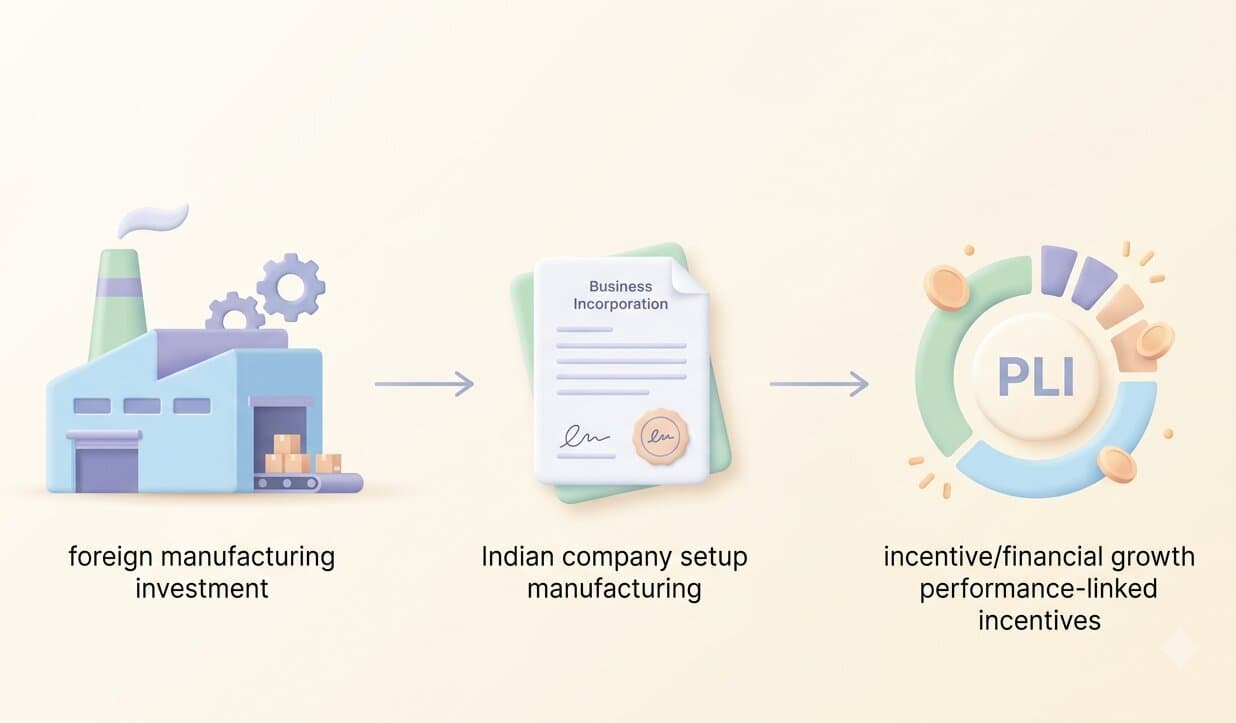
India crossed 1,700 active Global Capability Centres in FY 2025, employing over 1.9 million professionals and generating $64.6 billion in annual revenue. Another 110 new GCCs launched in 2024–25 alone. US companies account for approximately 70% of all new GCC demand. The National GCC Policy Framework released in 2025–26 introduced single-window clearances, fast-track FDI approvals, and state-specific incentive packages that make the process faster than at any point in the last decade.
Yet most guides on GCC setup in India cover the same surface-level steps: incorporate a company, get a PAN, open a bank account. What they leave out is the part that actually determines whether your GCC operates cleanly or accumulates regulatory exposure from day one — the legal and tax architecture decisions that must be made before you file a single document.
This guide covers the complete checklist, in the order you actually need to address it.
Step 1: Decide on GCC vs GIC Before Anything Else
The first decision is one most guides skip entirely. Before you choose an entity structure, you need to decide whether your centre will operate as a standard GCC or qualify as a Global In-house Centre (GIC) under the IFSCA (GIC) Regulations, 2025.
A standard GCC is incorporated in India as a Private Limited Company and serves its overseas parent under a Transfer Pricing-compliant intercompany services agreement. A GIC, by contrast, is a unit set up inside GIFT City (Gujarat's International Financial Services Centre) and operates under a separate regulatory regime administered by the IFSCA, not the MCA. GICs serving financial services groups — fintech, banking, insurance, asset management — benefit from a 10-year income tax holiday, zero customs duty on capital equipment, and significantly reduced GST treatment on intra-group services.
If your parent is a financial services entity and your GCC will handle IT, analytics, compliance, or operations for that group, the GIC route inside GIFT City is worth modelling seriously before you default to a standard Private Limited Company incorporation in Bengaluru or Hyderabad. The compliance regimes, tax profiles, and exit mechanics are materially different between the two.
Step 2: Choose the Right Legal Entity — Pvt Ltd Wins, But Here Is Why
For most GCCs, the correct structure is a wholly owned subsidiary incorporated as a Private Limited Company under the Companies Act, 2013. This is the overwhelmingly dominant structure for one clear reason: it eliminates Permanent Establishment (PE) risk for the foreign parent.
When a foreign company sets up a Branch Office in India, all income attributable to that branch is taxable in India at a corporate tax rate of 40% plus applicable surcharge, compared to 22% plus surcharge for a domestic Private Limited Company under the new concessional regime. More significantly, a Branch Office carries a higher inherent risk of the foreign parent being treated as having a PE in India under the applicable tax treaty, which subjects the parent's attributable profits to Indian tax — an outcome most multinationals design their GCC specifically to avoid.
An LLP is legally permissible but practically unsuitable for a GCC in most cases. LLPs cannot issue ESOPs, cannot list equity on Indian stock exchanges, and face limitations on raising equity capital — all constraints that matter as the GCC scales beyond its initial headcount.
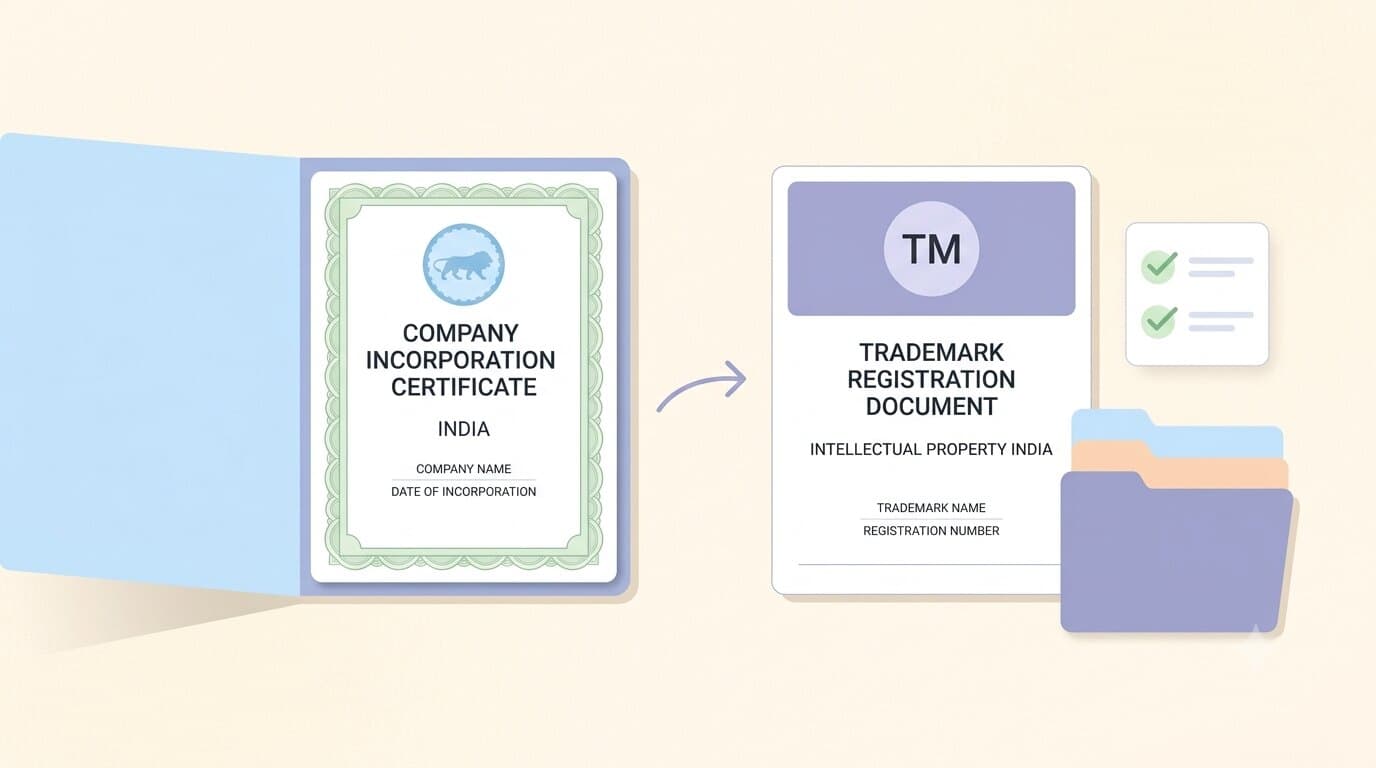
The Private Limited Company route, incorporated through the SPICe+ portal of the Ministry of Corporate Affairs, offers full operational control, clear IP ownership, the ability to issue employee stock options under the Companies Act, and a well-established legal framework for future transitions — whether that is converting to a public company, transferring the GCC to a third party, or absorbing it into a larger India holding structure.
Step 3: The Online Company Registration Process — SPICe+ Filing on MCA
The India online company registration process for a GCC runs through the SPICe+ (Simplified Proforma for Incorporating Company Electronically Plus) portal. This is the single integrated form for name reservation, company incorporation, PAN, TAN, GSTIN, EPFO, ESIC, and Shops & Establishments registration — all in one filing.
The sequence runs as follows. First, each foreign director of the proposed company must obtain a Director Identification Number (DIN) and a Class 3 Digital Signature Certificate (DSC). For foreign nationals, this requires notarised and apostilled identity documents from their country of residence. Second, the proposed company name is reserved through the RUN (Reserve Unique Name) system — names that exactly match existing registered companies or registered trademarks will be rejected outright. Third, the SPICe+ form is filed with the Memorandum of Association (MOA) and Articles of Association (AOA), which define the company's permitted business activities and governance structure. Fourth, within 30 days of the Certificate of Incorporation being issued, the company must file the Commencement of Business declaration (Form INC-20A) with evidence that the paid-up share capital has been received in the company's Indian bank account.
The full registration process from DSC procurement to Certificate of Incorporation takes 10 to 15 working days when all documents are in order. Where any foreign director or shareholder is involved, allow an additional 2 to 3 weeks for notarisation and apostille of overseas documents.
Step 4: FEMA Compliance — The Filing Timeline Foreign Companies Most Often Miss
Every GCC set up by a foreign parent is, by definition, a recipient of Foreign Direct Investment. FEMA compliance is not optional — it is a mandatory parallel track that runs alongside the company incorporation process.
The critical filing sequence is this. Within 30 days of receiving the initial share subscription amount from the foreign parent in the Indian company's bank account, the Indian company must file Form FC-GPR (Foreign Currency — Gross Provisional Return) with the Reserve Bank of India through the FIRMS portal. This is the primary FDI reporting document. Missing the 30-day window constitutes a FEMA violation and attracts the Late Submission Fee — a minimum of Rs.7,500 per delayed return, scaling up with the value of the FDI and the length of delay.
Each year thereafter, by July 15, the Indian company must file the FLA (Foreign Liabilities and Assets) Return with RBI's FLAIR portal. This discloses the outstanding FDI position — paid-up capital, loans from the foreign parent, and any financial guarantees given by the parent. The FLA return is entirely separate from income tax and ROC filings and is frequently missed by GCCs that rely on their auditor for tax compliance but have no dedicated FEMA advisor. Missing FLA returns in consecutive years compounds the regularisation difficulty significantly.
Step 5: Transfer Pricing — Set the Architecture Before Day One of Operations
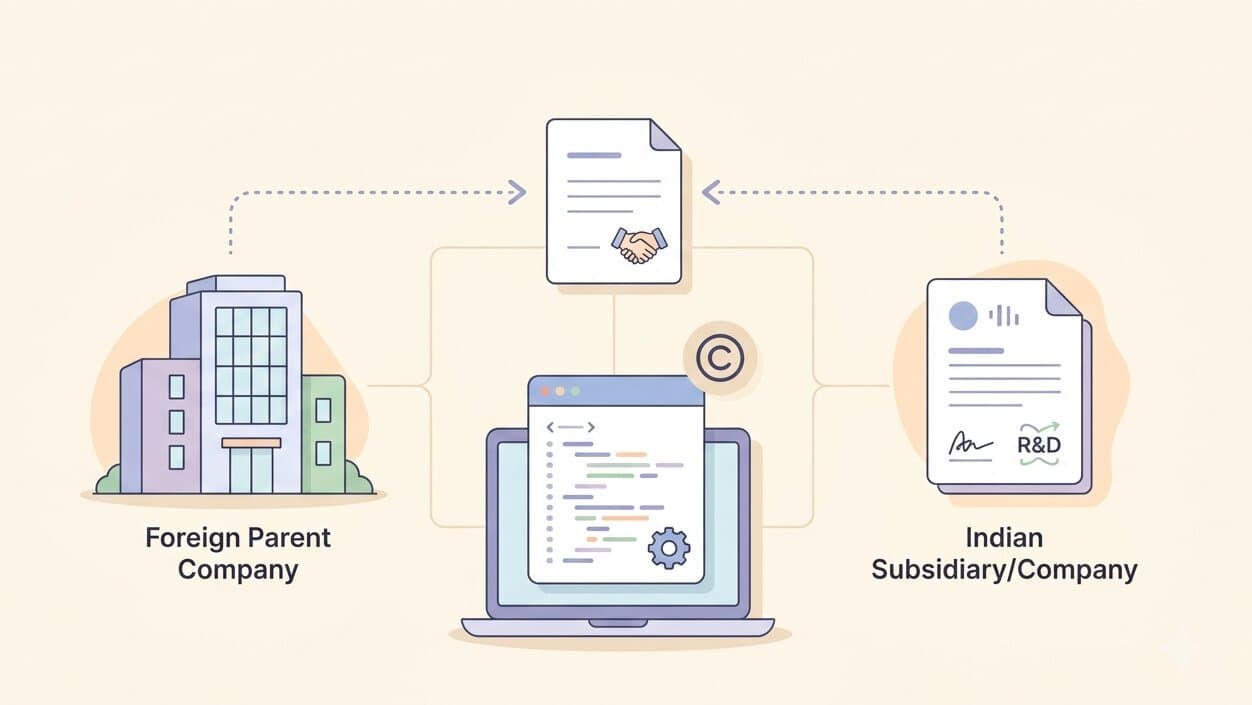
Transfer pricing is not a year-end compliance task. It is a structural decision that must be made before the first service invoice is raised between the Indian GCC and its foreign parent.
Under Sections 92 to 92F of the Income Tax Act, every transaction between the Indian GCC and any associated enterprise — including the foreign parent, sibling entities, or group companies — must be conducted at arm's length price. The Indian GCC typically provides services to the foreign parent and charges a mark-up on its cost base. The Transactional Net Margin Method (TNMM) is the most commonly used methodology, benchmarking the GCC's operating margin against comparable independent service companies in India.
The expanded Safe Harbour Rules, updated in 2025–26, offer GCCs with eligible IT and ITES services a simplified arm's length margin of 15.5% on operating costs, removing the requirement for a detailed benchmarking study where the GCC qualifies. For GCCs with more than Rs.1 crore in aggregate international transactions annually — which includes virtually every GCC from the first year of operations — Form 3CEB (Transfer Pricing Audit Certificate from a Chartered Accountant) must be filed with the income tax return by November 30 each year.
For GCCs expecting significant revenue from the foreign parent in the first three years, an Advance Pricing Agreement (APA) with the CBDT provides certainty on the transfer pricing methodology for up to five years, with a possible rollback of four prior years. An APA eliminates the risk of large transfer pricing additions and protracted litigation, which has historically been one of the biggest areas of tax dispute for GCCs in India.
Step 6: Data Compliance Under the DPDP Act 2023 — Not Optional for 2026
Every GCC that processes personal data of any individual — employees, customers of the foreign parent, or third-party data subjects — is subject to the Digital Personal Data Protection (DPDP) Act 2023 and the notified DPDP Rules 2025. This applies regardless of whether the data relates to Indian residents or foreign nationals processed within India.
The DPDP Act requires the GCC to have a lawful basis (consent or legitimate use) for every category of personal data it processes, maintain a Data Processing Agreement with its foreign parent covering cross-border data transfers, implement a mechanism for individuals to exercise access and erasure rights, and appoint a Data Protection Officer where required under the notified Rules.
For GCCs handling health data, financial data, or children's data — which includes many banking, insurance, and healthcare GCCs — additional consent and security requirements apply. The penalty for data breaches under the DPDP Act can reach Rs. 250 crore per violation. Build the compliance architecture into the GCC's initial operating framework, not as a retrofit after the first audit.
Step 7: State Selection and Single Window Clearance
The state you choose for your GCC has a greater impact on long-term operating costs than almost any other structural decision. Karnataka, Telangana, Tamil Nadu, Haryana, and Maharashtra each offer dedicated GCC policies (2025–26), including employment subsidies, electricity duty exemptions, real estate incentives, and capital investment support. If you're evaluating locations, our guide to the best states for business in India compares incentives, infrastructure, and sector-specific advantages to help you choose the right state.
Telangana's TS-iPASS system — a statutory single-window clearance mechanism — remains the benchmark for regulatory speed, guaranteeing all operating licences and clearances within 15 days by law, with automatic deemed approval if departments fail to respond. Karnataka's GCC incentive policy introduced in 2025 includes equity-free grants for GCCs establishing innovation labs and patent cost reimbursements for IP filed from Indian GCC entities.
For the single-window clearance process, every Indian state now operates a de jure online portal. In practice, the speed of statutory clearances — particularly Consent to Establish and Consent to Operate under the Air and Water Acts — varies significantly. Telangana and Gujarat are the two states that consistently execute within statutory timelines, while other states may take 60 to 120 days for the same approvals.
The most common mistake US firms make is defaulting to Bengaluru without modelling the full cost stack. Hyderabad in Telangana offers Grade A tech park real estate at Rs.75–105 per sq ft per month versus Rs.100–140 in Bengaluru, equivalent talent depth in most technology functions, and materially faster regulatory clearances. The talent pool for AI, ML, data science, and enterprise software is now effectively interchangeable between the two cities for most GCC mandates.
Step 8: The Annual Compliance Calendar — What Your GCC Must File Every Year
Once operational, a GCC incorporated as a Private Limited Company carries the following mandatory annual compliance obligations.
With the Registrar of Companies: Annual Return in Form MGT-7A or MGT-7, Financial Statements in Form AOC-4, and Board Meeting minutes maintained as per the Companies Act. The statutory audit must be completed by a ICAI-registered Chartered Accountant and the annual report filed within 60 days of the AGM.
With the Income Tax Department: Corporate income tax return by October 31 for non-audit entities and November 30 for audit-required entities. Transfer Pricing return in Form 3CEB by November 30 where applicable. Advance tax payments quarterly: June 15, September 15, December 15, and March 15.
With the RBI: FLA Return by July 15 annually on the FLAIR portal.
With GST authorities: Monthly or quarterly GSTR-1 (outward supplies) and GSTR-3B (summary return). For GCCs providing export-of-services to the foreign parent — which is the typical structure — the services are zero-rated, meaning no GST is charged on the intercompany invoice but GST paid on Indian input costs can be claimed as a refund. This refund mechanism requires a separate application process and typically takes 30 to 90 days per cycle.
The Legal and Tax Checklist — In Order
Before operations begin: Choose GCC vs GIC structure. Incorporate as Private Limited Company via SPICe+ on MCA portal. Obtain DIN and DSC for all directors. Reserve company name via RUN. File Memorandum and Articles of Association. Receive Certificate of Incorporation. File Form INC-20A within 30 days of capital receipt. File Form FC-GPR with RBI within 30 days of receiving FDI. Set intercompany service agreement and transfer pricing methodology. Register for GST. Register under applicable State Shops and Establishments Act. Obtain Consent to Establish from State Pollution Control Board if applicable. Implement DPDP Act compliance framework and Data Processing Agreement.
Every year: File FLA Return with RBI by July 15. File Transfer Pricing audit in Form 3CEB by November 30. File corporate income tax return by October 31 or November 30. File annual return and financial statements with ROC. Pay advance tax on schedule. File monthly GST returns and apply for export-of-services refunds quarterly.
The One Decision Most GCCs Get Wrong
The most consequential and most frequently mishandled decision in GCC setup is not the state selection or the entity choice — it is the intercompany service agreement and transfer pricing structure. Companies that do not establish a written, arm's length intercompany agreement before the first invoice is raised between the GCC and its parent are exposed to transfer pricing additions, PE risk, and potential disallowance of expenses in both jurisdictions. This is not a back-office compliance task. It is a Day 1 legal and tax architecture decision that determines your GCC's audit risk profile for the entire life of the entity.
Accorp Partners' India incorporation and GCC advisory team works with US, UK, and Singapore companies at every stage of this process — from pre-incorporation structure review through SPICe+ filing, FEMA compliance, transfer pricing setup, and ongoing annual compliance. More at accorppartners.com/services/incorporation/india-incorporation.
Learn More- https://accorppartners.com/services/incorporation/india-incorporation
Frequently Asked Questions
Q: What is the fastest way to register a company in India for a GCC?
File through the SPICe+ portal on the MCA website. With all documents ready, registration takes 10 to 15 working days.
Q: Does a GCC in India need to comply with transfer pricing rules?
Yes — every transaction between the Indian GCC and its foreign parent must be at arm's length. Form 3CEB must be filed annually where international transactions exceed Rs.1 crore.
Q: Can a US company own 100% of an Indian GCC?
Yes. 100% FDI is permitted in most GCC-relevant sectors under the automatic route. No government approval is required.