.svg)
.svg)
.svg)
NBFC or Fintech Registration in India: Why "Incorporate First, License Later" Doesn't Work
RBI NBFC registration must come before lending in India. Explore the ₹10 crore capital rule, licensing timeline, penalties, and compliant alternatives.

Accorp Compliance Team
Our team of compliance experts specializes in PCI DSS, SOC 2, and other security frameworks to help businesses achieve and maintain compliance.
A fintech founder completes private limited company registration in India, gets the Certificate of Incorporation within the usual week or two, and starts building the lending product immediately — onboarding borrowers, disbursing small loans, running the whole thing through the freshly incorporated entity. Eight months later, someone finally asks the question that should have come first: does this company actually have RBI's Certificate of Registration to operate as a Non-Banking Financial Company? It doesn't. And under Section 45-IA of the RBI Act, that gap isn't a paperwork delay — it's a criminal offence, carrying up to five years' imprisonment and fines reaching ₹25 crore.
This is a genuinely common sequencing mistake, and it's worth understanding exactly why incorporation and NBFC licensing can't be treated as a "do the easy part now, sort the license out later" two-step.
The Assumption That Gets Founders Into Trouble
The mistake almost always starts with a reasonable-sounding assumption: once a company exists legally, it can do whatever its business plan says it will do, and licenses are just administrative formalities that catch up eventually. That logic holds for most businesses going through how to open a company in India — a services company, an e-commerce brand, a SaaS product can typically start operating the day the Certificate of Incorporation is issued. Financial services businesses are the deliberate exception. Under Section 45-IA, no NBFC can commence or carry on the business of a non-banking financial institution without first obtaining a Certificate of Registration from the RBI — meaning the license isn't something you get around to after the business is already running. It's the precondition for the business existing at all, in a legal sense.
What Incorporation Actually Gets You — And What It Doesn't
Completing online registration of company formalities for a proposed NBFC gets you a legal entity — a Private Limited or Public Limited Company under the Companies Act, with a Certificate of Incorporation, a PAN, and the ability to open a bank account. What it does not get you is the right to lend, invest as a core business, or engage in any activity that RBI classifies as non-banking financial business. The company can exist, hold capital, and prepare for licensing. It cannot actually do the thing it was built to do until the Certificate of Registration lands — and that gap between "legally incorporated" and "legally licensed" is exactly where founders get into trouble, either through impatience or genuine misunderstanding of the sequencing.
The ₹10 Crore Wall Standing Between Incorporation and Application
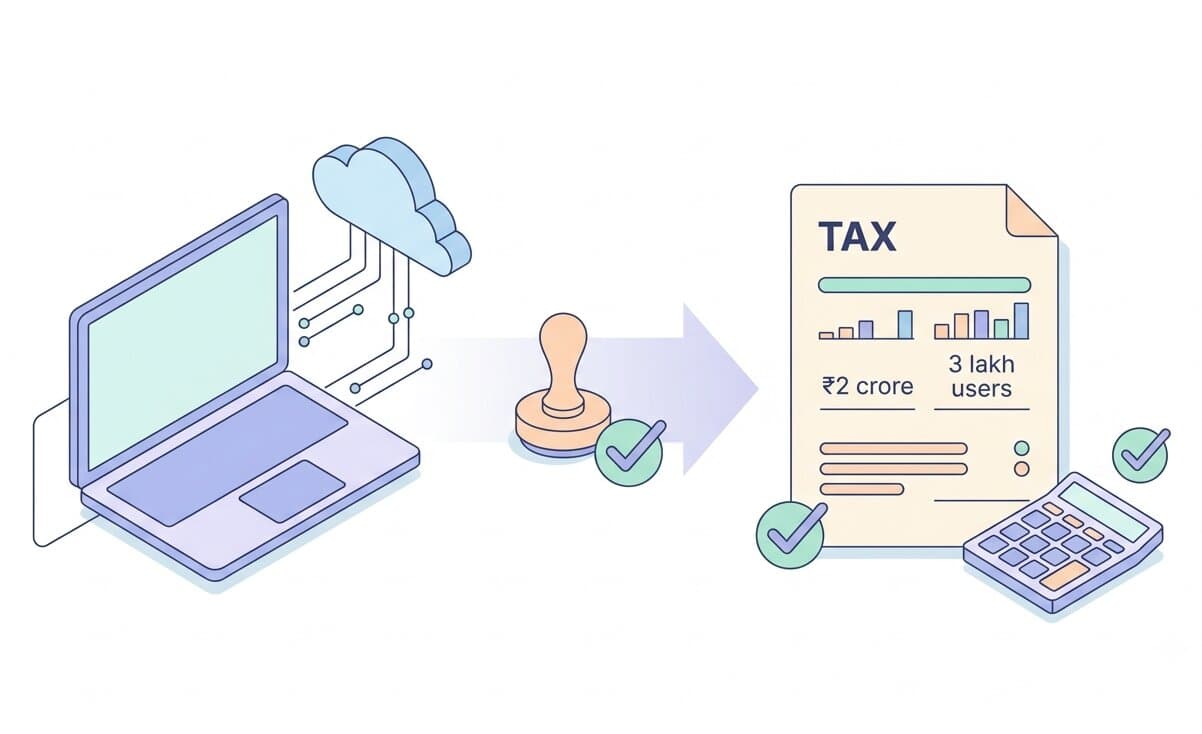
Even before RBI reviews anything, there's a capital threshold that has to be cleared. The minimum Net Owned Fund requirement for a new NBFC is ₹10 crore, raised from the earlier ₹2 crore threshold effective October 2022 for new applicants. This isn't a target to work toward after licensing — it has to be infused as paid-up equity capital and sitting, unencumbered, in the company's bank account before the application is even filed, backed by a banker's certificate confirming the funds are free of any lien, alongside a statutory auditor's certificate verifying the NOF computation.
For founders who assumed they could incorporate lean and raise the capital progressively as the business grew, this is often the first real wall they hit — a serious founder considering NBFC registration needs to have this capital committed and ready essentially before the process meaningfully begins, not as a later milestone.
Why the MoA's Objects Clause Isn't Boilerplate
A detail that trips up companies that incorporated without NBFC registration specifically in mind from day one: the Memorandum of Association's objects clause has to explicitly include financial services activities — lending, investing, borrowing, dealing in financial instruments — for the entity to be a credible NBFC applicant. A company incorporated with generic, broad objects clauses, or ones written for a different business model that later pivots toward lending, often needs to amend its MoA before RBI will even consider the application seriously. This is a fixable problem, but it's an entirely avoidable delay if the incorporation itself is planned with the NBFC application already in mind, rather than treating company formation and licensing strategy as separate workstreams handled by different people at different times.
What the Actual Timeline Looks Like, Realistically
This is where the "license later" assumption really falls apart. Company incorporation and documentation preparation alone typically takes four to eight weeks. RBI's own review of a complete application through the COSMOS portal — the mandatory online system for all new NBFC applications, with no walk-in or email submission accepted anymore — commonly runs three to six months on top of that, and can extend further if the application triggers additional clarification requests. Taken together, a realistic end-to-end timeline from initial planning to actually holding a Certificate of Registration runs somewhere between eight and fourteen months.
For a founder who incorporated assuming they'd be lending within weeks, that's not a minor miscalculation — it's the difference between a functioning business and a company sitting idle, fully incorporated and fully capitalised, unable to legally do anything with either.
What Happens If a Company Operates Without the Certificate of Registration
The consequences here are genuinely serious, not a slap-on-the-wrist compliance technicality. Operating financial services that qualify as NBFC activity without a valid Certificate of Registration is a criminal offence under Section 45-IA, carrying imprisonment up to five years and fines up to ₹25 crore. Beyond the criminal exposure, RBI has the power to direct banks to freeze the company's accounts, issue cease-and-desist orders, and publicly name unauthorised entities — and enforcement against unregistered lenders and digital lending platforms operating outside proper licensing intensified noticeably through 2024 and 2025. A founder who quietly kept lending through the licensing gap, assuming the paperwork would eventually catch up, is now dealing with an active enforcement environment where that gap gets noticed and acted on, not overlooked.
The Alternative Most Founders Overlook: Partnering Instead of Becoming
Not every fintech idea actually requires becoming an NBFC. A meaningful share of lending-adjacent businesses operate as loan service providers or lending service providers, originating and servicing loans on behalf of an already-licensed NBFC or bank partner, rather than holding the balance sheet and regulatory license themselves. This model sidesteps the ₹10 crore capital requirement and the eight-to-fourteen-month licensing timeline entirely, at the cost of sharing economics and operating within the licensed partner's regulatory framework. For an early-stage fintech testing a lending model before committing to the full capital and compliance weight of becoming a licensed NBFC, this partnership route is worth genuinely evaluating before defaulting to "we'll incorporate and get licensed."
Can Foreign Founders and NRIs Actually Register an NBFC in India?
Yes — NRIs and foreign nationals can invest in and promote an NBFC in India, though any foreign investment involved has to comply fully with FEMA alongside the RBI licensing requirements. This adds a genuine layer of complexity for anyone approaching this from abroad: the standard question of how to register a company in India remotely already involves resident director requirements and FEMA-compliant capital inflow reporting, and layering NBFC licensing on top means coordinating company law compliance, FEMA reporting, and RBI's separate financial-sector licensing process simultaneously, rather than treating them as sequential, unrelated steps.
Building the Sequencing Correctly From the Start
The single biggest lesson in all of this: how to register a business in India for a financial services model isn't a two-step process where incorporation happens first and licensing gets figured out afterward. It's one integrated plan where the objects clause, the capital structure, the entity type, and the RBI application all need to be designed together from the outset, because the incorporation itself needs to already anticipate what the NBFC application will require. Founders who treat these as separate, sequential projects — get incorporated now, worry about RBI later — are the ones who end up with a fully formed company that legally can't operate for the better part of a year, or worse, one that starts operating anyway and walks into the exact enforcement exposure Section 45-IA was written to catch.
Accorp Partners works with fintech founders through exactly this integrated planning — structuring incorporation, capital infusion, and MoA drafting specifically around what RBI's NBFC licensing process requires, so the entity that comes out of register company remotely India procedures is actually positioned to clear the Certificate of Registration application on the first attempt, rather than discovering months in that the two processes were never aligned to begin with.