.svg)
.svg)
.svg)
Single Window Clearance for Foreign Companies in India — What's Actually Available Now
National Single Window System (NSWS) streamlines business approvals in India. Explore its coverage, benefits, limitations, and setup process.

Accorp Compliance Team
Our team of compliance experts specializes in PCI DSS, SOC 2, and other security frameworks to help businesses achieve and maintain compliance.
Every foreign company that has tried to set up in India knows the feeling. You incorporate the company through MCA. You file with the RBI. You register for GST. You apply for an environment clearance, an industrial licence, a state-specific labour registration. Each one lives on a different portal, managed by a different department, with a different login and a different document set. You are not navigating one system — you are navigating twelve.
The Indian government has been aware of this friction for years. The answer, in policy terms, is the National Single Window System — usually referred to as NSWS. The question most foreign companies and their advisors are now asking is a practical one: what does it actually cover, who can use it, and how much of the clearance problem has it actually solved?
This blog gives you the honest, current answer — based on what the NSWS portal covers as of 2026, how it connects to the existing India incorporation process, and where the gaps still are.
WHAT IS THE NATIONAL SINGLE WINDOW SYSTEM
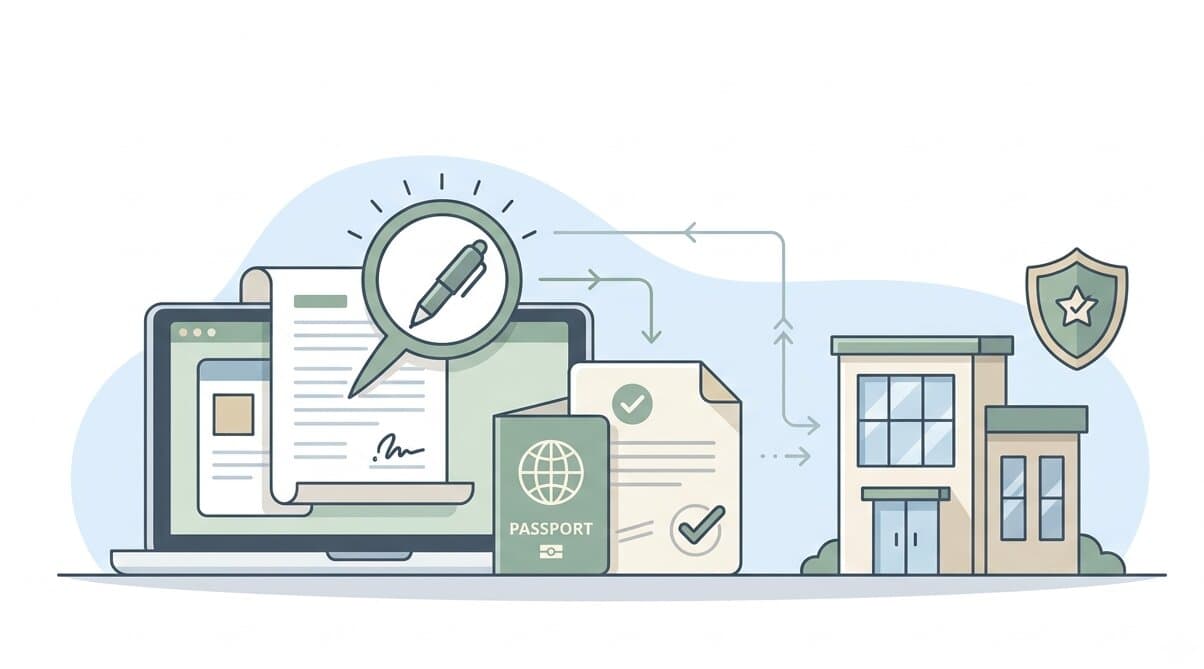
The National Single Window System was launched in September 2021 by the Ministry of Commerce and Industry under the Department for Promotion of Industry and Internal Trade (DPIIT). It is a digital platform designed to do one thing: allow businesses to identify, apply for, and track regulatory approvals in India through a single unified interface — without having to visit multiple government portals, ministries, or state offices separately.
Invest India — the government's national investment promotion agency — manages the NSWS under the guidance of DPIIT. The platform is available at nsws.gov.in.
As of 2026, the NSWS hosts applications for approvals from 32 central departments and 34 state governments. The Know Your Approvals (KYA) module — the portal's most practically useful feature — covers guidance from 32 central departments and 35 states, providing an intelligent questionnaire that identifies which approvals a proposed business activity will require before any application is filed.
That is a substantial coverage footprint. The question is what it means in practice for a foreign company doing company formation in India.
HOW THE NSWS WORKS — STEP BY STEP
The NSWS has three distinct functions that are worth understanding separately.
Know Your Approvals (KYA)
This is the starting point and arguably the most valuable feature for a foreign company or its Indian team in the early planning stage. The KYA module presents an intelligent questionnaire. You input your business activity, sector, location, and proposed operations — and the system generates an indicative list of central and state approvals that may be required.
This is not a comprehensive legal opinion. The NSWS itself notes that the KYA module is for guidance purposes and may not capture every approval required. But for a foreign company that has never operated in India, the KYA output gives an immediate map of the regulatory landscape — which ministries are involved, which state departments need to be approached, and what class of clearances (pre-establishment versus pre-operation) apply to the proposed business.
Single Application Interface
Once the KYA exercise is complete, the applicant can file applications for approvals that are live on the NSWS directly through the portal. The platform provides a single applicant dashboard where documents uploaded once can be used across multiple applications — eliminating the duplication of submitting the same corporate documents, director IDs, and address proofs to each department separately.
Real-Time Status Tracking
Every application filed through the NSWS can be tracked in real time through the applicant dashboard. The status of approval, queries raised by the department, and any rectifications required are visible in one place — rather than requiring the applicant to log into each department's portal separately to check progress.
PAN is now the master business identifier on the NSWS. All entities — companies, LLPs, and individuals — must verify their PAN before accessing the approval application functions, aligning the system with the broader government push toward a single business user ID.
WHAT APPROVALS ARE ACTUALLY AVAILABLE ON NSWS RIGHT NOW
This is the section most guides skip — and it is the most important one for a foreign company planning India incorporation or expansion.
The NSWS currently covers a wide but not exhaustive range of central approvals. The live categories as of 2026 include:
Industrial approvals — The Industrial Entrepreneur Memorandum (IEM Part A and Part B) for industrial undertakings can now be filed directly through NSWS. This is relevant for foreign manufacturers setting up production facilities in India.
Environment and Forest clearances — Environment Impact Assessment related applications routed through the Ministry of Environment, Forest and Climate Change are accessible through NSWS for applicable project categories.
Import Export Code — IEC registration through DGFT is covered on the platform, which is relevant for foreign companies engaged in goods trade.
FSSAI licence — Food safety licences under the Food Safety and Standards Authority of India are accessible, relevant for food and nutrition companies.
Sector-specific licences — Licences across fisheries, animal husbandry, consumer affairs, and food distribution are hosted on the portal.
Government incentive schemes — The NSWS also facilitates applications for government incentive schemes including programmes under the national green hydrogen mission, ethanol blending, solar module manufacturing, and vehicle scrapping, though the current list of live scheme applications is limited to five categories.
State approvals — 34 state governments have onboarded their approval processes to varying degrees. This means a foreign company can apply for certain state-level factory registrations, pollution control board clearances, and shop and establishment registrations through NSWS depending on the state and sector.
What is not yet on NSWS: It is important to be direct about the limits. The NSWS does not handle company incorporation itself — that remains with the MCA through the SPICe+ process. It does not cover RBI filings for FDI reporting, FEMA compliance, or transfer pricing documentation — those remain separate. Telecom licences under the Department of Telecommunications are currently suspended from new applications. And the depth of state integration varies enormously — some states have deeply integrated their approval systems while others have onboarded a limited subset of approvals.
THE RELATIONSHIP BETWEEN NSWS AND THE INDIA INCORPORATION PROCESS
For a foreign company going through India online company registration, the NSWS and the MCA portal are two separate systems — and understanding how they connect is critical to sequencing the setup process correctly.
Company formation in India happens through the SPICe+ form on the MCA21 portal (www.mca.gov.in). The SPICe+ form handles name reservation, director identification numbers, incorporation filings, and the simultaneous issue of PAN, TAN, EPFO registration, ESIC registration, and GST registration in a single integrated filing. This is a significant consolidation in itself — what once required six separate applications now happens in one.
The NSWS sits above and alongside this. Once a company is incorporated and has its PAN, it can register on NSWS and begin using the KYA module to identify what additional sector-specific and state-level approvals are needed before operations can begin.
The practical sequence for a foreign company doing online registration of company in India is:
First — Use NSWS's KYA module before incorporation to identify the full approval landscape for your proposed business. This informs the timeline and resource planning.
Second — Complete company incorporation through SPICe+ on MCA, which issues PAN automatically.
Third — Register on NSWS using the company PAN and begin filing applications for the sector-specific and state approvals identified in step one.
Fourth — Run FEMA and RBI compliance filings separately through your AD Bank and the FIRMS portal — these are not on NSWS.
This sequencing prevents the most common bottleneck: companies that complete incorporation and then discover they need multiple additional clearances before they can legally operate, causing weeks of delay between legal entity formation and actual commencement of business.
THE SEMICONDUCTOR SINGLE WINDOW — A SEPARATE TRACK
It is worth noting that the NSWS is not the only single window initiative active in India right now. In February 2026, the Ministry of Electronics and IT announced a dedicated single window clearance portal specifically for vendors of semiconductor manufacturing units — designed to address the specific friction that foreign companies from Japan, Singapore, Malaysia, and Europe were experiencing when trying to supply equipment, gases, and materials to semiconductor facilities in India.
This semiconductor-specific portal is separate from NSWS and is being developed under the India Semiconductor Mission. It is targeted at a narrow and specific set of companies — those supplying into India's semiconductor manufacturing ecosystem — but it signals the government's direction: sector-specific single windows being developed in parallel with the horizontal NSWS platform.
For foreign companies in electronics manufacturing, semiconductor supply chains, or advanced materials, this is a parallel track worth tracking.
WHAT STILL NEEDS TO HAPPEN
The honest assessment of where NSWS stands in 2026 is this: it is a genuine and functioning platform that meaningfully reduces the information-gathering friction for businesses entering India. The KYA module alone saves days of research. The single applicant dashboard and real-time tracking add real value once applications are filed.
But it is not yet the complete single window that the government envisions. Company incorporation, RBI and FEMA compliance, SEBI-related filings, and sector regulators like IFSCA remain outside the NSWS. The depth of state integration is uneven. And for complex foreign company setups — particularly those involving FDI approvals under the government route, industrial licensing in sensitive sectors, or multi-state operations — NSWS covers part of the picture, not all of it.
For a foreign company evaluating India incorporation, the right approach is to use NSWS as a planning and application tool for what it covers, while maintaining a parallel track for MCA incorporation, FEMA compliance, and any sector-specific regulatory requirements that sit outside the portal.
HOW ACCORP PARTNERS HELPS FOREIGN COMPANIES NAVIGATE THIS
The challenge for most foreign companies is not that the NSWS is too complex — it is that knowing what the NSWS covers, what it does not, and how to sequence the parallel compliance tracks is where the mistakes happen.
Accorp Partners helps foreign companies navigate the full India entry stack: company formation in India through SPICe+, FDI reporting and FEMA compliance through the AD Bank and FIRMS portal, and coordination of sector-specific approvals through NSWS and standalone regulatory processes where NSWS does not apply.
For foreign companies planning India incorporation in 2026 — whether through a Wholly Owned Subsidiary, a Branch Office, or a Liaison Office — Accorp Partners' services are available here:
https://accorppartners.com/services/incorporation/india-incorporation
Frequently Asked Questions
Q: Does the National Single Window System replace the MCA SPICe+ process for company registration in India?
A: No. Company incorporation in India is still done through the SPICe+ form on the MCA21 portal. NSWS is a separate platform for identifying and applying for regulatory approvals and licences needed after or alongside incorporation — such as environment clearances, industrial licences, food safety licences, and state-level permits. The two systems are complementary, not substitutes.
Q: Can a foreign company with no Indian entity yet use the NSWS?
A: The KYA (Know Your Approvals) module on NSWS can be used at the pre-incorporation stage to identify what approvals will be needed — no Indian entity is required for this. For filing applications, the applicant needs a PAN, which is issued as part of the SPICe+ incorporation process. So effectively, NSWS application filing begins after incorporation.
Q: Does NSWS cover FEMA and RBI filings for foreign direct investment?
A: No. FEMA compliance — including FC-GPR filings after share allotment, FLA returns, and ODI reporting — is handled separately through the RBI's FIRMS portal and the company's Authorised Dealer bank. These are not part of NSWS.