.svg)
.svg)
.svg)
What Is Form 10F and Why Foreign Companies Need It Before Getting Paid in India
Set up your GCC in India with this legal and tax checklist covering incorporation, FEMA, transfer pricing, DPDP, state incentives, and compliance.

Accorp Compliance Team
Our team of compliance experts specializes in PCI DSS, SOC 2, and other security frameworks to help businesses achieve and maintain compliance.
If your company is based in the US, UK, Singapore, UAE, or any country that has a tax treaty with India, and you receive any payment from an Indian client — royalties, fees for technical services, interest, dividends, software licensing income, consulting fees — there is a document you must file before that payment is processed. Not after. Not at year-end. Before the payment.
Without it, your Indian client is legally required to deduct Tax Deducted at Source (TDS) at the full domestic Indian rate — typically 20% to 30% of every payment — regardless of what your tax treaty says. Getting that money back requires filing an Indian income tax return, waiting 6 to 18 months for a refund, and navigating a refund process in a tax jurisdiction where your company may have no existing compliance infrastructure.
The document that prevents all of this is Form 10F. And from April 1, 2026, it has a new name.
What Has Changed in 2026 — Form 10F Is Now Form 41
This is the update most guides have not yet caught up with. India's new Income Tax Act 2025 came into force on April 1, 2026, replacing the Income Tax Act 1961 that had governed Indian taxation for over six decades. With the new Act came a new form: Form 41, which replaces Form 10F entirely.
The purpose is identical. A foreign company or non-resident individual earning income from India files this form to declare their tax residency status and claim the reduced withholding tax rate available under the applicable Double Taxation Avoidance Agreement (DTAA) between India and their country of residence. But the form number, the legal sections it references, and the assessment year labelling have all changed.
If your team has been auto-renewing Form 10F every year through your Indian tax advisor, that process needs to be updated. A Form 10F filed under the old Act does not cover Tax Year 2026-27 under the new Act. These are different documents filed under different laws. The current requirement is Form 41, and it must be filed on the income tax portal for each Tax Year, which now runs April 1 to March 31 with no separate "Assessment Year" — a simplification the new Act introduced.
Throughout this article, both terms are used because most companies still know the document as Form 10F, and the underlying purpose, documentation requirements, and compliance consequences remain the same. What changed is the form number, the portal process, and the legal basis.
What DTAA Is and Why It Matters When Your Indian Client Pays You
A Double Taxation Avoidance Agreement (DTAA) is a bilateral tax treaty between two countries that determines which country has the right to tax a specific type of income, and at what rate. India has comprehensive DTAAs with over 90 countries, including the United States, United Kingdom, Singapore, Germany, Japan, UAE, Australia, Canada, and the Netherlands.
These treaties exist because without them, the same income would face taxation twice — once in India when the payment is made, and again in your home country when you declare that income. The DTAA eliminates or substantially reduces this double burden by capping the Indian withholding tax at a treaty-specified rate, which is almost always lower than India's domestic rate.
Under India's domestic Income Tax Act, the default TDS rate on royalties and fees for technical services paid to a foreign company is 20% plus surcharge and cess — an effective rate of approximately 20.8% to 21.5% depending on the surcharge applicable. Under the India-US DTAA, that rate is capped at 15% on royalties and 15% on fees for technical services. Under the India-UK DTAA, the rate on royalties can be as low as 10%. Under the India-Singapore DTAA, fees for technical services are taxed at 10%.
The gap between the domestic rate and the treaty rate is the cash your business is entitled to keep on every payment from India. On a USD 100,000 invoice, the difference between a 20.8% domestic deduction and a 10% treaty deduction is USD 10,800 — per invoice, per year.
You do not receive that treaty rate automatically. You must claim it, and claiming it requires Form 41 (formerly Form 10F) filed before the payment is processed.
Who Must File Form 41 (the Replacement for Form 10F)
Any non-resident — individual or entity — that earns income from India and wants to claim a reduced or nil TDS rate under an applicable DTAA must file Form 41 for the relevant Tax Year. This includes:
US, UK, Singapore, or UAE companies receiving royalties, licensing fees, software fees, or subscription revenue from Indian clients. Foreign companies providing consulting, technical advisory, engineering, or management services to Indian entities and billing from outside India. NRIs receiving interest from NRO accounts, dividend income from Indian shares, or rent from Indian property. Foreign individuals or entities earning commission, referral fees, or platform revenue from Indian businesses.
The obligation is triggered by any India-sourced income where a DTAA rate is being claimed — not by the size of the income or the frequency of payments.
The Complete Document Stack — What You Need Before Your Indian Client Pays You
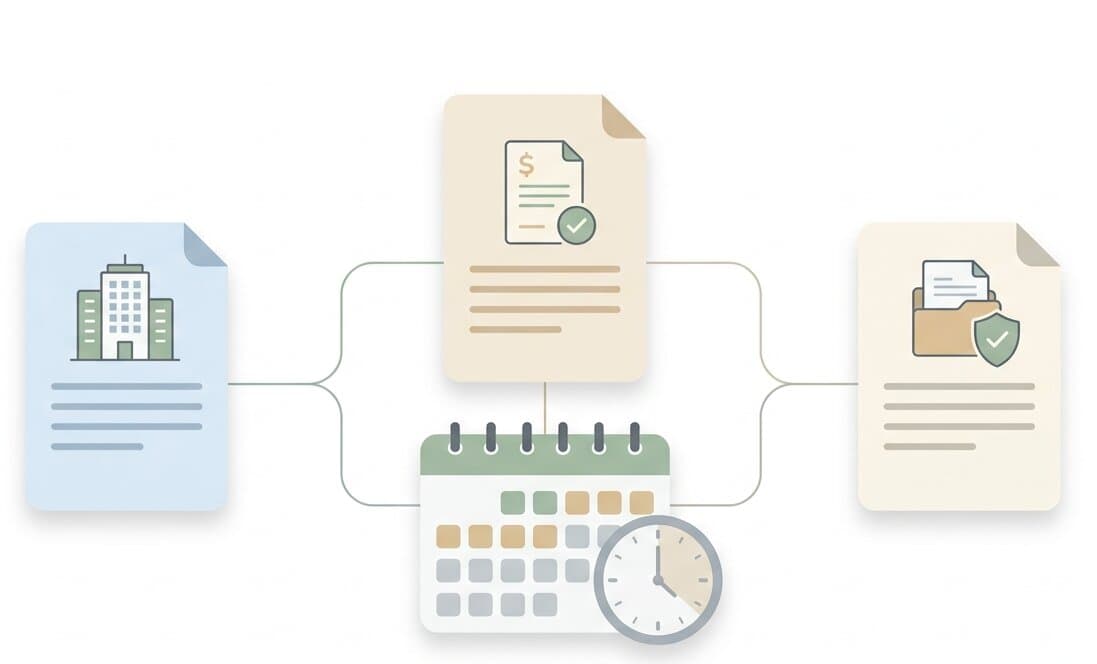
The form itself is one piece of a four-document compliance package that must be in place before your Indian client processes your invoice. Each document serves a distinct purpose and missing any one of them breaks the treaty claim.
Tax Residency Certificate (TRC): Issued by your home country's tax authority — the IRS for US companies, HMRC for UK companies, IRAS for Singapore companies. It certifies that you are a tax resident of that country for the relevant tax period. India's tax authorities require a current TRC that covers the Tax Year in which the payment is being made. This is a fresh certificate issued by your home authority, typically valid for one year. A common trap: if your TRC is issued on a calendar-year basis (January to December) and the Indian Tax Year runs April to March, a single TRC may not cover the full Indian Tax Year. A TRC for January to December 2026 covers only up to December 2026. You may need a second TRC for January to March 2027 for the same Indian Tax Year.
Form 41 (formerly Form 10F): Filed electronically on India's income tax e-filing portal. It contains the supplementary information that the TRC sometimes does not capture in the format the Indian tax authority requires: the foreign company's tax identification number in its home country, its legal status and constitution, its address of residence, and the period for which the TRC is valid. If the TRC already contains all of this information in the required format, Form 41 may technically not be required — but in practice, filing it anyway is the safest approach and avoids disputes with the Indian payer's TDS officer.
PAN (Permanent Account Number) — or Foreign TIN registration: A PAN is the Indian taxpayer identification number. Without a PAN, Section 206AA of the Income Tax Act mandates TDS deduction at 20% regardless of the treaty — meaning the DTAA benefit is lost by default. Foreign companies that regularly receive income from India should obtain an Indian PAN through Form 49AA. Since October 2023, non-residents who genuinely do not need a PAN — for example, those receiving a one-off small payment — can register on the income tax portal as a non-PAN user with their foreign Tax Identification Number and still file Form 41 electronically. But for any company with ongoing India revenue, obtaining an Indian PAN is strongly advisable and avoids the 206AA TDS problem on every payment.
No Permanent Establishment (No PE) Declaration: A separate letter — not a form, but a signed declaration — stating that the foreign company does not have a Permanent Establishment in India as defined under the relevant DTAA. If a foreign company has a PE in India, it becomes taxable on its attributable profits in India as a quasi-resident entity, and the DTAA withholding rates no longer apply to those profits. The Indian payer needs this declaration to satisfy their TDS deduction obligations. It is typically a one-page letter on company letterhead, signed by an authorised representative, and renewed each Tax Year.
The TDS Consequence of Not Filing — Exact Numbers
The penalty for missing Form 41 (Form 10F) is immediate and financial. Your Indian client is legally required to deduct TDS at the domestic Indian rate when no treaty documentation is in place. Under Section 195 of the Income Tax Act, the payer who fails to deduct at the correct rate becomes an "assessee in default" and is personally liable for the shortfall plus interest — which means Indian payers are highly motivated to deduct the maximum rate when documentation is unclear.
Practical example: A UK-based company invoices an Indian client Rs.50 lakh (approximately £48,000) for IT services. The India-UK DTAA caps fees for technical services at 10%. Without Form 41 and TRC in place, the Indian client deducts 20.8% — Rs.10.4 lakh. With Form 41 and TRC filed correctly, the deduction is Rs.5 lakh. The missing documentation costs Rs.5.4 lakh on a single invoice.
Recovering excess TDS requires filing an Indian income tax return, waiting for the Income Tax Department to process the refund — which routinely takes 12 to 24 months — and in some cases, corresponding with the Centralised Processing Centre on refund delays. Claiming the treaty rate upfront through correct documentation is categorically easier and faster than reclaiming it later.
How to File Form 41 (Previously Form 10F) — Step by Step
Log in to the Income Tax e-filing portal at incometax.gov.in using your company's Indian PAN credentials. If the company does not have a PAN, register as a non-resident non-PAN user using your foreign Tax Identification Number, your company's country of incorporation, date of incorporation, and contact details. Navigate to e-File, then Income Tax Forms, then Form 10F (the portal may still show the old name while it is being updated to Form 41 — the underlying submission process is the same). Select the Tax Year for which the filing applies — under the new Act, this is the Tax Year in which the income is received, e.g. Tax Year 2026-27 for income received between April 1, 2026 and March 31, 2027. Complete the form with your company's legal name, country of residence, tax identification number, address, legal constitution, and TRC validity period. Upload your TRC as a supporting document. Submit and download the acknowledgement. Provide copies of the filed Form 41 (or Form 10F), the TRC, your PAN, and the No PE Declaration to your Indian client before the payment is processed.
This entire process, once your portal registration and PAN are in place, takes approximately 30 to 60 minutes. The documentation package is valid for that Tax Year. It must be renewed each April for the following Tax Year.
DTAA Rates at a Glance — What You Can Claim
Under the India-US DTAA: Royalties — 15%. Fees for technical services — 15%. Interest — 15%. Dividends — 15% or 25% depending on shareholding. The domestic rate without treaty is 20.8% to 30% plus surcharge.
Under the India-UK DTAA: Royalties — 10% or 15% depending on type. Fees for technical services — 10% to 15%. Interest — 10% or 15%.
Under the India-Singapore DTAA: Fees for technical services — 10%. Royalties — 10%. Interest — 10% or 15%.
Under the India-UAE DTAA: Royalties and fees for technical services — 10%. Interest — 5% or 12.5%.
These reduced rates are only accessible with a valid Form 41, TRC, PAN, and No PE Declaration on file with the Indian payer before payment. Without the documentation stack, the domestic rate applies automatically.
One Thing That Catches Foreign Companies Every Year
The most common compliance failure is timing. Companies often receive their first invoice payment from India at full TDS deduction and only then begin the paperwork to claim a refund. The correct sequence is the reverse: file Form 41 first, deliver the documentation package to your Indian client, and only then invoice and receive payment at the treaty rate.
For companies with recurring India revenue — monthly or quarterly invoicing to Indian subsidiaries or clients — a single annual Form 41 filing at the start of each Tax Year (April) covers all payments through March 31 of the following year. Set a calendar reminder for the first week of April to renew the documentation, and your India revenue can be received at treaty rates year-round without interruption.
Accorp Partners manages Form 10F and Form 41 compliance, DTAA advisory, Indian PAN registration for foreign companies, and No PE Declaration preparation as part of its US CPA and cross-border tax advisory practice. If your company receives payments from India and you are not certain the correct withholding rate is being applied, contact the team at accorppartners.com for a compliance review.
Frequently Asked Questions
Q: Is Form 10F still valid in 2026?
No. Form 10F under the Income Tax Act 1961 has been replaced by Form 41 under the new Income Tax Act 2025, effective April 1, 2026. File Form 41 for Tax Year 2026-27 onwards.
Q: Can a foreign company file Form 41 without an Indian PAN?
Yes, since October 2023, non-residents can register on the income tax portal with a foreign Tax Identification Number and file without a PAN. However, without a PAN, Section 206AA mandates 20% TDS regardless — so obtaining a PAN is strongly recommended for any company with recurring India income.
Q: Does Form 41 need to be filed every year?
Yes. It is an annual filing, valid for the Tax Year in which it is filed. It must be renewed each April for the new Tax Year.
Q: What happens if my Indian client deducts TDS at the wrong rate?
You must file an Indian income tax return to claim the refund. Refunds typically take 12 to 24 months. This is why filing Form 41 before payment is always preferable to recovering excess TDS after the fact.