How a US Company Sets Up an Indian Subsidiary in 2026: Entity Choice, FEMA and Compliance
Setting up an Indian subsidiary of a US company? Compare entity types, FEMA and FC-GPR rules and the first-year compliance calendar.

Accorp Compliance Team
Our team of compliance experts specializes in PCI DSS, SOC 2, and other security frameworks to help businesses achieve and maintain compliance.
If you are a US company entering India, the usual answer is a private limited company that you own outright. It gives you a separate legal entity, limited liability, the right to hire and invoice locally, and a structure that investors recognise. The part that trips founders up is not incorporation. It is the foreign exchange rules that govern the money you send in, and the tax and filing calendar you take on once the company exists.
This guide is organised around the questions a US CFO or founder actually asks before committing. It covers whether you need a subsidiary at all, which entity fits, how capital can enter India legally, what the tax picture looks like, and what to expect in year one. If you are weighing the whole structure, start with our comparison of an Indian subsidiary of a US company versus the reverse arrangement.
Do You Actually Need a Subsidiary?
Many US companies begin in India with freelancers or an employer-of-record. That is fine for a few hires. It starts to strain when you want a permanent team, an office, local contracts, or credibility with Indian customers.
There is also a tax reason to be deliberate. If people in India habitually negotiate or conclude contracts on behalf of the US company, or the US company effectively runs a fixed place of business there, India may treat the US company as having a permanent establishment and tax its profits directly. A properly structured subsidiary that is paid at arm's length for defined services is the standard way to contain that exposure. Get tax advice on your specific facts before you rely on informal arrangements.
The trade-off is real compliance. A subsidiary means corporate filings, audits, tax returns, transfer pricing and RBI reporting, so budget for ongoing cost and not only setup.
Which Entity Fits a US Parent?
1. Private limited company: the default
For most US parents, a private limited company is the right vehicle, and it is the usual form of a wholly owned subsidiary in India. It needs at least two directors, one of whom must be an Indian resident, and at least two shareholders. In a wholly owned setup, the US parent holds all but one share and a nominee holds that one, which satisfies the two-shareholder rule. There is no statutory minimum capital, and most sectors allow 100% foreign ownership under the automatic route.
2. LLP: lighter, but less investor-friendly
An LLP can take foreign investment in sectors where 100% automatic route investment is allowed and no performance-linked conditions apply. It is lighter on some filings, but venture investors and employee stock plans fit a company far better. If you expect to raise capital or grant equity in India, choose the private limited company.
3. Branch, liaison and project offices
A branch is an extension of the US company rather than a separate entity, so liability stays with the parent, and profits are taxed at the rate that applies to foreign companies. Branch, liaison and project offices need regulatory approval through an authorised dealer bank and are limited to specified activities. A liaison office cannot earn income. These suit narrow, defined purposes, not a company that plans to hire, invoice and grow in India.
How Does Money Get In Without Breaking FEMA?
This is the section most US founders underestimate. Foreign investment into an Indian company is regulated under FEMA, and FEMA compliance starts the day capital moves.
Check the sector first. Most sectors allow 100% foreign ownership under the automatic route, but some carry caps, conditions or an approval requirement, and a few are prohibited. Confirm your activity before you incorporate.
Use banking channels only. The US parent remits the subscription money to the Indian company's bank account. The bank issues evidence of the inward remittance, which you need for the filing.
Price shares at fair value or above. Shares issued to a non-resident cannot be priced below fair value. For an unlisted company, that generally means a valuation by an eligible professional. Allot the shares within the permitted window after the money arrives, or the funds may have to be returned.
File FC-GPR within 30 days. After shares are allotted to the US parent, the Indian company reports the allotment on the RBI's FIRMS portal using Form FC-GPR. Late filing is a contravention that can lead to late submission fees or compounding. Our RBI reporting guide explains each form and its deadline.
Think before you fund by loan. A loan from the US parent is not the same as equity. Borrowing from a foreign parent is regulated as external commercial borrowing and comes with conditions on cost, tenure and reporting. Many parents fund the Indian company with equity, or with instruments that count as equity, and keep loans for specific needs after taking advice.
File the FLA return every year. Every Indian company with foreign investment files the Foreign Liabilities and Assets return with the RBI by 15 July, including in years with no new investment.
What Will the Subsidiary Cost You in Tax and Compliance?
The Indian subsidiary is an Indian tax resident company. Its profits are taxed in India, and the money that moves between it and the US parent raises several recurring questions.
Transfer pricing. Charges between the subsidiary and the US parent, such as service fees, cost-plus arrangements or royalties, must be at arm's length and supported by documentation. Put an intercompany agreement and a pricing policy in place from day one, because revising it after tax authorities ask is far harder.
GST and exports. Services the Indian company provides to the US parent are generally treated as exports of services and can be zero-rated for GST if the conditions are met, including receiving payment in convertible foreign exchange and filing the required undertaking. Check your facts before assuming.
Moving money back to the US. Dividends, service fees and reimbursements flowing out of India involve withholding tax, India–US tax treaty relief and bank documentation such as Forms 15CA and 15CB. Plan how profits will be repatriated before you design the fee structure.
The US side. An Indian private limited company is a foreign corporation for US tax purposes, so the US parent generally files Form 5471 each year. Read our guide to Form 5471 obligations for US persons owning an Indian company. Also keep your US tax filings consistent with what the Indian company reports on intercompany charges.
Setting It Up, in the Right Order
The process is the same for a US parent as for any foreign parent, and it can be done remotely. This is the usual sequence for foreign subsidiary registration in India:
Confirm the sector and the structure. Decide the entity type, the share structure and who will hold the nominee share.
Choose your resident director carefully. The Indian resident director carries real legal duties, so pick someone you trust, such as a senior employee or a professional arrangement agreed in writing. The director generally must have stayed in India for 182 days in the previous year, with relaxation in the first year.
Get DINs and digital signatures. Every director needs a Director Identification Number and a digital signature certificate. Foreign directors can usually complete this remotely.
File SPICe+. This integrated form handles name approval, incorporation, PAN and TAN, and optional registrations such as GST and employee-related enrolments.
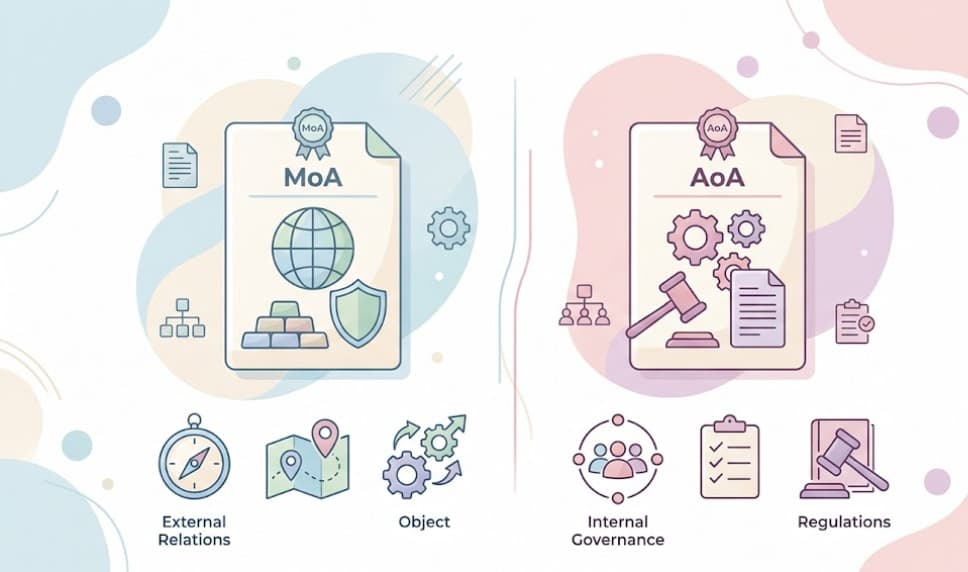
Finalise the charter documents. Draft the Memorandum and Articles of Association to reflect the parent's approval rights, reporting needs and exit mechanics.
Set up the registered office and bank account. A registered office in India is mandatory. Choose a bank that is comfortable with inward foreign remittances.
Remit capital, allot shares and file FC-GPR. Complete this within the time limits above.
Declare significant beneficial owners. The company must disclose the individuals who ultimately own or control it to the Registrar, so keep your ownership chart handy.
If your founder holds a US work visa, our guide on whether an H-1B holder can own or direct an Indian company covers what to check.
A Year of Obligations
Incorporation is the starting line. In the first year, expect to deal with these:
First auditor. The board generally appoints the first statutory auditor within 30 days of incorporation.
Commencement of business. File the declaration with the Registrar within 180 days of incorporation, after the share capital is paid in.
Payroll and indirect taxes. Register for GST where applicable, and set up TDS, provident fund and other employee compliances once you hire.
Annual company filings. File financial statements and the annual return after the annual general meeting. Directors also complete their annual KYC.
Income tax and transfer pricing. File the tax return, and where you have international transactions above the threshold, a transfer pricing report is generally due around 30 November.
FLA return. By 15 July, every year.
Dates and thresholds change, so confirm the current calendar with your adviser each year.
Where Founders Slip
The costly mistakes are almost never about incorporation. Teams treat FC-GPR as optional when the 30-day clock is real. They remit funds before the structure is final and then hit allotment and refund rules. They skip the valuation. They leave the resident director as an afterthought. They run service fees through the subsidiary with no transfer pricing policy. And nobody owns the compliance calendar, so FEMA, company law and tax dates are missed one by one.
The Takeaway
A US company that sets up an Indian subsidiary does best when it treats the structure as a package: the right entity, capital that enters under FEMA, an intercompany arrangement that is priced and documented, and a named owner for the compliance calendar. The incorporation is the easy part. The paperwork around it decides whether the entity stays clean.
Planning an Indian subsidiary and want the sequence done right? Talk to Accorp Partners for foreign subsidiary registration in India, FEMA filings and ongoing compliance for your US-owned entity.
Frequently Asked Questions
1. Do we need to travel to India to set up the subsidiary?
No. Incorporation can be completed remotely with digitally signed documents, and the US parent remits capital from its US bank. You do need a resident Indian director, a registered office address and a local bank account.
2. Who can be the resident director?
Any Indian resident under the Companies Act, such as a trusted employee, a local leader or a professional director. The role carries real legal responsibility, so put expectations and removal terms in writing and give the person access to the books and filings.
3. Can we fund the subsidiary with a loan from the US parent?
Yes, but loans from a foreign parent fall under the external commercial borrowing rules, with limits on cost, tenure and reporting. Most parents use equity so the only filing is FC-GPR. Take advice before mixing equity and debt.
4. How is the subsidiary taxed, and how do profits reach the US?
It pays Indian tax as an Indian resident company. Profits move to the US through dividends, service fees or reimbursements, each with its own withholding tax and documents, subject to treaty relief. Decide the flow before setting prices.
5. What happens if we miss the FC-GPR deadline?
A late filing is a FEMA contravention, but it can usually be regularised with a late submission fee, or compounding if the delay is significant. A missing filing will also surface in any later funding or acquisition diligence.
6. Can we start hiring before the company is registered?
Not through the subsidiary. It can hire only after incorporation and basic registrations such as PAN, TAN and payroll enrolments. An employer-of-record can bridge the gap if the handover is planned.