.svg)
.svg)
.svg)
Selling SaaS Into Japan: How SOC 2 Reporting and ISMAP Actually Fit Together
See how SOC 2 supports ISMAP readiness for SaaS companies entering Japan, including ISMAP-LIU, control overlap, Japanese documentation, and assessment.

Accorp Compliance Team
Our team of compliance experts specializes in PCI DSS, SOC 2, and other security frameworks to help businesses achieve and maintain compliance.
Every SaaS company chasing government or enterprise contracts in Japan eventually runs into the same question from a prospect's procurement team: "are you ISMAP registered?" If your sales conversations have mostly involved US and European buyers who ask for a SOC 2 audit report and move on, this can feel like an entirely separate compliance track appearing out of nowhere. It isn't unrelated — the two frameworks share real common ground — but understanding exactly where SOC 2 compliance ends and where ISMAP begins is worth getting straight before it slows down a Japanese deal you thought was nearly closed.
This piece walks through what ISMAP actually is, how much of your existing SOC 2 work genuinely carries over, and how companies selling SaaS into Japan typically sequence the two.
What ISMAP Actually Is
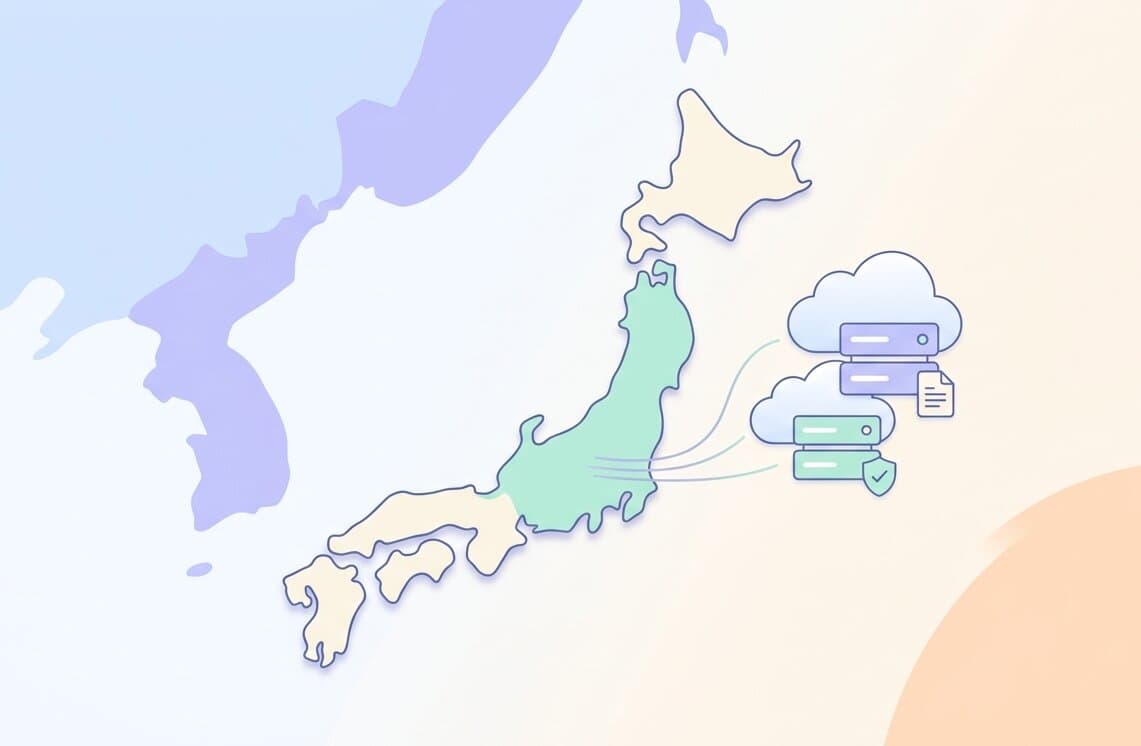
The Information System Security Management and Assessment Program — ISMAP — is a cloud services assessment program administered by the Japanese government, officially launched in 2020. It's often described as "Japan's FedRAMP," and that comparison holds up reasonably well: ISMAP evaluates and registers cloud services that meet Japanese government security requirements, so that government agencies can procure from a pre-vetted list instead of each ministry running its own separate vendor security review.
In practice, this means Japanese government offices and agencies are, in principle, required to procure cloud services from the ISMAP Cloud Service List. If you're targeting Japanese public sector contracts specifically, ISMAP registration isn't optional — without it, your service typically won't even be considered for those procurements. And while ISMAP started as a government-only requirement, its influence is increasingly spilling into the private sector too, as more Japanese enterprises use ISMAP registration as an informal signal of trustworthy cloud security even outside formal government procurement.
ISMAP's Scale: Why It Looks More Intimidating Than It Is
The headline number that scares people off is the control count — the standard ISMAP framework includes roughly 1,200 controls, built on a foundation of ISO/IEC 27001 and extended with cloud-specific requirements drawn from ISO 27017 and concepts similar to FedRAMP's control catalog. Compared to a SOC 2 audit, which is scoped around a handful of Trust Services Criteria and their associated controls, 1,200 requirements sounds like an entirely different order of magnitude.
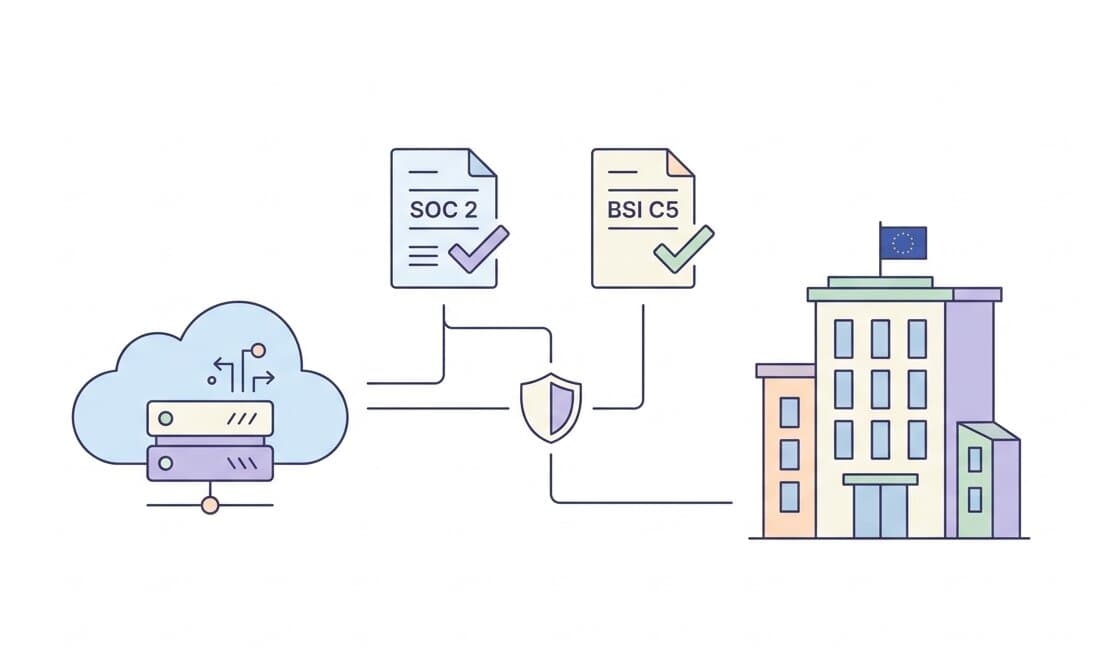
The reality is more manageable than that number suggests, for two reasons. First, a large share of those requirements are governance and management criteria that overlap heavily with what a mature security program already has in place. Second — and this is the detail that matters most for companies already SOC 2 compliant — ISMAP was structured so that its later chapters map directly onto ISO 27001's Annex A, while its foundational governance chapter maps onto ISO's core management clauses. Because SOC 2's own Trust Services Criteria for Security, Availability, and Confidentiality already overlap significantly with ISO 27001 in practice, more than half of ISMAP's total control set maps back to controls a company with a solid SOC 2 Type 2 report has likely already built and evidenced.
ISMAP-LIU: The Lighter Path Most SaaS Companies Actually Need
For most SaaS companies — as opposed to large-scale infrastructure or platform providers — the full ISMAP framework isn't actually the relevant target. ISMAP-LIU, or ISMAP for Low-Impact Use, is a streamlined version specifically designed for SaaS services handling lower-risk data, generally classified as Confidentiality class-2 information under the program's data classification scheme.
The difference in scope is significant: where standard ISMAP evaluation runs against nearly 1,200 requirements, ISMAP-LIU narrows external assessment down to roughly 148 controls across 230 requirements, with the remaining governance-level requirements handled through an internal audit process tested once per three-year cycle rather than externally assessed every time. For a SaaS company whose Japanese government ambitions involve typical business applications rather than critical infrastructure, ISMAP-LIU is very likely the more realistic and proportionate target — and it's a meaningfully smaller lift on top of an existing SOC 2 compliance program than the full framework would be.
How Much of Your SOC 2 Audit Work Actually Transfers
This is the question that matters most for planning purposes, and the honest answer is: a lot, but not everything. Companies already holding a credible SOC 2 report — particularly a SOC 2 Type 2 report demonstrating sustained operational effectiveness rather than a point-in-time snapshot — are in a materially stronger starting position than a company building an ISMAP program from nothing.
During ISMAP's assessment process, a phase called Control Description Validation is where a registered third-party assessor reviews your documented controls for compatibility with ISMAP's requirements — and this is exactly where existing SOC 2 or ISO 27001 documentation gets leveraged directly, rather than rewritten from scratch. Access management, logging and monitoring, incident response, change management, and vendor risk management — the same control categories any SOC 2 auditor already tested during your SOC 2 Type 2 audit — form the backbone of ISMAP's requirements too.
What doesn't transfer automatically: ISMAP has a strong data classification and cloud-specific governance layer that SOC 2 doesn't address in the same structured way, and — critically for companies used to English-language SOC 2 reporting — all ISMAP documentation must be submitted in Japanese, which means translation and localization becomes a real, non-trivial part of the process rather than an afterthought.
Where ISMAP and SOC 2 Diverge
It's worth being precise about what each framework is actually proving, because they answer somewhat different questions even where the control language overlaps.
Registration versus attestation. A SOC 2 audit report is a narrative document — an independent CPA firm's opinion, shared selectively with buyers who request it. ISMAP is a registration model: once approved, your service appears on a public list that government procurement teams reference directly, more similar to a certification than an attestation.
Assessor structure. Your SOC 2 auditor is a licensed CPA firm working under AICPA attestation standards. ISMAP assessments are conducted by assessors from an official ISMAP Assessor List, approved specifically by the Japanese government's ISMAP Steering Committee — a different pool of qualified firms than the ones performing your SOC 2 reporting.
Renewal cadence. Both frameworks expect ongoing evidence rather than a one-time pass, but ISMAP registration is maintained through annual audits under a defined governance structure, layered on top of the multi-year internal audit cycle for ISMAP-LIU's non-externally-assessed requirements.
A Practical Sequencing Approach for Companies Selling Into Japan
If Japanese government or enterprise procurement is a genuine part of your growth plan, the sensible order is rarely "start ISMAP from zero." It's:
Build and maintain a strong SOC 2 Type 2 report first, since that's the foundation both US/international buyers and much of the ISMAP control mapping process will lean on regardless.
Determine early whether ISMAP-LIU, rather than full ISMAP, actually matches your risk classification and target buyer — this decision alone changes the scope of the project by nearly an order of magnitude.
Budget for Japanese-language documentation and translation as a real line item, not something to figure out during the assessment itself.
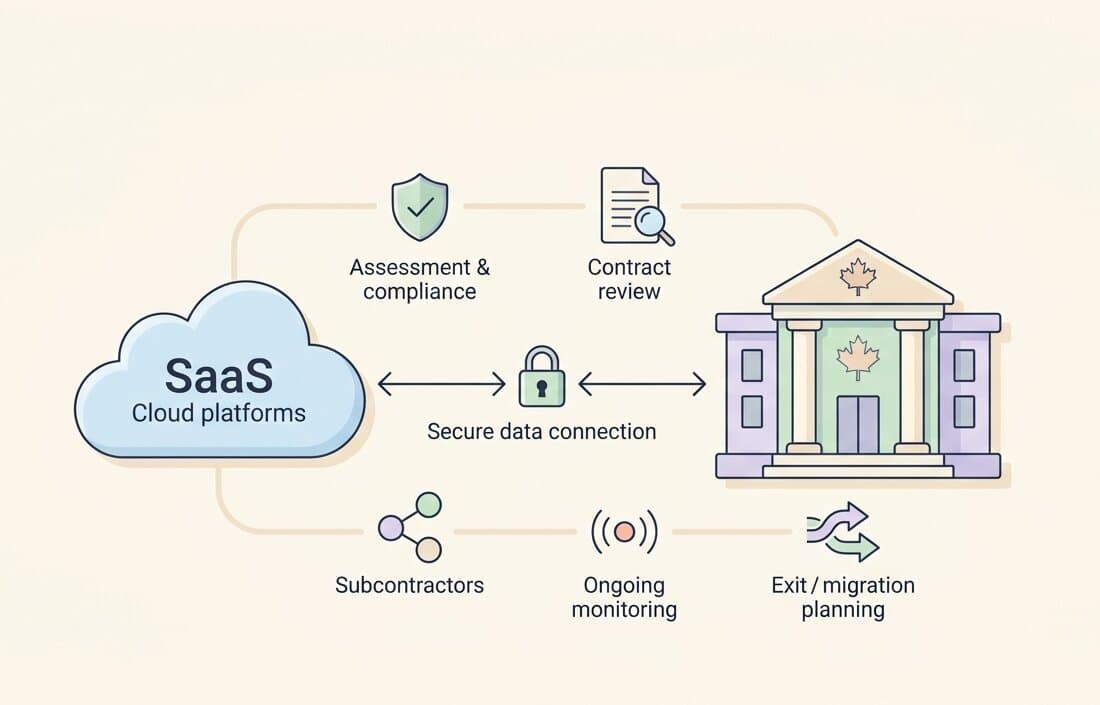
Engage an ISMAP-approved assessor early in scoping, the same way you'd loop in your SOC 2 auditor before readiness work begins, so control mapping gaps between your existing SOC 2 compliance evidence and ISMAP's specific requirements get caught early rather than mid-assessment.
What This Means for Positioning Your SOC 2 Reporting to Japanese Buyers
Even before pursuing ISMAP formally, it's worth being explicit with Japanese enterprise or public-sector-adjacent prospects about what your SOC 2 audit report already demonstrates. A well-documented SOC 2 Type 2 report, framed clearly against ISO 27001-aligned language that a Japanese buyer's security team will recognize, can meaningfully ease early-stage conversations — even for buyers who will eventually need to see ISMAP registration before a formal government procurement can proceed.
Where Accorp Fits In
Accorp Partners works with SaaS companies building their Japan go-to-market strategy — helping map how much of an existing SOC 2 compliance program genuinely carries over toward ISMAP or ISMAP-LIU, determining which track actually fits a company's risk profile and buyer base, and sequencing the two so Japanese procurement doesn't become a blocker discovered mid-deal.
Frequently Asked Questions
1. Does having a SOC 2 Type 2 report make ISMAP registration faster?
Generally yes. Since more than half of ISMAP's controls map back to ISO 27001 and SOC 2's Security, Availability, and Confidentiality criteria, companies with an existing SOC 2 audit history typically move through control mapping and validation more efficiently than starting from scratch.
2. Do all SaaS companies selling into Japan need full ISMAP certification?
No. Most SaaS providers targeting lower-risk data and applications fit ISMAP-LIU, a streamlined path with a significantly smaller external control set than the full ~1,200-control ISMAP framework.
3. Can a SOC 2 auditor also perform an ISMAP assessment?
Not necessarily — ISMAP assessments must be conducted by an assessor on the official ISMAP Assessor List, which is a separate qualification from being a licensed CPA firm performing SOC 2 reporting.
4. Is ISMAP only relevant for companies selling to the Japanese government?
Primarily, yes, since government agencies are required to procure from the ISMAP Cloud Service List — but registration is increasingly used as a trust signal by private-sector Japanese buyers as well.