.svg)
.svg)
.svg)
SOC 2 Under Quebec's Law 25: What Changes If You're Selling Into Quebec Specifically
Explore how SOC 2 supports Quebec Law 25 compliance, covering Section 17, cross-border data transfers, PIAs, sub processors, and data residency.

Accorp Compliance Team
Our team of compliance experts specializes in PCI DSS, SOC 2, and other security frameworks to help businesses achieve and maintain compliance.
A SaaS vendor closes what looks like a straightforward enterprise deal with a Quebec-based organization, sends over its SOC 2 Type 2 report the moment security review comes up, and assumes the compliance conversation is essentially done. Then the client's privacy officer — often, by legal default, the CEO themselves — comes back asking for something the vendor's standard security packet doesn't contain: a completed cross-border transfer analysis under Section 17 of Quebec's Law 25, along with contractual clauses the vendor's boilerplate DPA doesn't have.
This is a genuinely different pattern from the usual "extra certification required" story that shows up when selling into other regulated markets. Law 25 doesn't primarily ask the vendor to go get something new. It puts a legal obligation directly on the Quebec client — one that a vendor's SOC 2 auditor certification, however strong, can support but cannot substitute for.
What Law 25 Actually Is
Law 25, formerly Bill 64, was adopted in September 2021 as a comprehensive overhaul of Quebec's private-sector privacy framework, explicitly designed to bring the province's rules closer to global standards like GDPR. Its provisions phased in over roughly three years, with the bulk of substantive obligations — including the cross-border transfer requirements most relevant to SaaS vendors — taking effect in September 2023. It applies to any organization that collects, uses, communicates, or retains personal information of Quebec residents, regardless of where that organization is physically located, which means a vendor headquartered anywhere in the world can fall squarely within its scope the moment it has Quebec-resident data flowing through its systems.
The Core Distinction: A SOC 2 Report Is Evidence, Not the Assessment Itself
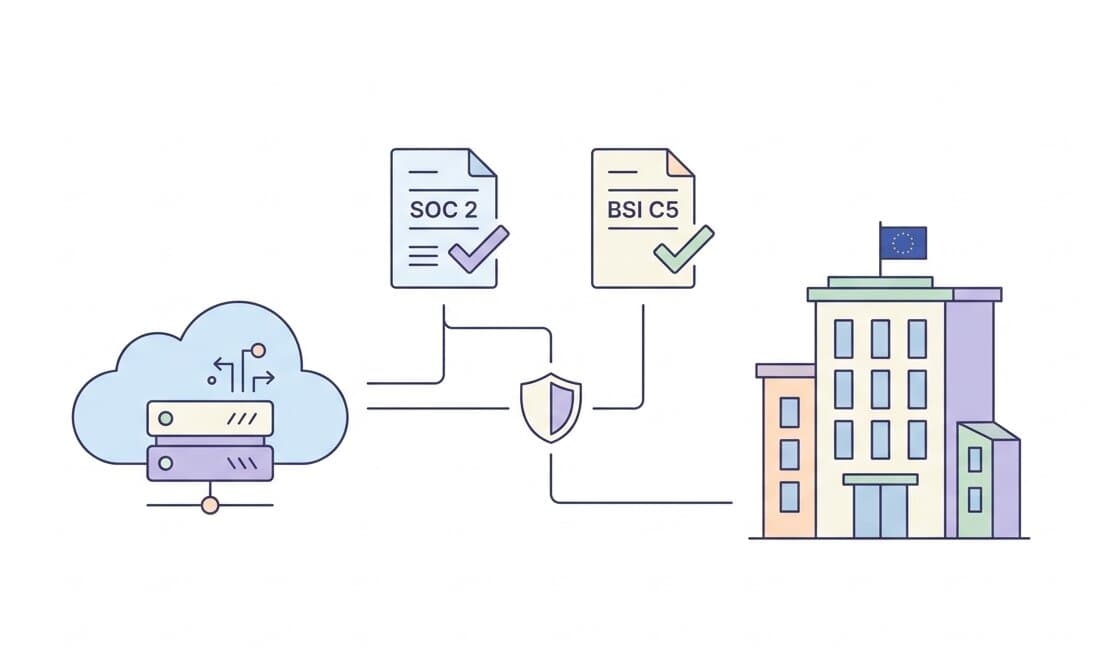
This is worth stating plainly, because it's the single most common and most costly misunderstanding vendors bring into a Quebec deal: a SOC 2 report addresses the effectiveness of security controls. It does not perform, and cannot replace, the specific legal analysis Law 25 requires the Quebec organization itself to complete before personal information can be communicated outside the province. Treating a vendor's SOC 2 Type 2 audit as if it were equivalent to a Privacy Impact Assessment is a well-documented mistake among Quebec organizations working through Law 25 compliance — the SOC 2 report is useful, credible supporting evidence within that assessment, but it doesn't perform the equivalency analysis Section 17 specifically demands.
For a vendor, this reframes the whole conversation. The Quebec client isn't asking "do you have good security" — the SOC 2 reporting already answers that reasonably well. They're asking "can I legally send personal information to you," which is a distinct question their own privacy officer is personally obligated to answer, with the vendor's cooperation, before the relationship can proceed.
Section 17: What Actually Triggers the Cross-Border Transfer Requirement
Section 17 of Quebec's privacy law requires a Privacy Impact Assessment before any communication of personal information outside Quebec, and the scope of what counts as "communication" is broader than most vendors expect. It isn't limited to data storage location. Sending personal information to a vendor's API endpoint for processing counts, even if the results are returned and the data ultimately rests on Quebec-based servers — the processing step itself is what triggers the requirement. Equally, if a vendor's support staff located outside Quebec can access client data for troubleshooting purposes, that access itself constitutes a transfer requiring assessment, regardless of where the underlying data is physically stored.
This means a vendor can have excellent data residency practices and still trigger a Quebec client's Section 17 obligation, simply because of how the product is operated day to day — support access, processing pipelines, or backup replication to a facility outside the province.
The "Canadian Isn't the Same as Quebec" Trap
This is a detail that catches even Canadian vendors off guard, not just international ones. Law 25 defines the relevant boundary as Quebec specifically, not Canada as a whole. A vendor headquartered and hosting entirely within Ontario or British Columbia is still, from a Quebec privacy law standpoint, transferring data outside the jurisdiction — the same Section 17 PIA obligation applies as it would for a vendor based in the United States or Europe. Vendors that assume "we're a Canadian company, so this doesn't apply to us" are working from an incorrect premise that has genuinely tripped up domestic vendors, not just foreign ones.
What the Quebec Client's PIA Actually Needs From the Vendor
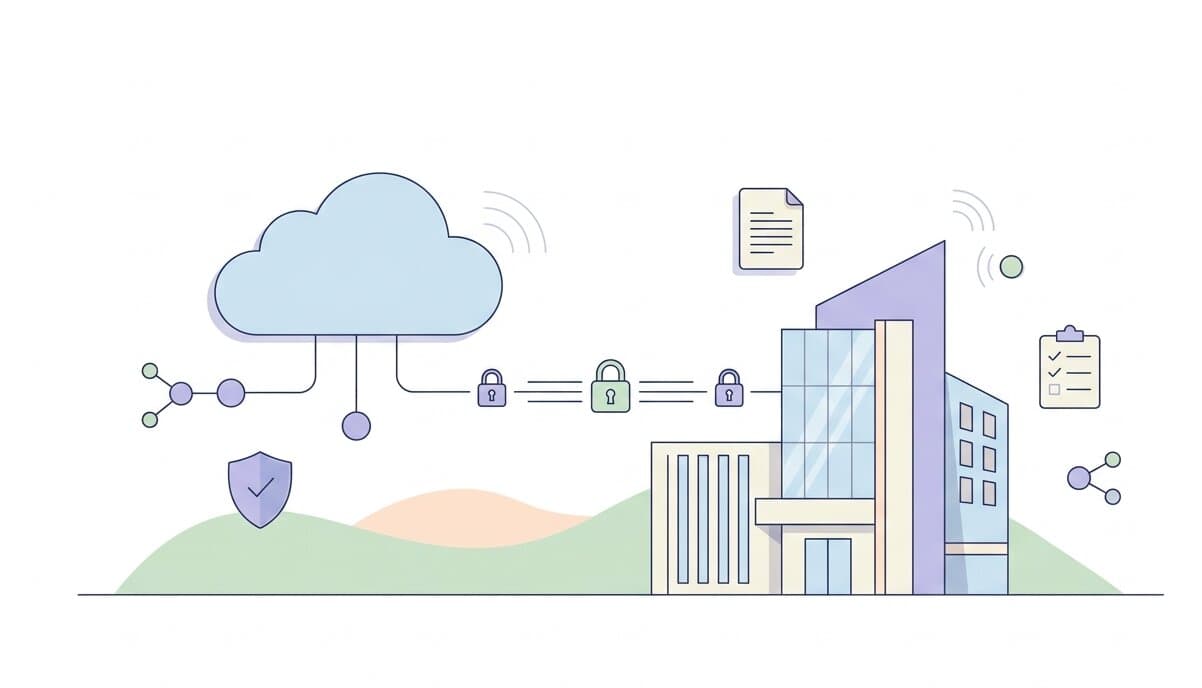
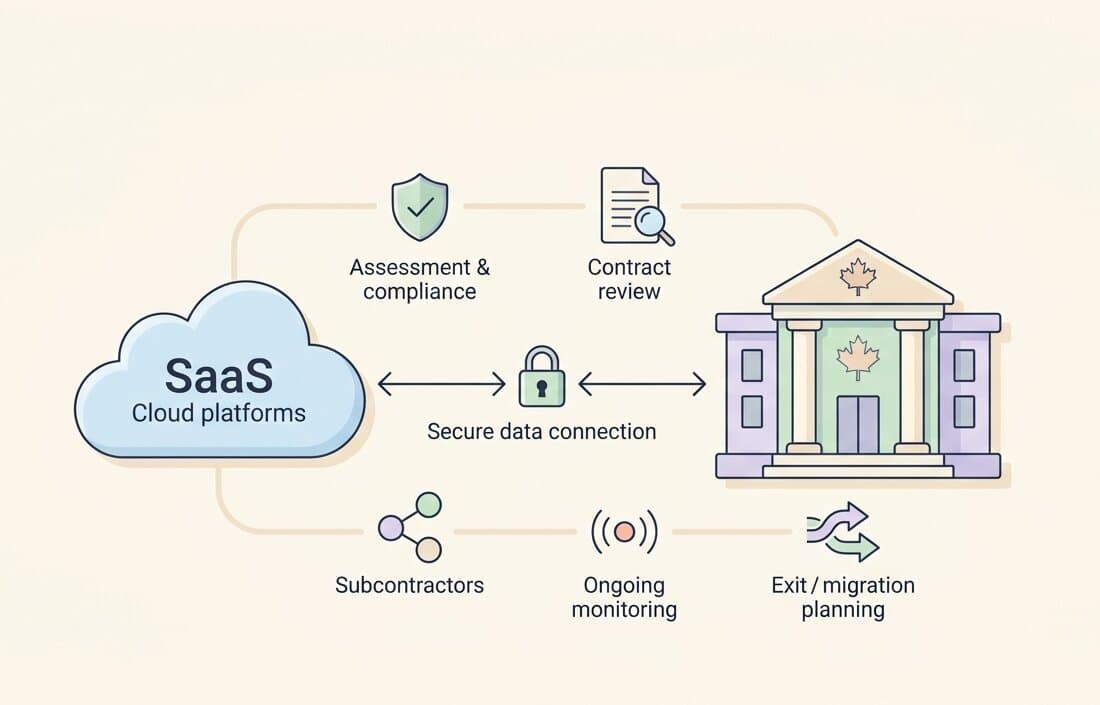
Since the Quebec organization — not the vendor — bears the legal obligation to complete the PIA, the practical question for a vendor is what it can provide to make that process move quickly rather than stalling for weeks. A well-prepared vendor typically needs to have ready: a clear data flow map showing exactly where personal information is stored, processed, and accessed from, including any subprocessors; a current, accurate subprocessor list, since an outdated one is a frequently cited gap even among major SaaS platforms; a written agreement containing specific cross-border transfer clauses addressing how the receiving jurisdiction's legal environment compares to Quebec's protections; and confirmation of where support and operations staff who may access client data are physically located.
Vendors that can hand over this information promptly and accurately turn what could be a multi-week legal back-and-forth into a straightforward review. Vendors that can't tend to watch deals stall in exactly the phase where the security review had already gone smoothly.
The CLOUD Act Overlay: Why "Data Residency" Claims Don't Fully Resolve This
A pattern worth understanding, because it echoes what's increasingly true across other sovereignty-conscious markets as well: a US-headquartered vendor advertising Canadian data residency — physically hosting data on servers located in Canada — does not fully escape this issue. The US CLOUD Act allows US federal law enforcement to compel US-incorporated companies to produce data they control, regardless of where that data is physically stored, meaning a Quebec client's privacy officer evaluating a vendor's Section 17 equivalency analysis needs to weigh this exposure even when the vendor's marketing materials emphasize local hosting. This is precisely the kind of consideration a SOC 2 Type 2 report, focused on control effectiveness rather than jurisdictional legal exposure, simply doesn't address.
The Privacy Officer Requirement, and Why It Can't Be Outsourced to a Vendor
Law 25 requires every organization within its scope to appoint a privacy officer, and by default, this role falls to the organization's CEO unless formally delegated in writing to someone else inside or outside the organization. This individual is personally responsible for overseeing compliance activities, including data subject access requests, breach reporting, and PIAs — and critically, this responsibility cannot be discharged by pointing to a vendor's own compliance posture. "Our cloud provider handles privacy" is explicitly not considered a compliant answer under Law 25, which is exactly why the Quebec client's own team, not the vendor's sales engineer, is the one asking pointed Section 17 questions mid-deal.
Enforcement Reality: Not Yet Aggressive, But the Infrastructure Is Live
As of early 2026, Quebec's privacy regulator, the Commission d'accès à l'information (CAI), hadn't yet announced major monetary penalties under Law 25's newer provisions. That's a meaningfully different picture from an active enforcement wave, but it shouldn't be read as low risk. The complaint intake pipeline is operational, and the CAI has signaled readiness to use its expanded enforcement powers going forward — the honest framing for both vendors and their Quebec clients is that this is a matter of when enforcement activity picks up, not whether it will. A notable data point reinforcing this: a large share of Quebec organisations using multiple cross-border SaaS tools daily still haven't completed a single Transfer Impact Assessment, despite the requirement having been in force since September 2023 — a compliance gap regulators are increasingly positioned to start addressing.
What This Means Practically for a SOC 2-Compliant Vendor
For a vendor with a solid SOC 2 compliance program already in place, the practical addition for the Quebec market isn't a new certification to chase — it's operational readiness to support a client-driven process. Maintaining a current subprocessor list, being able to clearly map where data is processed and by whom, having Section 17-aware contractual language ready rather than a generic DPA, and understanding that "Canadian" doesn't mean "Quebec-compliant by default" are the specific additions that turn a Quebec enterprise deal into a smooth process rather than a stalled one.
Where Accorp Fits In
Accorp Partners helps SaaS vendors prepare exactly this kind of Quebec-specific readiness package — data flow documentation, subprocessor transparency, and Section 17-aligned contract language — so a strong SOC 2 Type 2 report becomes genuinely useful evidence within a Quebec client's own Privacy Impact Assessment, rather than something the client's privacy officer has to work around.
Frequently Asked Questions
1. Does a SOC 2 Type 2 report satisfy Law 25's cross-border transfer requirements?
No. It's useful supporting evidence, but Law 25 requires the Quebec organization itself to complete a Privacy Impact Assessment analyzing the equivalency of protection in the receiving jurisdiction — a SOC 2 report doesn't perform that analysis.
2. Does hosting data in Canada exempt a vendor from Law 25's Section 17 obligations?
Not if the vendor is based outside Quebec, even elsewhere in Canada. Law 25's boundary is Quebec specifically, so an Ontario- or British Columbia-based vendor still triggers the same cross-border transfer assessment requirement.
3. Is a vendor legally responsible for completing the Law 25 Privacy Impact Assessment?
No, the Quebec client organization bears that legal obligation. The vendor's role is providing the information — data flow maps, subprocessor lists, contractual terms — needed to complete it efficiently.
4. Can a vendor's data residency claims eliminate Law 25 compliance concerns?
Not entirely. A US-headquartered vendor hosting data in Canada can still be compelled to produce it under the US CLOUD Act, a jurisdictional risk a Quebec privacy officer is expected to weigh independently of where servers are physically located.