.svg)
.svg)
.svg)
Why Customers Ask for SOC 2 Type 2 Reports — and How to Actually Respond
Learn why enterprise customers request SOC 2 Type 2 reports and how businesses should respond to security and compliance reviews.

Accorp Compliance Team
Our team of compliance experts specializes in PCI DSS, SOC 2, and other security frameworks to help businesses achieve and maintain compliance.
A SOC 2 report request usually lands in your inbox mid-negotiation — right when a deal is close to closing. Enterprise procurement and security teams have made this request routine because they can't afford to onboard a vendor blind. They need proof, not promises, that your company handles their data responsibly.
If this is your first time fielding one, the request can feel like a roadblock. It isn't — but how you handle it decides whether the deal moves forward on schedule or stalls for weeks.
What's Actually Different Between Type 1 and Type 2 (And Why Buyers Care)
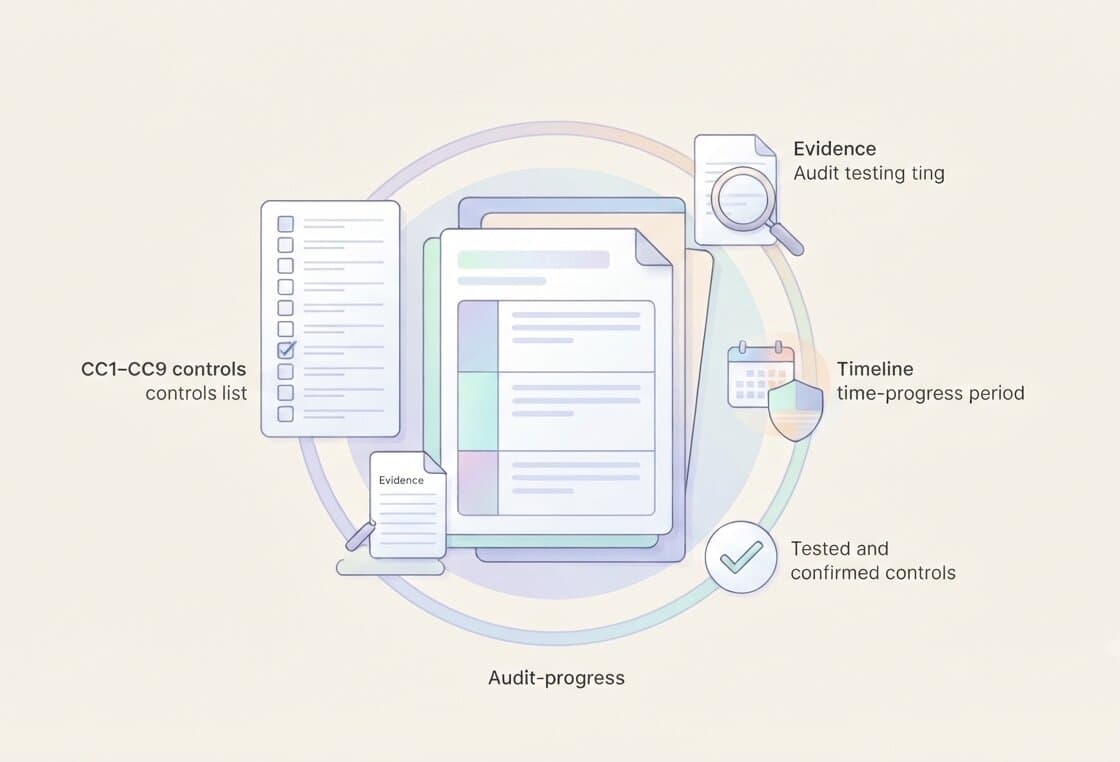
Most companies confuse this early on. A Type 1 report tells you whether your controls were designed correctly on a single date. A SOC 2 Type 2 report tells you whether those controls actually worked — consistently — over a review period, usually 6 to 12 months.
Enterprise buyers almost always ask for Type 2 specifically, because Type 1 only proves intent. A company can design a great access control policy and never enforce it. Type 2 catches that gap — the auditor pulls samples across the entire period, not just a snapshot, and checks whether the policy was actually followed every time.
Why Buyers Ask for This Now — Even Before You're "Big Enough"
A few years ago, SOC 2 requests mostly hit companies after Series B. That's no longer true. Startups with 10-person teams are getting SOC 2 questionnaires from enterprise buyers before they've even closed their first six-figure contract — because a single breach at a small vendor can expose the buyer's own customer data.
This shift matters because it means you can't wait for the "right size" to start. Buyers now look for:
Access management controls
Security monitoring practices
Incident response readiness
Data protection procedures
Operational accountability
What's Actually Inside the Report — And What Buyers Skip Reading
Most first-time recipients assume the whole report gets read line by line. It doesn't. Security reviewers typically jump straight to three sections:
The auditor's opinion — unqualified (clean) vs. qualified (something failed)
Exceptions noted — even a clean report can have exceptions listed against individual controls; buyers read these closely because a small exception with a documented remediation plan reads very differently from an unexplained one
Complementary User Entity Controls (CUECs) — the responsibilities the report assumes the customer handles on their end, which savvy buyers check to see if they match their own setup
If you're already working within ISO 27001 or PCI DSS, a lot of this evidence overlaps — control mapping between frameworks is one of the fastest ways to cut audit prep time.
The Bridge Letter Problem Nobody Warns You About
Here's something that catches almost every first-time SOC 2 company off guard: your audit period ends, but your customer's due diligence doesn't wait for your next report. If a prospect asks for evidence covering a date range after your report period ends, you can't just say "wait six months."
This is where a bridge letter (sometimes called a gap letter) comes in — a short attestation from your auditor confirming no material changes occurred since the report period closed. Companies that don't plan for this end up scrambling right when a deal is closest to closing. Building a bridge letter request into your renewal timeline avoids that entirely.
How to Actually Respond When the Request Comes In
Don't just email the PDF. A rushed, unstructured response creates its own risk — and it looks worse to a security reviewer than taking two extra days to do it properly.
A tighter process looks like:
Route the request to whoever owns your compliance documentation — not whoever answered the email first
Get an NDA signed before sharing anything (most SOC 2 reports contain enough infrastructure detail that they shouldn't circulate freely)
Use a controlled sharing method — a secure portal or trust page, not an email attachment that lives in someone's inbox forever
Keep a log of who requested what and when — this becomes useful evidence of your own vendor governance maturity
Companies using structured SOC 2 Compliance Audit Services workflows tend to have this response cycle down to a day or two — a real differentiator when you're competing against a vendor who takes two weeks to reply.
Where Companies Actually Lose Deals — It's Rarely the Report Itself
The report content matters less than most people think, as long as it's clean or has well-explained exceptions. What actually slows deals down:
Sending a report that's already outside its valid coverage window
Sending a heavily redacted version that leaves buyers unable to verify key controls
Taking too long to respond — internal security reviews often have their own SLA, and vendors who stall get quietly deprioritised in favour of a competitor who responded faster
Inconsistent answers between what's in the report and what your sales team says on a call
Getting Ahead of This as a Growing Company
The companies that handle these requests best usually treat SOC 2 as infrastructure, not a one-time project. That means:
Centralising compliance documentation somewhere your whole team can find it
Running a SOC 2 self-assessment a few months before your actual audit window, so surprises show up early instead of during the real thing
Assigning one clear owner for security questionnaires — not leaving it to whoever's free that week
Treating access reviews and monitoring as ongoing habits, not audit-week scrambles
Getting stuck at any point in this process — from first readiness gaps to bridge letters to structuring a response workflow — is common, not a sign something's wrong with your setup. Accorp Partners works with companies at every stage of this, from first-time SOC 2 prep to managing ongoing enterprise security reviews. Get in touch if you're navigating a request right now or planning ahead of one.
Frequently Asked Questions
1. How long does it take to get a SOC 2 Type 2 report?
The observation period alone runs 6-12 months, plus 4-8 weeks for the audit and reporting after that. Companies that start SOC 2 prep only after a customer asks for it are usually 8-12 months away from having anything to show.
2. Can I share my SOC 2 report before I have one?
Yes — a SOC 2 readiness assessment or a signed engagement letter from your audit firm can sometimes satisfy an early-stage buyer's requirement while your Type 2 is still in progress. It won't work for every buyer, but it's worth offering rather than going silent.
3. Does a SOC 2 report expire?
Not exactly, but most buyers treat reports older than 12 months as stale, and some contracts explicitly require an annual refresh. Build your renewal audit timeline around your biggest customers' renewal cycles, not just a calendar date.