.svg)
.svg)
.svg)
Step-Down Subsidiary APR: Who Files When Your Foreign WOS Has Its Own Subsidiary
FEMA ODI rules for step-down subsidiaries cover APR reporting, audit requirements, RBI compliance, and round-tripping risks for Indian companies.

Accorp Compliance Team
Our team of compliance experts specializes in PCI DSS, SOC 2, and other security frameworks to help businesses achieve and maintain compliance.
Every few weeks, a CFO or founder reaches out with a version of the same confusion: "our wholly owned subsidiary abroad just set up its own subsidiary — do we need to file anything separately for that?" It's a fair question, because FEMA's ODI framework doesn't make this obvious, and the answer sits in a place most first-time filers never think to look — buried inside the same APR you're already filing for your first-level subsidiary, not in a separate form. Getting this wrong doesn't usually mean an outright violation on day one. It means a slow accumulation of disclosure gaps that eventually surface as a problem during RBI reporting scrutiny or an AD bank review, at which point untangling it costs far more time than getting it right the first time would have.
This piece walks through exactly what a step-down subsidiary is under India's ODI framework, who's actually responsible for filing when one exists, whether it needs its own audit, and how multi-country structures typically get coordinated in practice.
What Counts as a Step-Down Subsidiary Under FEMA
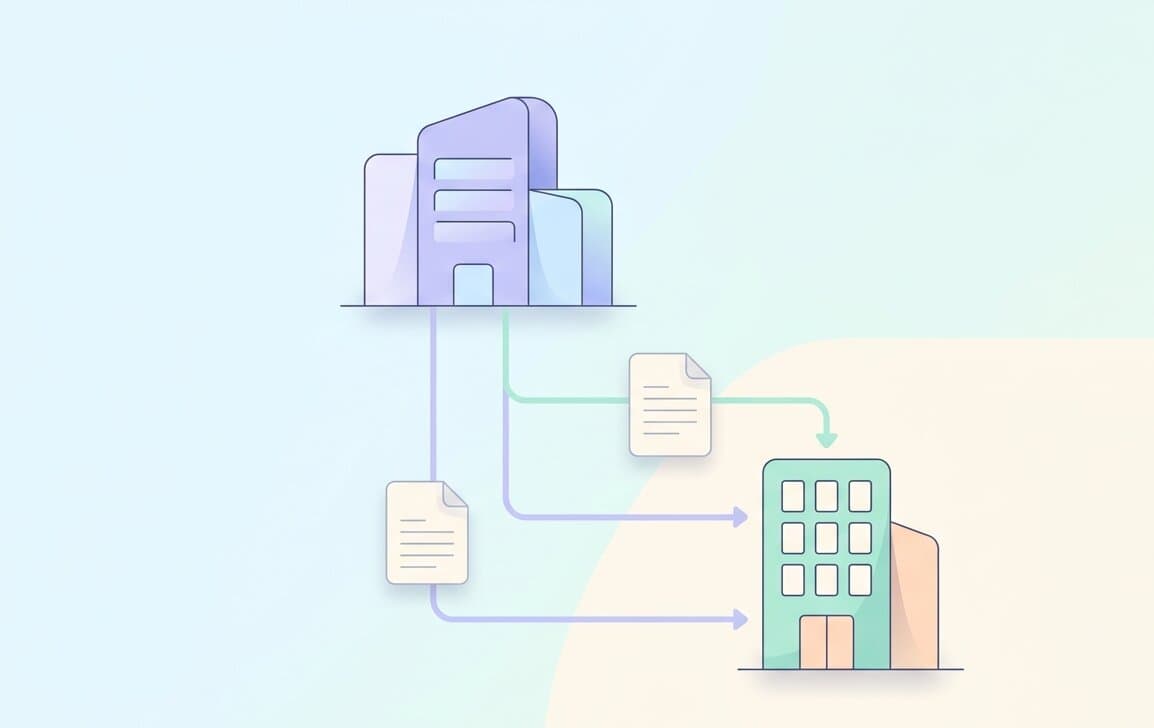
A step-down subsidiary — often abbreviated SDS — is a company incorporated by your foreign entity (your direct JV or WOS) using its own funds or profits, rather than a fresh round of capital sent from India. In practical terms: your Indian company sets up a WOS in the US; that US WOS then, out of its own retained earnings, sets up a subsidiary in Singapore. The Singapore entity is the step-down subsidiary — a second-level layer sitting underneath your first-level overseas investment.
Under the Foreign Exchange Management (Overseas Investment) Rules, 2022, an Indian entity that has acquired control in a foreign entity is permitted to have that foreign entity subsequently acquire or set up a subsidiary or SDS outside India, subject to the overall ODI compliance framework. This is a meaningfully simpler position than the old regime, but "simpler" doesn't mean "no reporting obligation" — it means the reporting obligation moved, rather than disappeared.
Why SDS APR Filing Confuses Even Experienced Compliance Teams
Here's the part that trips people up: under the 2022 Rules, the Indian entity is not required to separately report or seek fresh RBI approval for the step-down subsidiary at the time it's formed. There's no standalone "SDS filing" event the way there is for the initial ODI transaction itself. That absence of a separate filing step is exactly what leads companies to assume, incorrectly, that step-down subsidiaries sit entirely outside their FEMA compliance obligations going forward.
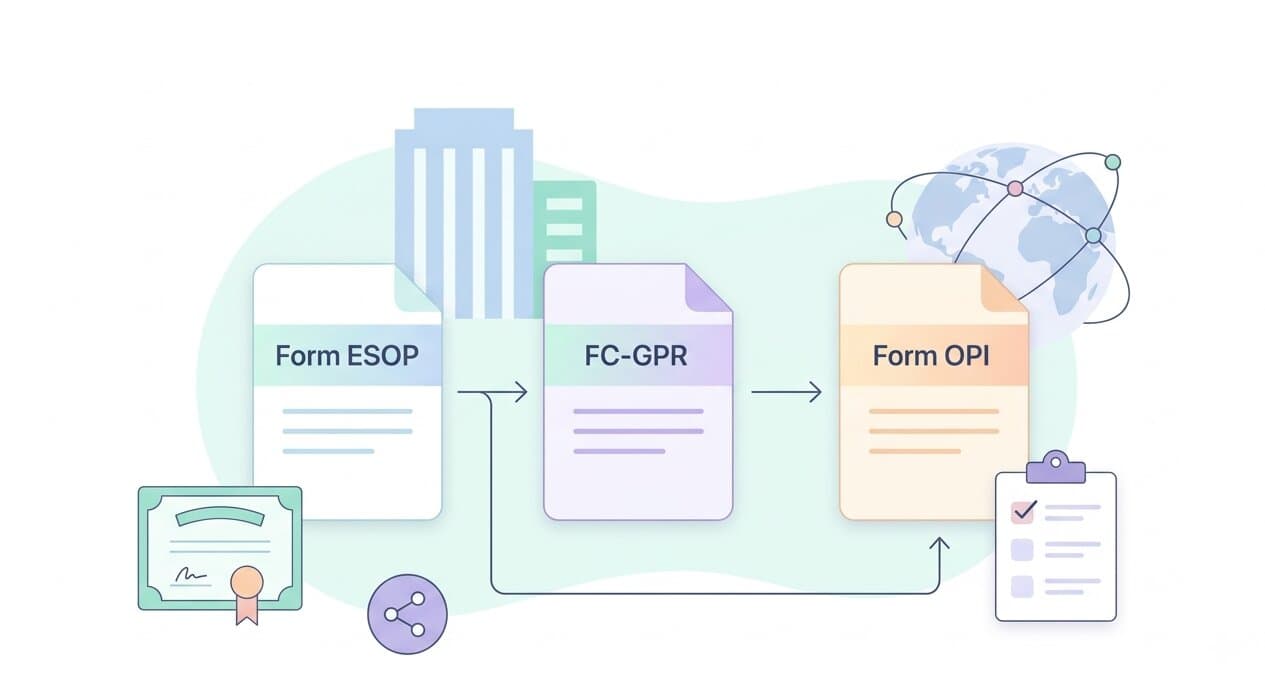
They don't. The Indian entity must disclose the step-down subsidiary within the Annual Performance Report itself — Form ODI Part II specifically includes a dedicated table capturing details for investments held through a step-down subsidiary of a JV or WOS. Skipping this table, or treating the SDS as immaterial because "it's not our direct investment," is one of the more common gaps that surfaces when RBI reporting gets scrutinized more closely, whether during a routine AD bank review or a compounding application triggered by something else entirely.
Who Actually Files the APR When a Step-Down Subsidiary Is Involved
This is the question behind almost every version of this confusion, and the answer is straightforward once it's stated plainly: the Indian parent entity remains the filer, always. RBI's counterparty under the ODI framework is the Indian resident entity that made the original overseas investment — not the foreign WOS, and not the step-down subsidiary itself. The SDS doesn't file anything with RBI directly, because it isn't the party RBI's ODI compliance framework regulates.
What changes with a step-down subsidiary in the structure is the scope of what the Indian parent's single APR needs to capture — not who's responsible for capturing it. The same December 31 deadline applies. The same Form ODI Part II applies. It just now needs to reflect the full layered structure: the first-level WOS, and the SDS sitting beneath it, both reported within one consolidated filing rather than two separate ones.
Does the Step-Down Subsidiary Need Its Own Audit
Yes — and this is the detail that catches people off guard most often. If the Indian company, directly or through a step-down subsidiary, holds 10% or more equity with control in an overseas entity, an annual audit of that entity is mandatory for APR purposes. Profitability and activity level don't matter; a dormant or loss-making SDS still needs its financials audited for the year, the same way a dormant first-level WOS does.
Under the RBI Master Direction on ODI, this audit has to be performed by the statutory auditor of the SDS itself — or an equivalent auditing professional recognized in that entity's host country — not by the auditor of the first-level WOS sitting above it. If your WOS is in the UK and its step-down subsidiary is in the US, you're not looking at one audit relationship; you're coordinating two, potentially under two entirely different audit standards, submitted into a single Indian APR filing.
Where a formal statutory audit genuinely isn't applicable in the SDS's home jurisdiction, the APR can instead be certified by a chartered accountant — a provision RBI has clarified explicitly applies even in individual-investor structures, not just corporate ones.
The Round-Tripping Restriction You Can't Ignore
Beyond the audit and disclosure requirements, FEMA's ODI framework carries an explicit structural condition: the overall arrangement — Indian parent, first-level WOS, and any step-down subsidiary — cannot be structured in a way that results in round-tripping, meaning funds effectively flowing back into India through the layered offshore structure in a manner the framework is specifically designed to prevent. This isn't a filing formality; it's a substantive condition on the legality of the structure itself, and it's worth reviewing explicitly whenever a step-down subsidiary is added, particularly if that SDS's activities involve any Indian-facing revenue or investment flows.
Multi-Country Structures: Coordinating a UK Auditor, US CPA, and Everyone In Between
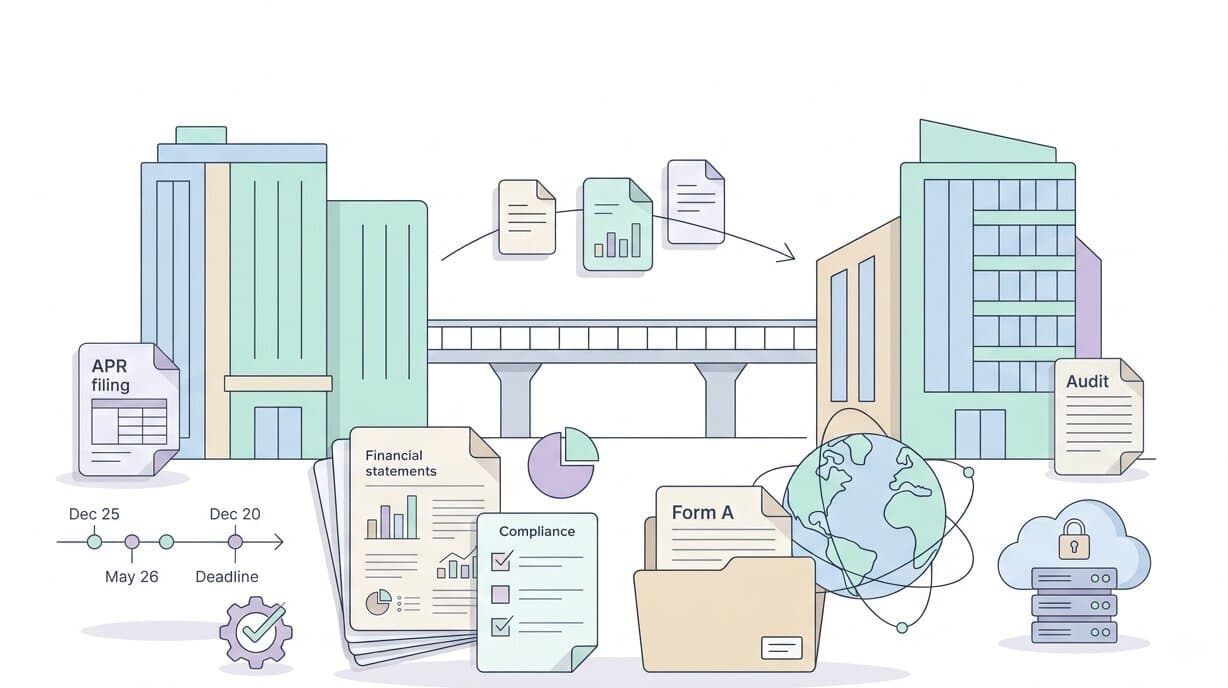
This is where step-down subsidiary APR filing genuinely becomes an operational challenge rather than just a compliance technicality. A layered structure spanning, say, a UK first-level WOS and a US step-down subsidiary means your APR compliance now depends on coordinating a UK auditor working to UK statutory audit standards for one entity, and a US CPA working to US GAAS for the other — on two different fiscal timelines, potentially with two different audit engagement cycles, all needing to land in time to be consolidated into a single Indian APR filing before the December 31 deadline.
The practical failure point isn't usually the individual audits themselves — it's the coordination. A UK auditor unfamiliar with what RBI reporting actually requires may produce a technically compliant UK audit report that's missing the specific attestation language RBI's ODI framework expects. The same applies to a US CPA working on the SDS side. Getting both audit engagements briefed correctly on what the Indian APR filing needs — not just what local statutory audit requirements demand — is what actually keeps a multi-country structure's ODI compliance clean year over year.
What Goes Wrong When SDS Reporting Is Treated as an Afterthought
A few patterns come up repeatedly with layered structures specifically:
The SDS gets left off the APR entirely because nobody flagged it as reportable, since there was no separate RBI filing event when it was formed.
The SDS's audit gets skipped or delayed because it's dormant or small, and the "audit is mandatory regardless of activity level" rule gets assumed not to apply.
The host-country auditor for the SDS produces a report that satisfies local statutory requirements but doesn't include what's needed for RBI's APR submission, forcing a scramble close to the December 31 deadline.
Round-tripping risk in the layered structure goes unreviewed because attention stays focused on the first-level WOS relationship rather than the full chain.
Each of these is avoidable with the same discipline applied to any other part of ODI compliance: treat the step-down subsidiary as a full reporting obligation from the moment it's formed, not a footnote to the first-level investment.
A Practical Checklist for Multi-Layer ODI Structures
Confirm whether your foreign WOS has formed, or plans to form, any step-down subsidiary — this needs to be tracked proactively, since there's no RBI filing trigger to prompt the question.
Map out audit responsibility separately for each entity in the chain, with the right local auditor engaged for each jurisdiction.
Brief each host-country auditor explicitly on RBI's APR requirements, not just their own local statutory obligations.
Complete the dedicated SDS table in Form ODI Part II every year the structure exists, regardless of activity level.
Review the overall structure periodically for round-tripping exposure, particularly if the SDS's business activities touch India in any way.
Where Accorp Fits In
Accorp Partners manages the complete ODI lifecycle for Indian parent companies with layered overseas structures — coordinating host-country audits for both first-level WOS and step-down subsidiaries, working directly with UK auditors, US CPAs, and equivalent professionals across jurisdictions, and consolidating everything into a single, complete APR filing before the December 31 deadline. If your foreign subsidiary has set up — or is about to set up — its own subsidiary, it's worth getting the reporting structure right from the start rather than discovering the gap during a compounding review.
Frequently Asked Questions
1. Does a step-down subsidiary need a separate RBI filing when it's formed?
No. Under the 2022 ODI Rules, there's no standalone reporting requirement at formation — but the SDS must be disclosed within the Indian parent's annual APR filing going forward.
2. Who is responsible for filing the APR when a step-down subsidiary exists?
The Indian parent entity remains the sole filer with RBI. The foreign WOS and the step-down subsidiary don't file directly; both are reported within the parent's consolidated APR.
3. Does the step-down subsidiary need its own audit, separate from the first-level WOS?
Yes. If control and 10%+ equity exist through the SDS, its financials must be audited annually by its own host-country statutory auditor or equivalent, regardless of whether it's active or dormant.
4. What happens if a step-down subsidiary is left off the APR for one or more years?
It's treated as incomplete or non-compliant ODI compliance under FEMA, generally requiring the missed years to be reconstructed and audited retroactively before RBI accepts regularisation through late fees or compounding.