.svg)
.svg)
.svg)
Can a US CPA Sign the APR Auditor's Certificate for RBI? What AD Banks Accept in 2026
A US CPA audit may not fully satisfy RBI APR filing. Learn what AD banks verify for FEMA, ODI compliance and overseas subsidiary audits in 2026.

Accorp Compliance Team
Our team of compliance experts specializes in PCI DSS, SOC 2, and other security frameworks to help businesses achieve and maintain compliance.
Completing the annual audit for a US subsidiary may appear straightforward until the APR filing stage begins in India. Many businesses assume that once a US CPA signs the financial statements, the same documents will automatically satisfy RBI and AD bank requirements. In practice, the process is far more detailed.
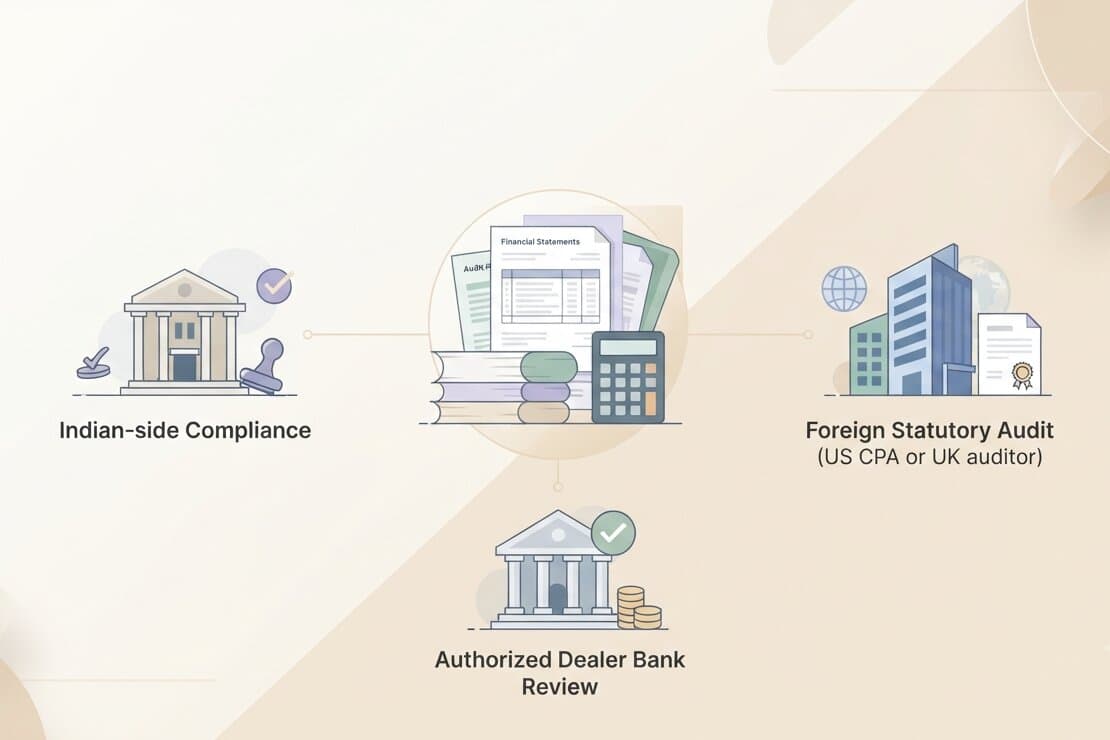
AD banks in 2026 are paying closer attention to overseas investment disclosures, especially for companies with foreign subsidiaries, inter-company funding structures, and cross-border transactions. A clean US audit report is important, but APR filing India involves additional FEMA and ODI compliance checks that go beyond standard US accounting certification.
This is why businesses increasingly seek guidance on whether a US CPA for APR filing can sign the auditor’s certificate accepted by RBI and what supporting records are needed to avoid delays. Understanding how banks review foreign audit reports can help companies maintain smooth foreign subsidiary audit compliance and reduce regulatory risk.
Why APR Filing Is Different From a Normal Overseas Audit
An overseas statutory audit primarily focuses on whether financial statements are prepared according to local accounting standards such as US GAAP. The purpose is to ensure:
Financial accuracy
Proper disclosures
Tax compliance
Corporate reporting transparency
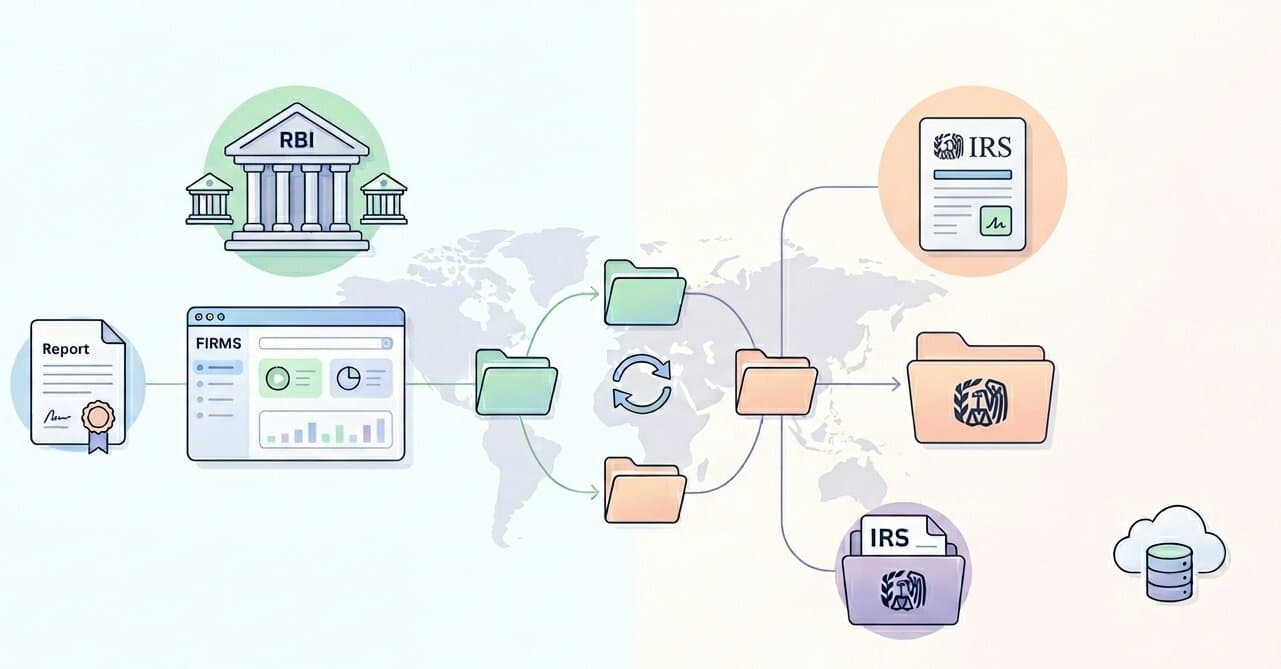
APR filing for foreign subsidiaries serves a different purpose. RBI uses APR reporting to monitor:
Overseas Direct Investment (ODI)
Foreign exchange exposure
Capital infusion
Loans and guarantees
Overseas financial commitments
This means APR filing India is not just an accounting exercise — it is also a regulatory compliance review under FEMA.
Can a US CPA for APR Filing Sign the Auditor’s Certificate?
Yes, But Acceptance Depends on Supporting Compliance
A licensed US CPA for APR filing can usually certify:
Audited financial statements
Profit and loss accounts
Balance sheet disclosures
Shareholder reporting
However, AD banks may still evaluate whether the submitted documents properly support FEMA and ODI reporting obligations.
In many cases, banks accept CPA-certified financials if:
The overseas entity structure is simple
ODI records are updated
Financial statements reconcile with RBI disclosures
No major compliance gaps exist
For more complex structures, banks may request additional documentation or clarification.
What AD Banks Usually Verify During APR Review
Matching ODI Data With Financial Statements
Banks commonly compare:
ODI investment records
Shareholding disclosures
Capital infusion amounts
Loan balances
with the overseas audited financial statements.
If numbers do not reconcile, the bank may hold the APR filing for additional clarification.
Checking Related-Party Transactions
Cross-border transactions between the Indian parent and overseas subsidiaries receive special attention during an overseas subsidiary audit.
Banks often review:
Management fee payments
Inter-company loans
Service agreements
Royalty arrangements
Expense reimbursements
Improper disclosures may create foreign subsidiary audit compliance concerns.
Reviewing Overseas Financial Exposure
AD banks also examine:
Guarantees issued
Outstanding loans
Additional investments
Step-down subsidiary exposure
to ensure ODI compliance limits are properly followed.
Why US GAAP Audits Alone May Not Satisfy FEMA Requirements
1. RBI Focuses on Regulatory Transparency
US GAAP reporting concentrates on accounting presentation and financial reporting standards. RBI, however, evaluates whether overseas investments comply with FEMA regulations.
For example:
A transaction may be acceptable under US accounting rules
But RBI may still question its ODI classification or reporting treatment
This creates a gap between local audit compliance and Indian regulatory expectations.
2. Currency Conversion Often Creates Reporting Gaps
US subsidiaries maintain accounts in USD, while APR filing India often requires INR-based reporting references.
This creates challenges involving:
Exchange rate fluctuations
Historical remittance values
Investment reconciliation
Profit conversion differences
Improper currency calculations are among the most common reasons for APR clarification requests.
Why Some Companies Face APR Delays Despite Clean Audits
1. Missing FEMA Documentation
Even when audited financials are complete, businesses sometimes fail to maintain:
ODI acknowledgment copies
RBI approval references
Remittance proofs
Share allotment records
Without these documents, AD banks may delay processing.
2. Incomplete Overseas Structure Disclosure
If the foreign subsidiary has:
Step-down subsidiaries
Additional overseas investments
Multi-country operations
banks may request consolidated exposure details during APR filing for foreign subsidiaries.
3. Delayed Financial Coordination
Many companies finalize US financial statements much later than Indian compliance timelines.
This creates:
APR filing delays
Incomplete reconciliations
Reporting inconsistencies
especially when multiple jurisdictions are involved.
How Businesses Can Improve APR Compliance in 2026
1. Maintain ODI Records Throughout the Year
Instead of preparing documents only before filing deadlines, businesses should continuously maintain:
Investment records
Loan schedules
Cross-border transaction summaries
Board approvals
This improves reporting accuracy.
2. Conduct FEMA Reconciliation Separately
A completed overseas audit should not replace FEMA review.
Companies should separately verify:
ODI disclosures
Capital infusion reporting
RBI submission consistency
Currency conversion treatment
before final APR submission.
3. Coordinate With Overseas Auditors Early
Businesses working with:
A US CPA for APR filing
A UK auditor for APR filing
International accounting teams
should align reporting timelines early to avoid documentation gaps.
Why Professional Compliance Support Matters
As overseas structures become more complex, APR filings increasingly involve:
Multi-country reporting
Currency reconciliation
Related-party disclosures
Consolidated financial analysis
FEMA interpretation
Professional advisors help businesses:
Prepare RBI-ready documentation
Coordinate with AD banks
Review overseas audit disclosures
Strengthen foreign subsidiary audit compliance
Reduce ODI compliance risks
This becomes especially valuable for companies managing multiple global entities.
The Growing Importance of APR Accuracy
APR filing errors can affect:
Future ODI approvals
Overseas expansion plans
Banking relationships
FEMA compliance status
RBI scrutiny levels
With tighter compliance reviews expected in 2026, accurate and transparent reporting is becoming more important than ever for international business groups.
Conclusion
A US CPA for APR filing can generally certify the financial statements of a US subsidiary, but RBI and AD banks often expect more than a standard overseas audit report during APR filing India. FEMA reporting requires businesses to demonstrate complete transparency regarding overseas investments, cross-border transactions, and ODI compliance.
A well-managed overseas subsidiary audit, combined with proper FEMA reconciliation and organized ODI records, helps businesses avoid delays, reduce regulatory questions, and maintain strong foreign subsidiary audit compliance.
As AD banks continue strengthening overseas reporting reviews, companies that proactively align US audits with RBI expectations will be better prepared for smooth and compliant international operations.
Also Read: If foreign subsidiaries have step down subsidiaries, do we do audit at consolidated level
FAQs
Q1. My US CPA signed the audit report. Will RBI and my AD bank accept it directly for APR filing?
Not always. AD banks also check FEMA disclosures and ODI records. If anything doesn't reconcile with the financial statements, they'll hold your filing until you provide more documents.
Q2. What exactly does the AD bank check when I submit my APR?
They verify three things — ODI records match financials, related-party transactions are disclosed, and overseas loans are within ODI limits. Any mismatch triggers a clarification request.
Q3. My US subsidiary has a clean audit. Why is my APR still getting delayed?
A clean audit doesn't guarantee smooth APR filing. Common reasons are missing ODI acknowledgements, no remittance proofs, or currency conversion inconsistencies. The audit and FEMA compliance are two separate things.
Q4. Does a US CPA understand RBI and FEMA requirements?
No. A US CPA handles US GAAP only. RBI-specific requirements — ODI classifications, FEMA disclosures, INR reconciliation — need to be handled separately by an Indian compliance expert.