.svg)
.svg)
.svg)
If foreign subsidiaries have step down subsidiaries, do we do audit at consolidated level
Learn how step-down subsidiaries affect APR filing India, overseas subsidiary audit, FEMA reporting, and ODI compliance.

Accorp Compliance Team
Our team of compliance experts specializes in PCI DSS, SOC 2, and other security frameworks to help businesses achieve and maintain compliance.
Global expansion rarely follows a simple one-company structure anymore. An Indian parent company may start with a single overseas entity in the US or Singapore, but over time that foreign subsidiary often creates additional entities for regional operations, investment holding, fundraising, or tax efficiency. These layered business structures introduce a major compliance question during APR filing India — should RBI reporting focus only on the direct subsidiary, or should the entire overseas group be reviewed together?
This issue becomes especially important when overseas entities transact with each other, move funds internally, or maintain multiple levels of ownership across countries. In such situations, a standalone audit of only the direct foreign subsidiary may not always provide the full financial picture RBI expects under FEMA and ODI compliance rules.
For businesses handling complex international structures, understanding how consolidated reporting works during an overseas subsidiary audit is essential for maintaining accurate disclosures, avoiding RBI queries, and strengthening foreign subsidiary audit compliance.
When Overseas Structures Become Multi-Layered
Many Indian companies now operate through:
Regional holding companies
International operating subsidiaries
Investment entities
Step-down subsidiaries across multiple countries
For example:
An Indian parent owns a Singapore entity
The Singapore entity owns a Dubai company
The Dubai company controls a UK operational subsidiary
In such cases, RBI may examine not only the first overseas entity but also the indirect overseas ownership structure connected to the Indian investor.
Why RBI Pays Attention to Step-Down Subsidiaries
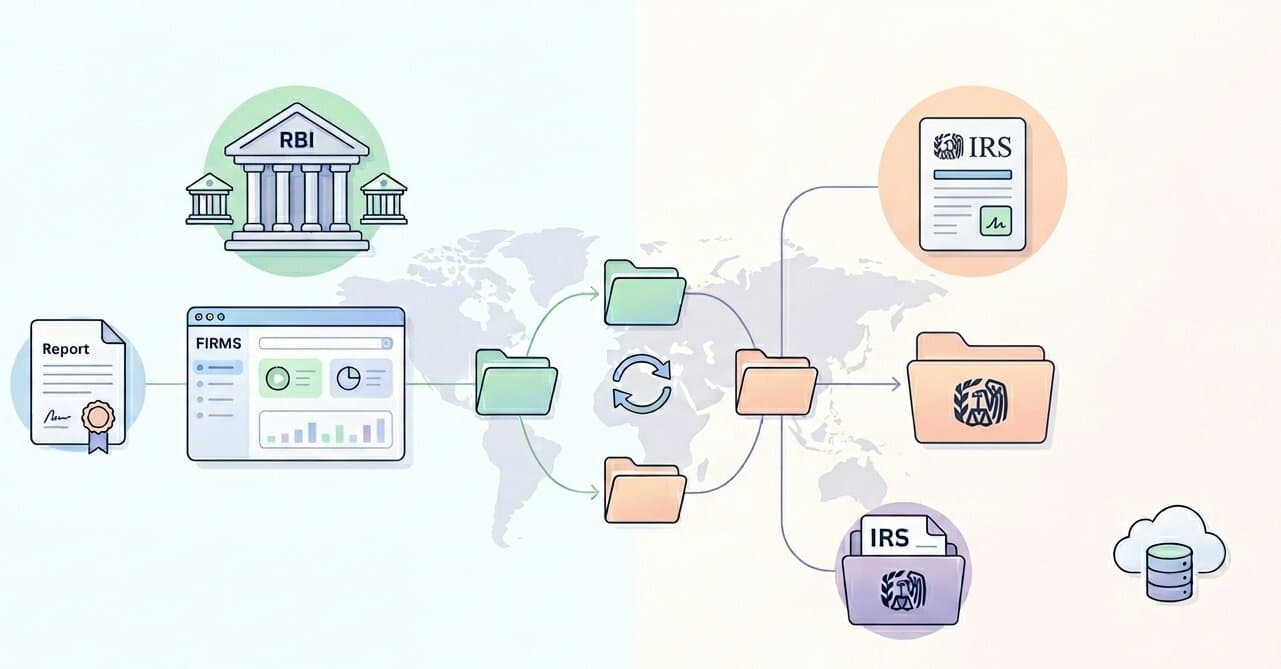
Under FEMA regulations, RBI monitors overseas investments to understand:
Total overseas exposure
Indirect financial commitments
Cross-border fund utilization
Ownership transparency
Related-party relationships
If step-down subsidiaries are ignored during APR filing for foreign subsidiaries, the reported financial position may appear incomplete.
This is why RBI often expects companies to disclose:
Overseas group structures
Additional overseas investments
Indirect ownership percentages
Consolidated operational exposure
Standalone Audit vs Consolidated Audit: What’s the Difference?
1. Standalone Audit Focuses on One Entity
A standalone overseas subsidiary audit reviews:
Financial statements of one company
Local revenue and expenses
Direct liabilities and assets
Entity-specific compliance
This is generally required under local jurisdiction laws.
2. Consolidated Audit Reviews the Entire Group
A consolidated audit combines:
Parent company financials
Subsidiary results
Step-down subsidiary accounts
Inter-company eliminations
This approach provides a broader financial view of the overseas business structure.
For RBI reporting purposes, consolidated disclosures often help explain:
Total overseas investments
Group liabilities
Internal funding arrangements
Overseas operational scale
Situations Where Consolidated Reporting Becomes Important
1. Multiple Overseas Entities Operate Together
If overseas companies share:
Employees
Contracts
Banking arrangements
Revenue streams
then consolidated financial review becomes more relevant.
2. Inter-Company Transactions Are Significant
RBI may seek additional clarity if:
One overseas subsidiary funds another
Loans move across overseas entities
Internal royalty or management fees exist
Standalone audits may not fully explain such transactions.
3. The Group Uses Holding Company Structures
Many Indian companies create holding entities in:
Singapore
UAE
Netherlands
UK
which then control multiple operational subsidiaries.
In such structures, consolidated reporting often provides better transparency during APR filing India.
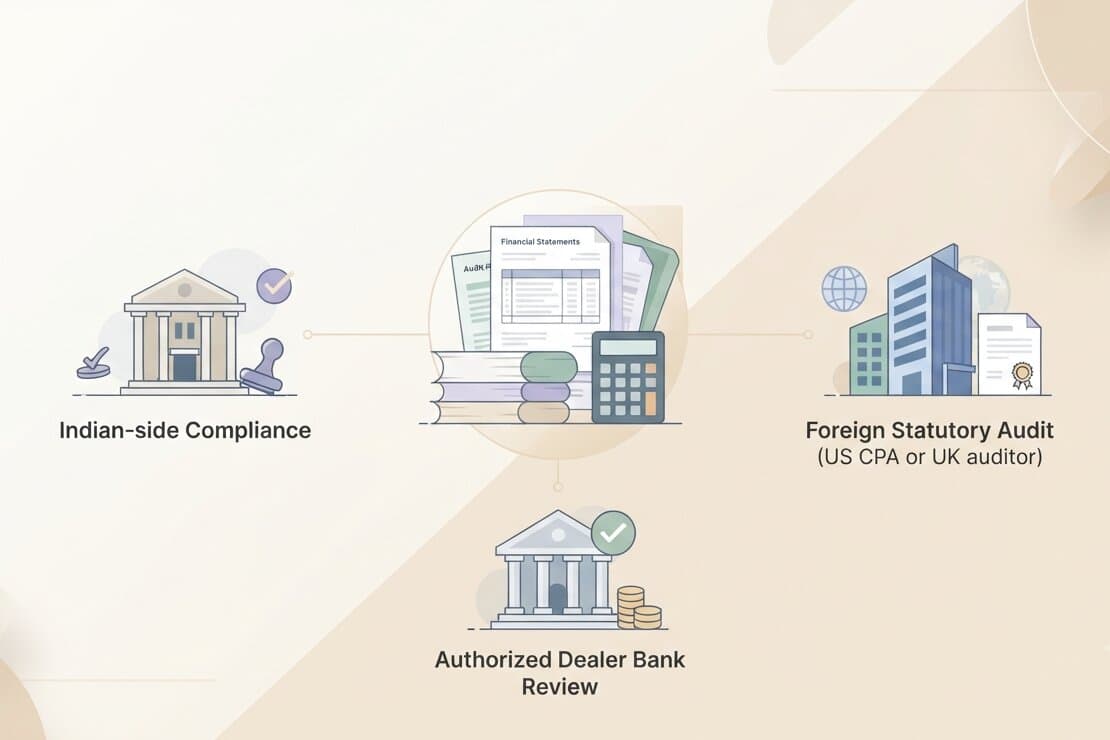
How Overseas Subsidiary Audit Handles Consolidation
An overseas subsidiary audit involving step-down entities generally includes review of:
Ownership structures
Consolidated financial statements
Inter-company reconciliations
Capital infusion records
Loan balances
Related-party transactions
Auditors may also verify whether overseas investments align with ODI disclosures submitted to RBI.
Different Countries Mean Different Audit Rules
One major challenge is that each jurisdiction may follow different accounting standards.
Examples include:
US GAAP in the United States
IFRS in Canada and Singapore
FRS 102 in the UK
As a result:
A US CPA for APR filing may prepare reports differently from
A UK auditor for APR filing
Reconciling multiple accounting frameworks into one consolidated overseas reporting structure can become technically complex.
Currency Conversion Creates Additional Complexity
Step-down subsidiaries may maintain financials in:
USD
GBP
SGD
EUR
CAD
During APR filing for foreign subsidiaries, businesses often need to:
Convert balances into INR
Reconcile historical investments
Track exchange rate differences
Improper conversion methods can create mismatches in ODI compliance reporting.
Common Mistakes Companies Make With Step-Down Structures
1. Reporting Only Direct Subsidiaries
Some businesses disclose only the first overseas entity while ignoring indirect ownership structures.
This can create incomplete FEMA reporting.
2. Missing Inter-Company Reconciliations
Layered structures often involve:
Shared funding
Cross-border transfers
Internal settlements
Without proper reconciliation, RBI may identify inconsistencies.
3. Depending Only on Local Audits
Local statutory audits may satisfy country-specific laws, but RBI may still expect:
Consolidated disclosures
ODI reconciliation
FEMA-specific reporting clarification
Best Practices for Managing Consolidated APR Reporting
Maintain a Clear Overseas Structure Chart
Businesses should document:
Direct ownership
Step-down subsidiaries
Shareholding percentages
Control relationships
This simplifies reporting and audit reviews.
Coordinate Global Finance Teams
Indian and overseas finance teams should regularly reconcile:
Loans
Investments
Currency conversions
Related-party transactions
before APR filing deadlines.
Conduct FEMA Reviews Separately
Even if overseas audits are complete, businesses should separately review:
ODI reporting obligations
FEMA disclosures
RBI filing consistency
Work With Experienced Compliance Advisors
Professional advisors help companies:
Prepare consolidated reporting
Coordinate foreign audits
Manage RBI queries
Improve foreign subsidiary audit compliance
Reduce reporting risks
Why Proper Consolidated Reporting Matters
Accurate consolidated reporting supports:
Better RBI transparency
Faster ODI approvals
Improved banking credibility
Lower compliance risks
Smoother overseas expansion
As global corporate structures become more complex, RBI increasingly expects Indian companies to maintain higher levels of overseas reporting transparency.
Conclusion
When foreign subsidiaries have step-down subsidiaries, a standalone audit may not always provide the complete picture required during APR filing India. In many cases, consolidated reporting becomes essential for accurately presenting overseas ownership structures, financial exposure, and inter-company transactions under FEMA regulations.
A well-planned overseas subsidiary audit, supported by proper reconciliation, consolidated disclosures, and strong documentation, helps businesses maintain foreign subsidiary audit compliance and reduce ODI compliance risks.
Whether companies work with a US CPA for APR filing, a UK auditor for APR filing, or international audit professionals across multiple jurisdictions, proactive consolidated reporting remains critical for long-term overseas compliance success.
Also Read: What Happens If You Miss APR Filing Under FEMA Regulations