.svg)
.svg)
.svg)
ESOP Liquidity at IPO: Timeline, Tax, and What Employees Should Expect
Understand ESOP in India at IPO, including employee stock option plan liquidity, ESOP valuation, taxation, lock-in period, and compliance for employees.

Accorp Compliance Team
Our team of compliance experts specializes in PCI DSS, SOC 2, and other security frameworks to help businesses achieve and maintain compliance.
For many startup employees, the biggest question around ESOP in India is: When will I actually get money? An Initial Public Offering (IPO) is one of the most anticipated liquidity events where employees can convert their esop stock into real wealth.
However, ESOP liquidity at IPO is not immediate or simple. It involves timelines, lock-in periods, taxation, and compliance. For founders, CFOs, HR professionals, and esop employees, understanding this process is essential to manage expectations and plan effectively.
What is ESOP in India
An ESOP (Employee Stock Option Plan) is a scheme that gives employees the right to purchase company shares at a fixed price. It is also known as an employee stock ownership plan or employee share option plan.
The purpose of an esop plan is to create employee ownership and align employees with the company’s long-term growth.
For a Private Limited Company in India, ESOPs are governed by:
Companies Act, 2013
Rule 12 of Companies (Share Capital and Debentures) Rules, 2014
These laws regulate the issuance of stock options for employees under an employee stock option scheme. ESOPs are widely used by startups and growing esop companies.
Step-by-Step ESOP Issuance Process
Before IPO liquidity, companies must follow a proper employee stock option plan structure:
1. Draft ESOP Scheme
Prepare an esop scheme defining eligibility, vesting, and exercise terms.
2. Board Resolution
The Board approves the stock option plan.
3. Shareholder Approval
A Special Resolution is passed for the employee share ownership plan.
4. Filing of MGT-14
File MGT-14 with ROC after approval.
5. Grant of Options
Eligible employees receive share options for employees.
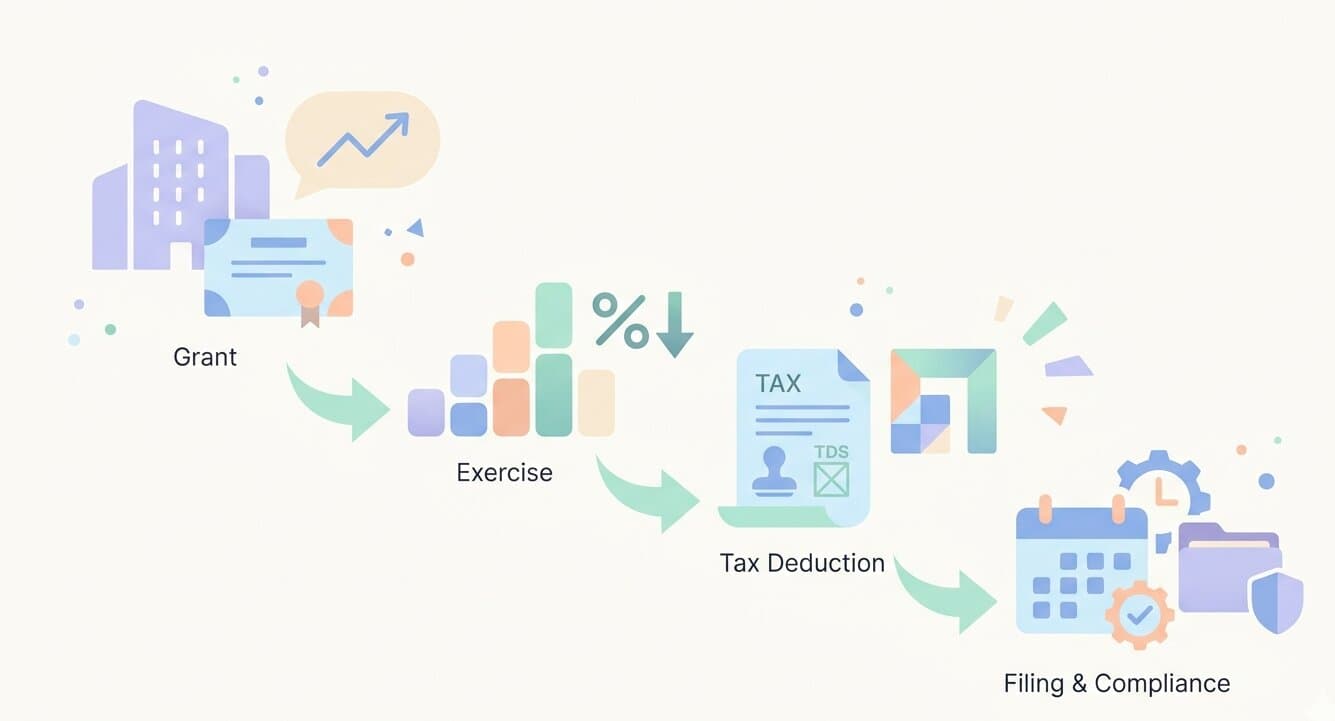
6. Vesting & Exercise
Employees exercise their esop stock after vesting.
7. Filing of PAS-3
File PAS-3 after share allotment.
8. Maintain Registers
Maintain statutory records for employee stock ownership.
ESOP Valuation in India
How IPO Impacts ESOP Valuation
At the time of IPO, the company’s share price becomes publicly discoverable. This significantly impacts esop valuation in India.
Pre-IPO: Valuation based on private funding rounds
At IPO: Price determined through market demand
Post-IPO: Share price fluctuates daily
ESOP Liquidity Timeline at IPO
Employees should understand the typical timeline:
1. Pre-IPO Stage
Employees hold vested stock options for employees
They may need to exercise options before IPO
2. IPO Listing
Shares are listed on stock exchanges
ESOP holders become shareholders (if exercised)
3. Lock-in Period
Many employees face a lock-in period (usually 6 months)
During this time, shares cannot be sold
4. Post Lock-in Sale
Employees can sell shares in the open market
This is when actual liquidity is achieved
Taxation of ESOPs in India
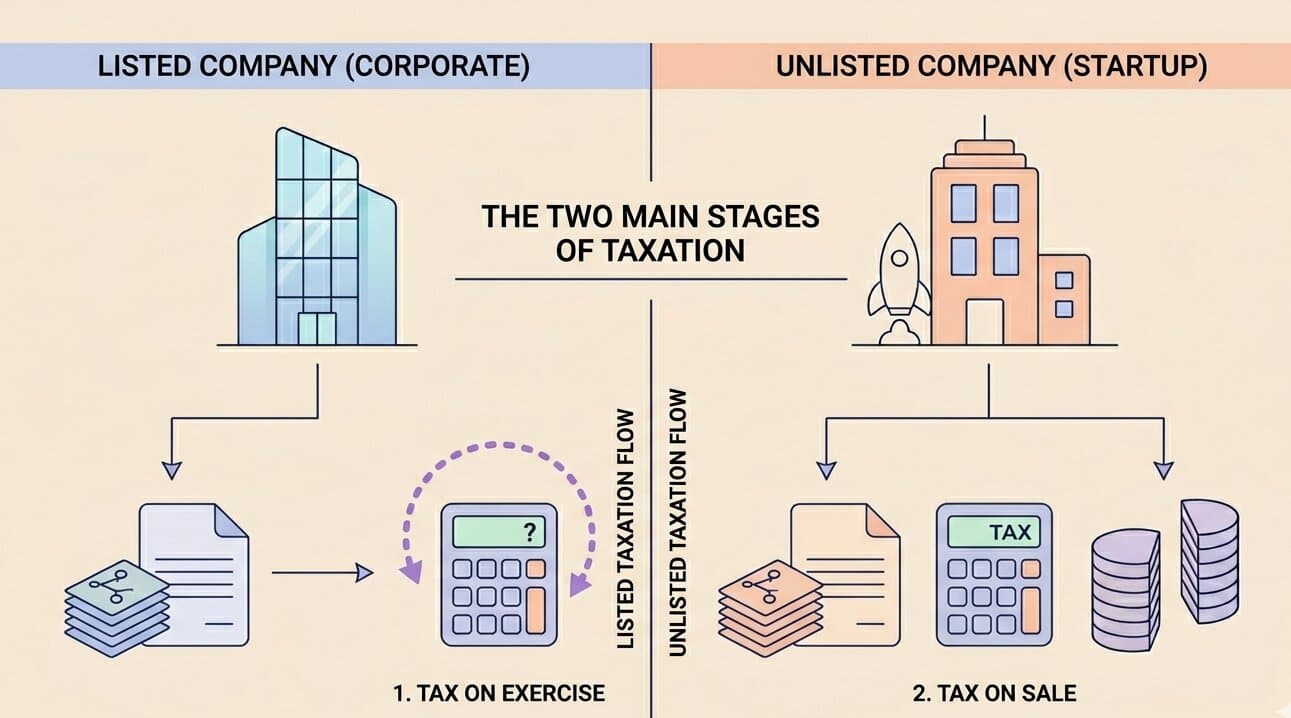
Understanding ESOP taxation in India is critical during IPO.
1. Tax at Exercise Stage (Perquisite Tax)
When employees exercise their employee stock option plan, the difference between:
Fair Market Value (FMV)
Exercise price
is taxed as salary income.
2. Tax at Sale Stage (Capital Gains Tax)
When shares are sold after IPO:
Capital gains tax applies
Listed shares have different tax rates
Types of Capital Gains:
Short-term (≤12 months)
Long-term (>12 months, lower tax rate)
Key Insight
IPO can significantly increase valuation, which increases both perquisite tax and capital gains. Proper planning is essential for employee ownership plans.
Key Compliance Requirements
For ESOP for private limited company in India, compliance is crucial before and during IPO.
Mandatory Compliance Steps:
Board approval of esop plan
Shareholder special resolution
Filing of MGT-14 and PAS-3
Proper esop valuation by registered valuer
Maintenance of statutory registers
Accurate disclosures in financial statements
IPO-Specific Considerations:
ESOP disclosures in DRHP (Draft Red Herring Prospectus)
Lock-in conditions for employees
Alignment with SEBI regulations
Investors and regulators closely review employee stock ownership structures before approving IPOs.
Conclusion
ESOP liquidity at IPO is a major milestone for employees and startups alike. While an IPO creates an opportunity to unlock wealth, it comes with timelines, tax implications, and compliance requirements.
For founders, CFOs, and HR professionals, the focus should be on:
Structuring a strong employee stock option scheme
Ensuring accurate esop valuation in India
Preparing employees for taxation and lock-in periods
For employees, understanding the journey—from grant to sale—is key to maximizing benefits from their employee share ownership plan. A well-managed esop plan not only drives employee ownership but also turns IPO success into real financial rewards for the entire team.
Planning for an IPO or managing ESOP liquidity for your employees? Understanding timelines, taxation, and compliance is crucial to maximize benefits and avoid costly mistakes.
Connect with Accorp Partners to structure your ESOP plan, handle valuation, and ensure smooth IPO readiness with complete compliance.