.svg)
.svg)
.svg)
Regulatory Compliances for Equity Compensation in India
Regulatory compliances for ESOP in India covering employee stock option plan, filings, taxation, valuation, and legal rules for equity compensation in companies.

Accorp Compliance Team
Our team of compliance experts specializes in PCI DSS, SOC 2, and other security frameworks to help businesses achieve and maintain compliance.
Equity compensation, especially through an ESOP (Employee Stock Option Plan), has become a powerful tool for Indian startups and private limited companies. It helps attract top talent, retain employees, and align their interests with long-term company growth.
However, implementing an ESOP in India is not just about offering shares—it comes with strict legal, taxation, and compliance requirements. Founders, CFOs, and HR professionals must understand these regulations to avoid penalties and ensure smooth execution.
This blog explains the complete regulatory compliances for employee stock option plans in India in a simple and practical way.
What is an ESOP scheme in India?
An Employee Stock Option Plan (ESOP) is a scheme that allows employees to purchase company shares at a predetermined price after a certain period (vesting period).
In India, ESOPs are governed primarily under:
Companies Act, 2013
Rule 12 of Companies (Share Capital and Debentures) Rules, 2014
Key Points:
ESOP is applicable to private limited companies in India
It is widely used by startups and growing businesses
It promotes employee ownership and long-term commitment
An ESOP scheme is also referred to as:
Employee share option plan
Employee stock ownership plan
Stock option plan
Employee share ownership plan
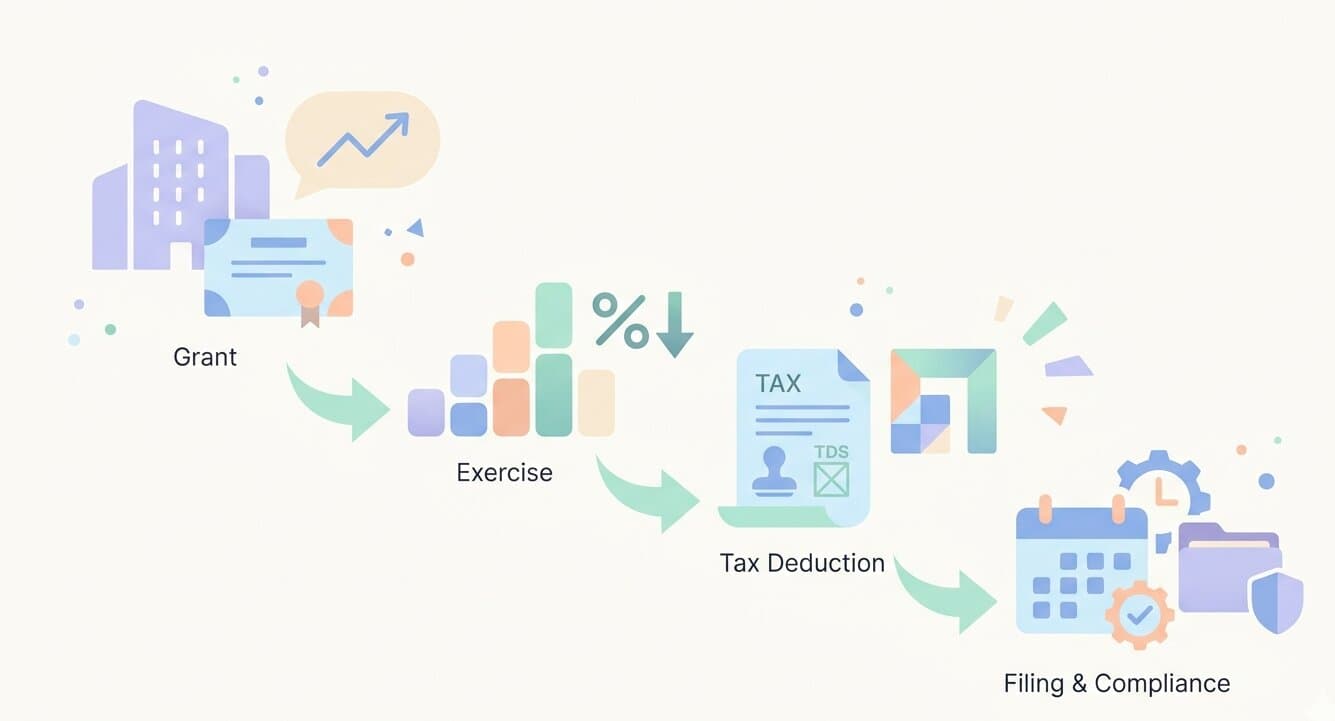
Step-by-Step ESOP Issuance Process
Implementing an ESOP plan in India involves multiple legal and compliance steps:
1. Drafting the ESOP Scheme
The company first creates an ESOP scheme defining:
Eligibility of employees
Vesting period
Exercise price
Number of stock options for employees
2. Board Resolution
The Board of Directors must approve the employee stock option scheme by passing a board resolution.
3. Shareholder Approval (Special Resolution)
A special resolution must be passed in a general meeting.
This is mandatory under the Companies Act
Required for issuing share options for employees
4. Filing of MGT-14
After passing the special resolution:
File Form MGT-14 with the Registrar of Companies (ROC) within 30 days
5. Grant of ESOPs
Once approved:
Options are granted to employees as per the ESOP plan
6. Vesting Period
Employees must complete the vesting period before exercising options.
7. Exercise of ESOP
Employees purchase shares at the pre-decided price.
8. Filing of PAS-3
After shares are allotted:
File Form PAS-3 with ROC for allotment of shares
9. Maintenance of Statutory Registers
Companies must maintain proper records of:
ESOP grants
Employee details
Share allotments
ESOP Valuation in India
ESOP valuation is a critical aspect of compliance.
Companies must determine the fair market value (FMV) of shares:
Done by a registered valuer or merchant banker
Required for taxation and regulatory purposes
Why ESOP Valuation Matters:
Determines tax liability for employees
Ensures compliance with income tax laws
Helps maintain transparency in esop companies
For example, an Indian startup offering ESOP stock must get proper valuation before granting options to avoid disputes and penalties.
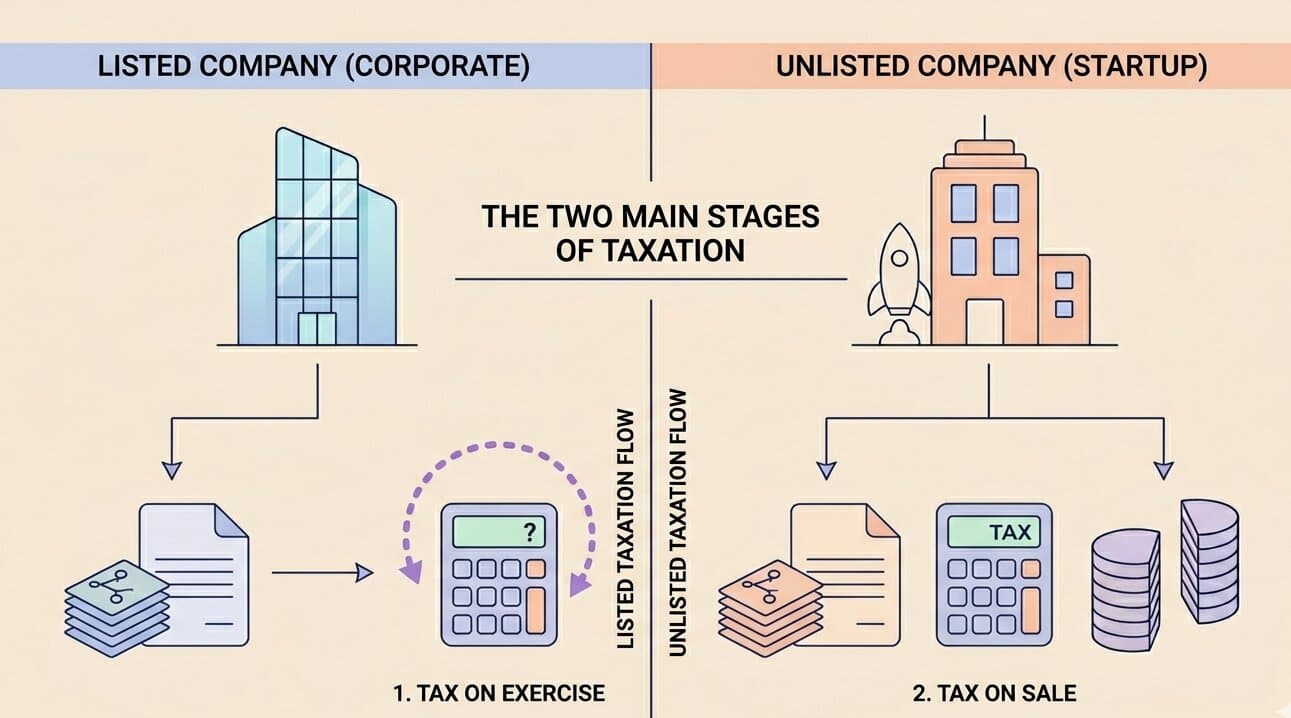
Taxation of ESOPs in India
Understanding ESOP taxation in India is essential for both employers and employees.
1. Tax at Exercise Stage (Perquisite Tax)
When an employee exercises stock options:
The difference between FMV and exercise price is treated as perquisite income
Taxed under “Salary” head
Example:
Exercise Price: ₹50
FMV: ₹150
Taxable Perquisite: ₹100 per share
2. Tax at Sale Stage (Capital Gains Tax)
When employees sell shares:
Tax is applicable on the profit earned
Types of Capital Gains:
Short-term capital gains (STCG)
Long-term capital gains (LTCG)
The holding period determines tax rates.
3. Income Tax Implications
Employers must deduct TDS (Tax Deducted at Source) on perquisite value
Employees must report gains in income tax returns
This makes ESOPs not just a benefit, but also a tax planning consideration.
Key Compliance Requirements
To run a compliant employee ownership plan, companies must follow these key requirements:
Legal Compliance
Follow Companies Act, 2013
Adhere to Rule 12 of Share Capital Rules
Regulatory Filings
MGT-14 (for special resolution)
PAS-3 (for share allotment)
Documentation
Maintain proper:
ESOP policy documents
Grant letters
Vesting schedules
Accounting Compliance
Record ESOP expenses in financial statements
Follow applicable accounting standards
Restrictions to Note
ESOP cannot be issued to promoters (in most cases)
Independent directors are usually not eligible
Conclusion
An ESOP in India is a powerful tool for building a motivated and growth-driven workforce. Whether you are a startup founder or CFO of a private limited company, implementing a structured employee stock option plan can significantly improve employee retention and performance.However, ESOPs come with strict legal and tax compliances—from board approvals and ROC filings to ESOP valuation and taxation. Ignoring these requirements can lead to penalties and operational issues.By following the correct process and maintaining proper documentation, companies can successfully implement an employee share ownership plan that benefits both the business and its employees.
In today’s competitive market, a well-designed ESOP scheme is not just a compensation tool—it’s a strategic growth driver for modern Indian businesses.
Need help with ESOP compliance and filings? Accorp Partners can support you with end-to-end ESOP structuring, valuation, and regulatory compliance.