.svg)
.svg)
.svg)
Valuation of ESOPs for Startups under Income Tax Act, 1961
Guide to ESOP valuation for startups under Income Tax Act 1961 covering FMV rules, DCF method, tax impact, compliance requirements, and employee stock options.

Accorp Compliance Team
Our team of compliance experts specializes in PCI DSS, SOC 2, and other security frameworks to help businesses achieve and maintain compliance.
For startups and private limited companies, an ESOP (Employee Stock Option Plan) is more than just a compensation tool—it is a way to build long-term employee ownership. However, one of the most critical and often confusing aspects is ESOP valuation, especially under the Income Tax Act, 1961.
Proper valuation is essential not only for compliance but also for determining tax liability for employees. In this blog, we break down the valuation of ESOPs in India in a simple and practical way for founders, CFOs, and HR professionals.
What is ESOP in India?
An employee stock option plan allows employees to purchase shares at a predetermined price after a specific vesting period. It is also known as an employee stock ownership plan or employee share option plan.
In India, ESOPs are governed by the Companies Act, 2013 and Rule 12 of Companies (Share Capital and Debentures) Rules, 2014, making them applicable for private limited companies in India. Through an ESOP scheme, companies offer stock options for employees, enabling employee share ownership and aligning employee interests with company growth.
Step-by-Step ESOP Issuance Process
To implement an ESOP for private limited company in India, companies must follow these steps:
1. Draft the ESOP Plan
Define eligible ESOP employee categories
Decide number of ESOP stock options
Set vesting schedule and exercise price
2. Board Resolution
Approve the employee stock option scheme
Authorize implementation of the ESOP plan
3. Shareholder Approval
Pass Special Resolution under Companies Act, 2013
File MGT-14
4. Grant of Options
Issue grant letters with share options for employees
5. Exercise and Allotment
Employees exercise options
Shares allotted
File PAS-3
6. Maintain Compliance
Maintain statutory registers
Ensure proper disclosures
ESOP Valuation in India
ESOP valuation in India is governed by the Income Tax Act, 1961, particularly for determining the Fair Market Value (FMV) of shares.
Why ESOP Valuation is Important
Determines tax liability for employees
Helps fix exercise price
Ensures compliance with tax laws
Methods of ESOP Valuation
For startups and ESOP companies, valuation is typically done using:
1. Discounted Cash Flow (DCF) Method
Based on future cash flows
Common for startups with high growth potential
2. Net Asset Value (NAV) Method
Based on company’s assets and liabilities
Used for stable businesses
3. Market Value Method
Based on comparable company valuation
Who Can Perform Valuation?
Registered Merchant Banker (mandatory for tax purposes)
Chartered Accountant (in certain cases)
Accurate ESOP valuation ensures fair pricing and avoids tax disputes.
Taxation of ESOPs in India
Understanding ESOP taxation in India is crucial:
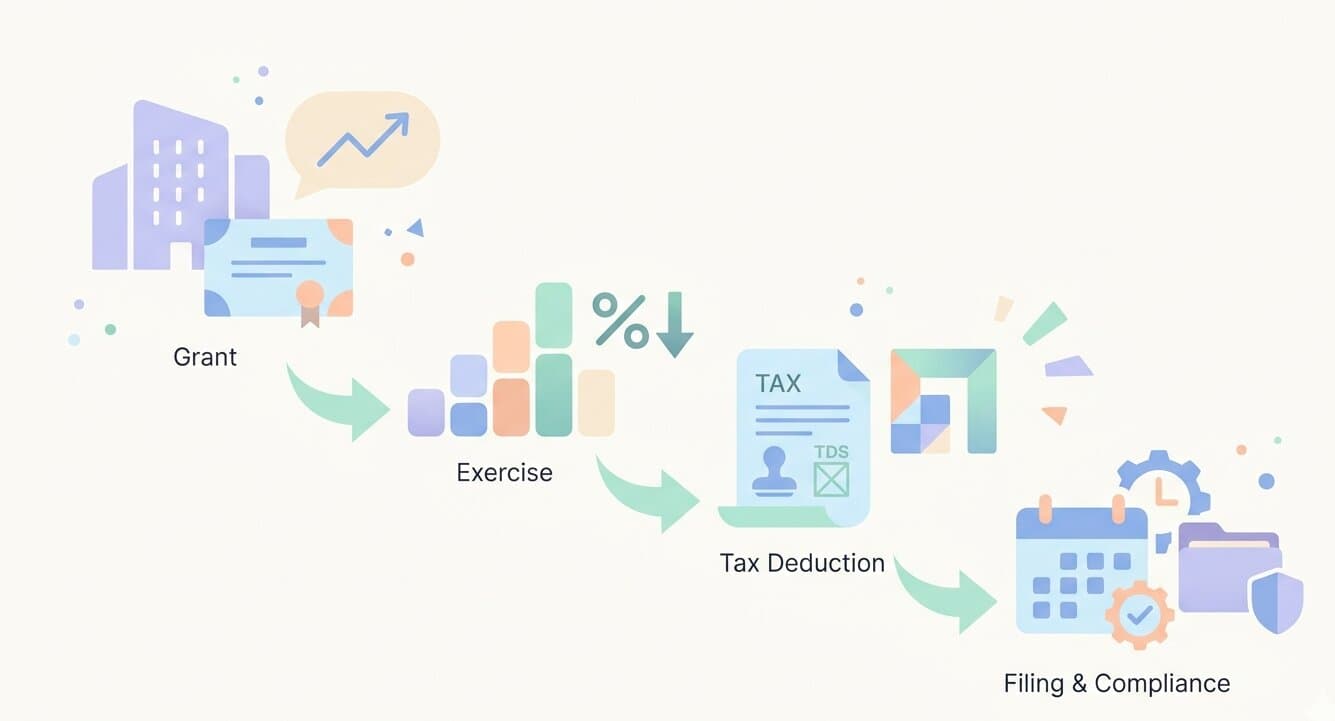
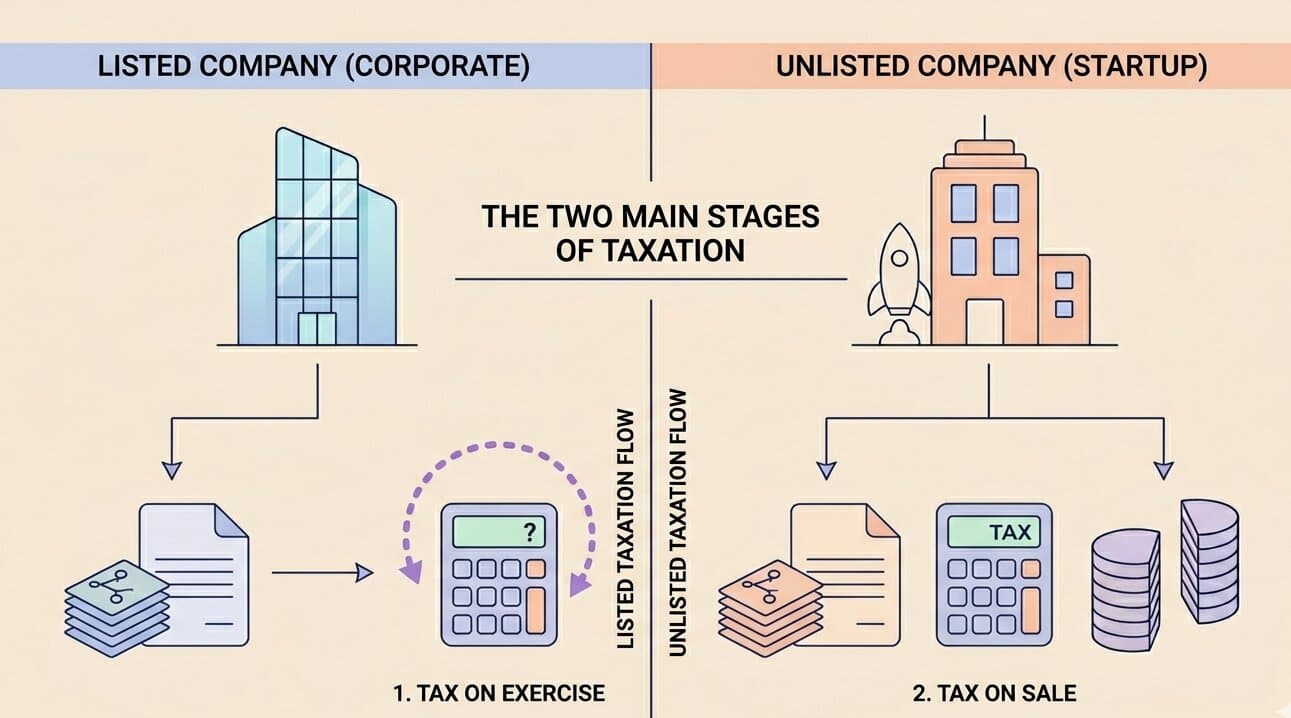
1. Tax at Exercise Stage (Perquisite Tax)
Taxable Value = FMV – Exercise Price
Treated as salary income
Taxed as per income slab
2. Tax at Sale Stage (Capital Gains)
Capital Gain = Sale Price – FMV at exercise
Tax depends on holding period
Example
Exercise Price = ₹50
FMV = ₹150
Sale Price = ₹250
₹100 taxed as salary
₹100 taxed as capital gains
This structure directly impacts returns from the employee stock ownership plan.
Key Compliance Requirements
To implement a compliant ESOP plan, companies must follow:
Companies Act, 2013 provisions
Rule 12 of Share Capital Rules
Board Resolution and Special Resolution
Filing of MGT-14 and PAS-3
Maintenance of ESOP register
Proper valuation reports
These steps ensure proper execution of the employee share ownership plan.
Practical Insights for Indian Startups
Startups often face challenges in ESOP valuation due to uncertain future growth.
Key Tips:
Use DCF method for better valuation accuracy
Ensure valuation is done by a merchant banker
Keep documentation ready for tax scrutiny
Communicate valuation logic to employees
Example:
An early-stage startup may show low profits but high future potential. In such cases, DCF-based ESOP valuation helps justify higher share value and aligns employee expectations.
Conclusion
The valuation of ESOPs for startups under the Income Tax Act, 1961 plays a critical role in both compliance and employee wealth creation. A properly valued ESOP plan ensures fair taxation and transparency.For Indian startups and private limited companies, combining correct ESOP valuation, legal compliance, and understanding of ESOP taxation in India is essential. It not only avoids legal issues but also strengthens the trust of employees. In the long run, a well-structured employee stock option scheme transforms employees into stakeholders—driving growth, innovation, and long-term success.
Need expert ESOP valuation under Income Tax rules? Accorp Partners can help you with accurate valuation and full compliance support.