.svg)
.svg)
.svg)
SOC 2 vs SecNumCloud: What French Enterprise Buyers Are Actually Looking For
Understand SOC 2 vs SecNumCloud, French sovereignty requirements, and what SaaS companies need to meet security expectations in the French market.

Accorp Compliance Team
Our team of compliance experts specializes in PCI DSS, SOC 2, and other security frameworks to help businesses achieve and maintain compliance.
Every SaaS company selling into France eventually runs into the same wall. You've got a clean SOC 2 audit report, your US and UK deals close without much friction, and then a French procurement team sends back a question nobody on your sales side quite knows how to answer: "is your infrastructure SecNumCloud qualified?" If you're not familiar with the French regulatory landscape, this can feel like an entirely new compliance mountain appearing out of nowhere. It isn't, exactly — but understanding why French buyers ask this question, and what your SOC 2 compliance actually does and doesn't cover in their eyes, is worth getting straight before it costs you a deal.
This piece walks through what SecNumCloud actually is, why it exists alongside SOC 2 rather than replacing it, and how companies selling into the French market typically navigate both.
Why French Buyers Don't Treat SOC 2 as the Final Answer
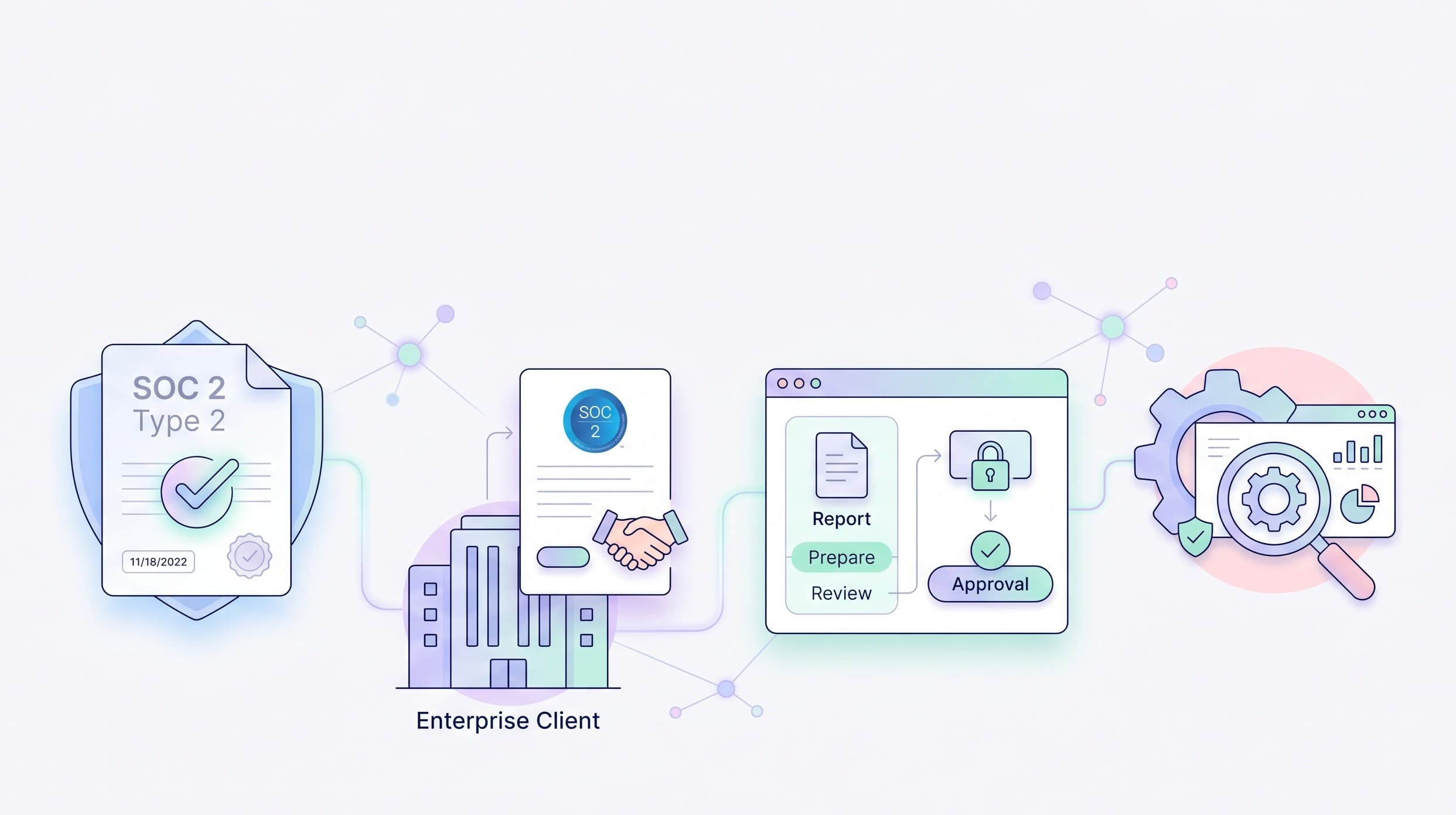
A SOC 2 audit report tells a customer that an independent CPA firm examined your controls and, for a SOC 2 Type 2 audit specifically, found them operating effectively over a real review period. That's a meaningful signal almost everywhere in the world — but France layers a second, distinctly French concern on top of it: sovereignty. Specifically, whether a foreign government can compel access to your data regardless of where your servers physically sit.
This concern isn't hypothetical for French regulators. It's the direct legacy of the US CLOUD Act, which gives American authorities a legal pathway to request data held by US-based cloud providers even when that data is stored outside the United States. A SOC 2 report — being an American attestation framework, built around AICPA standards — doesn't address this concern at all, because it was never designed to. It tells a buyer your controls work. It says nothing about which country's courts can ultimately reach your data.
That gap is exactly what SecNumCloud was built to close.
What SecNumCloud Actually Is
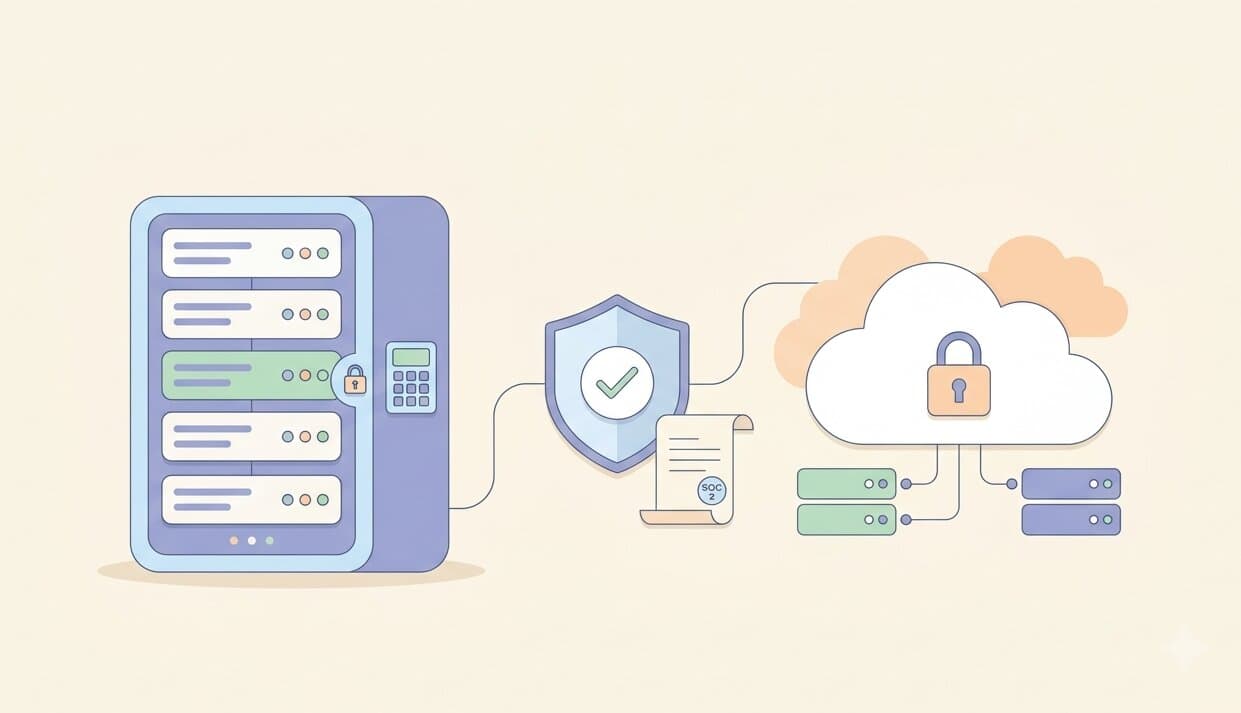
SecNumCloud is a qualification — not a certification in the SOC 2 sense — issued by ANSSI, France's National Cybersecurity Agency (Agence nationale de la sécurité des systèmes d'information). It defines a set of technical and organizational requirements a cloud provider must meet to be considered "trusted" for hosting sensitive French data, and it's increasingly the deciding factor for public sector contracts, Operators of Vital Importance (OVI), and Operators of Essential Services (OES) in France.
A few things distinguish it sharply from a SOC 2 audit report:
Sovereignty is baked into the requirement itself. SecNumCloud explicitly requires that the provider's capital and voting rights be majority-controlled within the EU — generally no more than 24% held individually, or 39% collectively, by non-EU entities. There's nothing equivalent to this in the SOC 2 framework, which doesn't concern itself with ownership structure at all.
It's a government-issued qualification, valid for a fixed term. SecNumCloud qualification runs for three years, with a surveillance audit roughly every eighteen months — a different rhythm entirely from the annual SOC 2 Type 2 report cycle most enterprise buyers expect.
It covers encryption key sovereignty specifically. Data must be encrypted at rest and in transit, with keys managed either by the provider or the customer — never by a third party subject to non-EU law. This is a meaningfully more prescriptive requirement than what SOC 2's encryption-related criteria typically demand.
Personnel security vetting is mandatory. Staff with access to sensitive systems must undergo security vetting as part of the qualification — something SOC 2 doesn't explicitly require in the same structured way.
The Common Misconception: "We Have SOC 2, So We're Covered in France"
This is the single most costly assumption I see companies make when they expand sales efforts into France. A SOC 2 Type 2 report demonstrates operational control maturity — access management, monitoring, incident response, change management — genuinely valuable things a French buyer's security team will still want to see. But it says nothing about data sovereignty, and for certain categories of French buyers, sovereignty isn't a nice-to-have, it's the entire point of the question.
Public sector buyers, operators tied to critical infrastructure, and increasingly, private enterprises handling sensitive commercial or health data are the segments where this distinction matters most sharply. The CNIL — France's data protection authority — has been explicit that the risk of unauthorized foreign-government access to hosted data is a real evaluation criterion, not an abstract legal footnote, when European organizations choose cloud providers.
If your sales team is fielding a French RFP and simply attaches the SOC 2 audit report as if it fully answers the sovereignty question, that gap will surface — either in the evaluation itself or later, when the buyer's legal or security team does its own deeper review.
SOC 2 and SecNumCloud Aren't Actually Competing Frameworks
It's worth being precise here, because "SOC 2 vs SecNumCloud" can make it sound like a company has to choose one path. In practice, they answer different questions and generally coexist. A SOC 2 auditor is testing whether your organizational controls work as designed and operated consistently — the same fundamental question whether your customer is in Ohio or Lyon. SecNumCloud is answering a narrower, France-specific question: can this data physically and legally be protected from foreign government access, given who owns and operates the infrastructure.
Many providers pursuing the French market end up holding both — SOC 2 compliance for the operational assurance American and international buyers expect, and SecNumCloud qualification (or partnering with a SecNumCloud-qualified hosting provider) for the sovereignty piece French public sector and critical-infrastructure buyers specifically require. Some SecNumCloud requirements are themselves partially derived from ISO 27001's Annex A, which means companies already building toward strong ISO or SOC 2 control maturity aren't starting from zero — but the sovereignty and ownership requirements are a genuinely separate lift that no amount of SOC 2 reporting rigor substitutes for.
Who Actually Needs SecNumCloud, and Who Can Rely on SOC 2 Alone
Not every company selling into France needs to chase SecNumCloud qualification, and it's worth being realistic about this rather than over-engineering compliance for a requirement that may not apply.
SecNumCloud tends to matter most for: French government agencies and public administration, Operators of Vital Importance and Operators of Essential Services under French law, and increasingly, private-sector buyers in regulated or sensitive-data industries who've adopted a "sovereignty-first" procurement posture as part of France's broader push toward digital sovereignty.
A strong SOC 2 Type 2 report is often sufficient for: commercial mid-market and enterprise French buyers whose primary concern is operational security maturity rather than sovereignty specifically, and companies whose French customers are subsidiaries of multinational organizations already comfortable evaluating SOC 2 reports as their standard vendor security artifact.
The honest starting point is asking your specific French prospect directly what their evaluation criteria actually require, rather than assuming either framework alone will universally satisfy every deal in that market.
What This Means for How You Position Your SOC 2 Reporting in French Deals
If SecNumCloud genuinely isn't in reach for your company right now — and for many SaaS businesses without EU-majority ownership, it structurally isn't — the more useful move is being upfront and specific about what your SOC 2 audit report does cover, rather than letting the buyer assume it addresses sovereignty when it doesn't. A well-prepared response to a French security questionnaire distinguishes clearly: "our SOC 2 Type 2 report demonstrates the following about our operational controls" versus "sovereignty and data residency are handled through [specific hosting arrangement, EU data center commitment, or partnership]," rather than treating SOC 2 alone as a universal answer.
Some companies address the gap practically by hosting the specific French or EU customer data in EU-based infrastructure with contractual sovereignty commitments, even without pursuing SecNumCloud qualification themselves — a middle path that satisfies commercial buyers' data residency concerns without the multi-year investment SecNumCloud qualification requires.
The Bigger Picture: France as Part of a Wider European Sovereignty Trend
It's worth noting that France isn't operating in isolation here. The EU's own Cybersecurity Certification Scheme for Cloud Services (EUCS) has drawn heavily on SecNumCloud's approach in its draft versions, and the sovereignty-versus-openness debate at the EU level remains genuinely unresolved as of mid-2026. Companies building a long-term European go-to-market strategy — not just a France-specific one — are increasingly finding that sovereignty questions once unique to French buyers are surfacing, in milder forms, across German, and other EU enterprise conversations too.
Where Accorp Fits In
Accorp Partners works with companies navigating exactly this gap — helping SaaS and technology businesses understand what their existing SOC 2 compliance program actually demonstrates to a French buyer, where the sovereignty conversation genuinely requires something beyond a SOC 2 audit report, and how to position both honestly during a French enterprise sales cycle rather than discovering the gap mid-negotiation.
Frequently Asked Questions
1. Does a SOC 2 Type 2 report satisfy French enterprise security requirements?
Often yes for commercial deals focused on operational security maturity, but not for buyers specifically requiring sovereignty guarantees — SOC 2 doesn't address data ownership or foreign-government access risk at all.
2. Can a US-owned company become SecNumCloud qualified?
Only if it meets ANSSI's EU-majority ownership thresholds — generally no more than 24% individual or 39% collective non-EU capital and voting control — which structurally excludes many US-headquartered SaaS companies.
3. Is SecNumCloud replacing SOC 2 for companies selling into France?
No. They answer different questions — SOC 2 reporting addresses operational control effectiveness, while SecNumCloud specifically addresses sovereignty and foreign-government access risk.