.svg)
.svg)
.svg)
Why SOC 2 Matters Today
Learn what SOC 2 really means, key SOC Type 2 requirements, core report components, and how organizations safeguard customer data effectively.

Accorp Compliance Team
Our team of compliance experts specializes in PCI DSS, SOC 2, and other security frameworks to help businesses achieve and maintain compliance.
When businesses start looking into SOC 2 compliance, it can sometimes feel a little overwhelming. The terminology is technical, the frameworks are nuanced, and the requirements aren't always straightforward. But SOC 2 doesn't have to be intimidating. Let's break it down and answer some of the common questions we hear from clients.
With the rise of cloud computing, protecting sensitive information has become critical. Nearly 80% of organizations rely on cloud providers such as AWS, Google Cloud, Azure, or DigitalOcean to store and manage their data. While convenient, this also means trusting third parties with security. Unfortunately, data breaches are still happening daily — costing companies billions each year.
In the U.S., many data security rules are industry-specific. For example:
PCI DSS focuses on credit card information.
HIPAA protects patient health records.
CCPA governs personal data for California residents.
SOC 2 is a little different. Instead of applying to just one industry, it provides a framework for evaluating how any service organization handles security, availability, privacy, and more.
What Exactly Is a SOC 2 Report?
A SOC 2 audit report helps an organization demonstrate that it has effective internal controls in place to safeguard customer data. It's prepared for service organizations and shared with clients or stakeholders as assurance that proper governance, IT, and operational practices are being followed.
Unlike other compliance frameworks that come with rigid checklists, SOC 2 is principles-based. The AICPA SOC 2 framework provides a set of criteria, and organizations choose which ones apply to their services. Auditors then evaluate whether controls are designed and operating effectively against those criteria.
A quick story: during one of our SOC 2 readiness assessments, we worked with a client who had outsourced system development to a vendor. That vendor proudly presented their "SOC 2 report." But when we reviewed it, we noticed something alarming: there was no independent auditor's opinion. Instead, the vendor had simply written their own statement saying controls were in place. Without a CPA firm's opinion, it's not a real SOC 2 report — just a self-assessment. This is why understanding the required components of a SOC 2 report is so important.
Core Components of a SOC 2 Report
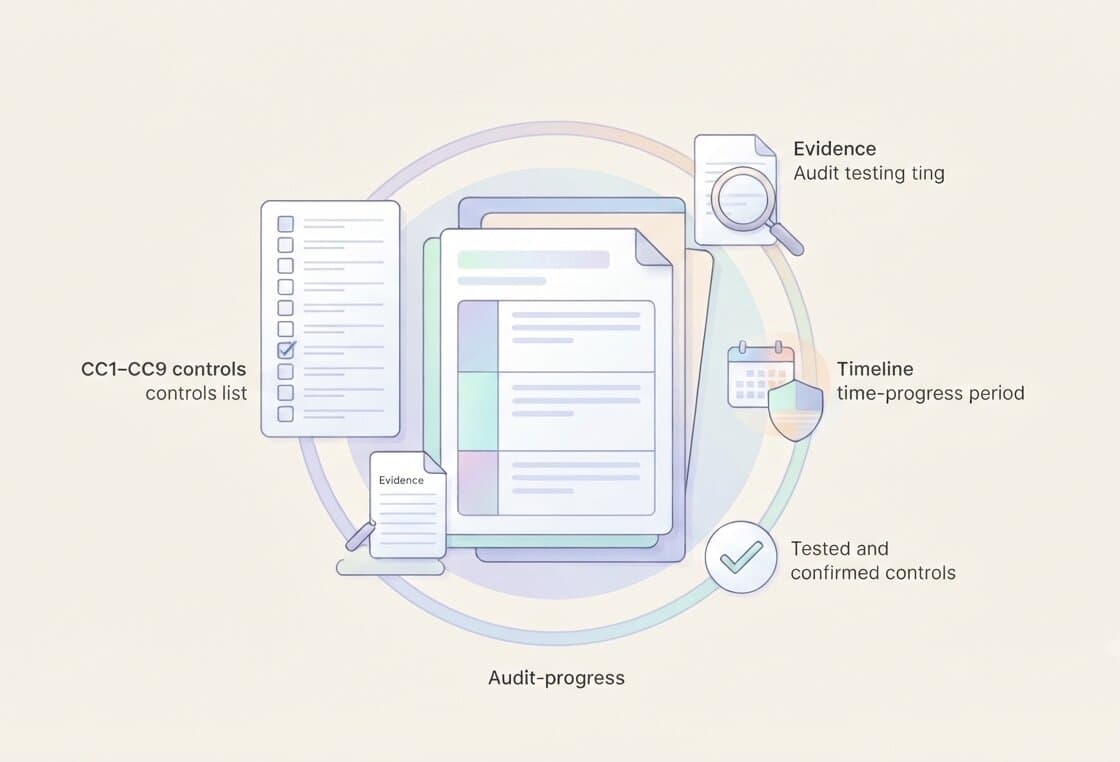
A legitimate SOC 2 audit report should include:
1. Independent Auditor's Report (Opinion Letter)
Performed by a licensed CPA firm.
States whether the organization's controls meet the criteria.
Provides an opinion: unqualified, qualified, adverse, or disclaimer.
2. Management's Assertion
A statement from management confirming that controls were designed and implemented in line with the Trust Services Criteria (TSC).
For a SOC 2 Type 2 report, it also confirms controls were operating during the audit period.
3. System Description
A detailed overview of the systems covered, including services, infrastructure, software, processes, and data management.
Helps readers understand how the organization operates and secures information.
Applicable Trust Services Criteria (TSC):
At least the Security category (mandatory).
Optional categories include Availability, Processing Integrity, Confidentiality, and Privacy.
4. Tests of Controls and Results (required for Type II, optional for Type I)
Lists security controls and how auditors tested them (e.g., inspection, inquiries, or system testing).
Shares test results and highlights any gaps or weaknesses.
5. Additional Information (Optional)
Organizations may include future improvement plans, remediation steps, or supporting policies.
What Are the Trust Services Criteria (TSCs)?
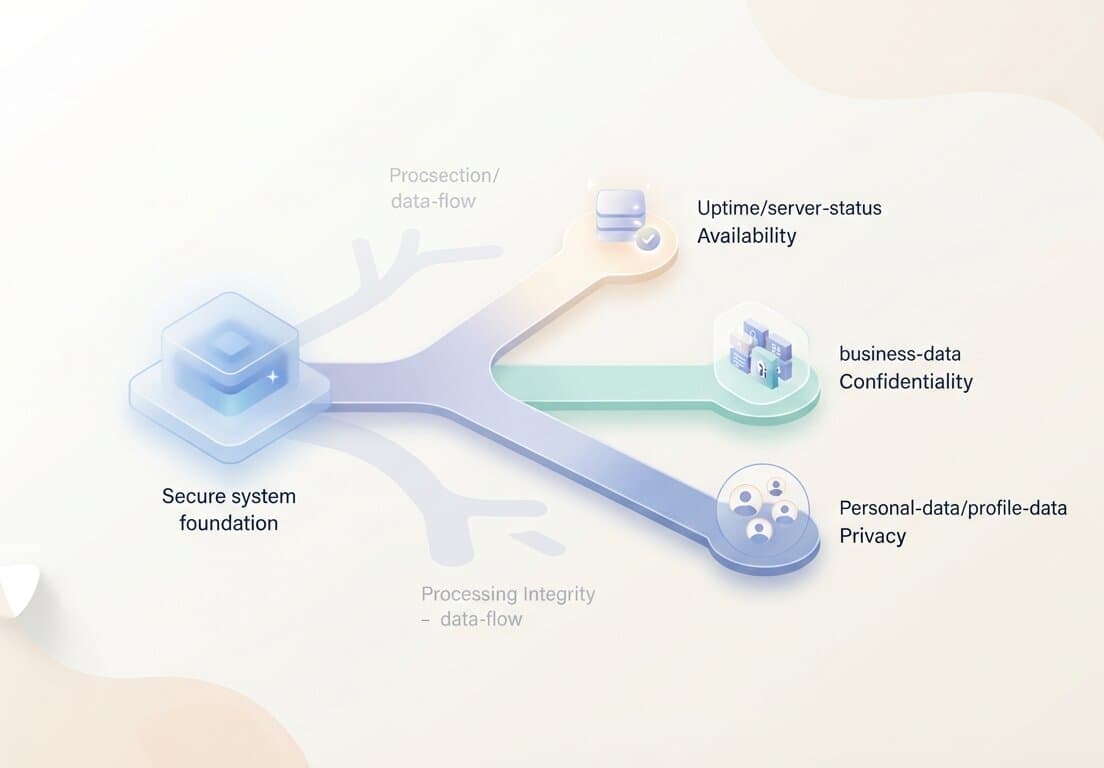
The Trust Services Criteria are the backbone of AICPA SOC 2. Here's a quick overview:
Security – Protection against unauthorized access (required for all reports).
Availability – Ensuring systems are reliable and accessible as promised.
Processing Integrity – Confirming data is processed accurately and in full.
Confidentiality – Safeguarding business-sensitive information.
Privacy – Proper handling of personal data.
Not every organization needs all five. For instance, if your business doesn't process transactions, "processing integrity" likely isn't relevant. We sometimes meet clients who want to include every category, thinking it will make their report "stronger." While that sounds logical, it can also create unnecessary complexity. The right approach is to select only the criteria that apply to your business and commitments to clients.
SOC 2 Type 1 vs. SOC 2 Type 2: What's the Difference?
A question we hear constantly is: what's the difference between a SOC 2 Type 1 Audit and a SOC 2 Type 2 audit?
A SOC 2 Type 1 Audit evaluates whether your controls are designed appropriately — assessed at a single point in time.
A SOC 2 Type 2 audit goes further — it tests whether those controls were actually operating effectively over a defined review period, typically six to twelve months.
For organizations just beginning their SOC 2 compliance journey, a Type 1 audit can be a practical starting point. It gives you a clear snapshot of your current security posture and helps identify control gaps before committing to a full Type 2 engagement.
The SOC 2 Process: What to Expect
Understanding the SOC 2 process from start to finish makes the journey far less daunting. Here's a simplified overview of how it typically works:
Scoping – Determine which systems, services, and Trust Services Criteria fall in scope.
Readiness Assessment – A SOC 2 readiness assessment identifies control gaps before the formal audit begins.
Remediation – Address the gaps discovered during the readiness phase.
Audit Fieldwork – Your SOC 2 auditor will test controls through interviews, documentation reviews, and system testing.
Report Issuance – The final SOC 2 audit report is issued, complete with the auditor's opinion and detailed test results.
Partnering with experienced SOC 2 audit firms ensures the process is efficient, well-structured, and fully aligned with AICPA SOC 2 standards.
Why SOC 2 Compliance Matters More Than Ever
In today's digital-first environment, enterprise clients and business partners increasingly require proof of strong data security practices before signing contracts. A clean SOC 2 audit report:
Builds measurable trust with potential clients
Shortens sales cycles and removes procurement blockers
Reduces the risk and financial impact of data breaches
Demonstrates a mature, well-governed security program
SOC 2 compliance isn't just a checkbox — it's a genuine competitive advantage that signals to the market that your organization takes data protection seriously.
Conclusion
SOC 2 may feel complex at first glance, but with the right guidance, the SOC 2 process becomes manageable and highly rewarding. Whether you're starting with a SOC 2 Type 1 Audit or moving directly into a SOC 2 Type 2 audit, what matters most is understanding your systems, selecting the right criteria, and working with a qualified SOC 2 auditor every step of the way.