.svg)
.svg)
.svg)
Major Tax Benefits of ESOPs in India
Explore key tax benefits of ESOPs in India, including deferred taxation, capital gains advantages, startup relief, and compliance insights for companies.

Accorp Compliance Team
Our team of compliance experts specializes in PCI DSS, SOC 2, and other security frameworks to help businesses achieve and maintain compliance.
In India’s startup ecosystem, an ESOP (Employee Stock Option Plan) has become a popular tool for rewarding employees and saving taxes efficiently. For founders, CFOs, and HR professionals, understanding the major tax benefits of ESOPs in India is essential for smart financial planning.
An employee stock option plan not only promotes employee ownership but also offers structured tax advantages when planned correctly. This blog explains ESOPs from an Indian perspective, including legal framework, process, and key taxation benefits.
What are ESOPs and how do they work?
An employee stock ownership plan (ESOP) allows employees to purchase company shares at a fixed price after a certain period. It is also referred to as an employee share option plan or employee stock option scheme.
In India, ESOPs are governed by the Companies Act, 2013 and Rule 12 of Companies (Share Capital and Debentures) Rules, 2014. These rules make ESOPs applicable for private limited companies in India, ensuring proper compliance.
Through an ESOP plan, companies offer stock options for employees, enabling them to become part of the company’s growth journey via employee share ownership.
How does the ESOP issuance process work in India?(Step-by-Step)
Implementing an ESOP scheme requires following a structured legal process:
1. Draft the ESOP Plan
Prepare a detailed stock option plan including:
Eligible ESOP employee categories
Number of ESOP stock options
Vesting period and exercise price
2. Board Resolution
Conduct a Board Meeting
Approve the employee ownership plan
Authorize ESOP implementation
3. Shareholder Approval
Pass a Special Resolution
File MGT-14 with ROC
This is mandatory under the Companies Act, 2013.
4. Grant of Options
Issue grant letters with share options for employees
Define vesting schedule
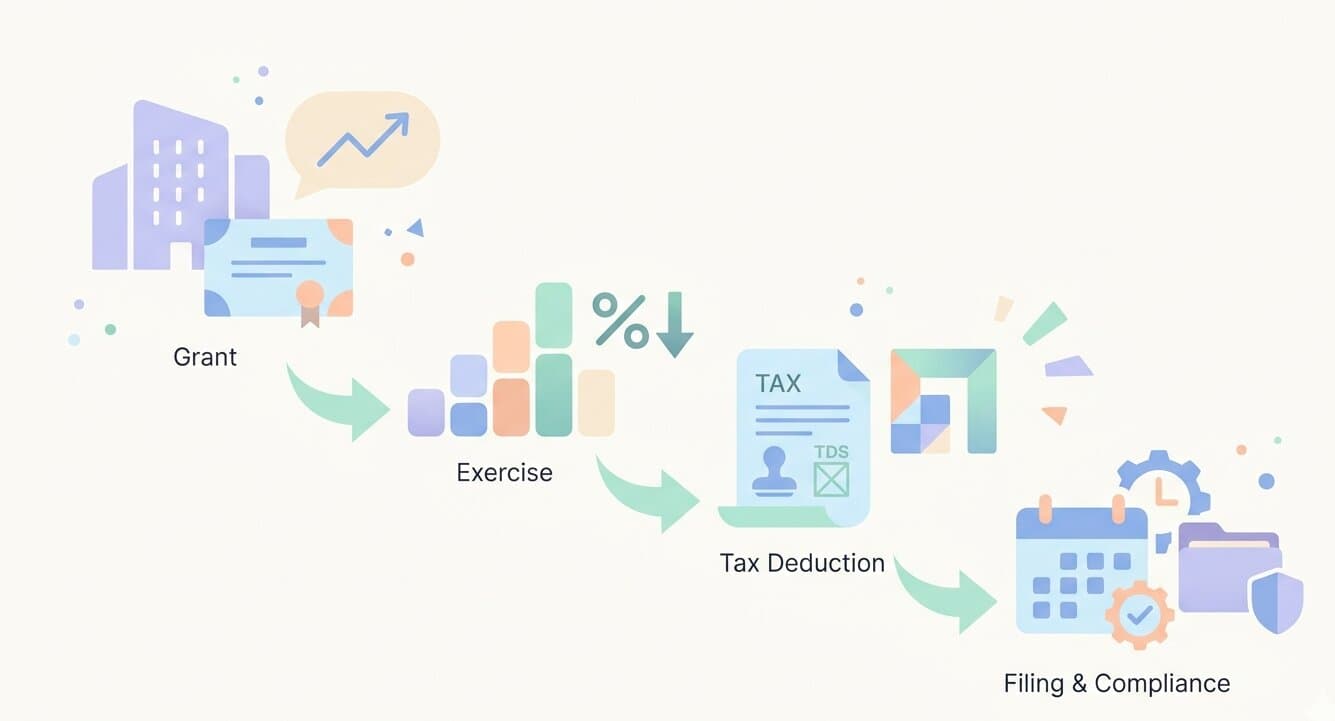
5. Exercise and Allotment
Employees exercise options
Shares are allotted
File PAS-3
6. Maintain Records
Maintain statutory registers
Ensure compliance reporting
This process ensures proper implementation of the employee share ownership plan.
What is ESOP valuation in India?
ESOP valuation determines the fair market value (FMV) of shares.
Conducted by a registered valuer or merchant banker
Required for tax calculation and compliance
Helps define exercise price
Proper valuation ensures transparency in the ESOP plan.
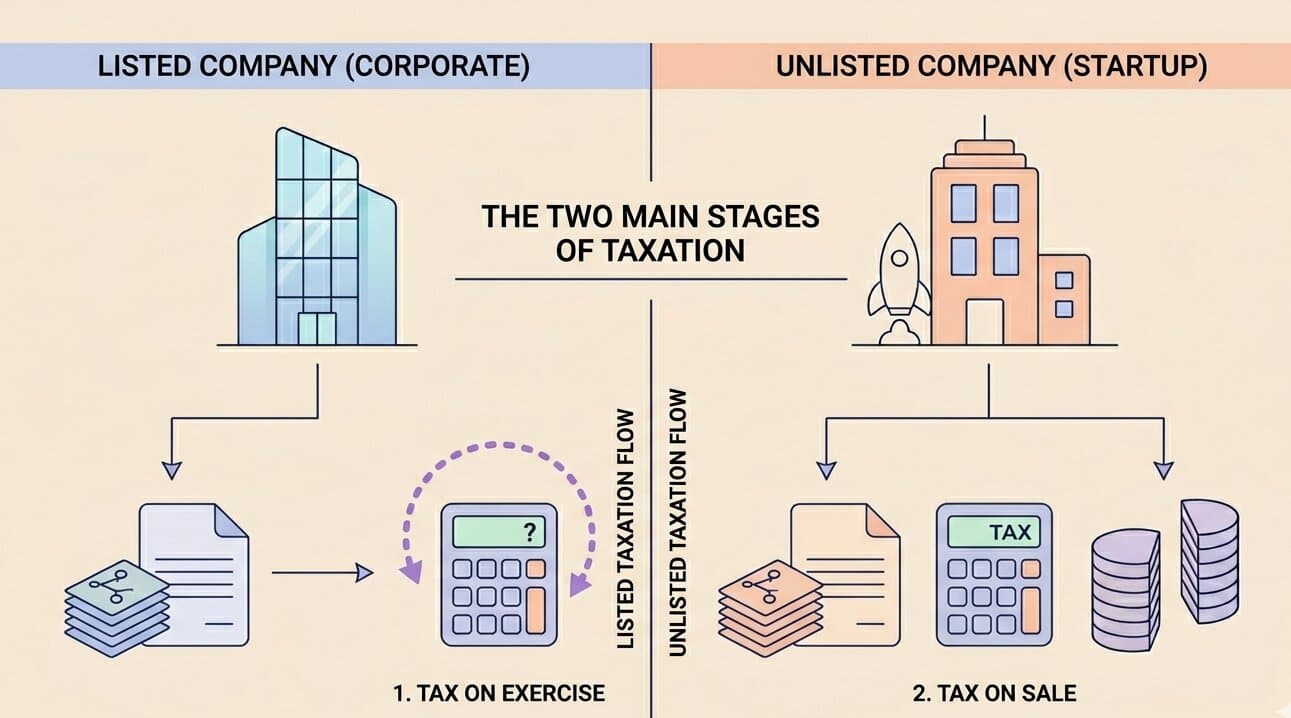
How does ESOP taxation work in India?
Understanding ESOP taxation in India is key to unlocking its benefits.
1. Tax at Exercise Stage (Perquisite Tax)
When an employee exercises options:
The difference between FMV and exercise price is taxed as salary
This is called perquisite tax
2. Tax at Sale Stage (Capital Gains)
When shares are sold:
Profit is taxed as capital gains
Depends on holding period (short-term or long-term)
What are the major tax benefits of ESOPs in India?
Despite taxation at two stages, ESOPs offer significant benefits when structured properly:
1. Deferred Tax Liability
One of the biggest advantages of an ESOP in India is tax deferral.
Employees are taxed only at exercise, not at grant
Helps delay tax burden until actual benefit is received
2. Startup Tax Relief (Eligible Cases)
For eligible startups (as per DPIIT recognition):
Tax on perquisite can be deferred
Payment allowed within specified timelines
This makes ESOPs highly attractive in startup ecosystems.
3. Capital Gains Advantage
If shares are held for a longer period:
Employees benefit from lower long-term capital gains tax
Encourages long-term employee ownership
4. Wealth Creation Opportunity
Unlike salary:
ESOPs allow employees to earn from company growth
Higher returns if company valuation increases
This strengthens the ESOP employee owned culture.
5. Tax Efficiency for Employers
Companies also benefit:
ESOP cost can be treated as an expense
Helps in tax planning and profit management
This is why many ESOP companies prefer this model.
What are the compliance requirements for ESOP in India?
To ensure smooth execution of an employee stock option plan, companies must follow:
Companies Act, 2013 provisions
Rule 12 of Share Capital Rules
Filing of MGT-14 and PAS-3
Maintenance of ESOP registers
Proper disclosures in Board Report
Compliance is essential for legal validity of the employee stock ownership plan.
Conclusion
An ESOP plan is not just an employee benefit—it is a powerful tax and wealth creation tool for both companies and employees. When structured correctly, it offers deferred taxation, capital gains benefits, and long-term financial growth.For startups and private limited companies in India, ESOPs help build a strong culture of employee ownership while also optimizing tax efficiency. Understanding ESOP taxation in India and following proper compliance ensures maximum benefits.In the long run, an ESOP employee becomes a true partner in the company’s success—making ESOPs a smart and strategic choice for modern businesses.
Looking to implement an ESOP plan with proper valuation and compliance? Accorp partners can help you set up and manage ESOPs seamlessly.