EOR or Your Own Entity in India? A CPA's Break-Even Analysis by Headcount
EOR vs subsidiary India: see how many employees make your own entity cheaper than an employer of record, plus control, tax and PE factors.

Accorp Compliance Team
Our team of compliance experts specializes in PCI DSS, SOC 2, and other security frameworks to help businesses achieve and maintain compliance.
For a small team, an employer of record (EOR) is almost always cheaper and faster than your own Indian company. For a larger, long-term team, your own subsidiary usually wins. The real question in any EOR vs subsidiary India decision is where the lines cross, and that depends on a few numbers you can estimate yourself.
This guide gives you the formula a CPA would use, three worked scenarios built on clearly stated assumptions, and the non-cost factors that can override the arithmetic. The figures here are illustrations. Replace them with real quotes before you decide.
Your Options for Hiring in India
There are three routes if you want to hire employees in India without an entity, and only one of them is really about employees.
Independent contractors. Fast and cheap on paper, but only valid when the relationship is genuinely independent. If you direct their hours and methods, they behave like employees, and that creates misclassification and tax exposure. It is not a long-term route for a core team.
An employer of record. An employer of record India provider employs your staff through its own Indian company. The EOR issues the contracts, runs payroll, deducts and pays statutory contributions, and carries employer compliance. You direct the work. A PEO, by contrast, needs you to have your own entity already, so it is not an alternative for a company starting from zero.
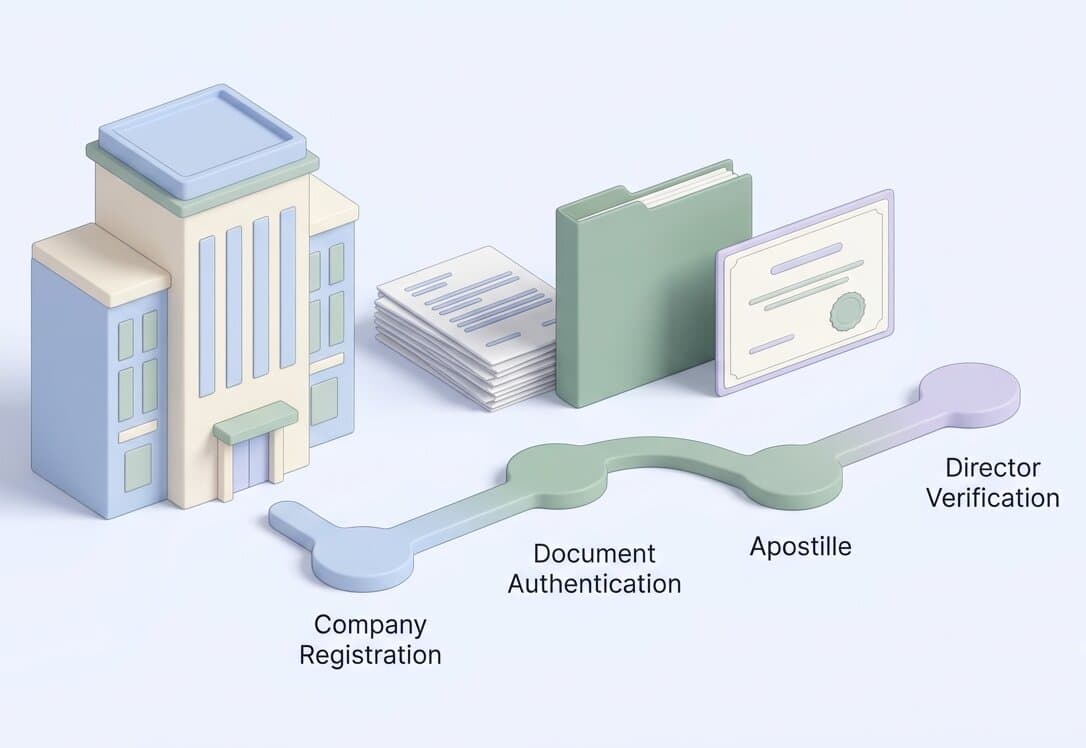
Your own subsidiary. You incorporate a private limited company, employ people directly, and take on all filings and compliance yourself, usually with an accountant or advisor. Our Incorporation Services cover this route end to end.
What Is the Same and What Differs
Before you compare costs, strip out what does not change. In both models, you pay the employee's salary and the employer's statutory contributions, such as provident fund and other benefits. Those are real costs under either structure, so leave them out of the comparison.
What differs is overhead.
With an EOR, you pay a recurring fee per employee. Market quotes vary by provider and scope, and one commonly cited range is roughly $99 to $299 per employee per month on top of employment costs. That works out to about $1,200 to $3,600 per employee per year.
With your own entity, you carry fixed annual costs that do not depend on headcount: statutory audit, company filings, income tax and transfer pricing work, bookkeeping, GST and payroll compliance, FEMA reporting, a resident director arrangement and a registered office. You also pay a one-time setup cost, plus a small incremental cost per additional employee for payroll and HR administration.
The Break-Even Formula
Here is the calculation:
Break-even headcount = (annual fixed entity cost + setup cost spread over the years you expect to use it) ÷ (annual EOR fee per employee − extra admin cost per employee in your entity)
In words: every employee moved from an EOR to your entity saves you the EOR fee but costs a little in admin. Those savings have to pay off the fixed cost of running the entity. The headcount where savings equal fixed cost is your break-even.
What Moves Your Break-Even
A few levers change the answer more than anything else.
EOR fee and what it includes. A low headline fee can hide extras such as onboarding charges, benefits administration or termination fees. Compare total cost, not the base fee. Fees often fall as headcount grows, which pushes break-even higher.
Entity running cost. The biggest swing factor. A simple private limited company with a small team and basic transactions costs far less to maintain than one with several lines of business, multiple states, or complex intercompany flows. Get a written estimate of annual compliance cost, not just incorporation.
Salary level. Percentage-based EOR fees make senior hires costlier. If you hire expensive roles, break-even comes sooner.
Growth speed. If you will double headcount within a year, a break-even calculated on today's team understates the case for an entity. If hiring is uncertain, an EOR keeps you flexible.
Time horizon. Setup cost spread over a longer period weighs less, which favours the entity for a long-term commitment.
Reasons That Override the Math
Some factors matter more than cost, and they can push you to an entity before break-even.
You plan to sell to Indian customers. An EOR cannot sign contracts with Indian customers for you, issue Indian invoices or collect Indian revenue. If India is a market, not just a talent pool, you need an entity.
Permanent establishment exposure. An EOR reduces permanent establishment risk, but it does not remove it, because the exposure depends on what your people actually do. If staff in India habitually negotiate or conclude contracts for the foreign company, tax authorities may treat it as having a taxable presence regardless of who the legal employer is. A subsidiary paid at arm's length for defined services is the standard structure to contain this.
IP, data and sensitive roles. If employees handle core IP or confidential data, many companies prefer to employ them directly under their own contracts and policies.
Equity and culture. Granting stock options to Indian employees and building a local employer brand are easier through your own company.
Senior leadership and a local head. A country manager, a regional team or a development centre all point to an entity.
What Changes Once You Have an Entity
Owning a subsidiary brings obligations you do not have with an EOR, and they belong in the cost side of your model. Capital that you send in is regulated under FEMA, and our guide to FEMA compliance explains how the rules apply to foreign-owned companies.
You must also report share allotments to the RBI within the prescribed time. Our RBI reporting guide lists each form and deadline. Intercompany charges need transfer pricing support as well. The US parent has its own reporting duties. Read our Form 5471 guide for US persons owning an Indian company to see what applies.
If you are weighing the whole structure, our comparison of an Indian subsidiary of a US company versus the reverse arrangement is a useful read. The entity route is also more document-heavy to start. If you are a foreign founder, our guide on setting up remotely without travelling to India shows how the process works. For the incorporation steps themselves, our checklist for a wholly owned subsidiary in India covers what you need.
The Hybrid Path: EOR First, Entity Later
Most companies do not choose one forever. A common path is to start with an EOR to test the market, then incorporate once the team grows and the plan is clear. The EOR can usually transition employment contracts to your new Indian company, with continuity of service so employees are not treated as new joiners. Only the legal employer changes.
Time the move carefully. Incorporation, bank account opening and capital remittance take weeks, so begin around three months before you expect to reach break-even or need to sell in India. Check your EOR contract before you commit: notice periods, any transfer or buyout fee, and non-solicitation terms can all affect the cost and timing of the switch.
A Quick Decision Checklist
Fewer than five hires, no sales in India, uncertain plans: use an EOR.
Between five and fifteen hires: run the formula with real quotes, and weigh control and PE factors.
More than fifteen hires, or a clear long-term plan: lean towards an entity.
Selling to Indian customers, handling core IP, or granting equity: lean towards an entity, whatever the headcount.
Unsure: start with an EOR, set a headcount or revenue trigger, and plan the switch in advance.
The Takeaway
The right answer depends on your numbers, so calculate them: annual entity cost, setup cost, EOR fee and extra admin per head. Use an EOR while the team is small or the plan is uncertain, and move to your own entity when the fixed cost is cheaper than the fees you would keep paying, or sooner if you will sell in India or handle sensitive IP.
Working out where your break-even falls? Talk to Accorp Partners about an annual cost estimate for an Indian subsidiary and a smooth EOR-to-entity transition.
Frequently Asked Questions
1. Can I hire employees in India without setting up a company?
Yes. An employer of record employs staff through its own Indian entity, so you can hire without incorporating. You direct the work, and the EOR handles contracts, payroll and statutory compliance. Contractors are another route, but they only work when the person is genuinely independent.
2. How many employees justify setting up my own entity?
There is no fixed number. Many companies land between about 10 and 15, but our scenarios range from roughly 5 to over 30 depending on EOR fees and entity running costs. Use the formula with real quotes, and add non-cost factors such as sales in India and permanent establishment risk.
3. Does using an EOR remove permanent establishment risk?
It reduces it but does not eliminate it. The risk depends on what your people do. If they habitually negotiate or conclude contracts on behalf of the foreign company, a taxable presence can arise even through an EOR. Get tax advice on the specifics.
4. Can an EOR sell to customers in India for me?
No. An EOR employs your people. It does not contract with your customers, invoice in India or collect Indian revenue for you. If you sell into India, you need your own entity or another suitable arrangement.
5. What ongoing compliance does an Indian subsidiary need?
An audit, annual company filings, income tax returns, transfer pricing documentation where it applies, GST and payroll compliance, and FEMA reporting such as the annual FLA return. Budget for these in your annual cost, not only the incorporation fee.