.svg)
.svg)
.svg)
GIFT City vs Regular Pvt Ltd: Tax Holiday, Repatriation & Who It Actually Suits
GIFT City vs Pvt Ltd in India: Compare tax benefits, eligibility, repatriation, compliance costs, and choose the right structure for your business.

Accorp Compliance Team
Our team of compliance experts specializes in PCI DSS, SOC 2, and other security frameworks to help businesses achieve and maintain compliance.
A founder I spoke with last quarter had already decided, before we'd even discussed his business model, that he wanted to set up in GIFT City. He'd heard "zero tax" and "instant repatriation" and treated the decision as settled. Twenty minutes into the conversation, it became clear his business — a domestic B2C subscription product selling entirely to Indian consumers — was about the worst possible fit for an IFSC entity. He needed a standard Pvt Ltd, plain and simple.
That mismatch is common enough that it's worth working through the actual numbers and mechanics, rather than the marketing pitch, before anyone commits to either structure.
What the Tax Holiday Is Actually Worth
Under Section 80LA of the Income Tax Act, an eligible unit operating in GIFT City's International Financial Services Centre can claim a 100% deduction on business profits for any 10 consecutive years out of its first 15 years of operation. That's a genuine zero-percent effective corporate tax rate during the holiday period — not a reduced rate, not a rebate, a full exemption on eligible income. The 2026 Budget went further for certain capital-intensive categories, extending the exemption window to 20 consecutive years within a 25-year block for sectors like aircraft leasing, ship leasing, and reinsurance, recognising that those businesses need a longer runway before the incentive pays off.
Compare that to a standard Indian private limited company, which pays corporate tax at 22% under the concessional regime (Section 115BAA) for most domestic companies, or 25% for companies above certain turnover thresholds that haven't opted into the concessional scheme. There's no holiday, no exemption window — tax applies from year one, on every rupee of profit.
On paper, that gap looks enormous. In practice, it only matters if your business actually generates the kind of income the exemption applies to.
The Eligibility Filter Most Founders Miss
Section 80LA's exemption isn't a blanket incentive for any company that registers an address in Gandhinagar. It's built for a specific category of activity: banking units, insurance and reinsurance operations, fund managers, stock exchanges, depositories, clearing corporations, merchant banking and broking operations, ship and aircraft lessors, and other entities specifically notified under the IFSC framework. These are financial services businesses, by design, serving non-resident and international clients in foreign currency.
A domestic e-commerce company, a SaaS product selling primarily to Indian customers, a manufacturing unit, a professional services firm billing Indian clients in rupees — none of these fit the IFSC mould, no matter how the pitch decks might make GIFT City sound universally attractive. If your revenue isn't structured around eligible financial services activity conducted with non-residents, the tax holiday simply doesn't apply to you, and setting up there buys you SEZ-style compliance overhead without the offsetting benefit.
Repatriation: Where GIFT City's Real Edge Shows Up
Tax exemption gets most of the attention, but the repatriation mechanics are arguably the more distinctive advantage for the businesses that do qualify. A GIFT City IFSC unit operates in foreign currency, is treated for regulatory purposes as located outside India's domestic tariff area, and profits can be repatriated without the RBI lock-in periods or approval layers that apply to standard cross-border remittances from a domestic Indian company. For a fund manager or an insurance entity moving capital in and out regularly, that difference in friction compounds meaningfully over a year of transactions.
A regular Pvt Ltd company, by contrast, repatriates profits to foreign shareholders as dividends — a straightforward process, but one that runs through standard banking channels, requires the usual RBI-compliant documentation, and is denominated in rupees converted at the point of remittance rather than held and moved in foreign currency throughout. It's not a difficult process, but it's not the same frictionless, foreign-currency-native environment that an IFSC unit operates in by design.
For a business that genuinely trades in foreign currency and repatriates frequently — fund structures, treasury operations, cross-border lending books — this mechanical difference can matter more than the headline tax number.
The Cost Side Nobody Puts in the Comparison
What tends to get left out of GIFT City pitches is the compliance and operating cost that comes with the structure. An IFSC unit is regulated by the International Financial Services Centres Authority, on top of whatever sectoral regulator applies to the specific activity — banking, insurance, or securities. That means a genuinely separate regulatory relationship, IFSCA-specific reporting, and often the need for specialised compliance staff who understand IFSC rules specifically, not general Indian company law. Office space, staffing, and professional service costs in GIFT City also don't come at domestic-India pricing — you're operating in an environment built to global financial-centre standards, and the cost structure reflects that.
A standard India Pvt Ltt, by comparison, is by far the more familiar, lower-friction structure: standard Companies Act compliance, standard tax filings, no separate financial-sector regulator to answer to unless your business activity itself is regulated. For most founders — genuinely most — this is not just the cheaper option but the structurally correct one, because their business was never going to use the IFSC-specific benefits in the first place.
A Framework for Actually Deciding
Rather than asking "should I use GIFT City," a more useful question is what your revenue actually looks like. If your business earns income from financial services provided to non-residents — fund management, insurance underwriting for offshore risk, broking or asset servicing for international clients — and you expect to hold that structure for a decade or more to make the holiday period worthwhile, GIFT City's tax and repatriation architecture is built precisely for you.
If your revenue comes from Indian customers, in rupees, regardless of how international your founding team or investor base is, a standard Pvt Ltd company incorporated through the regular MCA process is almost always the right call. The tax holiday you'd be chasing doesn't apply to domestic-facing income, and you'd be adding a specialised regulatory relationship for no offsetting benefit.
There's also a middle case worth naming: founders who expect to eventually run an international holding or treasury function alongside a domestic operating business. In these situations, it's common to run two entities — a standard Pvt Ltd for the India-facing operating business, doing company formation in India the conventional way, and a separate GIFT City unit only once the treasury or fund-management side of the business has genuine scale to justify the second structure. Setting up the IFSC entity prematurely, before there's real qualifying activity to put through it, just means paying for infrastructure that sits idle.
What This Means for the Incorporation Process Itself
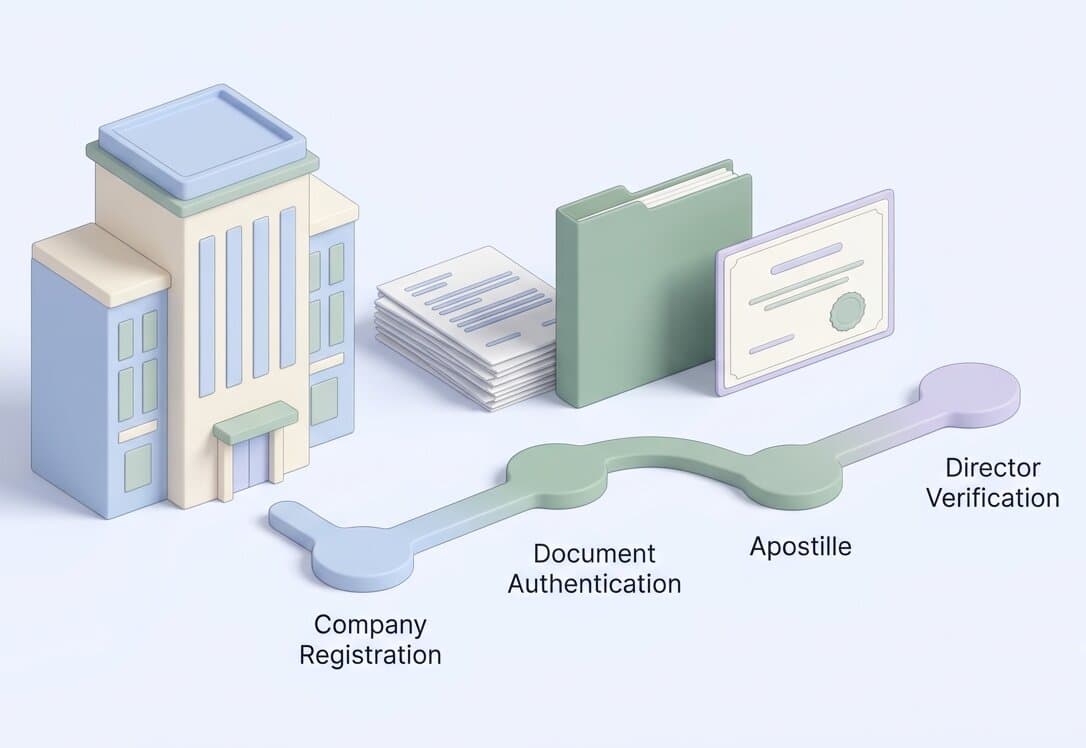
Whichever structure fits, the underlying registration process for founders working through how to open a company in India follows the same institutional backbone — Ministry of Corporate Affairs filings, PAN and TAN issuance, and RBI reporting where foreign capital is involved. What changes with GIFT City is the additional IFSCA registration layer sitting on top of that foundation, plus SEZ-specific compliance that a standard company never encounters.
For founders pursuing pvt ltd company registration in India as a conventional domestic or FDI-backed entity, the online registration of company process through SPICe+ remains the fastest and most direct route, and for the overwhelming majority of businesses — including most foreign-founded ones — it's also the correct one. GIFT City is a genuinely powerful structure, but it's powerful for a narrow, specific type of business, and the founders who benefit most from it are the ones who arrive at the decision by working backward from their actual revenue model rather than forward from the tax headline.