Switching SOC 2 Auditors: When It Makes Sense and How to Avoid a Gap in Your Report Coverage
Need to change SOC 2 auditor? Learn when switching makes sense, how to compare SOC 2 audit firms and how to avoid a gap in your report coverage.

Accorp Compliance Team
Our team of compliance experts specializes in PCI DSS, SOC 2, and other security frameworks to help businesses achieve and maintain compliance.
Change your SOC 2 auditor when the problem is fit, price or capability, and time the move to the boundary between report periods. Done that way, customers barely notice. Done mid-period, it can leave dates that no independent report covers, which is the one thing buyers do notice.
The trigger is usually familiar. A renewal quote lands 40% higher than last year. Fieldwork drags on for three months because nobody answers your emails. Or customers start asking whether your auditor is one of the recognised ones. This guide shows when a switch is justified, how to compare firms offering SOC 2 audit services, and how to protect your SOC 2 reporting continuity through the change.
Should You Switch? A Quick Decision Guide
Your situation | Switch? | Why |
Evidence arrived late and samples were missing | Fix preparation first | A new firm will hit the same problems and you pay the switching cost for little gain |
Fee up sharply with no change in scope | Get three quotes | A price comparison tells you whether the increase is fair |
Slow replies, a new contact on every call, shifting deadlines | Likely yes | These are signs of a poor fit |
You added products, regions or criteria and the firm lacks depth | Likely yes | You have outgrown the firm |
Enterprise buyers question the firm's reputation | Check with the buyers, then likely yes | A report your customers do not accept does not help sales |
Fieldwork starts within a few weeks | Stay this cycle | Switch at the next period boundary instead |
First, Work Out Whether the Auditor Is the Problem
Before you shop around, take an honest look at the last cycle. Some frustrations belong to the auditor and some belong to preparation.
If fieldwork was painful because evidence came late, samples were missing or controls were described vaguely, a new firm will meet the same problems. If the pain came from the auditor's side, it is different: slow responses, unclear requests, moving deadlines, or a team that does not understand how you work.
Signs It Is Time to Change Your SOC 2 Auditor
Fees that no longer match the value. A large unexplained increase, or charges for extras that were not in the engagement letter.
Poor communication. Weeks without answers, or a different contact each time.
You have outgrown them. New products, regions or additional criteria, and the firm lacks depth in your stack or industry.
Buyer pushback. Customers or their vendor risk teams question the firm's reputation or ask for a different type of auditor.
Slow turnaround. Reports arrive after the date your sales team promised, repeatedly.
Independence concerns. If the same firm helped design your controls and is now testing them, review the boundaries. Some customers will check.
An arrangement you want to unbundle. For example, the auditor was chosen only because a compliance platform recommended them.
When It Is Smarter to Stay
A single bad experience is not enough. Staying usually makes sense when:
The firm knows your systems and the process has been smooth.
The issue was a one-off, such as a staff change, and it is resolved.
Fieldwork starts in a few weeks and a switch would delay the report.
Other quotes are only slightly cheaper.
Continuity has real value. A returning auditor already understands your system description, so the second year tends to run faster.
Choosing Among SOC 2 Audit Firms: A Scorecard
Lists of the best SOC 2 auditors are easy to find, but no firm is best for everyone. A large name suits a big company with demanding buyers. A smaller firm may suit a 40-person startup better on price and attention. Ask at least three firms for proposals on the same terms, and score each one.
Criteria | What good looks like | Ask them |
Licence and peer review | Licensed CPA firm that undergoes regular peer review | "Can you share your licence and latest peer review?" |
Relevant experience | Audits of companies with your stack, size and industry | "Which similar clients have you reported on?" |
Buyer recognition | Your key customers accept the firm's reports | "Ask your top customers directly if unsure" |
Process | Clear evidence requests, sampling and status updates that fit your tooling | "How do you run fieldwork and track requests?" |
Staffing | Named team with low turnover | "Who will actually run my audit?" |
Timeline | A start date and report date you can plan sales around | "When can you start and when is issuance?" |
Pricing | Fixed quote with stated triggers for extra charges | "What would add cost beyond this quote?" |
References | Two or three current clients of similar size | "May I speak with them?" |
What "SOC 2 Auditor Certification" Really Means
SOC 2 is not a certificate you hold. It is an attestation report issued by an independent, licensed CPA firm. So when buyers ask about SOC 2 auditor certification, they usually mean the firm's credentials: its CPA licence, its peer review record, and its experience with the AICPA attestation standards. A provider that is not a CPA firm cannot issue a SOC 2 report that customers will rely on.
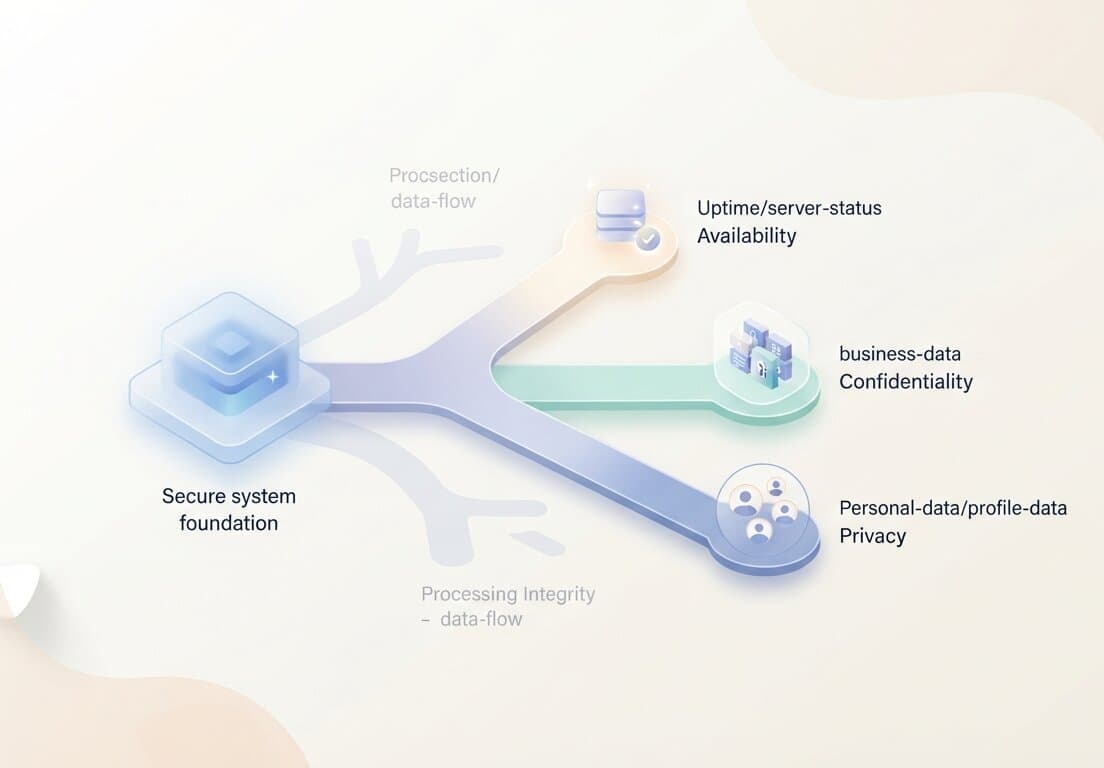
The same logic applies to the thing you hand your customers. Your SOC 2 audit report is only as credible as the firm that signed it. New to the criteria? Our guide to the five Trust Services Criteria explains how scope is chosen, which matters because the new firm will need to agree your scope on day one.
Timing Decides Whether You Get a Gap
The report period is where switching goes wrong. A Type 2 report covers a specific window, for example 1 January to 31 December, and customers read the dates closely. The cleanest switch happens at the boundary between periods: let the current report finish, then have the new firm's period start the next day.
Scenario | Last report period | New report period | Coverage |
Switch at the boundary | 1 Jan to 31 Dec, Year 1 | 1 Jan to 31 Dec, Year 2 | No gap |
New firm starts late | 1 Jan to 31 Dec, Year 1 | Starts 1 Mar, Year 2 | 1 Jan to 28 Feb has no independent report |
At the boundary, nothing is left uncovered and the new auditor tests a clean window with no inherited history.
What If You Need to Switch Mid-Period?
Sometimes you cannot wait. If so, keep these points in mind:
The new auditor must obtain enough evidence for the whole period they report on. For the part before they were engaged, they rely on evidence you kept, not on the old auditor's conclusions.
Some firms accept a mid-period start. Others begin a new window only from the date they are engaged. Ask early.
If the new window starts later, you may have a gap. A management bridge letter can describe the period between reports, but it is not an audit, and buyers treat it as a stopgap. Typical coverage is short, and some regulated buyers will not accept one.
Keep evidence for the whole year anyway. Your records belong to you, and they keep your options open.
If your buyers are pressing for a Type 2 report, plan the switch around that deadline. If you are still on Type 1, a change before your first Type 2 window opens is the easiest time of all.
A Step-by-Step Way to Switch
Four months before the period ends: read your engagement letter. Check termination terms, notice periods and fees for work already done.
Define what you need. Scope, criteria, Type 1 or Type 2, and your target report date.
Request proposals. Share the previous report and system description so quotes are realistic.
Choose and sign. Agree the period start date in writing so it follows directly after the last report.
Hand over cleanly. Provide the prior report, policies, system description and a control matrix. Auditors do not share working papers, so expect to supply your own evidence.
Brief your team. Explain the new process and the evidence calendar so the first cycle goes smoothly.
Tell your customers if timing shifts. A short, early note is better than a surprise.
Mistakes That Create Trouble
Deciding two weeks before the period ends. Start the search three to four months ahead.
Choosing on price alone. A cheap quote that excludes revisions or extra samples often ends up costing more.
Not checking buyer acceptance. A report no customer recognises does not help sales.
Letting evidence lapse during the switch. Keep collecting it, whoever is auditing.
Forgetting independence. Keep consulting and attestation roles clearly separated.
If you are also tightening your wider programme, our explainer on what SOC 2 compliance really means is a useful refresher before you brief a new firm.
The Takeaway
Change your SOC 2 auditor when the problem is fit, price or capability, and plan the move around the report period rather than your frustration. A clean handover at a period boundary is nearly invisible to customers. A rushed mid-period move is where gaps appear. Considering a switch and worried about your coverage dates? Talk to Accorp Partners about CPA-led SOC 2 auditor support, from readiness to a final report your customers will accept.
Frequently Asked Questions
1. Can we change our SOC 2 auditor in the middle of an audit period?
Yes, but it is harder than switching between periods. The new firm needs enough evidence to cover the period it reports on, and some firms start a new window only from the date they are engaged. Ask early whether they accept a mid-period start, and keep collecting evidence so you have options.
2. What is the best time to switch SOC 2 auditors?
At the boundary between two report periods. Let the current report end, then have the new firm's period begin the next day. Start your search three to four months before the period ends.
3. Will switching auditors create a gap in our SOC 2 coverage?
It can if the dates do not line up. If your last report ended on 31 December and the new period starts on 1 March, no independent report covers those two months. A management bridge letter can describe the gap, but it is not an audit.
4. What does the new auditor need from us when we switch?
Your previous report for context, plus your own evidence, policies, system description and control matrix. The new auditor cannot rely on the old firm's conclusions, and auditors do not share working papers.