.svg)
.svg)
.svg)
FEMA Compliance for US Subsidiaries: RBI and IRS Compliance Calendar
Who files the APR, Form 5472 and Form 3CEB for your US subsidiary? A month-by-month RBI and IRS compliance calendar for Indian-owned US companies.

Accorp Compliance Team
Our team of compliance experts specializes in PCI DSS, SOC 2, and other security frameworks to help businesses achieve and maintain compliance.
A founder once told me her Delaware company was "fully compliant" because the US CPA had filed everything on time. Six months later, her bank asked for the Annual Performance Report, and nobody could say whose job it was.
That gap is common. A US accountant knows the IRS calendar but rarely the RBI's. An Indian chartered accountant knows the Income Tax Act but may never have seen a Delaware annual report. The Indian-owned US company sits between two systems, and the filings that connect them, APR filing and transfer pricing, often belong to no one.
Good FEMA compliance for a US subsidiary starts with deciding who owns each filing and when it is due. This guide covers both.
Why FEMA Compliance for a US Subsidiary Is Easy to Miss
When an Indian company invests in a US entity, the investment falls under India's overseas direct investment (ODI) rules, administered by the RBI under FEMA. If you are still choosing how to fund the US entity, see LRS vs ODI: which route an Indian founder should use.
The obligation does not end with the original remittance. It continues every year the subsidiary exists: reporting its financial position, the Indian parent's holding, and any change during the period.
US advisors rarely raise this because it is not a US requirement. Indian advisors may assume the bank is tracking it. In practice, the bank only reminds you when something is already late.
Who Files What: The Division of Labour Nobody Writes Down
Split obligations by regulator rather than by entity.
Regulator | What is filed | Natural owner |
|---|---|---|
IRS and Delaware | Form 1120 with Form 5472, state annual report, franchise tax | US CPA |
RBI (via your bank) | Annual Performance Report, FLA return | Indian CA or finance head |
Indian Income Tax Department | Form 3CEB, transfer pricing documentation, ITR | Indian CA or tax advisor |
Companies Act | Disclosure of the subsidiary in Indian financial statements | Company secretary or auditor |
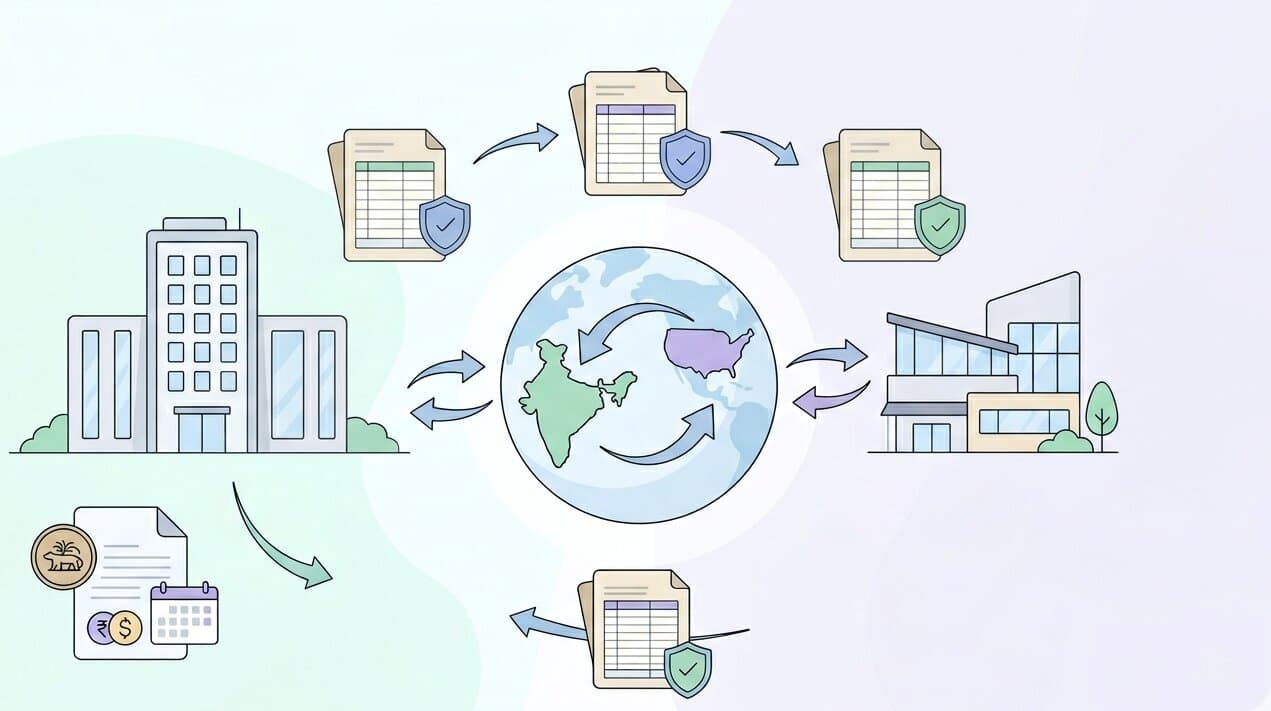
The middle rows depend on the first. The APR needs the US company's financial statements. The transfer pricing report needs the intercompany ledger. If the US books close late, everything in India slips with them.
What the RBI Expects: The APR in Plain Terms
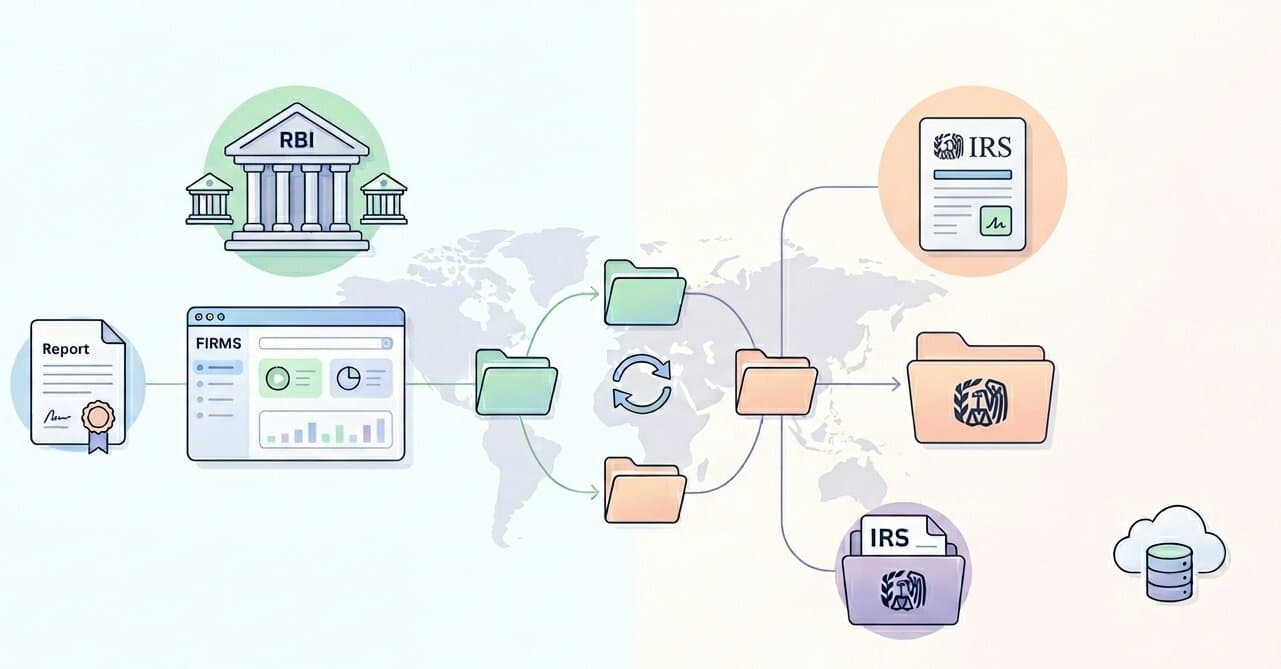
The Annual Performance Report tells the RBI how the foreign company performed, what the Indian parent holds, and whether anything changed. It is filed through your authorised dealer bank and is generally due by 31 December, using the overseas entity's latest financial statements.
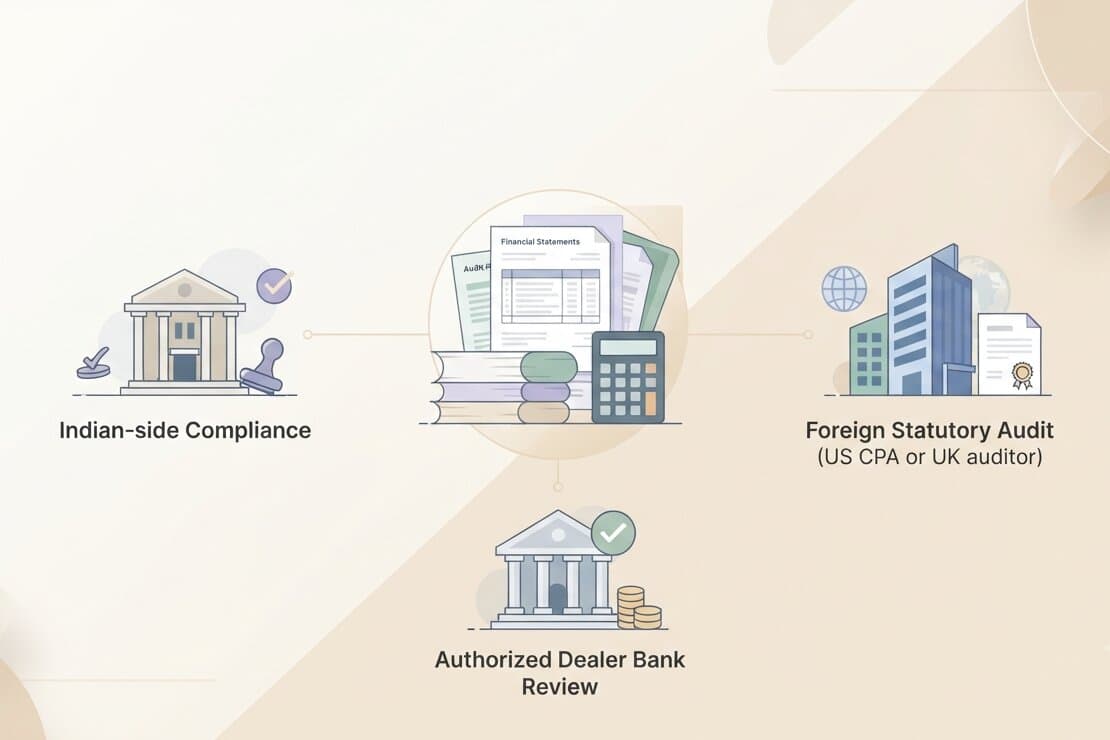
Audited accounts are usually expected. For a US company with no statutory audit requirement, this raises the question of who can audit the US subsidiary for APR purposes. Limited exceptions exist, so check current directions with your bank.
What Happens If the APR Is Late
Late filing attracts a late submission fee. You can read more on what happens if you miss APR filing under FEMA.
A pending APR can also make the bank hesitant to process further remittances to the subsidiary, which hurts when the US company needs funding. If that has already happened, here is how to restore access when your AD bank blocks outward remittances.
Transfer Pricing: The Filing That Follows the Money
Anything that moves between the two companies has to be priced as if strangers had agreed to it: service fees, cost reimbursements, intercompany loans, royalties, shared salaries. Practical transfer pricing India US subsidiary work comes down to showing that India is paid fairly for what it does.
Form 3CEB and Documentation Thresholds
There are two layers. Form 3CEB, certified by a chartered accountant, is required for international transactions with associated enterprises. Detailed documentation applies once these transactions pass ₹1 crore in a year.
Choosing a Pricing Method
Where the Indian team builds or supports the product and the US company sells it, a cost-plus arrangement is the usual starting point, with a markup benchmarked against comparable service providers. Safe harbour provisions for IT services may simplify this depending on current notifications, so verify before relying on them.
For a fuller walkthrough, see our practical guide to transfer pricing when an Indian company sets up a US subsidiary.
Where ODI Transfer Pricing Compliance Gets Awkward
ODI transfer pricing compliance is not one legal filing. It is the point where two unrelated laws describe the same relationship. FEMA asks how the money was invested and whether it was reported. The Income Tax Act asks whether the pricing was fair.
Mismatches usually look small:
A remittance recorded as equity with the bank but shown as a loan in the tax computation.
Service income at one figure in the US financials and another in the Indian books.
A subsidiary with steady losses while the Indian parent earns barely above cost.
Each one hands a reviewer a question that takes weeks to answer. A single reconciled intercompany schedule, used for the bank, the auditor and the tax filing, prevents most of them.
APR and Form 5471 Deadlines: Clearing Up a Common Confusion
Founders often search for APR and Form 5471 deadlines together, so it is worth separating them.
Form 5472: What the US Subsidiary Actually Files
Form 5471 is a US form for US persons who own a significant stake in a foreign corporation. A US subsidiary owned by an Indian company does not file it. The US company files Form 5472 instead, which reports related-party transactions with its foreign owner.
It is due with the Form 1120, generally 15 April for a calendar-year company, extendable through Form 7004. The penalty for missing it is steep and applies even with no taxable income.
When Form 5471 Does Apply
Form 5471 becomes relevant in a different case: when a founder who is a US citizen or resident holds a meaningful stake in the Indian parent. That person may have a personal 5471 obligation, due with their own US tax return. We cover this in Form 5471 obligations for US persons who own an Indian company.
If your cap table includes US-based founders, ask a US tax advisor about this specifically.
The APR, meanwhile, is an RBI filing due around 31 December. The two sit on different calendars and different forms, which is exactly why they get confused.
An RBI Compliance Calendar for ODI, Alongside the US Dates
Because the Indian and US financial years do not line up, plan around actual deadlines. Our piece on how US subsidiaries handle APR reporting with a December 31 year-end explains the timing in detail.
Treat the dates below as a working template and confirm each against current notifications, since extensions are common.
Period | US side | India side |
|---|---|---|
January to March | Close the US books for the calendar year. File the Delaware annual report and pay franchise tax by 1 March. | Collect the final intercompany ledger. |
April | File Form 1120 with Form 5472 by 15 April, or request an extension. | Close India's financial year on 31 March and reconcile balances against US numbers. |
May to July | Share figures for intercompany agreements. | Update intercompany agreements and prepare benchmarking. File the FLA return by 15 July. |
August to October | Confirm intercompany balances with the Indian team. | Finalise transfer pricing documentation. Have Form 3CEB ready by 31 October where the return deadline is 30 November. |
November to December | Deliver the finalised US financial statements. | Submit the APR through the authorised dealer bank before 31 December. |
Run this for one cycle and a pattern emerges: nearly every deadline draws on the same two documents, the US financial statements and the intercompany ledger.
Mistakes That Cost Startups the Most Time
Assuming the US CPA covers India. Most do not, and many say so only when asked. Confirm in writing who handles the RBI and transfer pricing side. One Delaware subsidiary's APR stayed blocked for 11 weeks because the audit came from the wrong signatory.
Waiting for the audit. If US financials arrive in November, the APR and Form 3CEB get squeezed into the same few weeks. Ask for draft numbers earlier.
Leaving intercompany balances open. Unpaid fees sitting for a year or more raise both tax and FEMA questions, since export receivables have realisation timelines.
Backdating agreements. A contract signed after the fact is weak evidence. Document the arrangement when services begin.
Putting It Together
The cleanest setup has a named owner for each regulator, a shared intercompany ledger, and a calendar that starts in January rather than November. It takes an hour to draft and saves weeks of scrambling. It also leaves a tidy record when an investor or acquirer asks for your filing history.
If you want one team to handle both sides, Accorp Partners manages APR audits and filing for Indian-owned subsidiaries, along with US company secretary compliance for Delaware entities. Talk to us about your filing calendar.
Frequently Asked Questions
1. Is the APR the same as the FLA return?
No. The FLA return is an annual data return filed on the RBI's portal, while the APR is submitted through your bank. Many companies file both. Our APR vs FLA return guide sets out the differences.
2. Does a loss-making US subsidiary still need transfer pricing documentation?
Yes, if there are international transactions with the Indian parent. Losses often draw more scrutiny. The APR still applies too, as covered in filing an APR when your overseas company made a loss.
3. Does my US subsidiary file Form 5471?
Generally no. It files Form 5472. Form 5471 applies to US persons holding foreign corporations.
4. When is the APR due for a US subsidiary with a December year-end?
The APR is generally due by 31 December each year, based on the subsidiary's latest audited financial statements. Confirm the exact cut-off with your authorised dealer bank.