.svg)
.svg)
.svg)
APR Filing and Transfer Pricing for India-US Startups: Handling Both in One Cycle
APR filing and transfer pricing overlap for Indian startups with a US subsidiary. Learn how to handle both filings in one cycle using a single set of records.

Accorp Compliance Team
Our team of compliance experts specializes in PCI DSS, SOC 2, and other security frameworks to help businesses achieve and maintain compliance.
Most founders with a Delaware subsidiary treat compliance as a series of unrelated fire drills. The auditor asks for something in September, the bank asks for something in November, and the tax consultant sends a questionnaire in October. The frustrating part is that these requests draw on the same underlying facts: what the Indian parent invested in the US company, what flowed between them, and what the US entity earned.
Handled together, APR filing and transfer pricing become one workstream instead of two. Here is how that works.
Why Two Different Regulators Care About the Same US Subsidiary
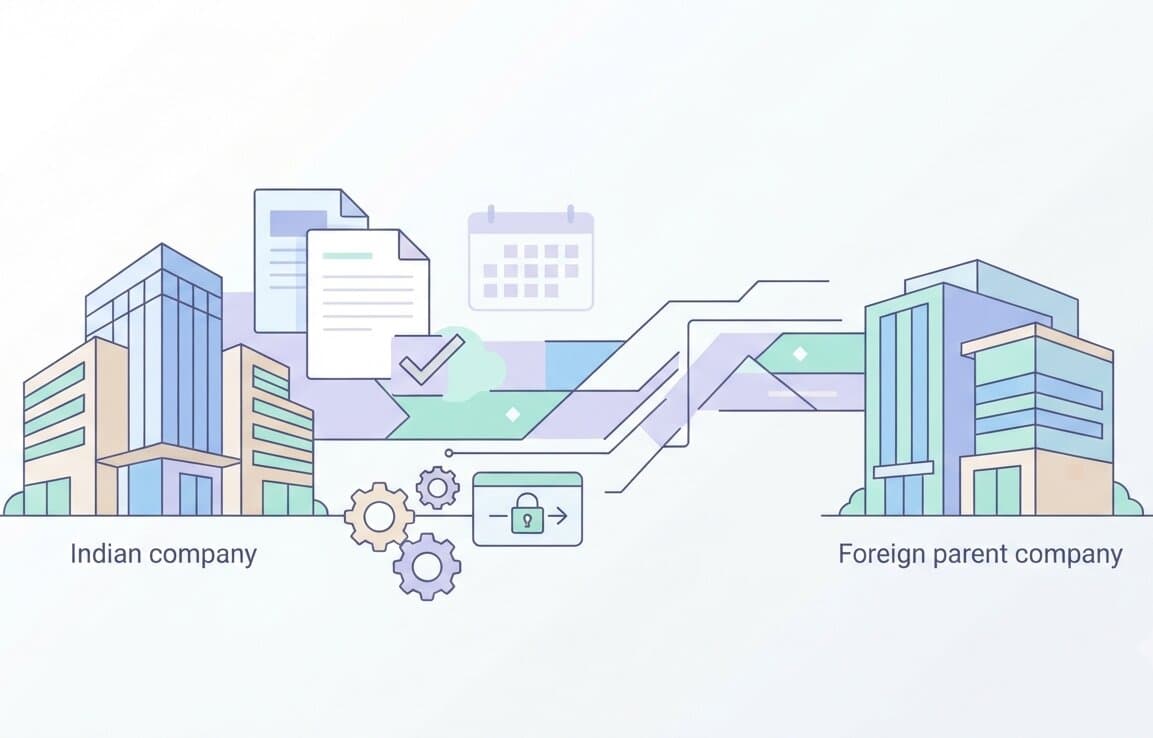
When an Indian company puts money into a US subsidiary, it is making an overseas direct investment (ODI) governed by FEMA. The RBI wants to know whether the investment is performing and whether it was made within the rules. That is what the Annual Performance Report is for.
The Income Tax Department looks at the same relationship differently. Its concern is whether the Indian parent and the US entity price their dealings as unrelated parties would. If your India team builds software for the US entity at a price that leaves profit in the US, India loses tax revenue, and the transfer pricing rules exist to catch that.
Same entities, same invoices, two regulators, two sets of deadlines. That is the root of the overlap.
What the Annual Performance Report Actually Requires
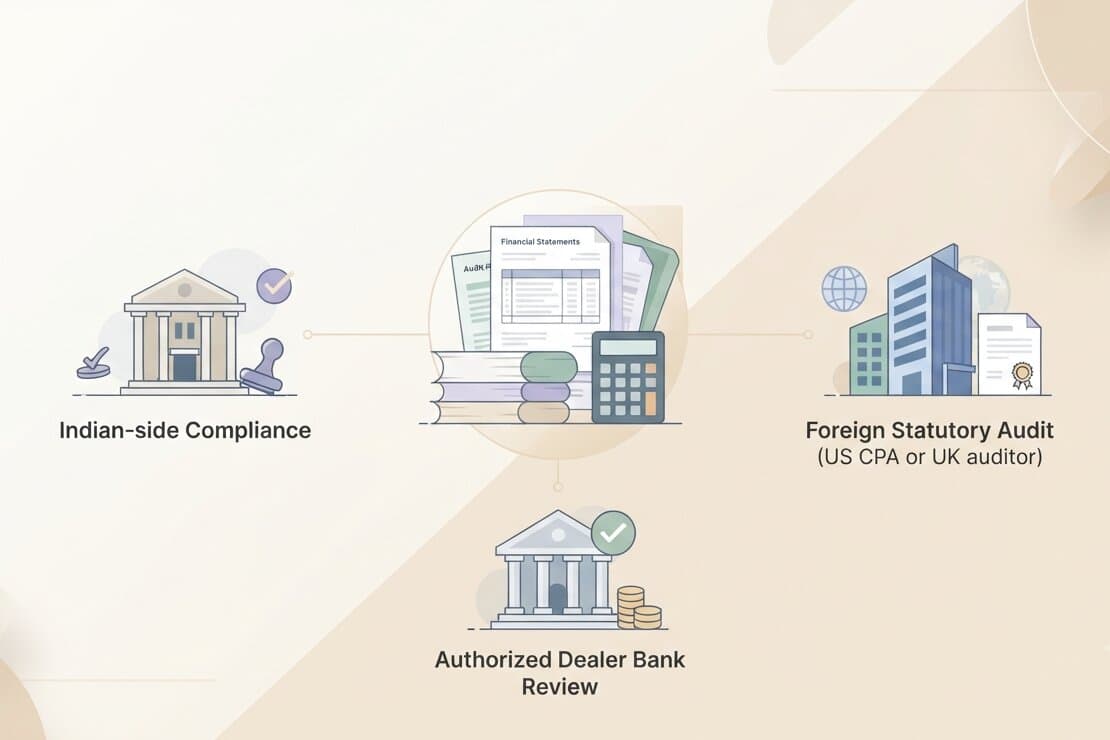
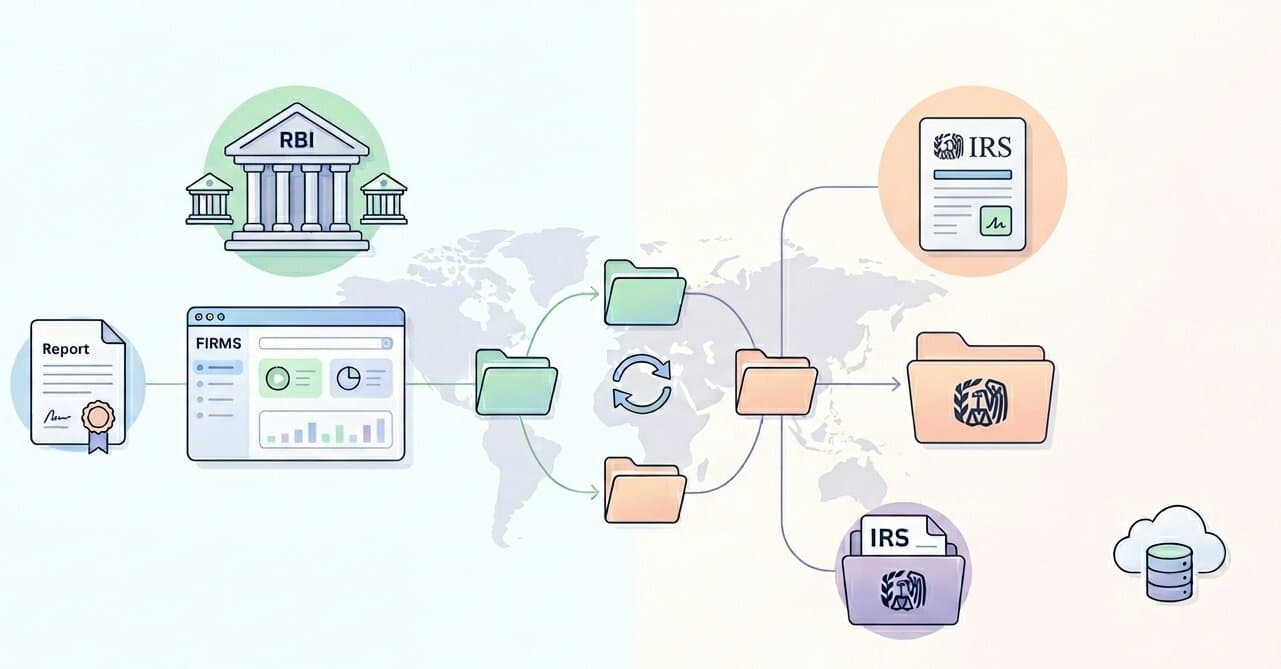
The APR is filed through your authorised dealer bank, usually the bank that handled your original remittance. It reports the foreign entity's financial position for its financial year, along with the Indian investor's holding and any changes during the year.
The practical points founders often miss:
Timing: The report is generally due by 31 December each year, based on the foreign entity's latest financial statements. A US subsidiary with a calendar-year close therefore needs its books finalised well before then.
Supporting numbers: The bank expects financials of the overseas entity, usually audited, though the rules permit unaudited accounts in certain circumstances. Check the current RBI directions for your case.
Late filing consequences: Missing the deadline does not simply mean a fine. It can block further remittances to the subsidiary and attract late submission fees, which hurts when you are mid-fundraise and need to send more capital.
The Transfer Pricing Side of the Relationship
Any international transaction between associated enterprises falls within Indian transfer pricing law. For a startup with a US subsidiary, the common transactions are:
Software development or support services provided by the Indian parent to the US entity
Cost sharing, such as the US entity paying for engineering headcount in India
Reimbursement of expenses paid on behalf of the other entity
Interest on intercompany loans
Licensing of IP or trademarks
If the combined value of these transactions exceeds ₹1 crore in a financial year, you must file an accountant's report in Form 3CEB, and documentation obligations increase as thresholds rise. Under the Income Tax Act's transfer pricing chapter, penalties for failing to maintain documentation or file the report can run into a percentage of the transaction value, which is far costlier than the compliance itself.
ODI Transfer Pricing Compliance: Where the Two Frameworks Meet
This is the heart of ODI transfer pricing compliance. FEMA and the Income Tax Act do not formally reference each other, but regulators can and do cross-check. Consider what happens when:
The APR shows the US subsidiary with losses, while the Indian parent charges it a thin margin for services. A tax officer may question why the arrangement is loss-making for the foreign entity and thinly profitable for the Indian one.
The financial statements submitted with the APR show intercompany payables that do not match the receivables in the Indian books.
Remittances to the US entity were booked as equity for FEMA purposes, but treated as loans for tax purposes.
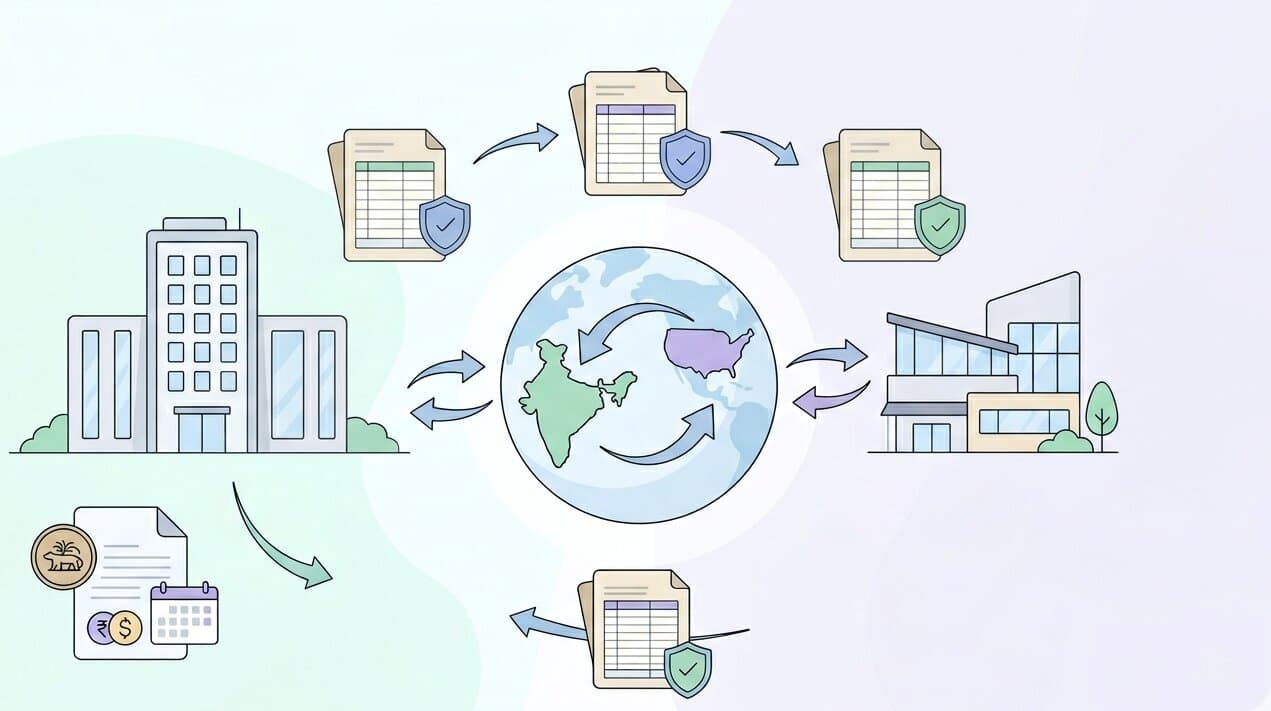
Each of these creates an inconsistency that is easy to prevent and awkward to explain after the fact. The simplest protection is making sure the same intercompany ledger feeds both filings.
Transfer Pricing India US Subsidiary: Getting the Pricing Right
For a typical transfer pricing India US subsidiary setup, where India provides development services and the US entity handles sales, the arrangement is usually benchmarked using a cost-plus approach. The Indian entity is compensated for its costs plus a markup that reflects what comparable service providers earn.
Some practical observations:
India's safe harbour rules for IT and IT-enabled services have historically offered a defined margin, which can shorten the process if your business qualifies. Whether they apply in a given year depends on current notifications, so confirm before relying on them.
If the Indian team does real product development, owns the IP, and takes decisions, the cost-plus model may undervalue its contribution. Functional analysis, meaning who does what, who owns what, and who bears which risks, matters more than the label on the contract.
Intercompany agreements should be signed before the services are performed. A backdated agreement drafted when the auditor asks is the weakest kind of evidence.
The US Side Is Not Optional
Founders sometimes focus entirely on India and forget that the US entity has its own obligations. A US corporation that is at least 25% foreign-owned and has reportable transactions with a related party generally files Form 5472 with its tax return, and the penalty for failure is substantial. Section 482 of the US Internal Revenue Code also requires arm's-length pricing.
If your India and US numbers are priced inconsistently, one tax authority may deny a deduction that the other has already allowed, leaving the group taxed twice on the same income. Aligning the pricing methodology in both countries is far cheaper than relying on relief procedures later.
Building a Single Compliance Calendar
Compliance for a US subsidiary runs across two financial years: India's April to March and the US entity's typically January to December. A workable calendar looks like this:
Period | Action |
|---|---|
April to June | Close India books; reconcile intercompany balances with the US ledger |
By 15 July | File the FLA return, which also requires overseas investment data |
July to September | Finalise transfer pricing benchmarking and documentation |
By 31 October | Form 3CEB filed (generally one month before the return deadline for transfer pricing cases) |
November to December | Obtain the US entity's financials; file the APR through the authorised dealer bank by 31 December |
Dates shift with extensions and amendments, so verify each against current notifications. The principle holds: one reconciled set of intercompany numbers, prepared once, used three or four times.
Common Mistakes Startups Make
Treating the APR as a bank formality. It is a statutory filing under FEMA, and repeated delays can complicate later investments or an eventual restructuring.
Letting intercompany balances drift. If the US entity owes the Indian parent for eighteen months of services and nobody invoices or settles, both the tax and FEMA treatment get murky. Export proceeds have realisation timelines under FEMA, and long-outstanding receivables draw questions.
Using different numbers in different filings. A rounding difference is fine. A different revenue figure between the 3CEB and the APR financials is not.
Hiring separate advisors who never speak. The person preparing your transfer pricing report and the person handling the RBI filing should be working from the same data pack, ideally in the same conversation.
A Sensible Way to Run It
Start with a single intercompany schedule listing every transaction between the two entities: date, nature, amount, currency, and settlement status. Have your accountant review it quarterly instead of annually. Next, document the pricing logic when the arrangement starts, not when someone asks. Finally, assign one person to own the compliance calendar and make sure the APR submission and transfer pricing report are prepared with each other in view.
Done this way, the work stops feeling like two parallel obligations and becomes a routine annual close. It also leaves you in a stronger position when due diligence arrives, because investors reviewing your next round will look for clean intercompany records and a clean filing history.
Frequently Asked Questions
1. What is the difference between APR filing and transfer pricing?
The APR is an RBI report, filed through your bank, on how the US subsidiary performed. Transfer pricing is an Income Tax requirement showing that dealings between the Indian parent and the US company are priced at arm's length.
2. When is the APR due?
Generally by 31 December each year, using the US entity's latest financial statements. Confirm the current date with your bank.
3. Is transfer pricing documentation needed if the US subsidiary is making losses?
Yes. The trigger is international transactions with the Indian parent, not profit. Losses often invite closer questions.
4. When does Form 3CEB become mandatory?
For international transactions with associated enterprises. Detailed documentation applies once the combined value crosses ₹1 crore in a financial year.
5. What happens if the APR is filed late?
A late submission fee applies, and the bank may hold up further remittances to the subsidiary until the default is cured.