.svg)
.svg)
.svg)
PLI Scheme Eligibility for Foreign Manufacturers Setting Up a Company in India
PLI scheme eligibility for foreign manufacturers in India, covering incorporation, investment thresholds, GST, sectors, application process, and incentives.

Accorp Compliance Team
Our team of compliance experts specializes in PCI DSS, SOC 2, and other security frameworks to help businesses achieve and maintain compliance.
We've had more than a few conversations lately with foreign manufacturers who ask a version of the same question: does it make financial sense to set up a plant in India, and is the Production Linked Incentive scheme actually worth structuring around? The short answer is that PLI can meaningfully change the economics of manufacturing in India, but only if the incorporation and the application are planned together — not incorporation first, PLI as an afterthought once the factory is already running.
This guide walks through what the PLI scheme covers, who's actually eligible, and how a foreign manufacturer should sequence company formation in India against the scheme's requirements.
What the PLI Scheme Actually Is
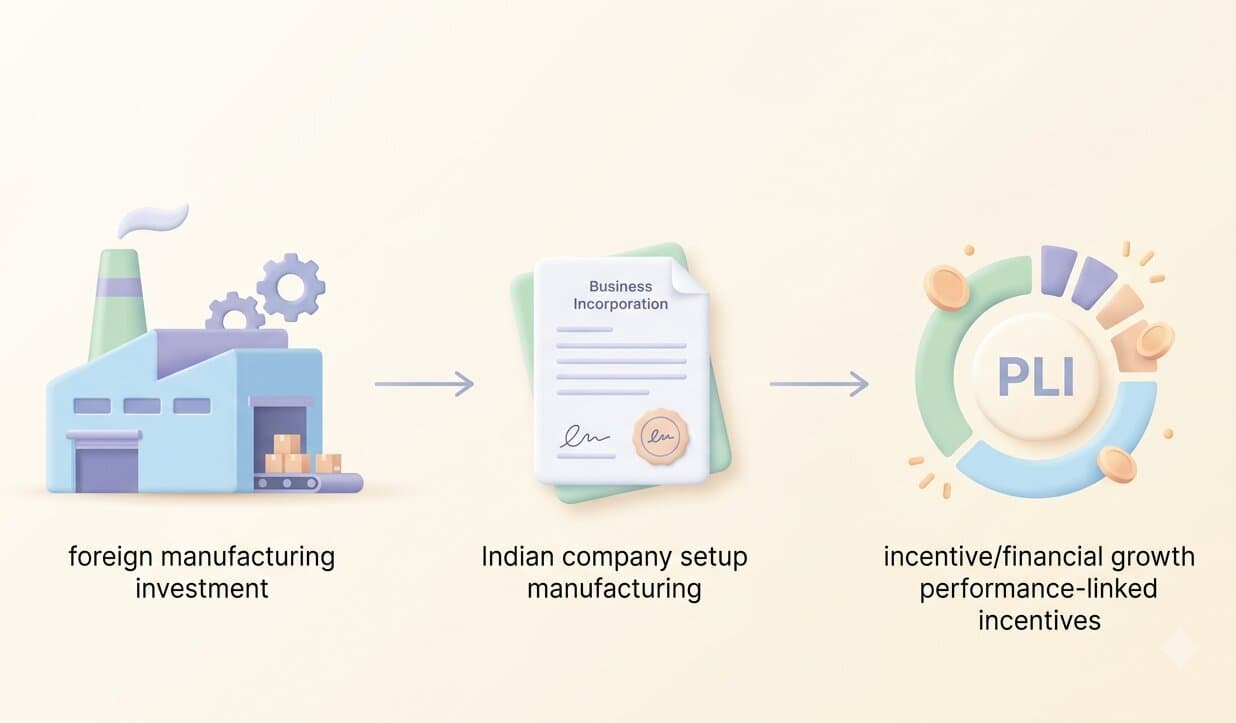
The Production Linked Incentive scheme is a performance-based industrial policy programme run by the Government of India, under which manufacturers receive a cash incentive calculated as a percentage of incremental sales above a defined base year, provided they also meet a minimum incremental investment threshold. It isn't a subsidy paid upfront — nothing is disbursed until you've actually invested and actually produced and sold more than the baseline, verified through your GST filings and audited financials.
The scheme currently spans roughly a dozen priority sectors, including electronics and IT hardware, telecom equipment, pharmaceuticals and APIs, automobiles and auto components, speciality steel, textiles, white goods, solar PV modules, advanced chemistry cell batteries, drones, and food processing. Incentive rates vary widely by sector, so the actual return depends heavily on which category your product falls under.
Why India Incorporation Is a Prerequisite for PLI Eligibility
This is the point that trips up foreign manufacturers most often: you cannot apply for PLI as a foreign company shipping into India, and you generally cannot apply through a liaison or representative arrangement either. The applicant has to be a company registered in India, holding an active GST registration, with manufacturing operations physically located within the country.
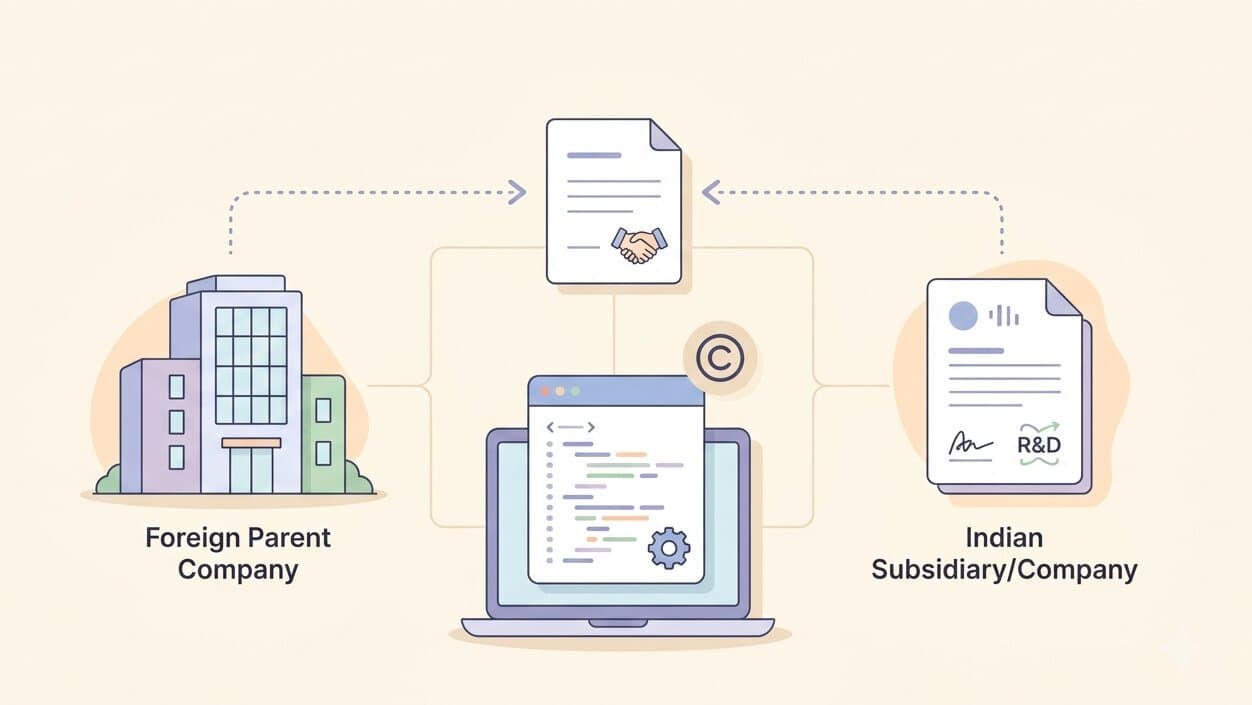
In practice, this means how to open a company in India isn't a separate conversation from your PLI strategy — it's the first step of it. Foreign manufacturers typically set up either a wholly owned subsidiary or a joint venture entity in India specifically to hold the manufacturing operation, and the PLI application is filed by that Indian entity, not by the overseas parent.
Which Sectors Are Covered Under the PLI Scheme
Coverage is sector-specific, and each sector has its own notified scheme document from the relevant nodal ministry, with its own investment thresholds, incentive rates, and eligible product categories defined by HSN code. Before assuming your product qualifies, check its specific HSN classification against the approved list in your sector's official notification — generic online descriptions are a starting point, not a substitute for the binding notification itself.
Core Eligibility Criteria Foreign Manufacturers Must Meet
Beyond being an India-incorporated, GST-registered entity, the scheme generally requires the manufacturing facility to be physically located in India — either a new greenfield plant or an expansion of an existing brownfield facility. Applicants must commit to a minimum incremental investment in plant, machinery, and equipment above their base-year level, and must achieve a minimum incremental sales threshold each year to actually receive that year's payout.
Most sectors expect audited financials for the preceding few years from established companies. For a newly incorporated entity — the situation most foreign manufacturers will be in — the requirement typically shifts to a detailed, credible business plan and financial projections instead, since there's no historical track record for a brand-new Indian subsidiary to show.
Investment Thresholds: How Much Capital Commitment Is Required
Minimum investment thresholds differ enormously by sector, ranging from a few crores for smaller, emerging categories like drone manufacturing, up to several hundred crores for capital-intensive sectors like automobiles. Founders and overseas parent companies often anchor on a headline figure they've seen for one sector without checking whether their specific product category carries a different, sometimes much higher, threshold.
Because this figure directly determines whether you clear the eligibility bar at all, confirm it early — not after the plant design and capex budget are already locked.
Incremental Sales Targets and How Incentives Are Calculated
The incentive is calculated against incremental sales — sales above whatever the base year figure was set at for your sector, not your total revenue. If you don't clear the threshold in a given year, you don't receive that year's payout, even if you've already made the required capital investment. This performance-linked structure is deliberate: it rewards actual production and sales growth rather than just capital deployment, which is also why disbursement happens after verification rather than as an upfront grant.
Sales data is verified through GST returns, which is another reason your GST registration and return filing discipline from day one matters far more under PLI than for a company not pursuing the incentive.
Choosing the Right Entity Structure Before You Apply
Foreign manufacturers generally choose between a wholly owned subsidiary and a joint venture with an Indian partner for the manufacturing entity. A wholly owned subsidiary gives full control over operations and IP, which matters if your process involves proprietary technology. A joint venture brings local market knowledge and sometimes faster land and regulatory approvals, at the cost of shared decision-making and profit.
Either way, pvt ltd company registration in India is almost always the entity type used, since it allows full operational flexibility, straightforward FDI under the automatic route for most manufacturing sectors, and compatibility with PLI's requirement that the applicant be a registered Indian company.
How to Register a Company in India Before Filing a PLI Application
The incorporation sequence follows the standard route: name reservation, Digital Signature Certificates for directors, including foreign nationals, filing SPICe+ along with PAN, TAN, and GST registration, and meeting the resident director requirement, since at least one director must have stayed in India for a minimum period in the preceding financial year.
What's specific to a PLI-track incorporation is timing your GST registration and first sales carefully against your intended base year and application window, since your sector's notification specifies a defined period for incremental investment and sales to be measured against. Getting incorporation and PLI application timelines out of sync is one of the more expensive planning mistakes we see.
Documentation and Financial Track Record Requirements
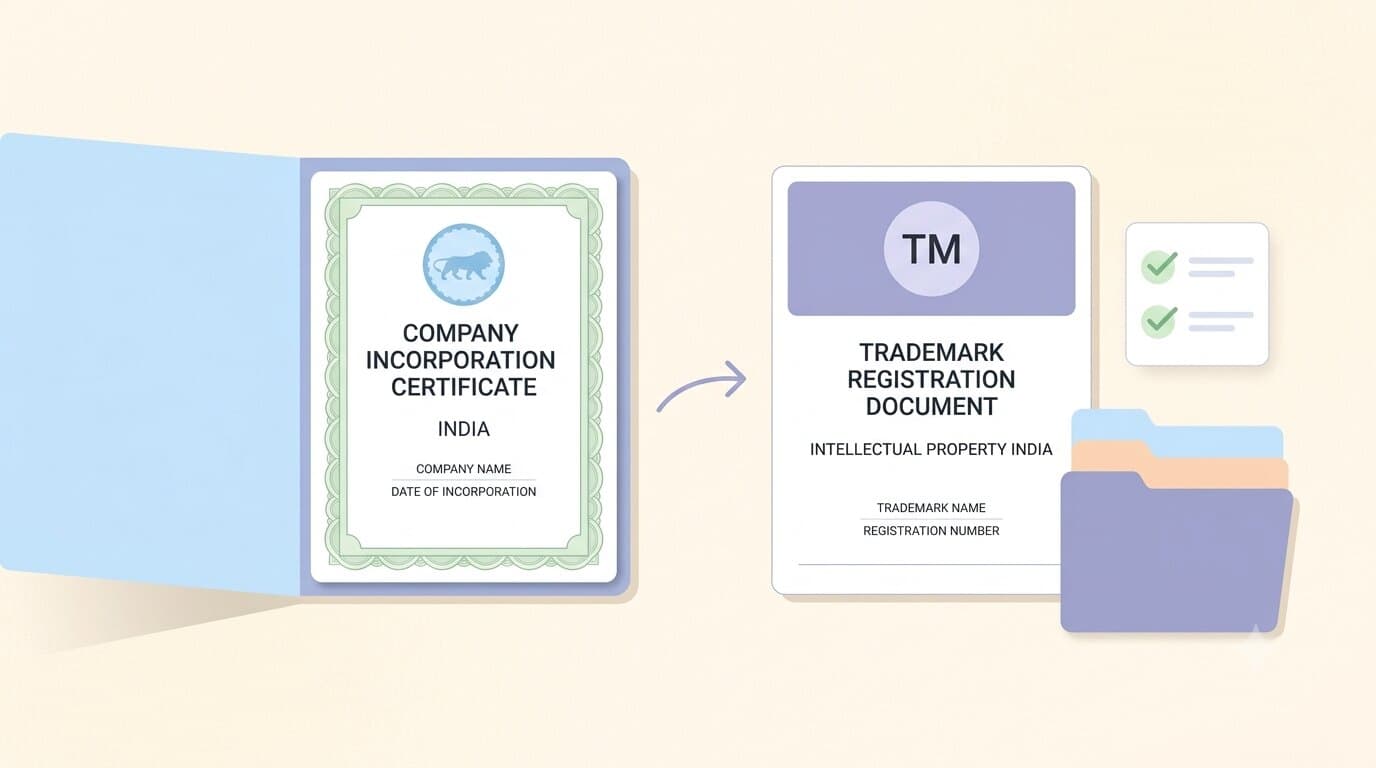
For a newly incorporated Indian subsidiary, expect to submit the Certificate of Incorporation, GST registration certificate, a board resolution authorising the application and the signatory, a detailed project report and financial projections in place of historical audited statements, and documentation establishing the parent company's manufacturing track record and financial capacity to fund the committed investment. Nodal ministries want reasonable confidence that a new applicant can deliver on the capex commitment, and a credible parent-company track record helps substantiate that.
Greenfield vs Brownfield: What Foreign Manufacturers Need to Know
Most foreign manufacturers entering India file as greenfield applicants, since there's no existing Indian facility to expand. Greenfield applications typically need more detailed project planning documentation upfront, since there's no operating history to draw on, but they also give you a cleaner base year and full flexibility in plant location and design. Brownfield expansion applies where an existing India-based manufacturer — including, in some cases, an existing Indian subsidiary of the same foreign parent — is expanding capacity rather than starting from scratch.
Application Process and Timeline
Applications are filed through the relevant nodal ministry's designated portal, following the specific sector's notified format and documentation checklist. Approval timelines vary by sector and by how complete the initial application is — incomplete documentation or an unclear HSN-to-notification match is the most common reason applications get delayed. Scheme windows also aren't open-ended; several sectors have defined application periods, and applying later in a cycle generally means a less favourable base year for your incremental targets.
Common Mistakes Foreign Manufacturers Make When Pursuing PLI
The most frequent mistake is treating India incorporation and the PLI application as two unrelated projects handled by different teams on different timelines, when they need to be planned together from day one. The second is assuming a single, generic investment threshold applies across all sectors rather than checking the specific notification for the exact product category. The third is underestimating how disciplined GST return filing needs to be, since incentive verification runs directly off that data. The fourth is waiting until the plant is operational to start the PLI conversation, by which point the base year and application window may already be unfavourable.
Why Timing Your Incorporation and PLI Application Together Matters
Because PLI incentives are measured against a defined base year and a limited scheme window, the earlier you get your India incorporation, GST registration, and application documentation aligned, the more favourable your incremental sales baseline is likely to be. Foreign manufacturers who treat online registration of the company as the finish line, rather than the starting point of a coordinated PLI strategy, routinely leave meaningful incentive value on the table simply through poor sequencing.
How Accorp Partners Helps Foreign Manufacturers Structure for PLI Eligibility
We work with foreign manufacturers through the full sequence — choosing the right entity structure, running India incorporation, setting up GST registration correctly from the outset, and preparing the documentation and financial projections a PLI application needs. Our focus is on ensuring the incorporation itself is structured with the scheme's requirements in mind from day one, rather than trying to retrofit PLI eligibility onto an entity that wasn't set up with it in mind.
Frequently Asked Questions
1. Can a foreign company apply for PLI directly, without an Indian subsidiary?
No. The applicant must be a company incorporated in India with GST registration and manufacturing operations physically located in the country. Foreign parent companies apply through their Indian subsidiary.
2. Does a newly incorporated company qualify for PLI, or do you need years of financial history?
New entrants can apply. Instead of historical audited statements, they typically submit a detailed project report and financial projections, along with documentation on the parent company's track record and financial capacity.
3. How is the PLI incentive actually calculated and paid out?
It's calculated as a percentage of incremental sales above your sector's defined base year, verified through GST returns, and disbursed only after you've met both the investment commitment and the sales threshold for that year — not paid upfront.