.svg)
.svg)
.svg)
Why Foreign Companies Keep Choosing India for Captive Centres (And When It Actually Makes Sense)
Captive centre setup in India for foreign companies, covering GCC models, top cities, company formation, costs, talent, and key setup considerations.

Accorp Compliance Team
Our team of compliance experts specializes in PCI DSS, SOC 2, and other security frameworks to help businesses achieve and maintain compliance.
A decade ago, a captive centre in India usually meant one thing: a cost-saving back office handling support tickets, data entry, or basic finance and accounting work. That picture has changed almost beyond recognition. Today, companies like Microsoft, Goldman Sachs, Walmart, Boeing, and Qualcomm run captive centres in India that own entire product lines, lead global engineering roadmaps, and increasingly report directly into global P&L structures rather than sitting quietly in the background.
For a foreign company weighing its next move — whether that's expanding an existing India presence or entering the market for the first time — the question isn't really "should we consider India?" anymore. It's "what kind of captive centre makes sense for us, and is now the right time?" This guide walks through both.
What Is a Captive Centre, Exactly?
A captive centre — also called a Global Capability Centre (GCC), Global In-house Centre (GIC), or offshore captive unit — is a wholly owned extension of a parent company set up in another country to run business-critical functions in-house, rather than outsourcing them to a third-party vendor. The defining feature is control: the company owns the entity, hires its own staff, and retains full authority over its intellectual property, processes, and technology stack.
This is what separates a captive centre from traditional outsourcing or a BPO relationship. With outsourcing, you're renting capacity from someone else's organisation. With a captive centre, you're building your own — just located in a market with a deeper or more cost-effective talent pool than you have at home.
Why India, Specifically?
India's position as the world's leading captive centre destination didn't happen overnight. It traces back to 1985, when Texas Instruments opened an R&D facility in Bengaluru — India's first wholly owned multinational technology centre — followed soon after by Citibank's software centre in Pune. What began as an experimental bet on Indian engineering talent has since scaled into an industry that now employs well over 1.9 million professionals across more than 1,700 active centres, generating tens of billions of dollars in annual output.
A few structural factors explain why the model keeps growing rather than plateauing:
A Deep and Specialised Talent Pool
India produces one of the largest annual pools of engineering, technology, and finance graduates in the world. What's changed more recently is depth rather than just volume — companies can now build specialised teams in AI and machine learning, semiconductor design, cybersecurity, and product engineering, not just generic IT support.Round-the-Clock Global Coverage
India's time zone sits conveniently between the US and Europe on one side and Asia-Pacific on the other, which makes it a natural hub for companies running global operations that need continuous coverage across regions.Cost Efficiency That Doesn't Sacrifice Quality
Operating costs remain meaningfully lower than in the US, UK, or Western Europe, even as the nature of the work has shifted from routine processing to high-value engineering and strategic functions. This combination — lower cost per output, without a corresponding drop in capability — is difficult to replicate elsewhere at India's scale.Government Policy Support
Recent policy moves have made captive centre setup more attractive still, including expanded safe harbour provisions offering multi-year tax certainty, long-duration tax holidays for foreign data centre investments supporting AI infrastructure, and greater FDI liberalisation for wholly owned captive units in select sectors. These aren't marginal changes — they materially reduce the tax and compliance uncertainty that used to make foreign companies hesitant about the captive route.
Top Cities for Captive Centre Setup in India
Location strategy inside India matters almost as much as the decision to enter India in the first place, since each city carries a different cost, talent, and attrition profile.
Bengaluru remains the dominant hub, hosting the largest share of captive centres and offering the deepest bench of AI, software, and product engineering talent. Most first-time entrants still start here.
Hyderabad has grown rapidly, particularly in fintech and semiconductor design, and has overtaken other states in new greenfield centre approvals in recent years.
Pune offers a strong engineering talent base with comparatively lower attrition than Bengaluru or Hyderabad.
Chennai has built specialised strength in automotive engineering, R&D, and manufacturing-linked technology functions.
NCR (Delhi-Gurugram-Noida) provides scale and proximity to policy and financial decision-making, useful for BFSI and corporate-function captives.
A growing number of 2026 setups don't rely on a single hub at all. Distributed models are becoming common — leadership and senior roles concentrated in one metro, engineering scale in a second city, and cost-efficient back-office functions in emerging locations like Coimbatore, Kochi, or Jaipur. This spreads out cost, talent access, and attrition risk in a way a single-city footprint can't.
When Does a Captive Centre Actually Make Sense?
Not every company needs a fully owned captive from day one, and this is where a lot of foreign entrants overcomplicate the decision. Broadly, there are three models worth considering:
1. Employer of Record (EOR)
A third-party provider hires and manages employees on your behalf without you needing to establish a legal entity. This is the fastest route — teams can be up and running within days — and works well for pilot teams of roughly 10 to 50 people who want to test the market before committing to a full incorporation.
2. Build-Operate-Transfer (BOT)
A partner builds and initially operates the centre on your behalf, then transfers full ownership to you once it's established. This model compresses time-to-operations significantly and reduces execution risk, which makes it particularly attractive to mid-market companies that don't have prior India-specific operating experience.
3. Fully Owned Captive Centre
This is the traditional GCC model — full legal entity, direct hiring, and complete control from the outset. It's the right choice once you know India will be a long-term, strategic part of your operating model, particularly if the work involves sensitive intellectual property or core product development that you don't want managed through an intermediary.
The honest answer to "when does it make sense" is: start with EOR or BOT if you're still validating the India opportunity, and move to a fully owned captive once your India operation has proven its value and you're ready to invest in permanence.
Setting Up the Legal Entity: Company Formation in India
Once you've decided to commit to a fully owned captive, the legal setup runs through the same central process regardless of which state or city you choose. Most foreign companies use a private limited company structure for their captive, since it supports full foreign ownership in most sectors under India's automatic FDI route.
If you're asking how to open a company in India for this purpose, the process for Pvt Ltd company registration in India generally follows these steps:
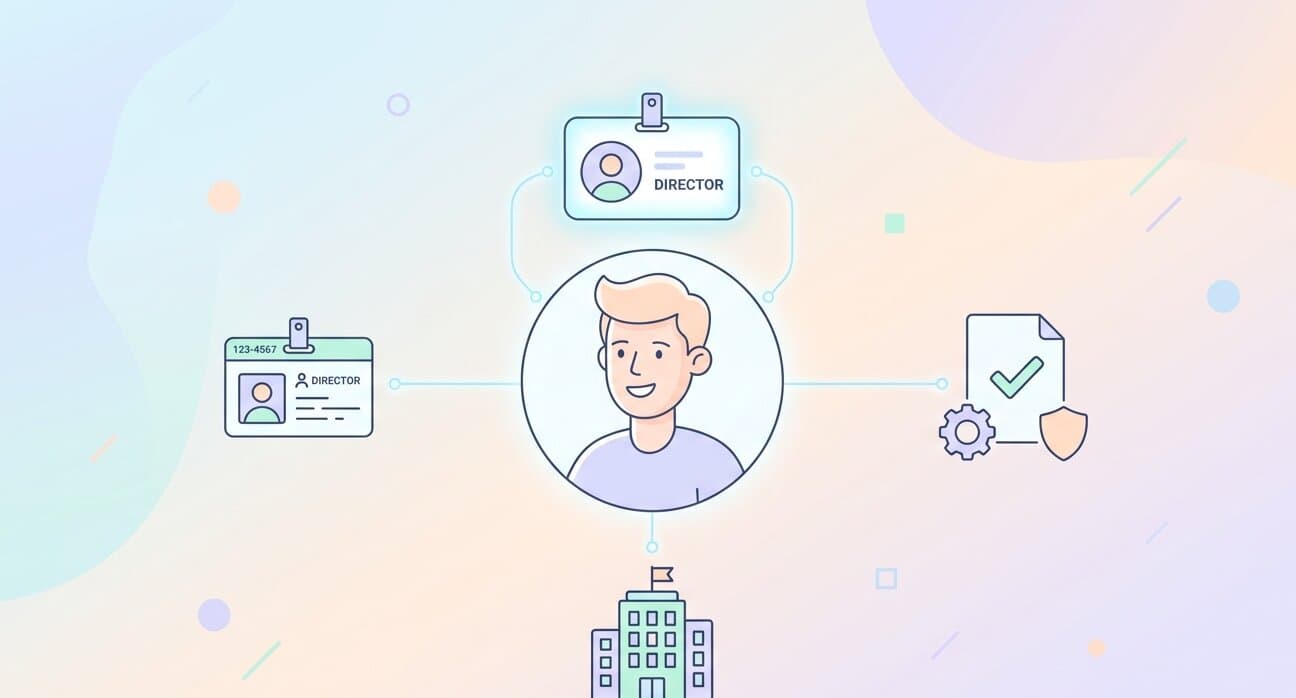
Digital Signature Certificates (DSC) for all proposed directors, required to sign incorporation forms electronically.
Director Identification Number (DIN) applications for each director.
Name reservation through the Ministry of Corporate Affairs (MCA) portal.
Filing the SPICe+ form, which bundles incorporation, PAN, TAN, and often GST, EPFO, and ESIC registration into a single application.
Certificate of Incorporation, after which the entity can open a bank account, sign an office lease, and begin hiring.
The system for online registration of company formation in India has become significantly more streamlined, and a straightforward private limited incorporation can often be completed within one to two weeks. This is precisely why India incorporation is rarely the bottleneck in captive centre setup — the real timeline is usually determined by office space, technology infrastructure, and talent acquisition, not the legal filing itself.
Common Mistakes Foreign Companies Make
Choosing a city based on brand reputation alone, without weighing the specific talent specialisation or attrition rate relevant to their function.
Committing to a fully owned captive too early, before validating demand or operating fit through a lighter EOR or BOT model.
Underestimating the technology and compliance build-out — cybersecurity frameworks, data protection compliance, and IT infrastructure often take longer than the legal incorporation itself.
Treating the captive as a cost centre indefinitely, rather than planning for its evolution into a strategic hub with real ownership over products, platforms, or global functions.
Ignoring distributed-location strategies, which can meaningfully reduce attrition and cost risk compared with concentrating an entire centre in one high-demand city.
Final Thoughts
The story of captive centres in India has moved well past the "cheap back office" narrative. What started as an experiment by a handful of multinationals in the 1980s has become a core part of how global companies build products, run operations, and develop technology. For foreign companies evaluating their next move, the real decision isn't whether India belongs in the conversation — it clearly does — but which model fits where your company is today: testing the waters with an EOR, de-risking the build with a BOT, or going all-in with a fully owned captive centre from the outset.
Whichever path you choose, the legal incorporation is the easy part. The decisions that actually determine whether your captive succeeds — location, model, and how deliberately you plan its evolution from cost centre to strategic hub — deserve just as much attention before you file a single form.