.svg)
.svg)
.svg)
A Foreign Manufacturer's Guide to Picking the Right State for Plant Incorporation in India
Compare the best Indian states for foreign manufacturing based on land, power, labour, logistics, incentives, and ease of setting up a plant.

Accorp Compliance Team
Our team of compliance experts specializes in PCI DSS, SOC 2, and other security frameworks to help businesses achieve and maintain compliance.
Setting up a manufacturing plant in India is one of the most consequential decisions a foreign company can make. Unlike a services office or a liaison setup that can be relocated within months, a factory is a long-term bet — on land, machinery, power connections, and a local workforce that will stay put for the next 15 to 20 years. Get the state wrong, and you're stuck absorbing higher logistics costs, patchy power supply, or a labour market that can't keep pace with your production targets. Get it right, and you've locked in a cost advantage that competitors setting up elsewhere simply won't have.
This guide walks foreign manufacturers through the practical side of that decision — what actually separates a good state from a mediocre one, how India's incorporation process works once you've chosen, and where the country's most competitive manufacturing hubs stand today.
Why the State You Choose Matters More Than You Think
India isn't a single, uniform market. It's a federation of 28 states and 8 union territories, each with its own industrial policy, land pricing, labour laws, power tariffs, and appetite for foreign investment. Two plants making the identical product, 800 kilometres apart, can have completely different cost structures purely because of where they sit.
This is also why company formation in India is rarely a one-step process. You're not just registering a company with the Ministry of Corporate Affairs — you're also navigating state industrial policies, land allotment authorities, pollution control boards, and local labour regulations. The incorporation itself is centralised and fairly standardised; the operational environment around your plant is not.
Key Factors Every Foreign Manufacturer Should Weigh
Before shortlisting states, it helps to score each option against the same set of criteria. Here's what genuinely moves the needle.
1. Land Cost and Availability
Industrial land prices vary enormously across India — from a few thousand rupees per square metre in emerging industrial corridors to significantly higher rates in established hubs like Pune or the Delhi-NCR belt. Greenfield industrial cities built under corridors such as the Delhi-Mumbai Industrial Corridor (DMIC) tend to offer cheaper land with trunk infrastructure already in place, which can meaningfully shorten your construction timeline.
2. Power, Water, and Utility Infrastructure
Manufacturing is power-hungry, and utility planning is one of the most underestimated parts of plant setup. States differ in tariff structures, subsidised power rates for industrial units, and the reliability of the grid itself. Some states also offer captive renewable energy options, which matter a great deal for energy-intensive sectors like chemicals, metals, or electronics.
3. Labour Availability and Cost
A state with a large working-age population isn't automatically a good fit — you need the right skill mix for your specific sector. States with established industrial clusters (auto components, textiles, electronics) tend to have a deeper bench of trained workers, which reduces your training overhead in the first few years of operation.
4. Logistics and Port Connectivity
If you're manufacturing for export, distance to a port isn't a minor detail — it's baked into your unit economics for the life of the plant. Coastal states with strong port infrastructure typically have an edge for export-oriented manufacturing, while states closer to major domestic consumption centres work better if your primary market is within India.
5. State-Level Incentives and Subsidies
This is where the real financial engineering happens. Most Indian states run a two-tier incentive structure — central government schemes like the Production Linked Incentive (PLI) programme stack on top of state-specific benefits such as capital subsidies, SGST refunds, stamp duty exemptions, and power tariff concessions. Depending on the sector and investment size, these combined incentives can meaningfully reduce your effective setup cost over the first several years.
It's worth noting that these incentives are rarely automatic. They usually require a separate application under the relevant state industrial policy, strict documentation, and adherence to eligibility windows tied to your commercial production date. Missing a deadline can mean forfeiting an entire year's claim, so this is an area where getting expert guidance early pays for itself many times over.
6. Ease of Regulatory Clearances
Some states have invested heavily in single-window clearance systems that bundle environmental, factory, and labour approvals into one portal. Others still require manufacturers to run between multiple departments. This difference alone can add months to your project timeline.
States Worth Shortlisting in 2026
While the right state ultimately depends on your sector, a few consistently come up as strong contenders for foreign manufacturers:
Gujarat — A long-standing industrial powerhouse with strong port access, a mature chemicals and petrochemicals ecosystem, and India's first International Financial Services Centre (IFSC) in GIFT City, which carries its own set of tax and duty concessions. Gujarat is particularly well suited to export-oriented and large-scale manufacturing.
Tamil Nadu — Home to an established electronics manufacturing base around Chennai, with global names already running operations there. The state offers additional capital subsidies, concessional land, and exemptions on stamp and electricity duty, making it a strong pick for electronics and semiconductor-adjacent manufacturing.
Maharashtra — A diversified industrial base with strong logistics connectivity through Mumbai and Pune, and incentive packages that increasingly reward export orientation and employment generation.
Uttar Pradesh — Rapidly building out industrial infrastructure with a focus on job creation, offering comparatively lower land and labour costs than the western coastal states, and positioning itself for food processing, textiles, and pharmaceuticals.
Andhra Pradesh and Odisha — Both have been drawing new semiconductor and electronics investment, backed by the India Semiconductor Mission and aggressive state-level incentive packages, including subsidised land and power tariff concessions.
The right answer for your business will come down to modelling actual costs across two or three shortlisted states rather than chasing the state with the highest headline subsidy number — a subsidy percentage on paper doesn't always translate into the best net present value once disbursement caps and timelines are factored in.
How to Open a Company in India Before You Break Ground
Once you've picked a state, the next step is company formation in India itself — a process that runs through central regulators regardless of which state your plant will sit in.
Most foreign manufacturers use a private limited company structure, since it allows 100% foreign ownership in manufacturing under India's automatic FDI route for most sectors, while limiting liability to the company's assets. Here's the broad sequence for pvt ltd company registration in India:
Obtain Digital Signature Certificates (DSC) for the proposed directors — required for signing electronic forms.
Apply for Director Identification Numbers (DIN) for each director.
Reserve your company name through the RUN or SPICe+ Part A service on the Ministry of Corporate Affairs (MCA) portal.
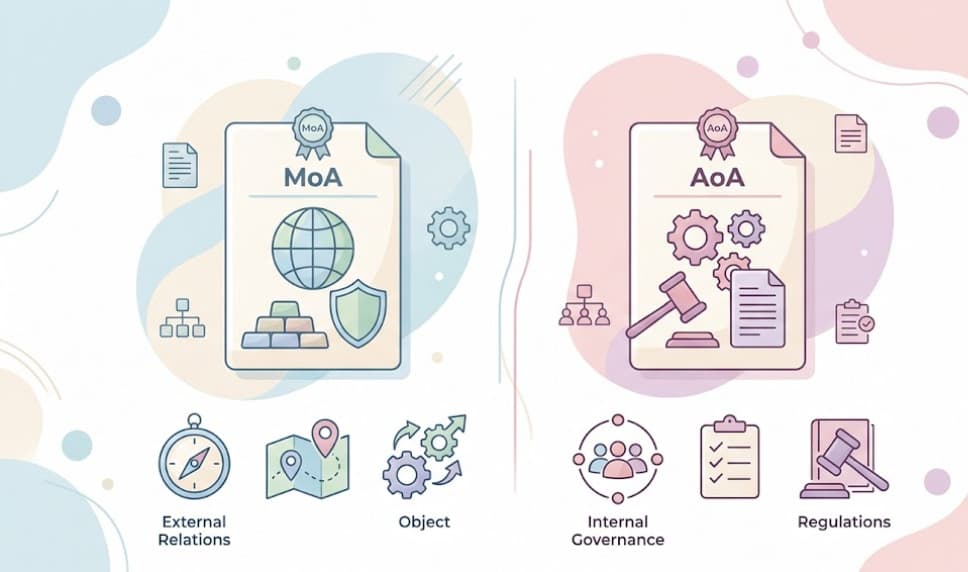
File incorporation documents — including the Memorandum of Association (MOA) and Articles of Association (AOA) — through the SPICe+ form, which also bundles PAN, TAN, EPFO, ESIC, and GST registration into a single filing.
Receive your Certificate of Incorporation, after which the company legally exists and can open a bank account, sign leases, and begin the plant-approval process at the state level.
The entire process for online registration of company formation in India is now largely digital, and a straightforward private limited incorporation can often be completed within one to two weeks once documentation is in order. What typically takes longer is everything that follows — land allotment, environmental clearances, and factory licences at the state level — which is why choosing a state with an efficient single-window system genuinely shortens your overall timeline.
India Incorporation Is Just the Starting Point
It's worth being clear-eyed about something: India incorporation gets you a legal entity, not a functioning factory. The real work — securing land, negotiating power connections, applying for incentives, and hiring your first plant team — happens at the state level, and that's precisely why the state decision deserves as much diligence as the incorporation paperwork itself.
Foreign manufacturers who treat state selection as an afterthought, bolted on after the company is already incorporated, tend to end up renegotiating their plans midway through construction. The ones who get the best outcomes are the ones who model land, power, labour, logistics, and incentive value across two or three states before they file a single incorporation document.
Common Mistakes to Avoid
Chasing headline subsidy percentages without modelling actual disbursement caps and payout timelines.
Underestimating documentation requirements for claiming SGST refunds or capital subsidies, which are rarely automatic and require dedicated compliance tracking.
Ignoring booster incentives tied to employment generation, exports, or women's workforce participation — these can meaningfully increase your total incentive value if structured correctly from the start.
Overlooking utility planning — power, water, and effluent treatment infrastructure is far costlier to retrofit later than to design in from day one.
Treating incorporation and plant setup as the same timeline — company formation in India can be quick, but land allotment and regulatory clearances at the state level almost always take longer.
Final Thoughts
Choosing where to incorporate your manufacturing plant in India is as much a strategic decision as a legal one. The company formation step — PAN, incorporation certificate, GST registration — is now fast and largely standardised across the country. The real differentiator between a smooth plant launch and a drawn-out one is how carefully you've evaluated the state itself: its land costs, power reliability, labour pool, logistics access, and the incentive package it's willing to put on the table.
For most foreign manufacturers, the smartest approach is to run this evaluation in parallel with early-stage incorporation planning — engaging local consultants who understand both the central registration process and state-specific industrial policy, so that by the time your Certificate of Incorporation arrives, you already know exactly where you're building.