.svg)
.svg)
.svg)
Setting Up an Indian Subsidiary to Sell to Indian Customers: A Structure & Compliance Guide for Foreign Companies
Set up an Indian subsidiary with guidance on Pvt Ltd registration, FDI, FEMA, GST, RBI filings, documentation, banking, and ongoing compliance.

Accorp Compliance Team
Our team of compliance experts specializes in PCI DSS, SOC 2, and other security frameworks to help businesses achieve and maintain compliance.
If you're a foreign company getting real traction with Indian buyers — enquiries, pilot orders, maybe a distributor asking for exclusivity — you've probably reached the point where invoicing from abroad or routing everything through a local reseller no longer makes sense. That's usually when the question comes up: how to open a company in India, and is it worth the compliance overhead?
We work with foreign companies going through exactly this decision regularly, and the honest answer is: it depends on how committed you are to the market. A subsidiary gives you control, credibility with Indian buyers, and access to domestic banking and GST — but it also comes with ongoing compliance that a distributor arrangement doesn't. This guide walks through the structure, the registration process, and what you'll own once the entity exists.
Why Foreign Companies Incorporate Instead of Selling Through a Distributor
Selling into India without a local entity is possible, and plenty of companies do it — through distributors, resellers, or by invoicing directly from abroad and letting the customer handle import duty. But this has real limits once volumes grow.
Indian procurement teams, especially in government-adjacent sectors, PSUs, and larger corporates, often prefer dealing with a locally registered vendor. GST-registered invoicing is expected in most B2B transactions, and without an Indian GSTIN you're either losing deals to competitors who have one, or absorbing a distributor's margin. There's also permanent establishment risk — if your foreign entity's people are effectively running sales operations in India without a formal structure, tax authorities can argue you already have a taxable presence here, minus any of the benefits of setting one up properly.
Company formation in India through a proper subsidiary solves this. You bill directly, register for GST, build a banking relationship, and are treated as a domestic vendor rather than an overseas supplier routed through intermediaries.
Choosing the Right Structure Before You Register
Not every foreign company needs the same entity, and this is where we see the most confusion.
A Liaison Office is meant purely for market research and representing the parent company — it cannot invoice Indian customers or generate revenue at all. If the goal is selling, this is the wrong vehicle.
A Branch Office can undertake specific permitted activities, including some trading, but needs RBI approval and operates within a narrower scope than most sales operations require.
A Wholly Owned Subsidiary (Private Limited Company) is what most foreign companies land on when the goal is direct sales to Indian customers. It's a separate Indian legal entity that can invoice freely, hold GST registration, open current accounts, and hire staff without the activity restrictions of a branch or liaison office. For most B2B and B2C sales operations, pvt ltd company registration in India is the practical answer, and it's the route we assume for the rest of this guide.
How to Register a Company in India as a Foreign Shareholder
Registration runs through the Ministry of Corporate Affairs (MCA) and is largely digital now, which is a real improvement from a few years ago.
Reserve the company name through the SPICe+ Part A form. Names get rejected more often than founders expect — usually too generic, too close to an existing trademark, or using restricted words. Keep two or three backup names ready.
Obtain Digital Signature Certificates (DSC) for proposed directors, including foreign nationals. This involves notarised and apostilled (or consularised, depending on the country) identity documents — this step causes the most delay, so start it early.
File SPICe+ Part B with the e-MOA and e-AoA. This integrated form covers incorporation, PAN, TAN, EPFO, ESIC, and GST in most cases — essentially what people mean by online registration of company in India today, since nearly the entire filing sequence happens through the MCA portal.
Meet shareholder and director minimums. A private limited company needs at least two shareholders and two directors, and at least one director must be an Indian resident — someone who stayed in India for at least 182 days in the previous financial year. This is a common trip-up for foreign parents assuming they can run the board entirely from abroad.
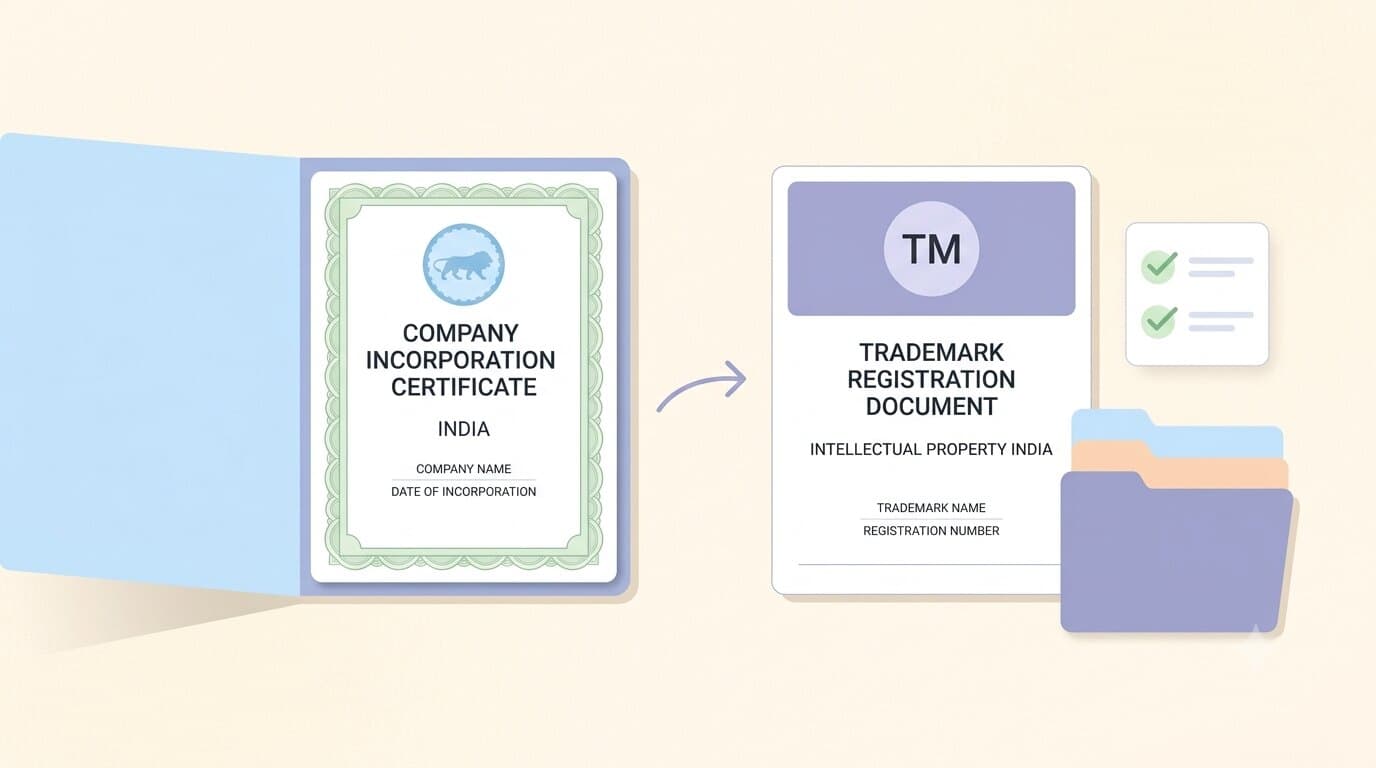
Receive the Certificate of Incorporation, along with the company's CIN, PAN, and TAN, once the ROC approves the filing.
File Form FC-GPR with RBI once the foreign parent remits share capital and shares are allotted. This is a mandatory FEMA filing that foreign-owned entities frequently delay — and delay here attracts penalties.
Documents Foreign Shareholders and Directors Typically Need
For the parent company: certificate of incorporation, a board resolution authorising the India subsidiary and its signatories, and the parent's constitutional documents — all apostilled or notarised as applicable for the country of origin.
For individual foreign directors: passport copy, proof of overseas address, and photographs, again apostilled where required, with certified translations if the originals aren't in English.
Getting this documentation chain right the first time saves weeks. We've seen incorporations stall a month simply because a board resolution wasn't apostilled correctly for the destination country's requirements.
FEMA, RBI Reporting, and What Happens After Share Capital Comes In
Incorporation isn't the finish line — it's the start of your compliance obligations as a foreign-owned entity. Once share capital is remitted, the subsidiary has 30 days to file Form FC-GPR with the RBI through the FIRMS portal. Beyond that, every Indian company with foreign investment must file the annual FLA (Foreign Liabilities and Assets) Return by July 15 each year, regardless of whether any transaction occurred during the year. This one gets missed constantly because it isn't tied to a specific event — it's a standing annual obligation for as long as foreign shareholding exists.
Most B2B and B2C sales businesses fall under the 100% automatic FDI route, meaning no prior government approval is needed. Certain sectors, such as multi-brand retail trading, carry specific conditions worth confirming before you file.
GST Registration and Selling to Indian Customers
GST registration is what lets you invoice Indian customers legally and claim input tax credit on business expenses. It can be applied for within the SPICe+ filing itself, so most subsidiaries get their GSTIN around the same time as incorporation rather than as a separate follow-up step.
Once registered, you'll file GST returns monthly or quarterly depending on turnover, issue GST-compliant invoices, and reconcile input credit regularly. If you're selling across multiple states, you may need state-specific GST registrations depending on where you hold inventory or maintain a place of business — worth mapping out before finalising your registered office.
Registered Office, Banking, and the Resident Director Requirement
Every Indian company needs a registered office address in India from day one — this is where statutory notices are legally deemed delivered, so it needs to be genuine and verifiable, not a nominal address that won't survive an ROC or bank site check.
Opening a current account requires the Certificate of Incorporation, PAN, board resolution, and KYC documents for all directors, including foreign ones — often the slowest part of the process. Budget more time for this than for the incorporation itself.
The resident director requirement deserves a second mention because it trips up so many foreign parents: you cannot run the board entirely with overseas directors. At least one must satisfy the 182-day residency test, which typically means appointing a trusted local professional or relocating a team member.
Compliance Calendar Once the Entity Is Live
Incorporation is a one-time event; compliance isn't. At minimum, expect annual financial statement and Annual Return filing with the ROC, income tax return filing, GST returns on a monthly or quarterly cadence, the annual FLA return, TDS compliance if you have employees or vendor payments, and statutory audit once you cross applicable thresholds. Missed deadlines attract late fees that compound faster than most founders expect, and persistent non-compliance can affect directors' eligibility for other Indian company appointments later.
Common Mistakes We See Foreign Companies Make
The most frequent one is treating incorporation as the finish line rather than the start of an ongoing compliance relationship. The second is underestimating apostille and notarisation timelines, which can add weeks depending on the shareholder's home country. The third is choosing a registered office address that isn't genuinely usable for banking and statutory purposes. And the fourth — probably the costliest — is missing the FC-GPR filing window after share capital arrives, which draws entirely avoidable RBI penalties.
How Accorp Partners Supports Foreign Companies Through India Incorporation
We work as the CPA-led compliance partner for foreign companies at every stage — from choosing the right entity structure and running the SPICe+ filing, to FEMA reporting, GST registration, and the ongoing annual compliance calendar once the subsidiary is operational. As a firm offering company incorporation services India-wide for foreign shareholders specifically, our focus is on getting the structuring decision right before anything is filed, since that's where most long-term compliance headaches either get avoided or get baked in permanently.
Frequently Asked Questions
1. Can a foreign company own 100% of an Indian subsidiary?
Yes, most sectors permit 100% FDI under the automatic route, meaning no prior government approval is needed for a wholly owned subsidiary. Certain sectors carry conditions or caps worth confirming for your specific business activity.
2. Does the India subsidiary need a local director?
Yes. At least one director must have resided in India for a minimum of 182 days in the preceding financial year, regardless of how many directors the foreign parent appoints.
3. How long does India incorporation typically take for a foreign shareholder?
Once documentation — apostille, DSC, KYC — is in order, MCA processing is often completed within two to three weeks. The real variable is how quickly overseas documentation can be notarised and apostilled, which can extend the timeline considerably if not started early.
4. Is GST registration mandatory at the time of incorporation?
Not legally, if you don't plan to invoice immediately — but since GST can be applied for within the SPICe+ form itself, most companies register upfront rather than filing separately later.