.svg)
.svg)
.svg)
SOC 2 for BPOs, Call Centers and Collection Agencies: What Your Clients’ Vendor Teams Expect
SOC 2 Type II certified collection firms clear vendor reviews faster. See what banks and lenders expect from a SOC 2 Type 2 report for BPOs and call centers.

Accorp Compliance Team
Our team of compliance experts specializes in PCI DSS, SOC 2, and other security frameworks to help businesses achieve and maintain compliance.
A collection agency can be a strong performer on liquidation rates and still lose a place on a lender's panel. The reason is often not performance. A vendor risk analyst opens the security package, cannot find a current audit report and flags the file as incomplete.
For contact centers and recovery businesses, the security review often decides who gets the work. This guide covers what those reviewers look for, how to scope an operation with hundreds or thousands of seats, and what it takes to be among the SOC 2 Type II certified collection firms that clear vendor review without a fight.
Why Vendor Teams Ask for SOC 2 Before They Ask About Performance
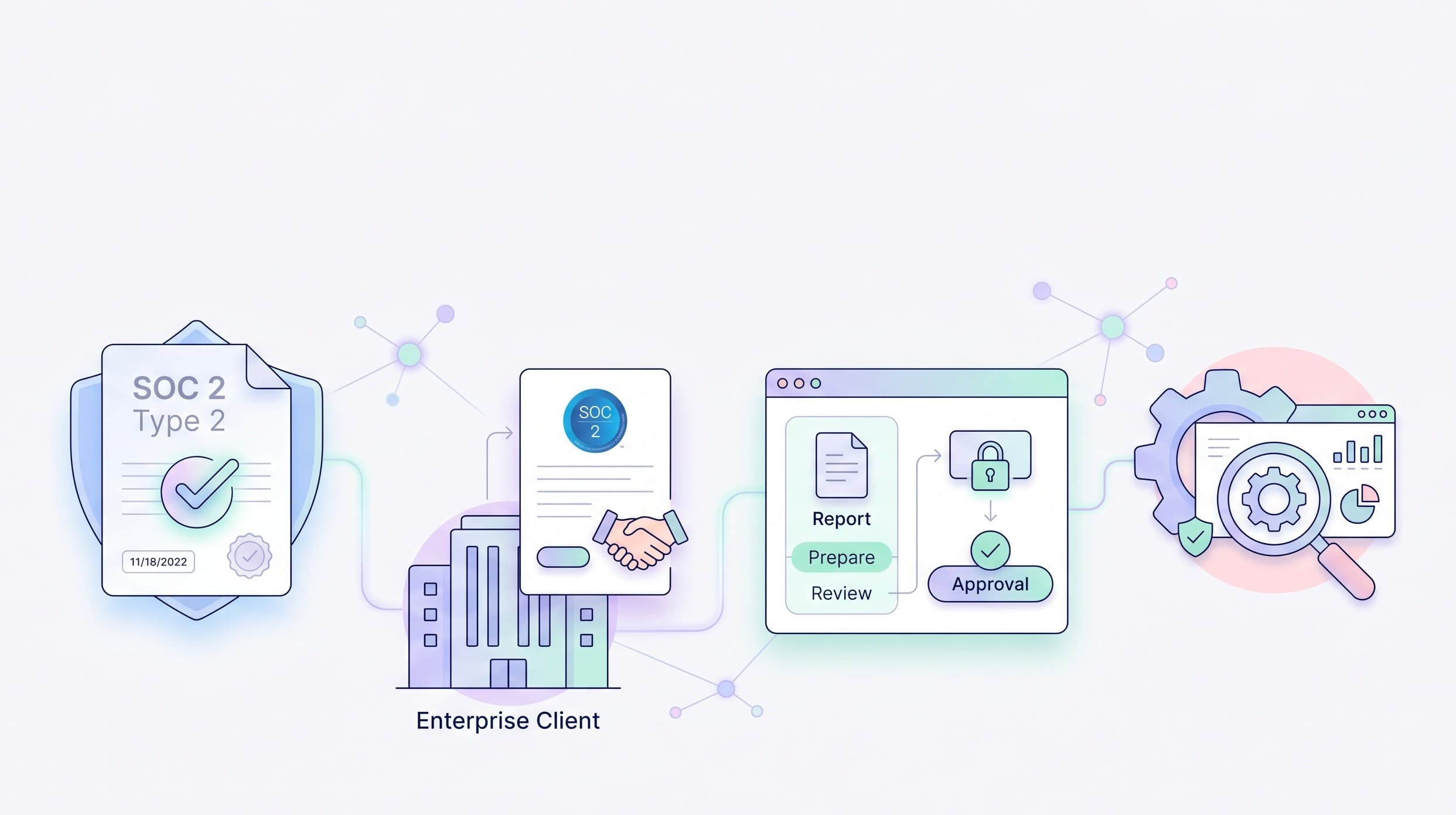
Banks, lenders, fintechs, telcos and healthcare payers hand their customers' data to outsourced teams every day. Their regulators and auditors hold them responsible for how that data is protected, whoever is holding it. A third-party risk team cannot visit every vendor, so it asks for an independent report instead. We cover the buyer's side of this in why customers ask for SOC 2 Type 2 reports.
That is why SOC 2 for BPO work has moved from "nice to have" to a line item in many master service agreements. A report from a licensed CPA firm lets the client's team reuse someone else's testing instead of running its own audit.
"Certified" Versus Report: What a SOC 2 Type 2 Report Actually Is
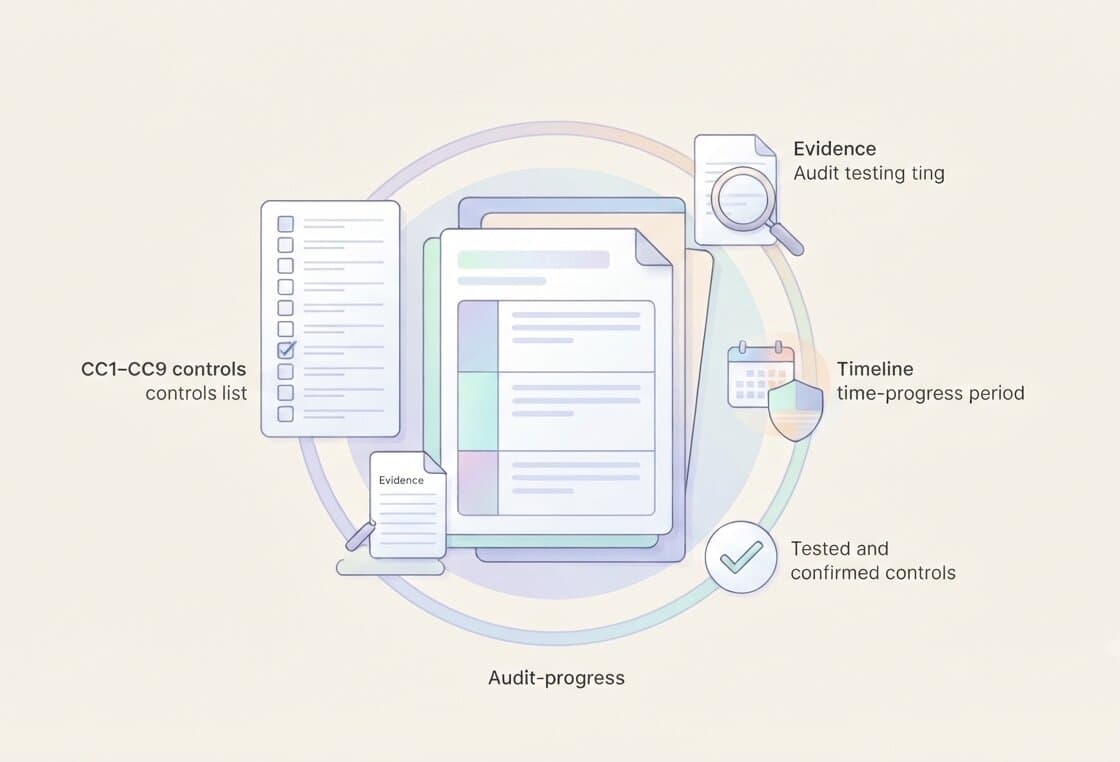
Buyers search for "SOC 2 certified" all the time, so the phrase is common in the industry. Technically, SOC 2 is not a certification. It is an attestation, as explained in what SOC 2 compliance really means. A CPA firm examines your controls and issues a SOC 2 Type 2 report, which contains:
The auditor's opinion on whether your controls were designed suitably and operated effectively
Your management's description of the system and the services covered
A list of the controls tested and the results of each test
Any exceptions the auditor found
For a section-by-section walkthrough, see SOC 2 report structure explained.
Type 1 vs Type 2
A Type 1 report describes controls at a single date. A Type 2 report tests them over a period, commonly six to twelve months. Vendor teams strongly prefer Type 2 because it shows the controls worked in practice, and a design on paper is not enough for them.
What a Vendor Risk Analyst Checks First
Reviewers rarely read a report from the first page to the last. They go to the same spots every time, so preparing for these makes the review quicker.
The Opinion
An unqualified opinion is what they expect. A qualified opinion triggers questions. Here is what qualified and adverse opinions mean for your report.
The Period
Is it recent, and is it long enough? A report that ended fourteen months ago looks stale.
The Scope
Does the system description cover the site, the service line and the data your client actually sends you? A report that excludes your collections floor is no use to a collections client.
The Trust Services Criteria
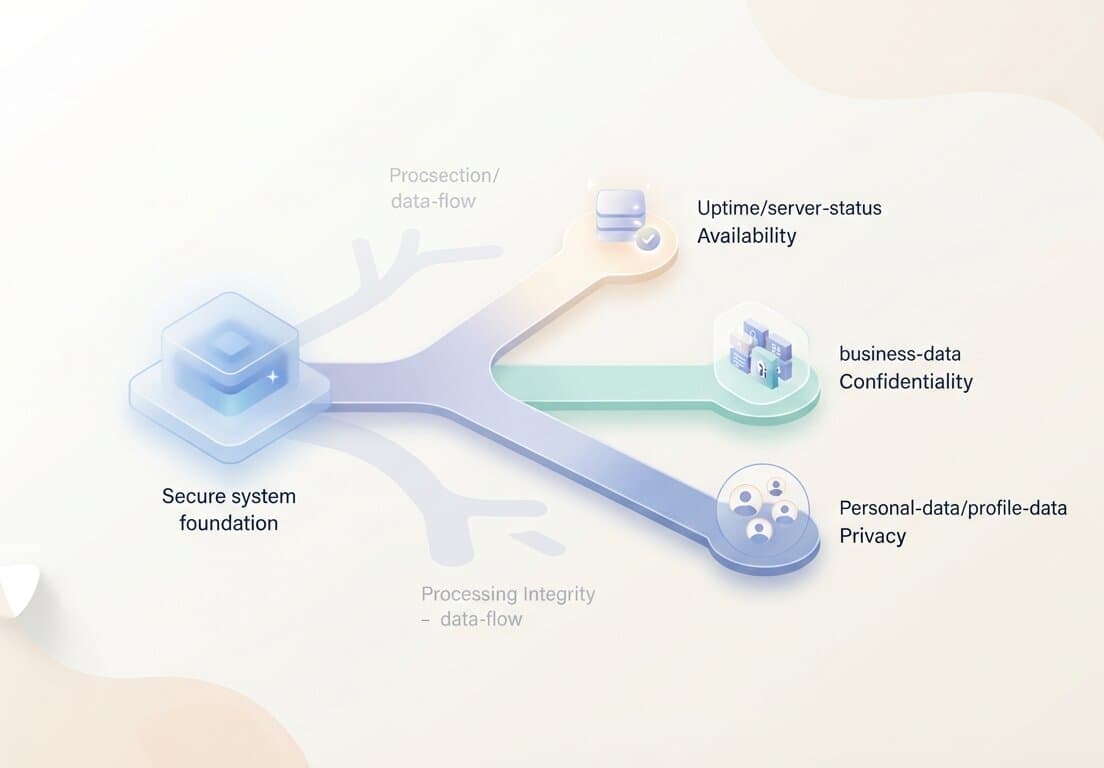
Security is mandatory. Many financial clients also expect Confidentiality, and some ask about Availability or Privacy. Our guide to all five trust services criteria helps you pick the right set.
Exceptions
One or two minor exceptions with a clear response are normal. A pattern of them is a concern. If your draft has one, read does an exception mean you failed.
Subservice Organizations
If you rely on a cloud host, a dialer vendor or a payments platform, the report should say how those are handled, as carved out or included. Subprocessor management is the control area most companies get wrong.
Complementary User Entity Controls
These are the things the auditor expects your client to do. Their team will check that they can.
Scoping SOC 2 for a BPO With Hundreds of Seats
A software company can describe its system in a few pages. A BPO has people, sites and workstations, which makes scoping the decision you can't afford to rush. Settle these early.
Sites and Programs in Scope
You do not have to include every seat in every location. Many operations scope by client program or by facility. Be honest about the boundary, because a client whose data is handled outside it will notice.Physical Controls
Badge access, visitor logs, clean-desk rules, restricted phones on the floor and camera coverage are all tested. SaaS-oriented guides say little about these areas.Workforce Controls
Auditors test background checks, signed confidentiality terms, security training and, above all, fast access removal when agents leave. In a high-turnover environment, the offboarding sample is where exceptions most often appear.Remote and Hybrid Agents
If any agents work from home, the auditor will ask how you secure home endpoints, restrict data on local devices and monitor access. See how remote-first companies pass SOC 2 audits.Call Recording and Quality Systems
These store sensitive conversations. Expect questions on encryption, retention, who can listen and how access is logged.
What a SOC 2 Collection Agency Needs to Show
A SOC 2 collection agency report works best when it speaks to the risks the client's compliance team already worries about.
Consumer Financial Data
Account details, balances, identity attributes and skip-tracing data. Show how each is classified, restricted and disposed of.Communications Records
Calls, letters, emails and texts are evidence in disputes. Retention, tamper resistance and retrieval should be in your controls.Payment Handling
If you take card payments, clients usually ask for PCI evidence in addition to SOC 2. The two frameworks overlap less than vendors claim, and one does not replace the other.Contractual Security Flow-Downs
Clients subject to financial data security rules, such as GLBA, usually pass the expectations to vendors through the contract. Map your controls to those clauses.What SOC 2 Does Not Cover
SOC 2 does not test your compliance with debt collection law, such as the FDCPA or Regulation F. Clients examine that separately, through audits and complaint monitoring. A SOC 2 report shows that data is protected. It does not show that your collection practices are lawful, so do not present it as both.
The Path to Joining SOC 2 Type II Certified Collection Firms
For a first-time agency, a sensible sequence looks like this:
Readiness assessment. Compare your current controls with the criteria and list the gaps. A SOC 2 compliance checklist is a useful starting point.
Remediation. Write missing policies, tighten access, set up logging and begin collecting evidence. If gaps surface, here is how to fix them before they cost you a deal.
Optional Type 1. Useful if a client needs something in hand before the Type 2 window has run. Read whether a Type 1 report is good enough for your clients.
Observation period. Controls operate while evidence builds up. For a first report, many firms start with a shorter window and extend it in later years.
Fieldwork and report. The auditor tests samples and issues the report. Knowing what auditors look for when reviewing evidence keeps this stage clean.
How quickly you move through these steps depends on how much documentation and tooling already exists.
Mistakes That Stall a Vendor Review
Letting the report lapse. Gaps between audit periods raise questions. Plan the next window before the current one ends, and keep a bridge letter available for the time between the report date and today.
Scoping around the problem areas. Leaving out the floor where the data is actually handled usually backfires.
Ignoring subservice providers. If the report's treatment of your cloud and dialer vendors is unclear, the client's team will ask you to explain it.
No response to exceptions. A short management response with a remediation date reads far better than silence.
Treating the audit as an annual scramble. Evidence collected continuously is cleaner than evidence reconstructed in the last month. This is the case for continuous SOC 2 compliance.
The Takeaway
Vendor teams do not ask for a SOC 2 report because they distrust you. They ask because they have to prove they checked. An agency that hands over a current, properly scoped Type 2 report with a clean opinion removes that hurdle before the conversation starts, and gives its sales team one less thing to explain.
Accorp Partners runs SOC 2 audits for BPOs, contact centers and collection agencies, and PCI DSS assessments where you take card payments. Talk to us about scoping your first report.
Frequently Asked Questions
1. Is a SOC 2 Type 1 report enough for a vendor review?
Sometimes, as a stopgap while your Type 2 observation window runs. A Type 1 only shows that controls were designed properly on one date, so most banks and lenders will want a Type 2 before they expand your volumes.
2. How long is a SOC 2 Type 2 report valid?
There is no official expiry date. Buyers usually expect an audit period that ended within the last 12 months. If there is a gap, they may ask for a bridge letter confirming that no major control changes have occurred since. Our guide on annual renewal and bridge letters covers what happens after the first report.
3. Are we "SOC 2 certified" once the audit is done?
Not technically. SOC 2 is an attestation, so a CPA firm gives you a report with an opinion on your controls. Buyers often say "certified," but your contracts and sales documents should say "SOC 2 Type 2 report."
4. Do we need to include every site and agent in scope?
No, but the scope must cover where your client's data is actually handled. Many BPOs scope by facility or client program. A report that leaves out your collections floor will not satisfy that client's vendor team.
5. Does SOC 2 replace PCI DSS if we take card payments?
No. They cover different requirements, and clients that send you payments often ask for both. Decide your PCI scope early, because call recordings that capture card numbers can enlarge it.