.svg)
.svg)
.svg)
APR for Resident Individuals: Does Your LRS Overseas Investment Need an Audit Too?
Resident individuals using LRS for overseas ODI must track APR filings, self-certification rules, shared investments and host-country audit requirements.

Accorp Compliance Team
Our team of compliance experts specializes in PCI DSS, SOC 2, and other security frameworks to help businesses achieve and maintain compliance.
Most APR compliance content is written for companies — Indian Party this, wholly owned subsidiary that. Somewhere in that sea of corporate language, resident individuals who've set up a business abroad using their own LRS remittance tend to get left out entirely, or worse, lumped in with company rules that don't actually apply to them the same way. If you're an individual who's incorporated a company overseas through the Liberalised Remittance Scheme, the audit question you're actually asking is different from what most guides answer.
How Individuals End Up Filing an APR in the First Place
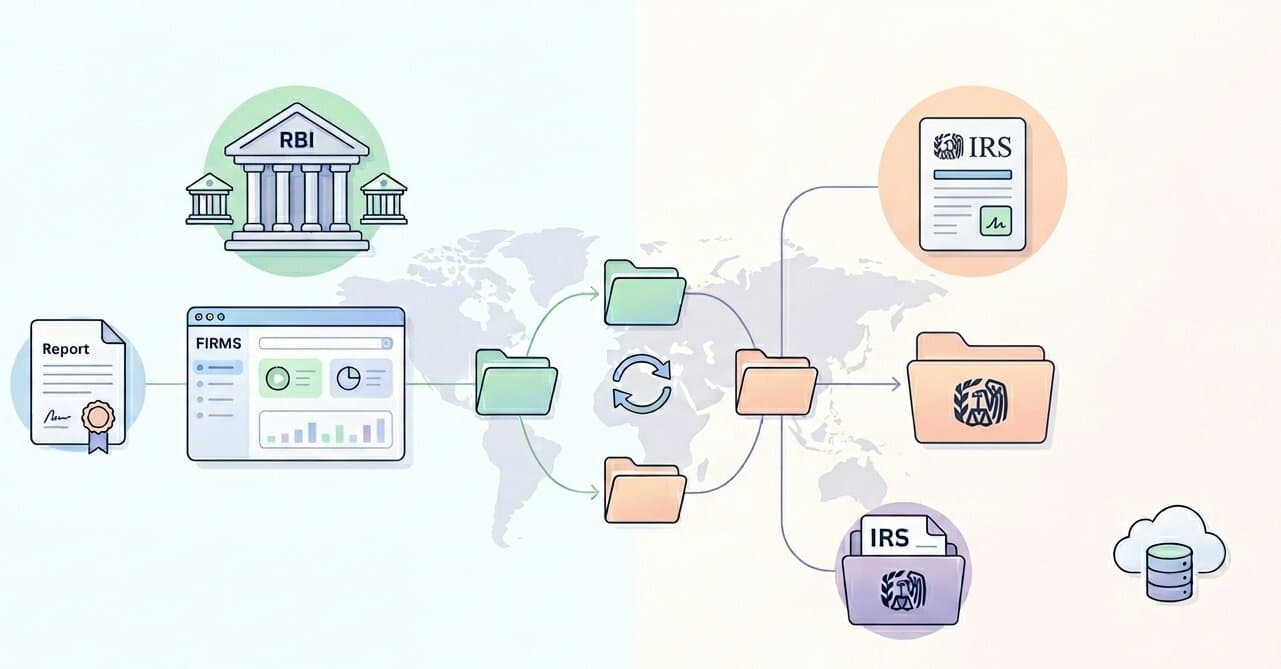
Under FEMA's Overseas Investment framework, a resident individual can set up or acquire equity in a foreign joint venture or wholly owned subsidiary using funds remitted under the LRS, currently capped at USD 250,000 per financial year. Once that investment qualifies as Overseas Direct Investment rather than portfolio investment — meaning it crosses the control or equity threshold rather than sitting as a passive holding — the same annual reporting obligation that applies to companies kicks in for the individual too: an Annual Performance Report, filed every year, for as long as the investment stays active.
This is where a lot of individual investors get caught off guard. They think of the LRS remittance as a one-time transaction — money sent, company incorporated, done. In practice, it opens a recurring compliance obligation that runs every year until the entity is either fully divested or wound up, structurally identical to what an Indian company owes RBI for its own foreign subsidiary.
The Certification Rule That's Different for Individuals
Here's the part that separates individual filers from corporate ones, and it's the answer to the question in the title. Under the Overseas Investment framework, the APR is ordinarily required to be based on the foreign entity's audited financial statements. But RBI has carved out a specific accommodation for resident individuals: certification of the APR by a statutory auditor or chartered accountant is not insisted upon in their case, and self-certification is accepted instead.
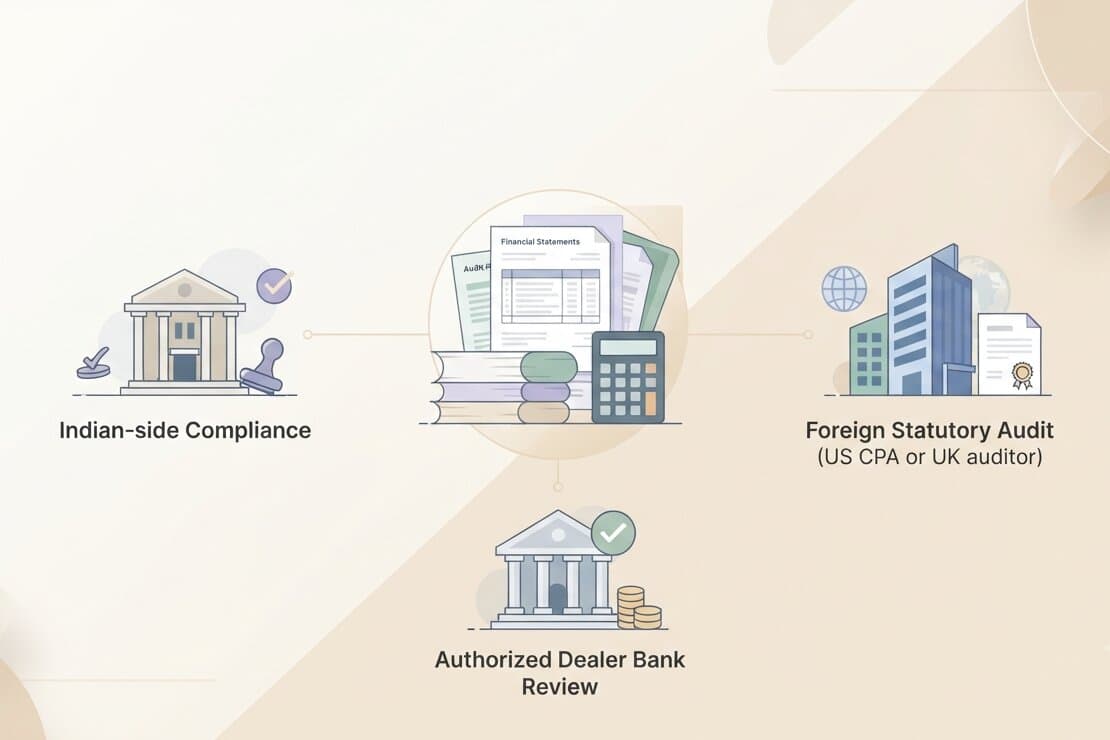
This isn't a loophole — it's a deliberate policy choice recognising that an individual running a small overseas venture through personal LRS remittance doesn't carry the same compliance infrastructure as a company with an in-house finance function. Where a corporate APR audit routes through a jurisdiction-specific auditor — a licensed CPA for a US entity, an ICAEW or ACCA member for the UK — a resident individual can, in most cases, certify their own APR figures directly, without engaging a foreign audit professional at all.
When Self-Certification Isn't Actually Enough
The exception matters, but it isn't unconditional, and this is where individual filers most often get it wrong. Self-certification works when the underlying figures are genuinely straightforward and the host country itself doesn't mandate a statutory audit for an entity of that size. If your overseas entity is incorporated somewhere that does require local audited accounts regardless of size — and several jurisdictions do, depending on revenue or asset thresholds — that local requirement doesn't disappear just because RBI is lenient on the Indian side. You still need audited financials to satisfy the host country's own company law, even if RBI would have accepted your self-certified version.
The practical trap here is assuming FEMA's accommodation for individuals overrides every other rule in play. It doesn't. It only removes the Indian-side insistence on auditor certification. Whatever the foreign entity's own jurisdiction separately requires stays fully in force.
What Happens With Multiple Individual Investors in One Entity
A less obvious scenario shows up when more than one resident individual holds a stake in the same overseas JV or WOS — siblings co-investing in a family business abroad, for instance, or business partners each remitting under their own LRS limit into a shared entity. RBI's framework doesn't expect duplicate filings in this situation. The obligation to submit the APR falls on whichever individual holds the maximum stake in the entity, or the co-investors can mutually agree to assign the responsibility to one designated person, who then furnishes an appropriate undertaking to the AD bank confirming they've taken on that reporting duty.
This detail gets missed constantly, usually resulting in either nobody filing because everyone assumed someone else would, or multiple redundant filings creating exactly the kind of confusion an AD Bank has to untangle manually. Sorting out who's responsible, formally, before the filing season starts is a small step that avoids a genuinely common failure point.
Why RBI Reporting Requirements Still Apply Even If the Business Is Small or Dormant
Individual investors sometimes assume that a small, low-revenue, or dormant foreign entity falls below some informal reporting threshold. It doesn't. FEMA compliance for ODI doesn't scale down based on the size or activity level of the foreign entity — the obligation to file exists as long as the investment exists, whether the business is thriving, breaking even, or sitting dormant with no transactions all year. An individual who assumes a quiet year means no filing is required is building exactly the kind of compliance gap that surfaces, unpleasantly, the next time they try to remit additional funds under LRS or make a follow-on investment.
Where This Intersects With the Broader ODI Compliance Picture
Even with the self-certification allowance, resident individuals sit inside the same overall FEMA compliance framework as companies — the same Unique Identification Number tracking, the same requirement to report each foreign entity separately if there's more than one, and the same expectation that whatever's filed reconciles against the original investment record on file with RBI. The audit of a foreign subsidiary of an Indian company gets more procedural scrutiny because of the scale involved, but the underlying principle — that RBI wants an accurate, current picture of Indian capital sitting abroad — applies identically whether that capital came from a corporate treasury or a single person's LRS remittance.
The Practical Takeaway for Individual Investors
If you're a resident individual with equity in an overseas JV or WOS, the audit question isn't a blanket yes or no — it's two separate checks. First, confirm whether RBI's self-certification allowance genuinely applies to your filing, rather than assuming it automatically does. Second, and separately, confirm what the host country's own law requires regardless of what India asks for. Getting both of these right, every year, for as long as the investment stays open, is what keeps a personal overseas venture from turning into an unresolved FEMA compliance question the next time you need your AD Bank to process something on your behalf.