.svg)
.svg)
.svg)
Missed APRs Found in Investor Due Diligence: How to Fix Them Before Your Funding Round or Sale Closes
ODI compliance due diligence can stall a deal. See how investors review a missed APR on your US subsidiary and how to regularise it before funding closes.

Accorp Compliance Team
Our team of compliance experts specializes in PCI DSS, SOC 2, and other security frameworks to help businesses achieve and maintain compliance.
The term sheet is signed, the data room is open, and then investor counsel sends a short request: "Please share the Annual Performance Reports for your US subsidiary for the last three years." Nobody on your team can find them, because they were never filed.
This is more common than founders admit. A missed APR is rarely careless or deliberate. It usually comes from a handoff nobody noticed, a bank that never followed up, or a US accountant who assumed India was someone else's job. The trouble is that it surfaces when a deal clock is already running. This guide explains how ODI compliance due diligence works, what a missed APR means in practice, and how to deal with it before it costs you the round.
Why ODI Compliance Due Diligence Matters to Investors
Legal due diligence is a search for liabilities that could pass to the investor or buyer. An Indian company with a US subsidiary carries an extra layer of regulation, because the original investment and every year after it sit under FEMA.
In a typical ODI compliance due diligence exercise, counsel asks for:
Proof of the original remittance and what was reported to the bank at the time (see LRS vs ODI if you are unsure which route was used)
Share certificates or a clean share register showing your holding in the foreign entity
Annual Performance Reports for each year since the investment
Correspondence with the authorised dealer bank or the RBI
Financial statements of the overseas company
Board records from the US entity, usually kept in its corporate minute book
A missing document is not automatically a deal-breaker. But each gap becomes a line in the diligence report, and each line gives the other side a reason to ask for a price adjustment, an indemnity or a closing condition.
What a Missed APR Means Legally
The APR is a yearly report on the foreign entity's performance, filed through your bank. When it is skipped, the result is a reporting default under the overseas investment framework. It is a procedural breach, not a finding that the investment itself was improper, and that distinction shapes how seriously reviewers treat it.
The usual consequences are:
A late submission fee, which increases with the length of the delay.
Compounding or formal regularisation, if the delay is long or other defaults are involved.
Practical restrictions, such as the bank declining new remittances until the defaults are cured.
The fee is rarely what worries investors. The bigger issue is delay, because regularisation runs through your bank and sometimes the RBI, and investors dislike waiting.
FEMA Due Diligence on a Missed APR: How Reviewers Sort the Problem
When counsel finds a gap, they tend to place it in one of three buckets. Knowing which one you are in tells you how much work lies ahead.
Isolated and cured. One late filing, already regularised, with proof on file. In a FEMA due diligence missed APR review, this becomes a footnote.
Repeated but uncured. Several years missing and no correspondence with the bank. This is a formal finding and usually leads to a condition that you fix it before funds move.
Linked to other issues. A missed APR alongside unreported remittances, wrong equity classification, missing share records or an unreported step-down subsidiary. This is where deals slow down, because the problem now looks structural rather than clerical.
Your aim is to move from the second or third bucket into the first before anyone asks.
How to Regularise APR Before Funding Closes
Waiting for the investor to raise it is the expensive route. A more controlled way to regularise APR before funding looks like this.
Build the inventory. List every year since the overseas investment, mark which reports were filed and which were not, and gather proof for those that were, including remittance records and bank acknowledgements.
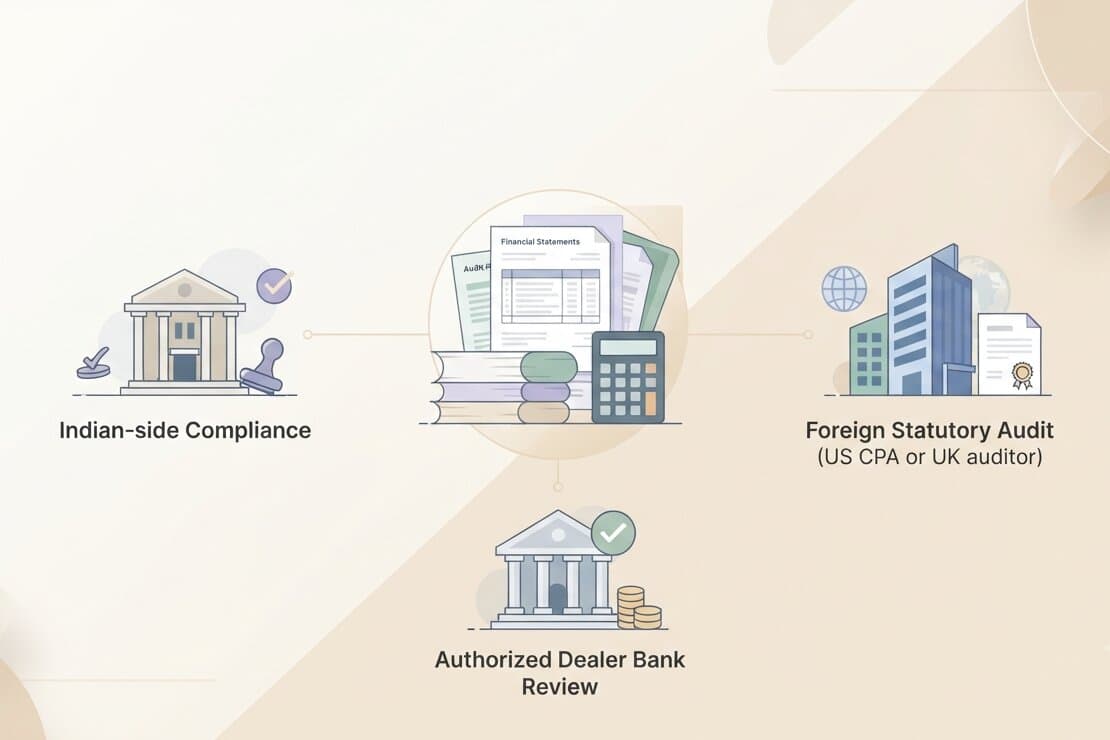
Get the missing financials. Each late APR needs the foreign entity's financial details for that year. If your US company never produced formal statements for earlier years, the US accountant must prepare them, and you will need to confirm who can sign off the audit. If the US entity follows a calendar year, read how to handle a different financial year. This is usually the slowest step, so begin here.
Approach your authorised dealer bank. The bank will say whether late submission fees are enough or whether the matter must go to the RBI. Response times vary, so speak to the bank early rather than near closing.
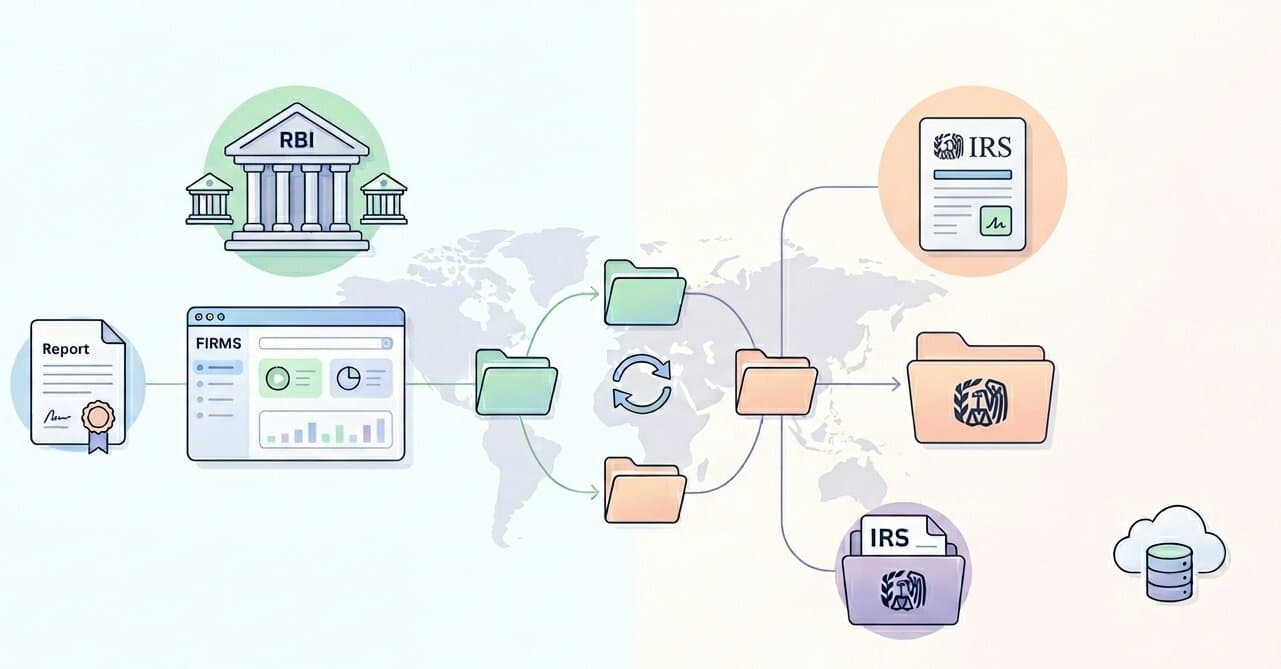
File and pay. Submit the delayed reports through the FIRMS portal, pay the fees and keep every acknowledgement.
Write the fix into the record. Prepare a short note for the data room: what was missed, when it was cured, and what controls now prevent a repeat. Reviewers respond well to a clear explanation and poorly to silence.
If the exercise uncovers something larger, such as a remittance reported incorrectly, ask a FEMA professional whether a compounding application is needed. It is a separate formal process and can affect your deal schedule. Our APR compliance team handles back-filings and bank engagement for Indian companies with US subsidiaries.
Disclose Early or Wait? A Practical View
Founders often ask whether to mention the gap before the investor finds it. In most cases early disclosure works better. It frames the issue as something you found and handled, rather than something counsel uncovered, and it leaves room to agree on a remediation plan while you still have negotiating strength.
There are exceptions. If the facts are unclear or other defaults may be linked, have your own advisor assess the position first. Disclosure should arrive with a plan, not just an admission.
Cross-Checks Reviewers Run Against Your APR
An APR rarely stands alone. Reviewers compare it with other records, and inconsistencies make a clean fix look messy.
The overseas company's financial statements should match the figures in the APR.
Intercompany balances should agree with the Indian parent's books and its transfer pricing records.
The shareholding reported should match the US entity's share register.
The Indian parent's own financial statements should disclose the subsidiary correctly.
If you are curing the APR anyway, reconcile all four at the same time. One tidy set of records answers most diligence questions at once, and it shortens ODI compliance due diligence for the next investor too.
Plan Backwards From Your Closing Date
The order of work matters more than speed. Run the steps in this sequence:
Finish the filing inventory first, so you know how many years are affected.
Start the missing US financials straight away, since every later step depends on them.
Open the conversation with your bank as soon as the inventory is ready.
Raise the compounding question early if the inventory shows linked defaults.
How long each step takes depends on your bank, the number of years involved and the complexity of the entity. What does not change is this: a problem found just before closing is hard to fix, while one found early is manageable. Founders who regularise APR before funding negotiations begin usually keep control of the timetable.
Habits That Stop It Happening Again
Once the backlog is cleared, protect the position:
Name one person as owner of RBI filings, in writing.
Ask the US accountant for draft financials by October each year.
Set reminders for the 31 December APR deadline and the 15 July FLA return.
Keep a living folder of remittance records, acknowledgements and bank correspondence.
Review the overseas investment file annually, not only when a deal appears. An APR audit each year keeps the file ready.
The Bottom Line
A missed APR is fixable, and fixing it before the investor asks changes the conversation from "what else is hiding?" to "this team keeps good records." Start with an inventory, get the US financials in order, speak to your bank early and keep a clean paper trail. Then the question in the data room gets a quick answer instead of a delay.
Frequently Asked Questions
1. Will a missed APR cancel my funding round?
Rarely on its own. More often it leads to a condition requiring you to cure the default before closing, or to a specific indemnity.
2. Can I file several years of late APRs together?
Generally yes, but each year needs its own financial statements and attracts its own late fee. Confirm the process with your bank.
3. Does curing the APR resolve every FEMA issue?
No. It addresses that reporting default only. Other matters, such as incorrect remittance reporting, need separate review.
4. Who files the late APR, the Indian parent or the US subsidiary?
The Indian company that made the overseas investment files it, through its authorised dealer bank. The US subsidiary supplies the financial statements the report relies on.
5. Should I still mention an APR that has already been regularised?
Yes. Put the bank acknowledgements and a short explanatory note in the data room. A cured default with proof on file usually ends up as a footnote in the diligence report.