.svg)
.svg)
.svg)
ESOPs to Overseas Employees: Does It Trigger ODI Reporting?
Overseas ESOPs can dilute foreign subsidiary shareholding. See how ESOP changes affect RBI APR reconciliation, ODI reporting and FEMA compliance.

Accorp Compliance Team
Our team of compliance experts specializes in PCI DSS, SOC 2, and other security frameworks to help businesses achieve and maintain compliance.
When companies ask whether an overseas ESOP needs to be reported to RBI, they're usually asking the wrong question. The more useful question — the one that actually surfaces during an APR audit — is whether that ESOP is quietly changing a number your auditor is going to reconcile against records RBI already has on file. That reconciliation step is where overseas stock option plans cause real problems, far more often than the initial reporting question does.
The Structure That Actually Matters for ODI Compliance
Not every overseas ESOP touches your ODI compliance. An Indian parent company issuing its own shares to employees of its foreign JV or WOS is a separate FDI-side transaction, reported through its own channel, and it never enters your Annual Performance Report.
The structure that does matter — and the one this piece focuses on — is a foreign subsidiary company issuing stock options in itself to its own overseas employees. This is a common retention tool for US, UK, and Singapore subsidiaries running independent local operations, and it's also the structure that directly affects the shareholding percentage your APR audit has to verify every year.
Why Vested Options Change a Number RBI Already Has on File
Every APR you've ever filed reports a specific shareholding percentage — the Indian parent's ownership stake in the foreign entity, as recorded against your original ODI approval. That percentage isn't static once an ESOP pool exists. Every option that vests and converts to equity issues new shares in the foreign subsidiary, and new shares mean the Indian parent's proportional ownership goes down, even though nothing changed on the Indian side of the transaction.
This is the part that gets missed. The foreign subsidiary's HR and finance teams see an ESOP program as a local compensation tool. RBI sees it as a change to a shareholding figure it's tracking year over year. Nobody is lying or hiding anything — the disconnect happens simply because the two teams are answering different questions, and neither one is checking whether the other's number still matches.
Where This Surfaces During APR Audit Reconciliation
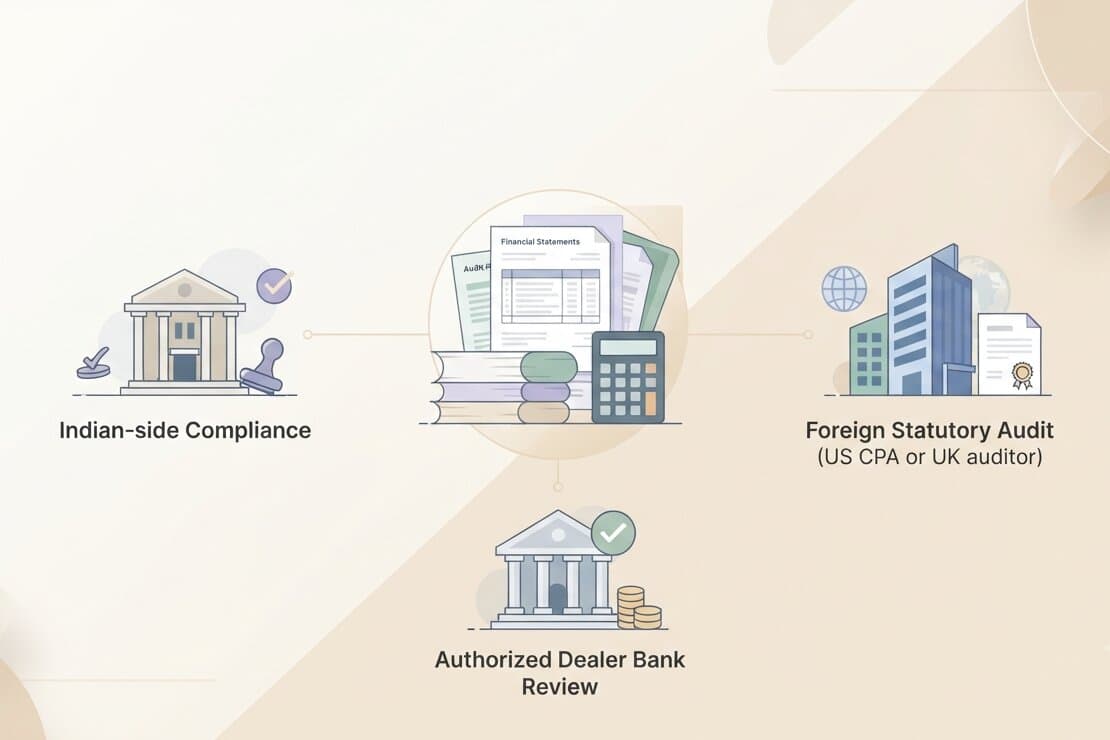
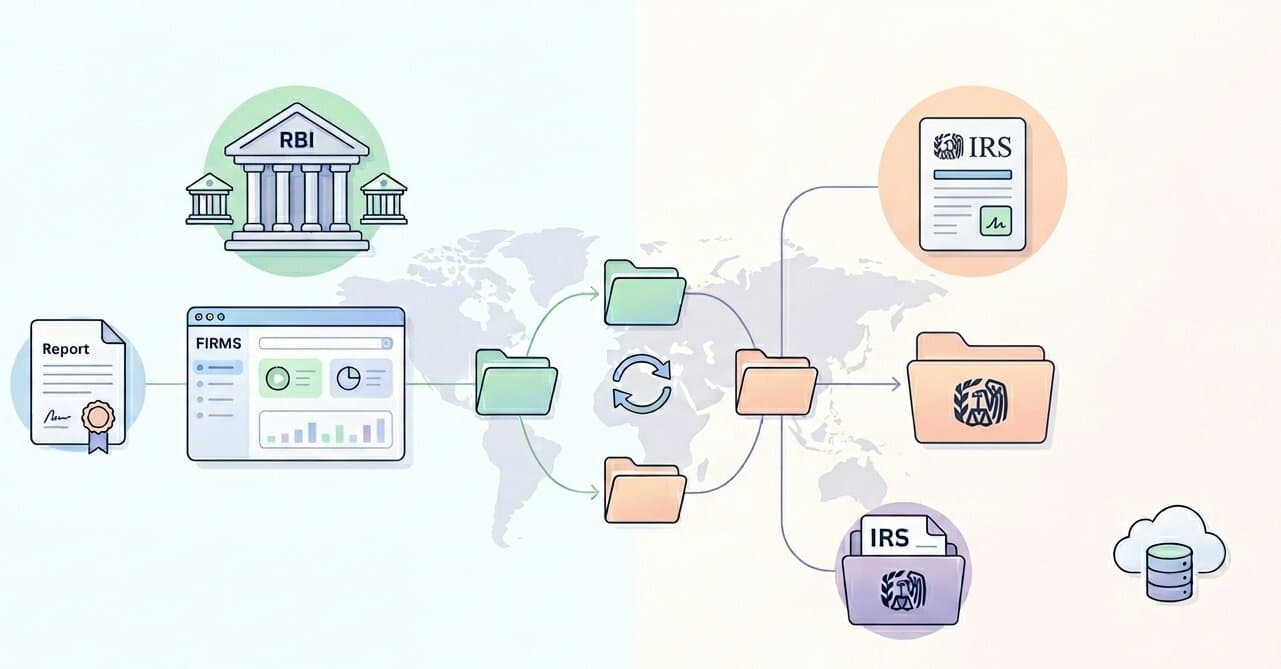
The audit of a foreign subsidiary of an Indian company doesn't stop at confirming the financial statements are accurate. A properly run APR audit reconciles those audited figures against your original ODI investment records — the amount invested, the shareholding structure, any loans or guarantees. This reconciliation step is exactly where an unreported ESOP dilution gets caught, because the shareholding percentage in the current year's audited financials no longer matches what RBI has on record from the prior APR.
When this mismatch surfaces during audit prep — rather than during a live AD Bank query — it's a manageable correction. The auditor flags the gap, the company explains the dilution, and the current year's APR reflects the accurate percentage going forward, potentially with a Form FC filing to formally record the change. When the same mismatch surfaces for the first time at the AD Bank's desk, after submission, it stops being a routine correction and starts looking like an unreported structural change that's been sitting unaddressed for however many vesting cycles it took to notice.
What Auditors Actually Need to See
A foreign subsidiary running an active ESOP program should be handing its auditor more than just the year's financial statements. A clean audit trail includes the option pool's vesting schedule, a record of every conversion event during the audit period, and the resulting cap table movement — not just the closing shareholding percentage, but how the entity got there over the year.
This is more often a documentation gap than a willful omission. Foreign subsidiaries frequently maintain their ESOP records in whatever HR or equity management platform they use locally — Carta, Pulley, or an in-house spreadsheet — without anyone on the Indian side pulling that data into the audit engagement. An auditor working only from year-end financials can confirm the numbers are internally consistent without ever catching that the shareholding percentage has drifted from what RBI's records show, because that comparison sits outside the standard audit scope unless someone specifically asks for it.
The Compounding Risk Behind an Unreported Dilution
An unreported shareholding change isn't treated the same way as a late APR filing. A missed annual filing is a timing issue, and you can regularise it through the standard late-submission fee route. A shareholding percentage that changed two or three years ago without any corresponding report is a different category of problem — it's a structural event that should have been disclosed when it happened, and RBI's enforcement history treats undisclosed shareholding and structural changes in overseas entities as compounding-track matters rather than simple late fees.
This is why catching an ESOP-driven dilution during your own audit reconciliation, before the AD Bank or RBI catches it independently, matters as much as it does. The gap is the same either way — the difference is whether your company surfaces it voluntarily as part of routine compliance, or has it identified as a contravention during a filing review.
Building ESOP Reconciliation Into Your Audit Preparation
For any Indian company whose foreign subsidiary runs its own stock option program, the practical fix isn't a one-time cleanup — it's a standing item in every audit engagement. Before the audit even begins, someone on the Indian side should be pulling the subsidiary's current cap table and comparing the Indian parent's shareholding percentage against what was reported in last year's APR. If the two numbers already match, the ESOP program hasn't created a reporting gap. If they don't, that gap needs to be resolved as part of this year's audit and filing, not left for a future reconciliation to discover.
This single check — cap table against last year's APR, before the audit starts — is a small addition to an engagement that's already running 60 to 90 days. But it's the difference between an audit that closes cleanly and one that opens a question nobody was prepared to answer, at the one point in the process where there's the least room left to fix it.