.svg)
.svg)
.svg)
How We Regularised Five Missed APRs: An Anonymised Case Study
See how five missed APRs led to retrospective UK audits, LSF, compounding and an acquisition delay, with practical lessons for ODI compliance.

Accorp Compliance Team
Our team of compliance experts specializes in PCI DSS, SOC 2, and other security frameworks to help businesses achieve and maintain compliance.
Note: this case study is anonymised and combines details from several situations, with figures rounded and identifying facts changed. Treat the sequence and lessons as representative, not as one client's file.
The call came from the CFO of an industrial manufacturer based near Pune. His company was three weeks from signing an acquisition in the United States, and the bank handling the funding had paused the remittance. The reason was a line on the ODI record: the annual reports for its UK subsidiary had not been filed for five consecutive years.
Nobody had ignored the obligation on purpose. The UK company was a small distribution business that filed accounts at Companies House every year, and the Indian team believed that was the end of the matter. This is how it was cleared, and what we would tell anyone standing where they stood.
Month Zero: Understanding What the Bank Actually Saw
The first task was to stop guessing. We asked the authorised dealer (AD) bank for the complete ODI history against the company's unique identification number. It showed one direct investment in the UK company, made several years earlier. It also showed the initial Form FC as filed, and no Annual Performance Report for the last five reporting cycles.
That last point mattered most. Under the RBI reporting requirements for overseas direct investment, the APR is not a one-off. It renews every year for as long as the foreign entity exists, and the bank will not facilitate fresh outward remittances or financial commitments until a reporting delay is regularised. The pending acquisition was effectively waiting on a UK company with under £5 million in annual turnover.
Sorting the Five Years Into Two Buckets
Late filings under the overseas investment framework can be regularised in two ways, depending on how long ago the deadline passed. Delays of up to three years can be cured by paying the Late Submission Fee, which is a flat ₹7,500 per delayed APR. Beyond three years, the matter moves to compounding, which means a formal application to the RBI.
Of the five missed years, the most recent two fell within the three-year window. The three older ones did not. That split shaped everything else: two straightforward filings, and three that needed a compounding application. The older years also sat under the earlier overseas investment framework, so we had to confirm with the bank how each year's reporting was to be mapped.
The Problem Nobody Had Planned For: Retrospective Audits
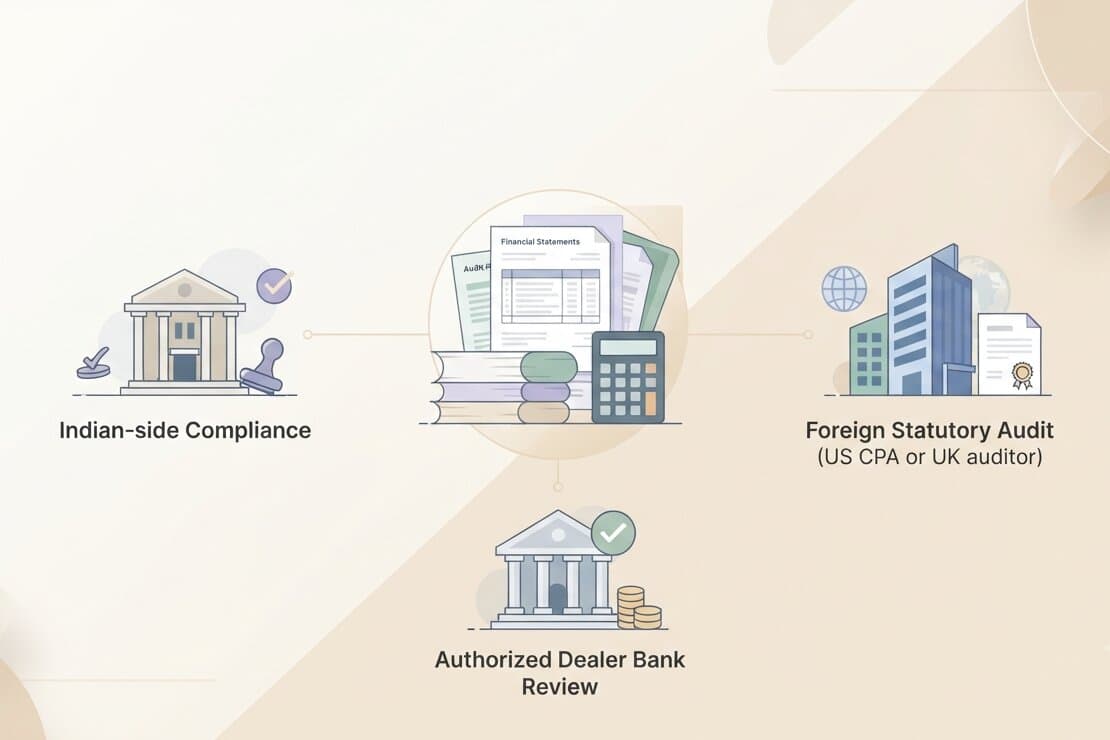
Here is where most people underestimate the work. The Indian company controlled the UK subsidiary, so each APR needed audited financial statements of that entity. The UK company had never been audited, having used the small-company audit exemption every year. That exemption is perfectly legal locally, but it does not meet the RBI requirement.
So five years of accounts needed a full audit, after the fact. This is the point where the search for a UK auditor for APR filing began, and it is a harder engagement than a routine annual audit. Three things came up.
Stock and cash cannot be recounted. For earlier years, the auditor could not attend a year-end stock count. Alternative procedures were needed, such as testing later sales, supplier statements and bank records, and the auditor was open about where evidence was thinner.
Opening balances chain together. Each year's audit rests on the closing position of the year before. We asked the auditor to begin with the earliest year so that a problem in year one did not silently corrupt years two to five.
The opinion might not be clean. Where evidence was limited, a qualified opinion was possible. Before starting, we asked the AD bank whether it would accept a report with a qualification, and got a written answer. Never assume this. Banks differ.
It took about four months to complete all five audits. That was longer than the manufacturer expected and, honestly, the single largest factor in the timeline.
What the Audits Found
The audits produced no fraud and no big surprises, but they did produce housekeeping issues that would have surfaced eventually. An intercompany loan from the Indian parent had never been formally documented. A dividend declared in year three was recorded in the UK accounts but not reported on the Indian side. And one year's reported equity was off by a small amount due to an exchange-rate difference.
This is the quiet benefit of a proper audit of a foreign subsidiary of an Indian company. It reconciles what each side believes happened, and the mismatches can then be dealt with under your FEMA compliance process rather than discovered in someone else's diligence.
The Filing and Compounding Sequence
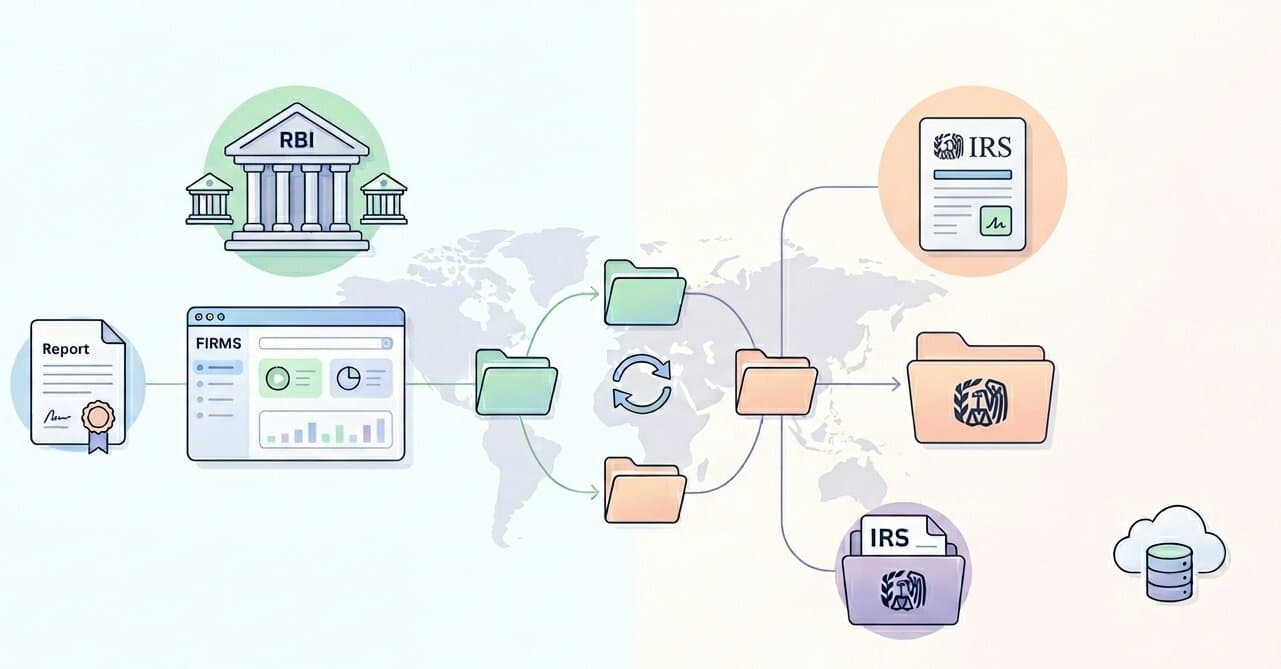
Once the audits were done, we prepared five APRs and reconciled each to the remittance records and the original Form FC. The two recent years were filed with the Late Submission Fee.
For the three older years, we prepared a compounding application. It set out the facts, the reason for the lapse, the corrective steps taken, and a request for regularisation. Under the RBI's compounding rules introduced in 2024, the RBI is required to pass an order within 180 days of receiving a complete application. In this case, the order was received in a little over five months, and the compounding amount was paid within the time allowed.
Once the order was in hand, and the delayed reports had been accepted by the bank, the hold on outward remittances was lifted. The acquisition closed about eight weeks later than planned.
What It Cost, Compared With What Was at Risk
Item | Approximate scale |
Late Submission Fee, two APRs | ₹15,000 |
Compounding amount, three APRs | Modest relative to the transactions involved |
Five retrospective audits | The largest single cost |
Delay to the acquisition | Around eight weeks |
Exposure if left uncorrected | Blocked remittances, and a possible penalty ceiling of up to three times the amount involved |
The regulatory payments were the smallest line. Professional fees for the audits and management time were far larger, which is consistent with how these cases usually go.
What We Would Do Differently
If we could rewind, the fixes are unglamorous.
Start audits the day the gap is found, in parallel with the bank conversation, not after it.
Get the bank's position on qualified opinions in writing before appointing the auditor.
Build a foreign-entity register listing every foreign subsidiary company, its year-end, its local audit status, and the APR owner.
Diarise September as the start of each APR cycle, since a full audit takes weeks and the deadline is 31 December.
Treat ODI compliance as a board-level topic, with a one-line status each quarter.
The Takeaway
Five missed APRs sounds catastrophic. In practice, it was a project: sort the years, commission the audits, file, compound, resume. What made it painful was discovering it at the last minute, with a deal waiting. Discovered early, the same work is routine.