.svg)
.svg)
.svg)
You Own a Foreign LLC Personally? RBI Still Wants Your APR — Even Without a Company in Between
Indian residents owning US LLCs may face ODI, LRS, UIN, APR and FEMA requirements. See the key compliance rules for personally owned US LLCs.

Accorp Compliance Team
Our team of compliance experts specializes in PCI DSS, SOC 2, and other security frameworks to help businesses achieve and maintain compliance.
A freelance developer in Pune sets up a single-member LLC in Wyoming because a US client's payment processor works more smoothly with a US entity than an Indian one. A SaaS solopreneur in Bangalore incorporates a Delaware LLC on the advice of a US-based accelerator, purely to look credible to American customers. Neither of them has an Indian company anywhere in the structure — no Pvt Ltd, no LLP, nothing routing the investment through a corporate entity. Both of them genuinely believe this makes it a US tax and administrative matter only, with no Indian regulatory footprint at all.
Both are wrong, and it's worth understanding exactly why, because this is one of the more common and more quietly serious FEMA compliance gaps among Indian professionals working with US clients today.
The Core Misunderstanding: "No Company in Between" Doesn't Mean "No ODI"
Overseas Direct Investment isn't a rule that only applies to Indian companies investing abroad through a corporate structure. Under the Foreign Exchange Management (Overseas Investment) Rules, Regulations, and Directions, 2022 — notified in August 2022 and now the governing framework for all outbound investment from India — resident individuals are explicitly permitted, and explicitly regulated, to make ODI in their own personal capacity. There's no requirement for an Indian entity to sit in the ownership chain for FEMA's ODI rules to apply. If a person resident in India personally owns equity or a membership interest in an operating foreign entity — including a single-member LLC — that ownership is ODI, full stop, regardless of whether any Indian company was ever involved.
This is the detail that catches freelancers, consultants, and solo SaaS founders off guard most often, because the entire mental model around "company compliance" versus "personal tax filing" breaks down here. A foreign LLC owned personally isn't a personal tax matter with no regulatory dimension — it's a full ODI Framework obligation, triggered the moment the LLC is formed and funded.
Why the US "Disregarded Entity" Classification Doesn't Matter to India
The specific confusion driving this gap deserves its own explanation, because it's genuinely reasonable on the surface. A single-member LLC in the US is typically treated as a "disregarded entity" for US federal tax purposes — meaning the IRS looks straight through the LLC to the individual owner, and the LLC itself doesn't file a separate federal tax return in the way a corporation does. Many Indian owners of these entities reasonably assume that if the US tax system treats the LLC as transparent, essentially non-existent as a separate taxpayer, then Indian regulators would take the same view.
FEMA doesn't work this way. Under Indian law, a foreign LLC is a foreign entity with its own legal personality, regardless of how the US Internal Revenue Code chooses to characterize it for domestic US tax purposes. The OI Rules, 2022 look at whether the individual has acquired equity capital, a membership interest, or an ownership stake in a legally distinct foreign entity — and a single-member LLC, however administratively simple it looks from the US side, satisfies that definition cleanly. The tax transparency that makes the LLC convenient for US purposes has no bearing whatsoever on its status as a reportable foreign entity under Indian exchange control law.
What Actually Qualifies as ODI for a Resident Individual
Under the OI Framework, ODI covers acquisition of unlisted equity capital in a foreign entity, subscription to a foreign entity's constitutional documents, or acquiring a stake that carries control — as distinct from Overseas Portfolio Investment, which generally covers smaller, non-controlling stakes in listed foreign companies, like buying shares of a publicly traded US stock. Owning and operating a single-member LLC sits squarely on the ODI side of this line: it's an unlisted entity, the individual holds the entire membership interest, and by definition they control it. There's no ambiguity here worth hoping around.
The Limits That Apply Specifically to Individuals
This is where resident individuals face materially different rules than Indian companies making ODI, and conflating the two is a second common mistake. Indian entities making ODI operate under a financial commitment limit of 400% of net worth under the automatic route. Resident individuals don't use that limit at all — their ODI is made under the Liberalised Remittance Scheme, capped at USD 250,000 per financial year, aggregated across all permitted LRS uses, not just ODI.
Individuals are also restricted to investing in genuinely operating foreign entities engaged in bona fide business activity — financial services businesses are generally off-limits for individual ODI absent specific regulatory permission — and a structure rule prevents an individual's overseas investment from creating more than two layers of subsidiaries beneath the foreign entity. For a straightforward single-member LLC providing consulting, development, or freelance services to clients, these restrictions rarely bite in practice, but they're worth knowing before assuming any foreign LLC structure is automatically permitted.
The Compliance Chain That Follows Formation
Once the LLC exists and is funded, a specific sequence of obligations follows, and it doesn't end at formation. The individual needs to obtain a Unique Identification Number through Form ODI Part I before the investment, then file Form ODI Part II reporting the actual investment within 30 days of the remittance going out. Evidence of the investment — a share certificate, membership certificate, or equivalent document — needs to be received and retained within six months. Any dues owed by the LLC back to the individual, such as consulting fees or profit distributions, need to be repatriated to India within 60 days of becoming due, rather than accumulating indefinitely in the US account.
The Annual Performance Report: The Ongoing Obligation Most Individuals Don't Know Exists
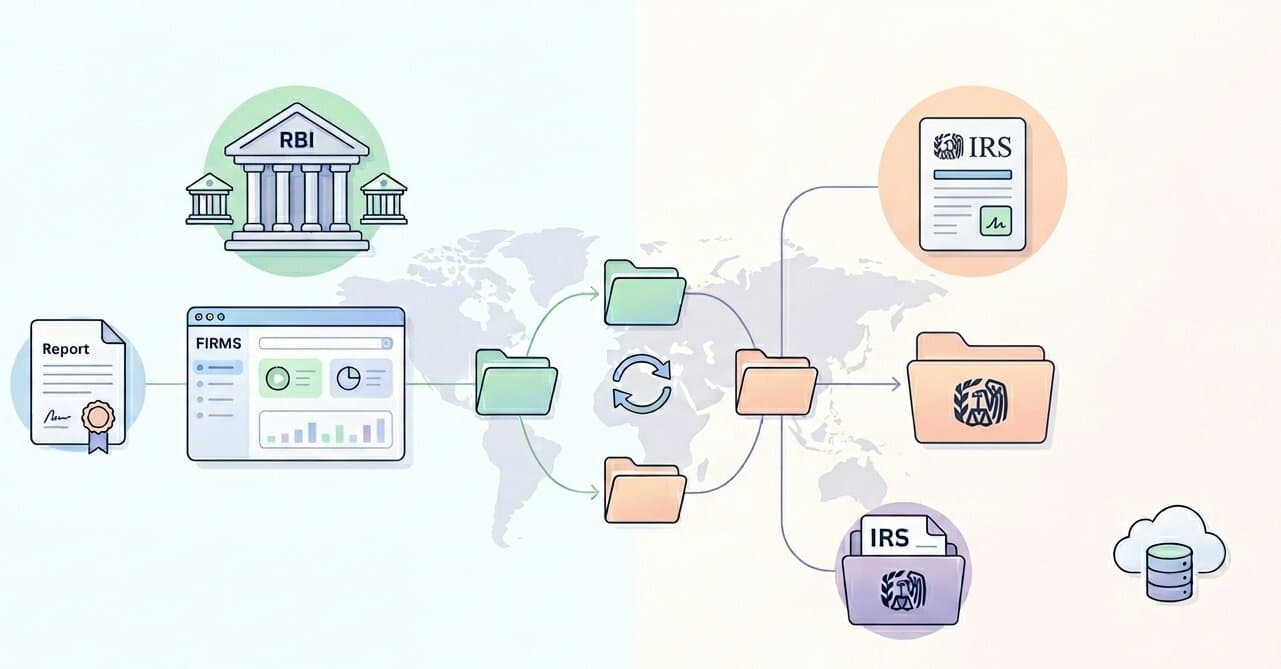
This is the recurring piece that catches people well after the initial excitement of setting up the LLC has faded. Every person resident in India who has made ODI — individual or corporate — must file an Annual Performance Report through their AD bank by 31 December each year, covering the foreign entity's financial performance for the relevant accounting period. This isn't a one-time filing tied to formation; it's a standing annual obligation for as long as the LLC exists and the individual holds the investment.
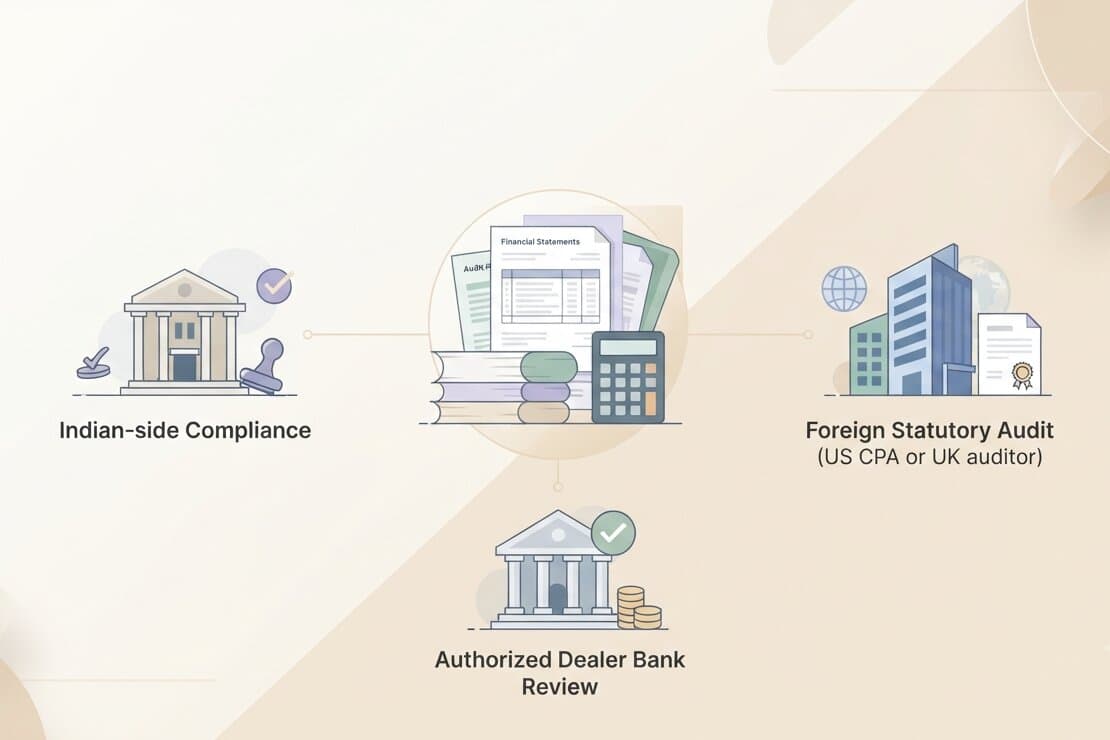
Here's the genuinely useful relief most individuals aren't aware of: while APR generally needs to be based on audited financial accounts of the foreign entity, resident individuals are permitted to file on a self-certified basis specifically in situations where statutory auditor certification isn't otherwise applicable — typically relevant for smaller, straightforward single-member LLCs that aren't required to undergo a formal audit under US state law and don't meet the control or scale thresholds that would otherwise mandate one. This makes ongoing APR filing India considerably less burdensome for a solo consultant's LLC than it sounds on first hearing about the requirement, provided the filing itself is actually done and done on time.
What Happens When This Goes Unreported
The consequences of treating a personally owned foreign LLC as purely a US matter, with no Indian filings at all, sit under Section 13 of FEMA: penalties of up to three times the amount involved in the contravention, plus a continuing penalty of ₹5,000 per day for as long as the non-compliance persists. Beyond the direct penalty exposure, an unreported or lapsed ODI position tends to surface at inconvenient moments — during a future LRS remittance, a loan application, or any point where a bank or regulator cross-references an individual's foreign holdings against their FEMA compliance history — and a gap discovered reactively is a considerably harder position to be in than proactive regularization.
Getting This Right, Whether You're Starting Fresh or Already Behind
For anyone about to set up a foreign LLC personally, the sequence is straightforward: confirm the LRS-based USD 250,000 annual limit accommodates the planned investment, obtain the UIN before remitting funds, file Form ODI Part II within 30 days of investment, and build the 31 December APR filing deadline into a standing annual calendar rather than treating it as a one-time task tied to formation.
For anyone who already owns an LLC set up without any of this having been done, the honest first step is a proper compliance review rather than continued silence — FEMA does provide compounding mechanisms for regularizing past contraventions, and addressing this proactively, before it surfaces through an unrelated banking or regulatory touchpoint, is a materially better position than waiting to be asked about it.
Frequently Asked Questions
1. Does a US LLC's "disregarded entity" tax status exempt it from Indian ODI rules?
No. US federal tax treatment has no bearing on how FEMA characterizes the LLC. It's treated as a separate foreign legal entity for ODI purposes regardless of how the IRS taxes it.
2. What's the investment limit for a resident individual making ODI, compared to a company?
Individuals invest under the Liberalised Remittance Scheme, capped at USD 250,000 per financial year — a different and generally lower limit than the 400% of net worth available to Indian companies under the automatic route.
3. Is a statutory auditor certificate always required for the APR?
Not always. Resident individuals can self-certify the APR where statutory auditor certification isn't otherwise applicable, which typically covers smaller LLCs not required to undergo a formal audit and not meeting control or scale thresholds that would mandate one.