.svg)
.svg)
.svg)
How Should AI Companies Manage Third-Party Vendor Risks Under SOC 2?
SOC 2 vendor risk management for AI companies covering third-party risks, cloud providers, AI model APIs, and enterprise security expectations in detail.

Accorp Compliance Team
Our team of compliance experts specializes in PCI DSS, SOC 2, and other security frameworks to help businesses achieve and maintain compliance.
Most AI companies do not build everything themselves. They rely on cloud infrastructure providers, foundation model APIs, data processing services, authentication platforms, monitoring tools, and a range of other third-party vendors that are essential to how their product operates.
Each of these vendor relationships introduces risk. If a third-party provider has a security incident, inadequate data handling practices, or unexpectedly changes its terms of service, the AI company and ultimately its customers bear the consequences.
SOC 2 compliance explicitly addresses this reality through vendor risk management requirements. Enterprise buyers increasingly expect AI companies not just to manage their own security controls, but to demonstrate that the vendors they rely on are also being evaluated and monitored.
This guide explains what third-party vendor risk management means under SOC 2, which vendors AI companies need to evaluate, and how to build a practical program that satisfies both auditors and enterprise procurement teams.
Why Third-Party Risk Is Especially Significant for AI Companies
AI companies have a more complex vendor dependency structure than many traditional SaaS businesses. A typical AI platform might rely on a foundation model provider for inference, a cloud hyperscaler for infrastructure, a vector database for retrieval, a logging service for observability, a data labeling company for training data, and several other specialized services.
Each of these vendors touches customer data, model outputs, or the infrastructure that makes the product function. If any one of them handles data insecurely, has inadequate access controls, or experiences a breach, the downstream impact on the AI company and its customers can be significant.
Enterprise buyers understand this. When they ask about your security program, they are increasingly asking about your vendors as well — not just your own controls.
What SOC 2 Requires for Vendor Risk Management
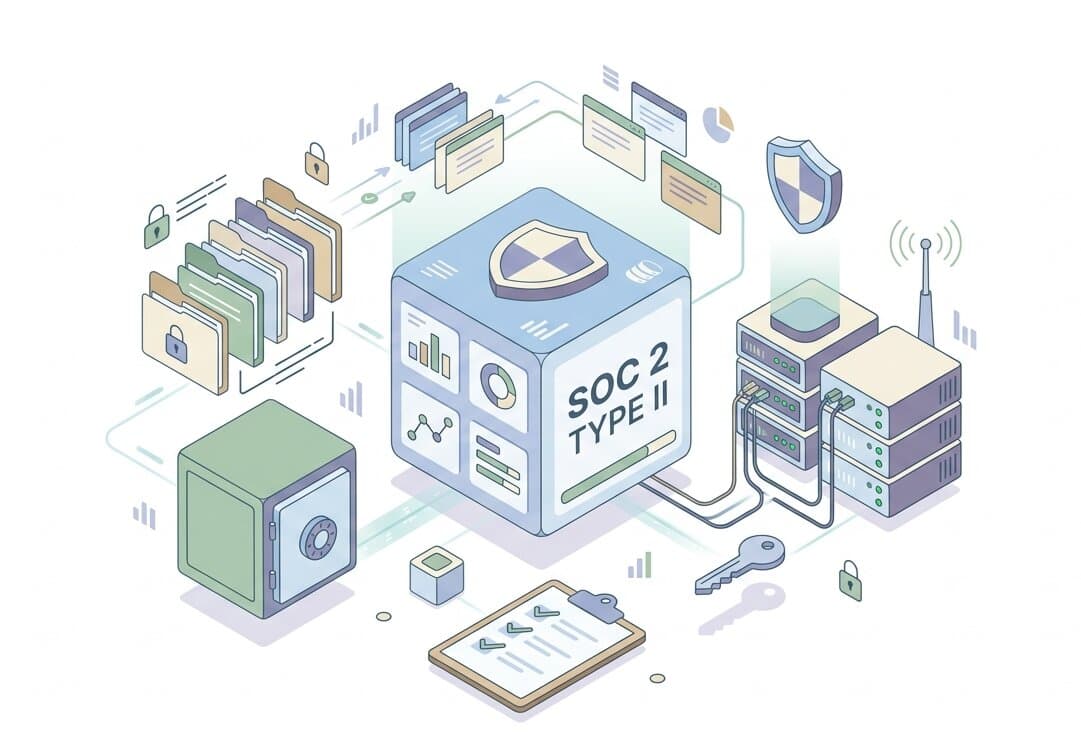
The SOC 2 framework includes vendor risk management as part of its Common Criteria. Organizations are expected to identify third-party vendors that could affect the security, availability, or integrity of their systems, assess the risks those vendors introduce, and implement controls to manage those risks appropriately.
In practice, this means SOC 2 auditors will look for evidence that your organization has a defined process for evaluating vendors before onboarding them, monitoring their security posture on an ongoing basis, and ensuring that contractual protections are in place for sensitive data handling.
It is not enough to simply use reputable vendors. SOC 2 requires documented evidence that vendor risks are being actively managed.
Which Vendors Do AI Companies Need to Evaluate?
Not every software subscription requires a formal vendor risk assessment. The scope of your vendor risk program should be proportional to the potential impact each vendor could have on your security posture and customer data.
For AI companies, the following vendor categories typically require formal assessment:
Cloud infrastructure providers (AWS, Google Cloud, Azure): These vendors host your application and customer data. Understanding their shared responsibility model and reviewing their compliance certifications is foundational.
Foundation model providers (OpenAI, Anthropic, Cohere, and others): If customer data flows through a model API, understanding how that provider handles data — including whether it is used for training — is critical.
Data storage and processing platforms: Any third-party service that stores, moves, or processes customer data requires evaluation.
Authentication and identity providers: Vendors that handle access credentials have significant security implications.
Monitoring and observability tools: These platforms often receive application logs that may contain sensitive data.
Data labelling and annotation services: If human reviewers interact with any customer-derived data, this relationship requires careful assessment.
How to Build a Vendor Risk Assessment Process
Step 1: Maintain a Vendor Inventory
Start with a complete list of all third-party vendors your organization relies on. Many companies discover gaps when they do this for the first time — SaaS tools adopted by individual teams, legacy integrations that were never formally reviewed, or infrastructure components added during rapid growth.
Step 2: Tier Your Vendors by Risk
Establish a tiering system that categorizes vendors based on whether they handle customer data, what level of access they have to your systems, and how critical they are to your operations. High-tier vendors should receive more thorough and more frequent assessments.
Step 3: Conduct Security Reviews
For high-tier vendors, conduct formal security reviews that include requesting their SOC 2 report or equivalent compliance documentation, reviewing their certifications, evaluating their data handling practices, and assessing their breach notification procedures.
Step 4: Ensure Contractual Protections Are in Place
Vendor contracts should include provisions that address data protection obligations, breach notification requirements, audit rights, and data deletion upon contract termination. SOC 2 auditors will review whether appropriate contractual protections exist for your critical vendors.
Step 5: Monitor Vendors on an Ongoing Basis
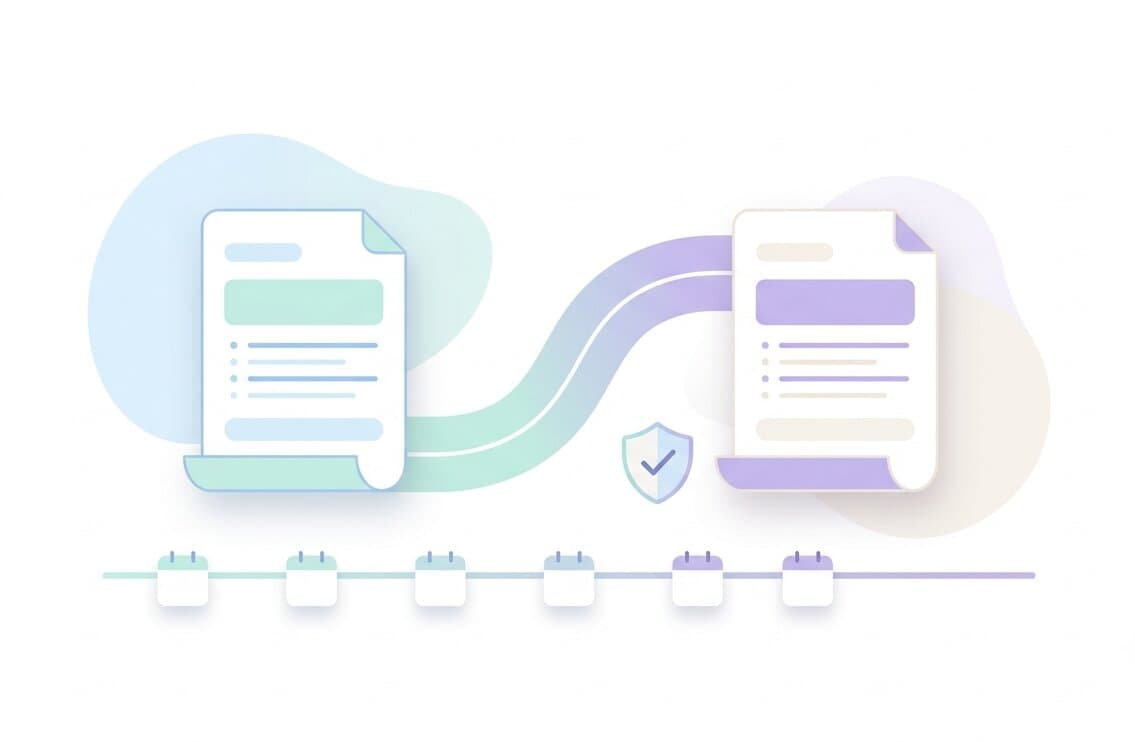
Establish a cadence for reviewing critical vendor compliance documentation annually, monitoring for security incident disclosures, and reassessing vendor risk whenever you significantly expand your use of their services.
Does SOC 2 Cover Third-Party Model Providers Like OpenAI or AWS?
This is one of the most common questions AI companies encounter from enterprise buyers. Your SOC 2 report covers your organization's controls — not your vendors' controls. However, your SOC 2 program should demonstrate that you have evaluated your vendors and manage the risks they introduce.
In practice, this means your SOC 2 report may reference the fact that you rely on specific cloud providers with their own SOC 2 certifications, and that your vendor risk program includes reviewing those certifications. Enterprise buyers who ask whether your AI platform's reliance on a model provider is covered by your SOC 2 should receive a clear explanation of how your vendor risk program addresses that relationship.
What Enterprise Buyers Want to See
When enterprise procurement teams evaluate AI vendors, vendor risk management is increasingly a specific area of review. Common questions include whether the AI company has reviewed the security practices of its model providers, what contractual data protections are in place with third-party vendors, and how the company would be notified if a vendor experienced a security incident.
Organizations that can answer these questions with documented evidence — vendor assessment records, contract terms, compliance certificates — create significantly more confidence in procurement reviews than those offering verbal assurances.
Final Thoughts
Third-party vendor risk management is one of the areas where AI companies most frequently encounter gaps when preparing for a SOC 2 audit. The vendor dependencies that make AI products possible also introduce risks that enterprise buyers expect to see actively managed.
Building a structured vendor risk program — even a simple one — demonstrates operational maturity and gives enterprise security teams the evidence they need to approve your organization as a trusted vendor. As AI supply chains grow more complex, strong vendor risk management is becoming a competitive differentiator, not just a compliance requirement.
Explore our SOC 2 Compliance Services to strengthen your security and compliance program.