.svg)
.svg)
.svg)
SOC 2 Type 1 vs Type 2 for AI Startups: Which One Do Enterprise Clients Actually Require?
Compare SOC 2 Type 1 and Type 2 audits for AI companies, including differences, timelines, and what enterprise buyers require for compliance decisions.

Accorp Compliance Team
Our team of compliance experts specializes in PCI DSS, SOC 2, and other security frameworks to help businesses achieve and maintain compliance.
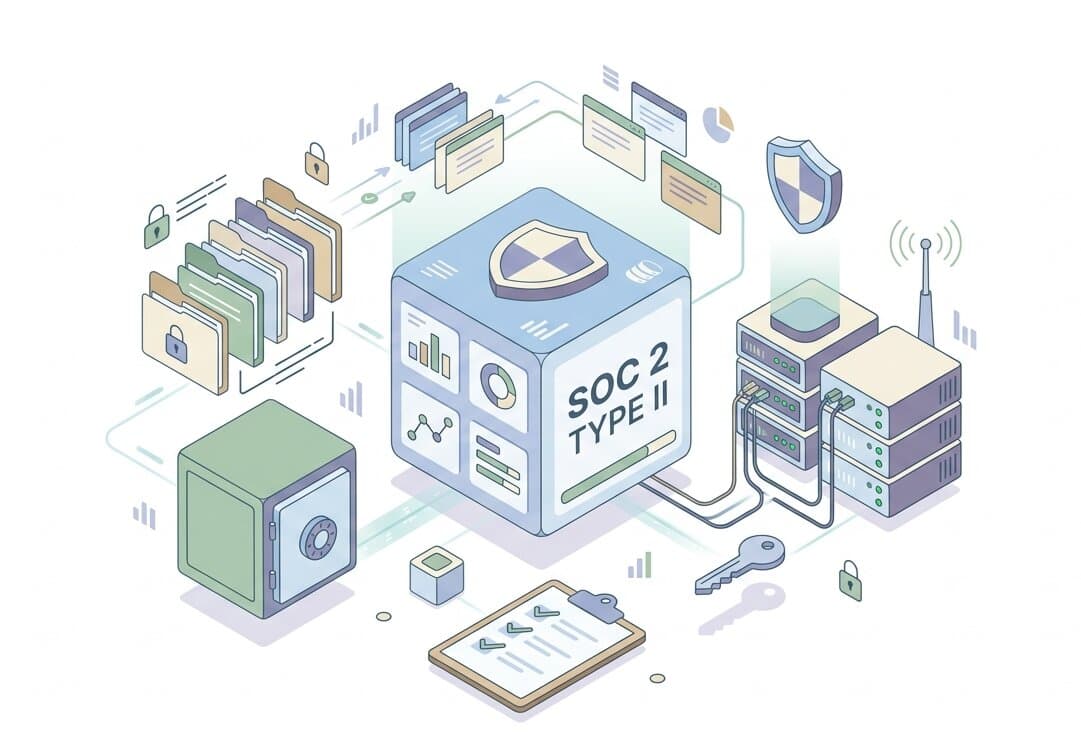
If you are building an AI company and have started exploring SOC 2 compliance, you have probably encountered the Type 1 versus Type 2 question fairly quickly. Both involve an independent audit of your security controls, but they differ in scope, timeline, and the level of assurance they provide to enterprise buyers.
The choice between them is not just a technical compliance decision — it directly affects how enterprise procurement teams evaluate your organization and how quickly you can close deals with security-conscious customers.
This guide explains the actual differences between SOC 2 Type 1 and Type 2 reports, who accepts each, and what AI startups should consider when deciding which path to take.
What Is a SOC 2 Type 1 Report?
A SOC 2 Type 1 examination evaluates whether your security controls are designed appropriately at a single point in time. Think of it as a snapshot. An independent auditor reviews your policies, procedures, and control configurations and provides an opinion on whether those controls are suitably designed to meet the relevant Trust Services Criteria.
A Type 1 report does not evaluate whether those controls actually worked over a period of time. It confirms that the right controls exist and appear to be properly structured — but it stops there.
For AI startups that are early in their compliance journey, a Type 1 can be a useful starting point. It requires less preparation time than a Type 2, can typically be completed in a few months, and gives customers something tangible to point to while you continue building your compliance program.
What Is a SOC 2 Type 2 Report?
A SOC 2 Type 2 examination covers the same control areas as a Type 1 but adds an operational dimension. Instead of evaluating controls at a single point in time, a Type 2 audit assesses whether those controls operated effectively over a defined observation period — typically six to twelve months.
This means the auditor is not just reviewing your documentation. They are testing whether your controls actually ran consistently, examining evidence of control operation, and forming a view on whether the controls worked as intended throughout the audit period.
A Type 2 report provides substantially stronger assurance than a Type 1. It demonstrates that your security program is not just well-designed on paper, but that it operates reliably in practice over time.
Key Differences Between Type 1 and Type 2
1. Scope and Timing
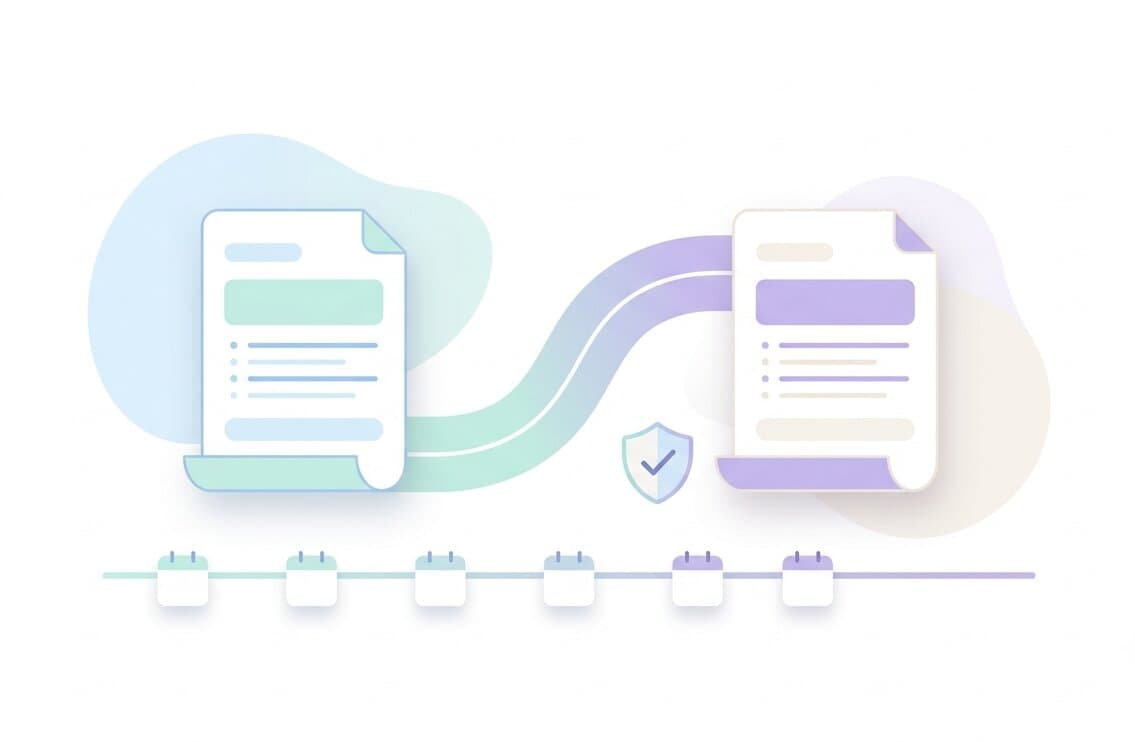
Type 1 audits are point-in-time assessments, usually completed after a brief readiness review. Type 2 audits require a sustained observation period — commonly six months minimum for a first report — during which auditors collect and test evidence of control operation.
2. Evidence Requirements
For a Type 1, auditors primarily review policies, procedures, and system configurations. For a Type 2, auditors examine operational evidence: access review records, incident response logs, change management tickets, vendor assessment documentation, and other artifacts demonstrating that controls were executed consistently.
3. Assurance Level
Enterprise security teams understand the difference. A Type 1 says your controls look good today. A Type 2 says your controls have been working reliably for months. For companies managing sensitive AI workloads, the operational evidence in a Type 2 report provides significantly more confidence.
4. Timeline to Completion
A Type 1 can typically be completed in two to four months after controls are implemented. A Type 2 requires the observation period to pass first — so even if your controls are ready today, you will not have a Type 2 report for at least six to nine months, depending on your auditor and observation window.
What Do Enterprise Buyers Actually Require?
This is the question that matters most for AI companies in growth mode. The answer depends on the type of enterprise buyer and how mature their vendor risk program is.
Many large enterprise organizations — particularly in financial services, healthcare, and government contracting — now specifically request a current SOC 2 Type 2 report as part of their vendor assessment process. A Type 1 may be accepted in early-stage discussions or as a temporary placeholder, but it is often insufficient for final vendor approval.
Mid-market buyers and companies with less formalized vendor risk programs are more likely to accept a Type 1 report, particularly if your product is newer or if you can demonstrate active progress toward a Type 2.
A practical reality: if your target market includes large enterprises, financial institutions, or regulated industries, you should plan for a Type 2 report from the beginning. Building toward a Type 1 first while preparing for a Type 2 observation period is a common and reasonable approach — just make sure your enterprise prospects understand the timeline.
How Long Does SOC 2 Type 2 Take for an AI Company?
The full timeline from starting your compliance program to receiving a Type 2 report typically runs eight to fourteen months for most AI startups. Here is a rough breakdown:
Readiness assessment and gap analysis: 4–8 weeks
Control implementation and policy development: 6–12 weeks
Type 2 observation period: 6–12 months
Audit fieldwork and reporting: 6–10 weeks
Companies that start with a Type 1 can accelerate this process by beginning their observation period immediately after the Type 1 examination closes. If your Type 1 audit covers a control environment that overlaps with your Type 2 observation period, the work does not need to start from scratch.
When Should an AI Startup Upgrade From Type 1 to Type 2?
The right time to pursue a Type 2 report depends on where your sales conversations are heading. If you are consistently encountering enterprise procurement requirements that ask for a Type 2 — or if deals are stalling in security review because you only have a Type 1 — that is a clear signal to prioritize the upgrade.
A practical approach is to initiate your Type 2 observation period as soon as your Type 1 audit closes. This way, you are not waiting unnecessarily to begin accumulating the operational evidence your auditor will need.
Companies that delay the transition often find that they need to go back and reconstruct evidence from earlier periods, which can slow the audit and create additional cost.
Is SOC 2 Type 2 Required for Enterprise SaaS Contracts?
Not universally required — but increasingly expected. The practical answer for AI companies targeting enterprise customers is that a SOC 2 Type 2 report has become the baseline expectation rather than a differentiating factor in many procurement processes.
Organizations that cannot provide a current Type 2 report are increasingly placed in higher-risk vendor categories, which can mean additional security questionnaires, longer review timelines, contractual security addenda, and in some cases, disqualification from vendor consideration entirely.
For AI companies processing sensitive enterprise data — customer communications, financial information, confidential documents, or personally identifiable information — a Type 2 report is the most straightforward way to address the security assurance gap in procurement. Enterprise buyers may also evaluate your AI governance framework alongside SOC 2 audit reports.
Practical Advice for AI Startups
Build with Type 2 in mind from the start. Build with Type 2 in mind from the start. Even if a Type 1 is your near-term goal, design your controls, documentation, and evidence collection processes to support the operational evidence requirements of a Type 2 examination. While building toward Type 2, make sure your vendor risk management program is also in place — auditors evaluate this during the observation period.
Start your observation period as soon as possible. Every week your controls operate without an observation period running is a week you cannot recover later.
Be transparent with prospects about your timeline. Enterprise buyers generally prefer honest communication about your compliance roadmap over vague assurances. If you have a Type 1 and a clear plan for Type 2, most security teams will work with you.
Final Thoughts
The SOC 2 Type 1 versus Type 2 decision is ultimately a question of how seriously you want to compete in the enterprise market. A Type 1 gets you started and demonstrates intent. A Type 2 demonstrates operational maturity and is increasingly what enterprise buyers require.
For AI companies handling sensitive customer data, investing in a Type 2 report is not just a compliance exercise — it is a signal to the market that your security program is real, tested, and reliable.
Explore our SOC 2 Compliance Services to strengthen your security and compliance program.