.svg)
.svg)
.svg)
What Data Protection Controls Do AI Companies Need for SOC 2 Compliance?
Explore how AI companies can strengthen data protection, improve compliance, reduce security risks, and meet enterprise buyer expectations.

Accorp Compliance Team
Our team of compliance experts specializes in PCI DSS, SOC 2, and other security frameworks to help businesses achieve and maintain compliance.
When enterprise buyers evaluate an AI vendor, one of the first things their security teams ask is simple: how is our data being protected? It sounds like a basic question, but for AI companies, the answer involves multiple layers of controls that span encryption, access management, storage policies, and data lifecycle governance.
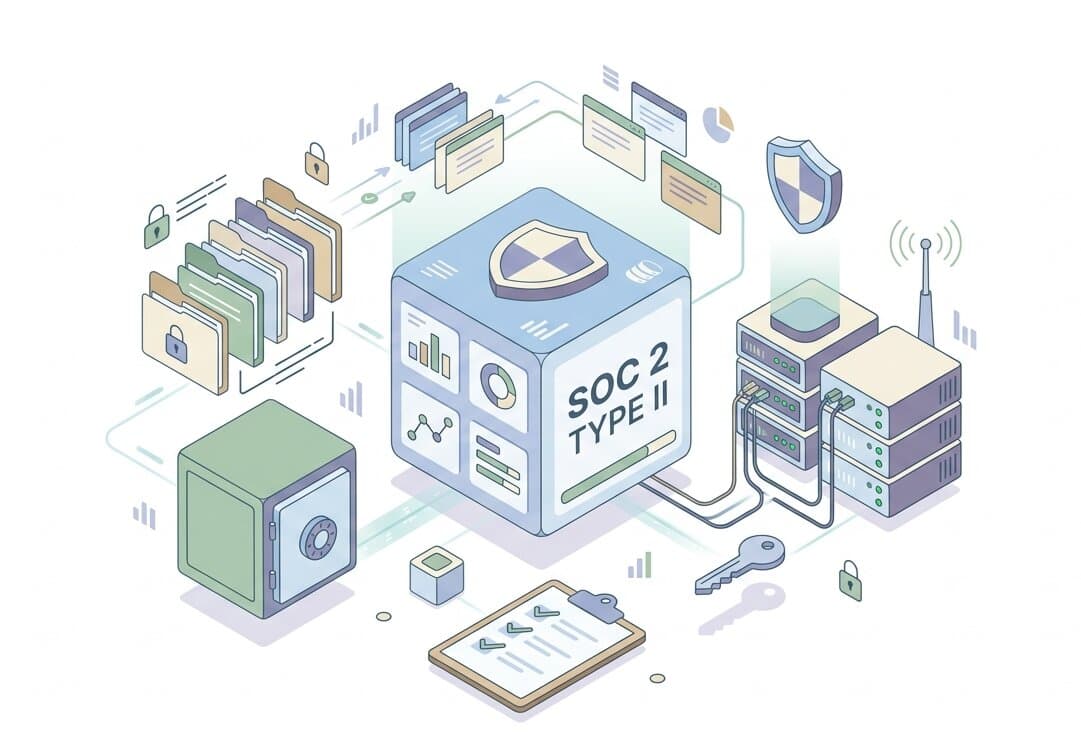
SOC 2 compliance gives AI companies a structured way to demonstrate that these controls exist and work consistently. But understanding which specific data protection controls matter most — and how to build them properly — is where many AI startups struggle.
This guide walks through the key data protection controls that SOC 2 auditors examine and that enterprise buyers expect from AI vendors.
Why Data Protection Is Uniquely Complex for AI Companies
Traditional SaaS companies handle user data within fairly predictable boundaries: forms, databases, files. AI platforms are different. Data flows through multiple stages — input prompts, model processing, output generation, logging, and feedback loops — each of which introduces distinct protection challenges.
Consider what an AI platform may actually handle on behalf of a customer: confidential business documents uploaded for analysis, employee conversations with an AI assistant, sensitive financial or legal queries, and proprietary workflows embedded in prompts. A single interaction can generate multiple data artifacts across different systems.
This complexity means that data protection for AI companies must cover a wider surface area than most compliance frameworks were originally designed for.
Core Data Protection Controls for SOC 2 Compliance
1. Data Encryption at Rest and in Transit
Encryption is the foundation of any data protection program. SOC 2 auditors expect to see encryption applied both when data is stored and when it moves between systems.
For AI companies, this means encrypting data in your databases, object storage, model artifact repositories, and any backup systems. In transit, all data transfers between your application, AI model APIs, third-party services, and end users should use TLS 1.2 or higher.
A common oversight for AI startups is failing to encrypt internal service-to-service communication. Even if your customer-facing endpoints are encrypted, unencrypted internal traffic remains a vulnerability that auditors will flag.
2. Data Classification and Inventory
Before you can protect data, you need to know what you have. SOC 2 compliance expects organizations to maintain an inventory of the types of data they collect and process, along with a classification system that defines how each type should be handled.
For AI companies, this typically means identifying categories such as customer input data, model outputs, training data, system logs, and user account information — and defining handling requirements for each. A prompt containing personally identifiable information requires different treatment than an anonymized test query.
3. Data Retention and Deletion Policies
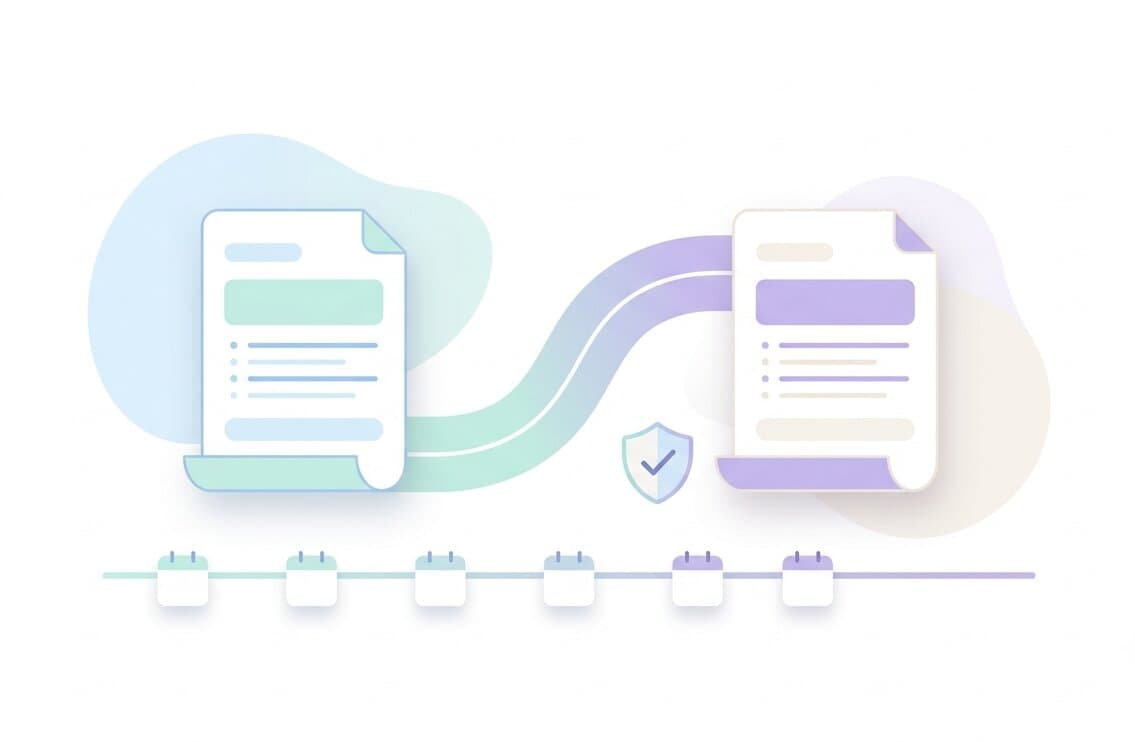
Enterprise buyers increasingly want to know how long their data is stored and what happens when a contract ends. SOC 2 auditors look for documented retention policies that are actually enforced in practice.
AI companies should define clear retention periods for each data category and implement automated deletion processes where possible. This is especially important for prompt logs and model inputs, which may contain sensitive business information that customers expect to be purged on a defined schedule.
Equally important is demonstrating that deletion processes actually work — auditors may ask for evidence that data is removed within the committed timeframes.
4. Access Controls and Least-Privilege Principles
Who can access customer data inside your organization? SOC 2 puts significant weight on access management as a data protection control. Access to production systems and customer data should be limited to employees who have a legitimate business need, and those permissions should be reviewed and updated regularly.
For AI companies, this means restricting access to model inference logs, training datasets, and customer inputs. It also means ensuring that developers working on model improvements cannot freely access production customer data without oversight.
5. Secure Data Storage Practices
Beyond encryption, secure storage involves ensuring that data is stored in environments with appropriate physical and logical controls. SOC 2 auditors will review your cloud storage configurations, backup procedures, and how your infrastructure is segmented.
AI platforms that use third-party cloud providers such as AWS, Google Cloud, or Azure need to verify that storage services are configured correctly — public bucket access disabled, versioning enabled for critical data, and backups tested regularly.
6. Data Minimization
Collecting only the data you actually need is both a privacy best practice and a risk reduction strategy. SOC 2 and related frameworks recognize that the less sensitive data an organization retains, the smaller the potential impact of a security incident.
For AI companies, data minimization often means evaluating whether prompt logs need to be retained at all, anonymizing data used for model evaluation, and avoiding the storage of sensitive fields that are not required for your product to function.
What Enterprise Buyers Specifically Ask About Data Protection
Beyond formal audit requirements, AI companies going through enterprise procurement processes will encounter specific questions from security review teams. Being prepared for these helps accelerate deals and reduces friction in vendor assessments.
Are customer prompts stored, and if so, for how long?
Can your model provider access our data?
Do your employees have access to our conversations or inputs?
What happens to our data if we cancel our contract?
How do you handle a data breach involving customer information?
Is our data used to train or fine-tune AI models?
Organisations that have clear, documented answers to these questions — backed by SOC 2 controls — are significantly better positioned in competitive procurement processes.
Common Data Protection Gaps in AI Startups
Several patterns emerge consistently when AI companies are preparing for their first SOC 2 audit.
1. Log retention without policy: Many AI startups retain detailed logs indefinitely because they might be useful for debugging. Without a formal retention policy, this creates compliance risk and makes it harder to respond to customer data deletion requests.
2. Inconsistent encryption: Encryption is applied to some systems but not others, often because infrastructure grew faster than security standards were formalised.
3. Missing data inventories: Teams know generally what data they collect, but have never formally documented it. This creates problems both in audits and in security incident response.
4. No employee data access reviews: Early-stage companies often have broad internal access to production systems that is never revisited as the team grows.
Building a Data Protection Program That Scales
Data protection for SOC 2 compliance is not a one-time project. As AI companies grow, new data types are introduced, new third-party integrations are added, and customer requirements evolve. A scalable data protection program treats controls as ongoing operational responsibilities rather than compliance checkboxes.
Practical steps include establishing a data protection owner accountable for policy maintenance, conducting annual data inventory reviews, testing data deletion processes quarterly, and reviewing access permissions whenever employees change roles or leave the organisation.
Final Thoughts
Data protection controls are at the heart of what enterprise buyers want to see from AI vendors. A well-structured SOC 2 program gives AI companies a framework to build these controls consistently and demonstrate them to customers through independent audit reports.
Understanding which controls matter most — and where AI companies typically fall short — is the first step toward building a compliance program that actually supports business growth, rather than just satisfying a checkbox on a security questionnaire.
Explore our SOC 2 Compliance Services to strengthen your security and compliance program.