.svg)
.svg)
.svg)
SOC 2 for AI Companies: The New Security Requirements Enterprise Buyers Expect
Discover the security, governance, and compliance expectations enterprise buyers have for AI companies and how they influence purchasing decisions.

Accorp Compliance Team
Our team of compliance experts specializes in PCI DSS, SOC 2, and other security frameworks to help businesses achieve and maintain compliance.
Artificial intelligence is transforming how businesses operate, but it is also changing how enterprise customers evaluate potential vendors. A few years ago, buyers primarily focused on product capabilities and pricing. Today, security, compliance, and risk management often play an equally important role in purchasing decisions.
For AI companies, this shift presents both a challenge and an opportunity. Enterprise customers increasingly ask detailed questions about data protection, model governance, access controls, and compliance programs before signing contracts. In many cases, organisations are expected to demonstrate SOC 2 compliance before serious procurement discussions can move forward.
As AI solutions become more integrated into business operations, achieving and maintaining a strong compliance posture is becoming a key competitive advantage.
Why SOC 2 Matters for AI Companies
Many AI companies process sensitive information, including customer data, proprietary business information, training datasets, prompts, model outputs, and application logs.
Enterprise buyers want assurance that this information is protected through well-designed security controls. This is where SOC 2 compliance becomes important.
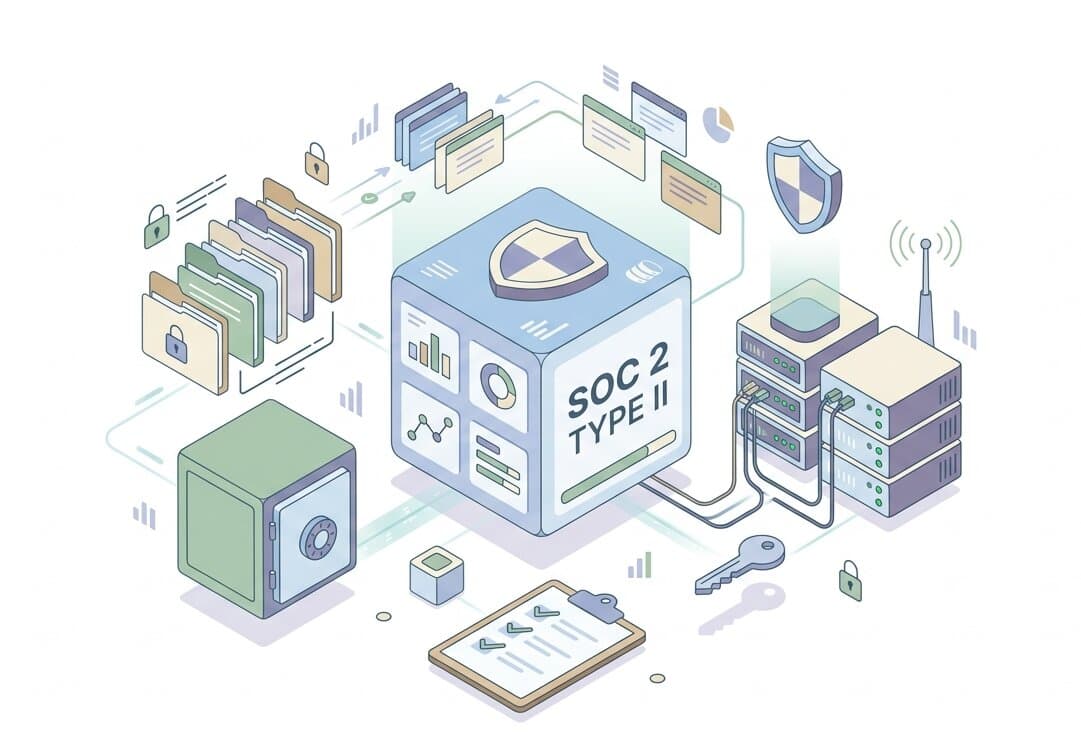
A successful SOC audit provides independent validation that an organisation has implemented controls designed to protect customer information. For AI companies, this assurance helps reduce buyer concerns and demonstrates a commitment to security and operational maturity. Many procurement teams now view SOC 2 compliance as a baseline requirement rather than a differentiator.
The Growing Security Expectations for AI Vendors
AI companies face unique risks that traditional software providers may not encounter.
Enterprise customers often ask questions such as:
How is customer data used by AI models?
Are prompts stored or retained?
Can employees access customer conversations?
How are model outputs protected?
What controls prevent unauthorised access to training data?
How are third-party AI providers evaluated?
These concerns have created new expectations for security governance. Organisations that cannot answer these questions effectively may struggle to complete security reviews or close enterprise deals.
Key SOC 2 Controls Enterprise Buyers Expect
Strong SOC 2 controls help AI companies demonstrate that security risks are being actively managed.
Access Management Controls
Access control remains one of the most important areas reviewed during a SOC audit.
Enterprise buyers want confidence that:
Access is granted on a least-privilege basis.
User permissions are reviewed regularly.
Departed employees lose access promptly.
Administrative privileges are monitored.
Access management is especially important when employees interact with sensitive customer information or AI training environments.
Data Protection Controls
AI platforms often process large volumes of data.
Organizations should establish controls around:
Data encryption
Data retention
Secure storage
Backup management
Data deletion procedures
Customers increasingly want transparency regarding how their data is handled throughout the AI lifecycle, highlighting the need for strong data protection controls in AI companies.
Monitoring and Logging
Continuous monitoring is essential for identifying security incidents and unauthorised activity.
Effective logging helps organisations:
Detect suspicious behavior
Investigate incidents
Support forensic analysis
Demonstrate control effectiveness
Auditors frequently review monitoring activities when evaluating SOC 2 compliance programs.
AI Governance Is Becoming a Business Requirement
Governance has become one of the most discussed topics among enterprise security teams. Organisations want to understand how AI systems are managed, monitored, and controlled, making the AI governance framework enterprise buyers expect a key part of evaluation.
Effective governance programs typically address:
Model development procedures
Testing and validation processes
Risk assessments
Data quality controls
Change management practices
While governance requirements vary between organisations, buyers increasingly expect AI vendors to demonstrate accountability and oversight.
Why SOC 2 Type 2 Is Becoming More Important
Many startups initially pursue a SOC 2 Type 1 examination because it can be completed more quickly.
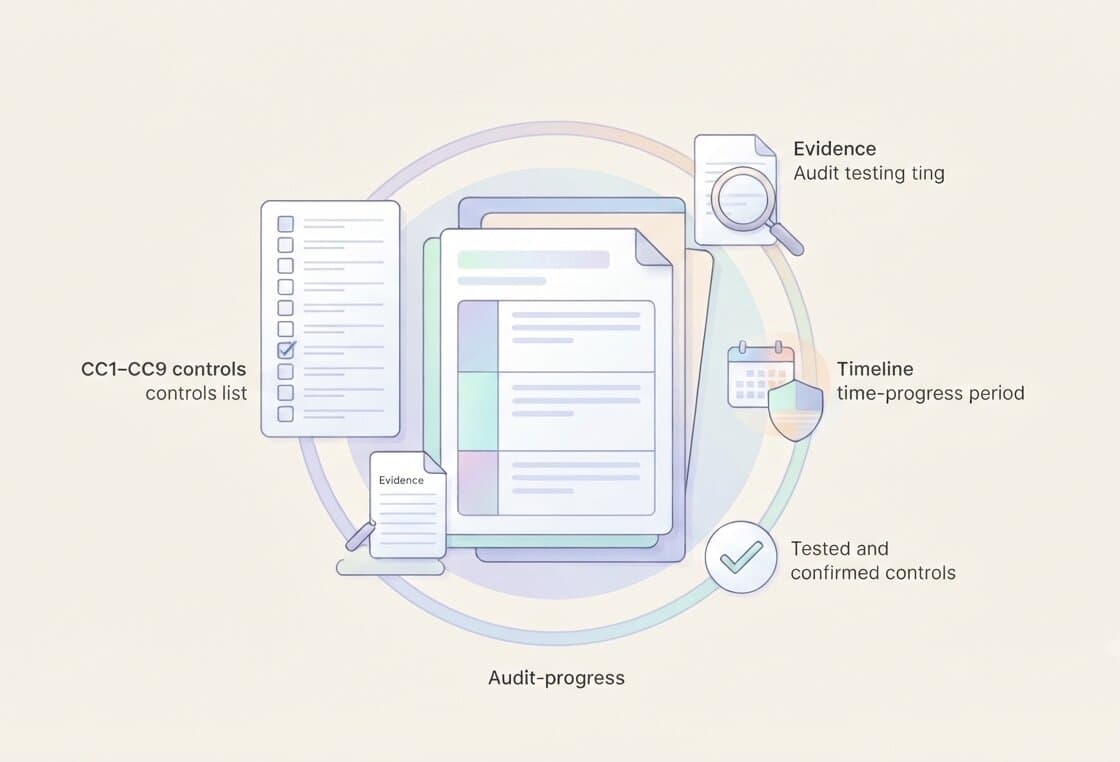
However, enterprise customers often prefer a SOC 2 Type 2 report. A Type 2 examination evaluates whether controls operated effectively over a defined observation period rather than simply assessing whether controls were designed appropriately.
For AI companies targeting large enterprises, a SOC 2 Type 2 report often provides stronger assurance and may help accelerate procurement reviews. Many buyers specifically request a current SOC 2 audit report before approving a vendor relationship. SOC 2 Type 1 vs Type 2 for AI startups is therefore an important consideration when planning compliance strategy.
Managing Third-Party AI Risks
Most AI companies rely on third-party providers for infrastructure, models, data services, or development tools.
Examples include:
Cloud hosting providers
Foundation model vendors
Data processing platforms
Monitoring tools
Authentication providers
Because of these dependencies, vendor risk management has become an important component of SOC 2 compliance.
Organizations should evaluate vendors through:
Security reviews
Risk assessments
Compliance documentation reviews
Contractual security requirements
Enterprise customers increasingly expect evidence that third-party risks for SOC 2 are being actively managed.
What the AICPA SOC 2 Framework Means for AI Companies
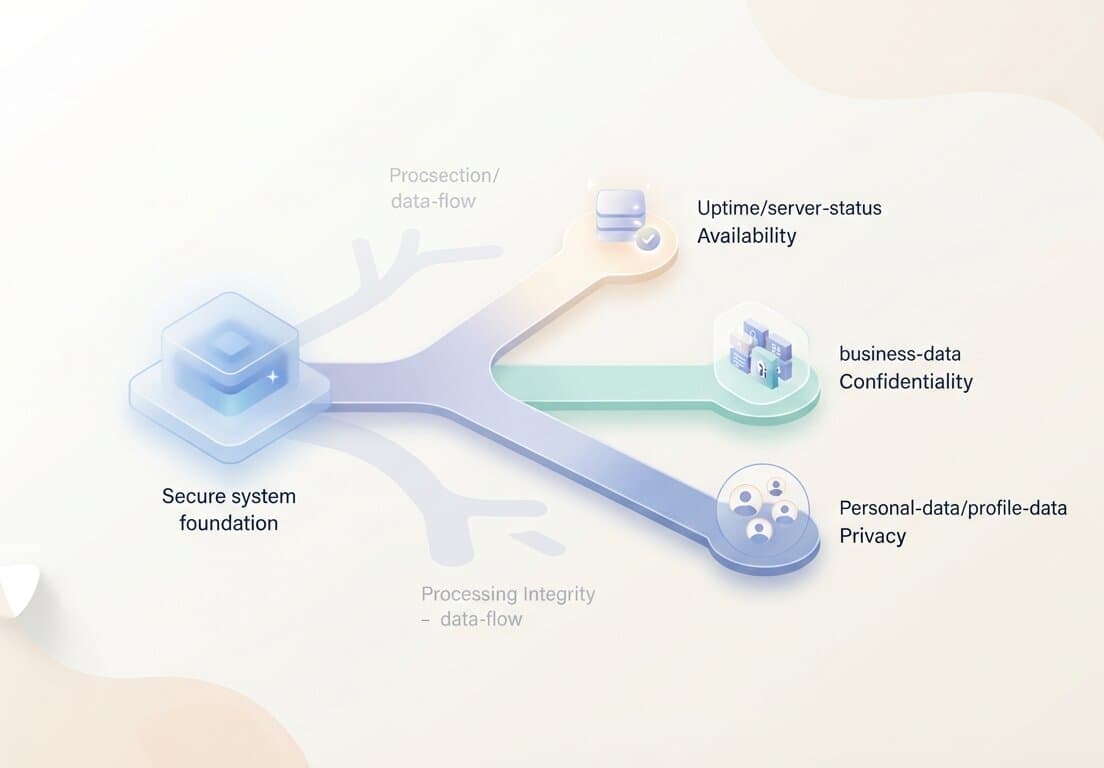
The AICPA SOC 2 framework focuses on principles related to:
Security
Availability
Processing Integrity
Confidentiality
Privacy
These principles provide a flexible framework that can be applied to AI companies of different sizes and maturity levels.
Rather than prescribing specific technologies, the framework encourages organizations to implement controls that appropriately address risks within their operating environment. For AI companies, this means designing controls that address both traditional cybersecurity risks and emerging AI-related challenges.
Common Compliance Mistakes AI Startups Make
As AI startups grow, several compliance issues frequently emerge.
1. Waiting Too Long to Start
Many companies delay compliance efforts until customers begin requesting security documentation.
Starting early often reduces future implementation challenges.
2. Focusing Only on Technology
Security tools alone do not create compliance.
Organisations also need policies, procedures, oversight, and documented processes.
3. Ignoring Vendor Risks
Third-party providers can introduce significant compliance risks if not properly evaluated.
4. Treating Compliance as a One-Time Project
SOC 2 compliance should be viewed as an ongoing process rather than a one-time milestone.
How SOC 2 Supports Enterprise Growth
Beyond security benefits, SOC 2 compliance can help AI companies:
Build customer trust
Shorten sales cycles
Improve procurement outcomes
Demonstrate operational maturity
Strengthen investor confidence
Support market expansion
For many enterprise buyers, compliance serves as evidence that an organization takes security seriously and can be trusted with sensitive information.
Final Thoughts
AI companies operate in an environment where security expectations are rising rapidly. Enterprise buyers want assurance that customer data, AI models, and supporting infrastructure are protected through effective governance and security practices.
A well-structured SOC 2 compliance program helps meet these expectations by demonstrating that risks are actively managed and controls operate consistently. Whether pursuing an initial SOC 2 Type 2 audit or maintaining an established SOC 2 Type 2 program, organisations that invest in strong security controls and governance frameworks are often better positioned to earn customer trust and compete in the enterprise market. As AI adoption continues to grow, SOC 2 compliance is becoming more than a security requirement—it is increasingly becoming a business requirement.
Explore our SOC 2 Compliance Services to strengthen your security and compliance program.