.svg)
.svg)
.svg)
APR Audit Process Explained Step-by-Step for Overseas Investments
Learn APR audit India process step-by-step. Understand audit, deadlines, ODI compliance, and avoid mistakes with expert CPA and auditor guidance.

Accorp Compliance Team
Our team of compliance experts specializes in PCI DSS, SOC 2, and other security frameworks to help businesses achieve and maintain compliance.
Indian businesses investing abroad need strong regulatory compliance. One of the most important obligations under Overseas Direct Investment (ODI) rules is the APR audit — a mandatory annual audit and reporting process for overseas investments.
Many companies assume this is just a form to submit. It isn't. The APR audit involves real financial verification, a full review of the overseas subsidiary's books, auditor certification, and compliance checks under FEMA.
If you own a foreign subsidiary, joint venture, or overseas entity, understanding the APR audit process helps you avoid penalties and keep your international operations running smoothly.
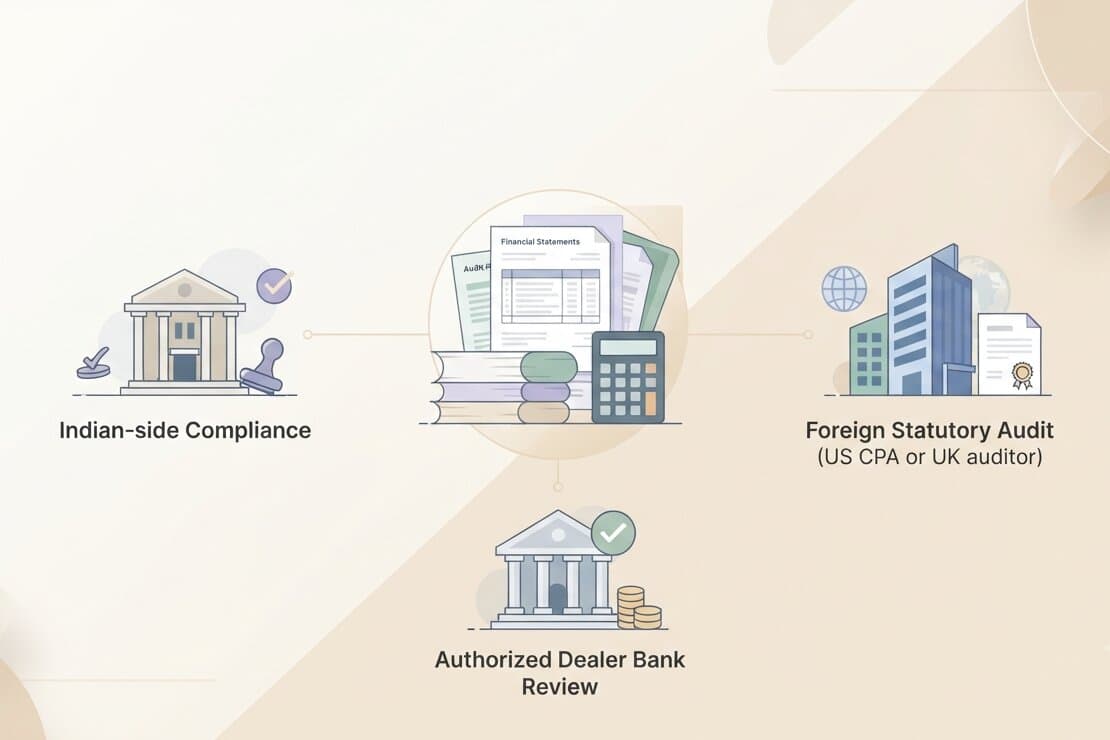
This guide walks through the process step by step — and shows where a US CPA, UK auditor, or Singapore ISCA professional fits in, alongside Indian compliance support.
What Is an APR Audit?
The APR audit is the annual review and verification of overseas investments made by Indian entities under ODI rules.
It covers:
Reviewing the foreign subsidiary's financial performance
Verifying overseas investment details
Auditing the financial statements
Confirming compliance with RBI and FEMA rules
Supporting accurate annual reporting
This audit is the backbone of overseas investment compliance for any Indian business operating internationally.
Who Needs an APR Audit?
You need one if your company:
Owns an overseas subsidiary
Holds a foreign joint venture
Has an active overseas investment under ODI rules
This applies even if:
The overseas entity has low activity
Revenue is minimal
Operations are still early-stage
Size doesn't exempt you. A pre-revenue subsidiary still needs the audit and the filing — the only exceptions are narrow, and depend on whether you have control over the entity and whether the host country's own law requires an audit.
Why the APR Audit Matters
This isn't just paperwork. It protects your company's international compliance standing.
1. Keeps you FEMA-compliant
The audit confirms your overseas investment stays aligned with RBI rules.
2. Verifies your numbers are real
It checks revenue, expenses, net worth, capital structure, and shareholding — not just what you report, but what's actually true.
3. Builds a clean compliance record
Proper documentation now saves you from scrutiny later.
4. Protects future expansion
A strong compliance history makes your next overseas investment approval faster and smoother.
The APR Audit Process, Step by Step
Step 1: Collect the Overseas Entity's Financial Statements
Start by gathering the foreign subsidiary's financial records — balance sheet, profit & loss statement, notes to accounts, and the auditor's report. These become the foundation everything else is built on.
Step 2: Verify Your ODI Investment Details
Before the audit begins, cross-check your ODI registration details, investment amount, shareholding structure, loans and guarantees, and capital contributions. Even a small mismatch here can create compliance issues down the line — this is worth doing carefully, not quickly.
Step 3: Get the Overseas Subsidiary Audited
The foreign entity's financials must be audited under local rules — not Indian standards.
US entities generally need a qualified US CPA
UK entities need a recognized UK auditor (ICAEW or ACCA)
Singapore entities need a Singapore ISCA-qualified professional
Using the right jurisdiction-specific professional matters here — it's what makes your dossier get accepted by your AD Bank on the first submission, instead of coming back with queries.
A Reality Check on Timing
Most companies underestimate how long this step actually takes. Overseas auditors typically need 60–90 days to complete an engagement, especially during their own busy season. If your subsidiary's financial year ends around the same time your APR is due, you're working with a tight window — start collecting financials well before December, not in November.
Step 4: Reconcile the Financial Data
Now reconcile the overseas financials against your ODI records, banking transactions, and previous filings. This step catches:
Reporting mismatches
Investment inconsistencies
Missing disclosures
Skipping this step is where most rejections come from — not from the audit itself, but from numbers that don't line up across documents.
Step 5: Indian CA Review
An Indian Chartered Accountant reviews the overseas audit report, your ODI records, and overall financial consistency to confirm everything satisfies Indian regulatory expectations — not just the host country's.
Step 6: Organise and Validate Documentation
Before submission, pull together:
The overseas audit report
Auditor certifications
Financial statements
Investment proof
Supporting compliance documents
A well-organised dossier is the single biggest factor in whether your AD Bank processes this quickly or sends it back with questions.
Step 7: Submit Through Your AD Bank
Once the audit and verification are complete, your finalized APR is submitted through your Authorized Dealer (AD) Bank, which forwards it to RBI's FIRMS portal. A clean submission means faster processing and far less chance of rejection.Authorised
What If Your Financial Year Doesn't Match India's?
This trips up more companies than you'd expect. India's financial year runs April to March, but your US subsidiary might run January to December, and other jurisdictions follow their own calendars entirely. When the two don't align, RBI allows unaudited financials to be submitted initially — with audited financials following within 6 months of the overseas entity's year-end, or by December 31 of the next year, whichever comes first. Plan around your subsidiary's actual year-end, not India's.
Deadline
APR compliance is due December 31 every year, covering the overseas entity's most recently completed audited financial year.
Common Mistakes to Avoid
1. Starting too late
Late starts mean rushed auditor coordination, hurried financial reviews, and higher compliance risk — none of which you want with a hard deadline.
2. Weak documentation
Incomplete records weaken the audit itself, your FEMA compliance, and the accuracy of what gets reported.
3. Incorrect ODI reporting
Mismatched investment values, shareholding percentages, or entity details trigger compliance queries — and queries mean delays.
4. Skipping the right local auditor
Not engaging a qualified US CPA, UK auditor, or Singapore ISCA professional (as applicable) often results in outright rejection by Indian banks — this isn't optional in most cases.
5. Poor coordination between teams
This audit needs your internal finance team, the overseas auditor, your Indian CA, and the AD Bank all working from the same information. Miscommunication between any two of these is where most avoidable errors happen.
Best Practices for a Smoother APR Audit
Start early — begin preparation months before the deadline, not weeks
Keep records organized year-round — investments, banking transactions, financial reports, audit documents
Work with auditors who actually know this space — ODI, FEMA, and cross-border compliance experience matters more than general audit experience
Run internal reviews periodically — don't wait until audit season to check your own numbers
Review everything before submission — a final check catches what a rushed process misses
Why Professional Support Actually Helps Here
Managing this internally gets harder as your international footprint grows — especially once you're coordinating across multiple countries, currencies, and reporting systems.
The right support helps you:
Coordinate directly with overseas auditors
Manage the overseas subsidiary audit end-to-end
Improve the accuracy of what gets reported
Avoid penalties and delays
Keep your ODI compliance record clean
Simplify reporting across multiple jurisdictions
This matters most if you're running subsidiaries in more than one country — coordinating separate audits, separate timelines, and separate auditors gets complicated fast without someone managing the whole engagement.
Conclusion
The APR audit is far more than a routine annual filing — it's a real compliance mechanism that verifies your overseas investments, your financial reporting, and your regulatory standing.
From the overseas subsidiary audit itself to coordinating with a US CPA, UK auditor, or Singapore ISCA professional, every step needs accuracy and real planning — not a last-minute scramble in December.
Get the audit quality right, keep your records organised, and work with people who actually specialise in this — and the APR process stops being a yearly fire drill and becomes a routine part of running an internationally active business.