.svg)
.svg)
.svg)
Form APR vs Form ODI Part II: Which Name Does Your AD Bank Use in 2026?
APR vs ODI Part II explained: understand the current APR form, old ODI Part II name, RBI format, AD bank templates, and filing requirements.

Accorp Compliance Team
Our team of compliance experts specializes in PCI DSS, SOC 2, and other security frameworks to help businesses achieve and maintain compliance.
Ask five finance teams what they file every December for their overseas subsidiary, and you will hear "the APR", "ODI Part II", "the ODI form" and "Form APR". All of them are referring to the same document. Whether your bank writes one name or the other on its checklist changes nothing about what you must submit, but it can change which template you are handed.
This guide explains where the two names come from, why both are still in circulation, and how to make sure the version you file is the one RBI actually prescribes for APR filing in India.
The short answer: one report, two labels
The Annual Performance Report is the yearly return an Indian investor files for each foreign entity it holds under ODI. Since the overseas investment framework took effect on 22 August 2022, RBI's prescribed format is titled "Annual Performance Report (APR)". Before that, the same report was filed in a form called ODI Part II.
So "Form APR" is the current name. "Form ODI Part II" is the older name that never quite went away. Guides, bank templates and even some RBI documents still use it.
How the confusion started
The 2022 framework replaced the old FEMA Notification 120 regime. It brought a new set of forms: the initial reporting of an investment moved into Form FC, and the annual report got its own form under the Overseas Investment Regulations. The old filing labels lost their legal footing on that date.
Old habits outlast legal changes, though. The label "ODI Part II" survives in three places:
RBI's own late-fee table. The Late Submission Fee matrix, circulated on 30 September 2022, still reads "Form ODI Part-II/APR" for the flat ₹7,500 fee. The regulator itself used both names in the same line.
Bank checklists and internal templates. Many were written before 2022 and were edited only where the law forced a change.
Practitioner guides. Some articles call the current report "Form ODI Part II". Others call it "Form APR". Both appear in guides published this year.
Even the RBI form has a slip. Instruction 18 speaks of signing "each page of the Form FC", which is a leftover from a different form. Small inconsistencies like this explain why nobody on the ground is fully consistent.
What the current Form APR contains
More useful than the name is what the document holds. RBI's 2022 form is a structured report with these parts:
period covered and the UIN;
capital structure of the foreign entity, and whether the Indian investor has control;
changes in shareholding during the year;
two years of financial position: net profit or loss, dividend and net worth;
repatriation from the foreign entity, retained earnings and profit;
FDI by the foreign entity into India and refunds of excess share application money;
details of any step-down subsidiary acquired, set up, wound up or transferred;
a declaration by the Indian investor, with specific confirmations on evidence of investment and repatriation of dues;
a signed block by the Indian entity's statutory auditor or a chartered accountant, including a UDIN; and
an AD bank block.
Our section-by-section breakdown of the form walks through the figures, and the note on the auditor's signature requirements covers the last blocks.
Which name does your AD bank use in 2026?
I can't tell you for a specific bank, and no reliable public source can. Banks differ, and a branch may use whatever wording its own ODI desk has always used. What you can do is ask for two things: the bank's ODI checklist and the template it wants uploaded.
If the checklist says "ODI Part II" and the template has the fields listed above, the bank is just using the old name for the current form. That is a naming habit, not a compliance issue.
If the template lacks the step-down subsidiary section, the declarations or the auditor and bank blocks, you may have an older layout. Ask the bank to confirm it is the format RBI prescribed in 2022 before you fill it in.
Why the wrong template can cost you
An outdated template creates real risk, and it does not need to be dramatic to cause trouble:
Missing changes. The instructions say that failing to report step-down subsidiary changes or shareholding changes amounts to non-submission of the APR. A template that never asks for them will not remind you.
Missing declarations. The current form asks the investor to confirm that share certificates reached the AD bank within six months and that the foreign entity's dues have been repatriated. You can file a layout without those lines, leaving an obligation unchecked. You can file a layout without those lines, leaving an obligation
Bank queries in December. If the bank later finds the template is out of date, you will be redoing it against the deadline, alongside the audit sign-off.
Where the name shows up around the audit
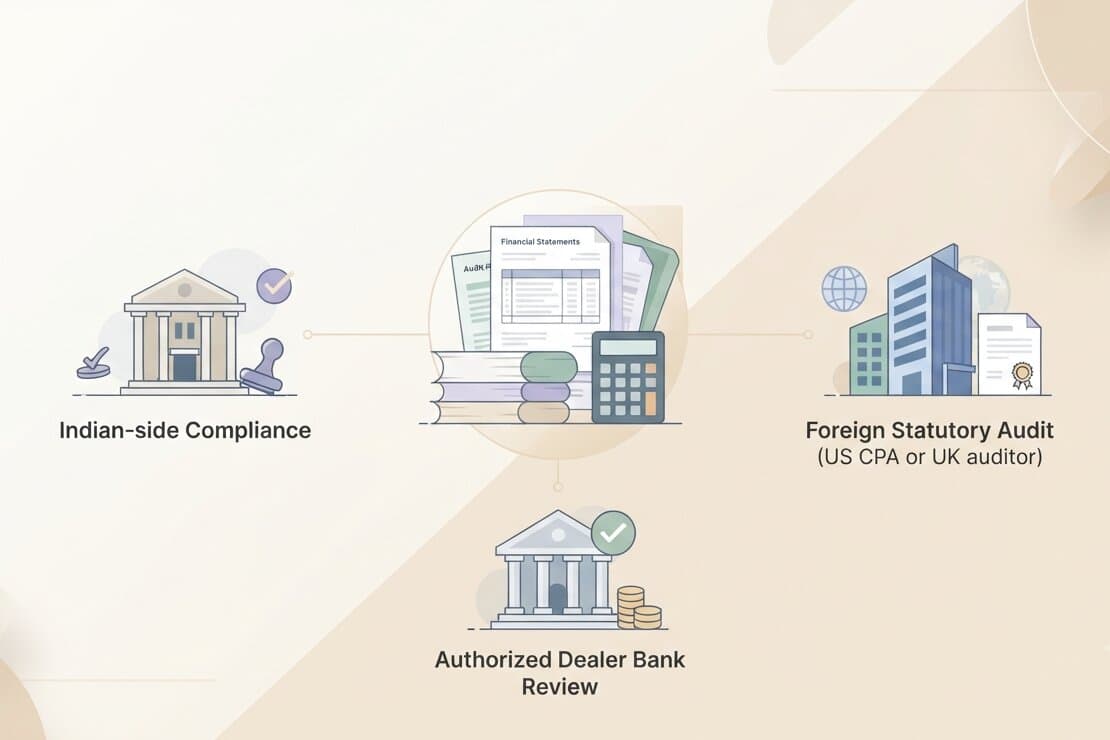
Naming also matters in the paperwork around the APR audit. Engagement letters and audit reports often say "for Form ODI Part II". A wording that avoids the problem is "for the Annual Performance Report under the Overseas Investment Regulations, 2022". That is accurate under either name.
The auditor block on the form itself is worded around the Regulations, referring to the year ended, whether the accounts are audited, and the control condition. Keep any covering language consistent with it, so the audit of a foreign subsidiary of an Indian company lines up with what the bank sees.
Naming it in your own records
For your board notes, compliance calendar and file names, use one consistent label. A practical choice is "APR (Form APR)", with the old name in brackets for your first year of use: "APR (Form APR, earlier Form ODI Part II)". It keeps your overseas investment compliance records searchable for people who know only one name, and it will not confuse your auditors or your bank.
A quick checklist for this December
Ask your AD bank for its current ODI checklist and template.
Compare the template with RBI's Form APR: the paragraph sequence, the declarations, the UDIN block.
Confirm the filing route, whether physical submission or upload, and who signs each page.
Align the wording in your audit engagement letter with the Regulations rather than the form name.
Update your internal calendar to say "APR" and mention both names once.
The name is a small detail, but the template behind it is what RBI's reporting requirements actually test. Sort it out before fieldwork starts, and it is one less thing to fix in December.