.svg)
.svg)
.svg)
Filed Your APR With a Wrong Figure? How to Correct It After Submission
APR audit errors can create FEMA compliance issues. See how to correct wrong figures, reconcile accounts, work with your AD bank, and avoid penalties.

Accorp Compliance Team
Our team of compliance experts specializes in PCI DSS, SOC 2, and other security frameworks to help businesses achieve and maintain compliance.
The email arrives in February. A pharma exporter in Hyderabad has just received the final audit report for its Singapore subsidiary, and the finance manager is reconciling it against the APR filed in December. Turnover in the audit report reads 4.8 million. The APR says 48 million. Someone keyed the figure in the wrong unit, the AD bank accepted it, and the acknowledgement has sat in a folder for two months.
The first instinct is to hope nobody looks. The better instinct is to fix it now, quietly and properly, while it is still a correction and not a finding. This piece walks through how that works, what can go wrong, and what to check before you press submit next year.
Why One Wrong Number in an APR Is Not Trivial
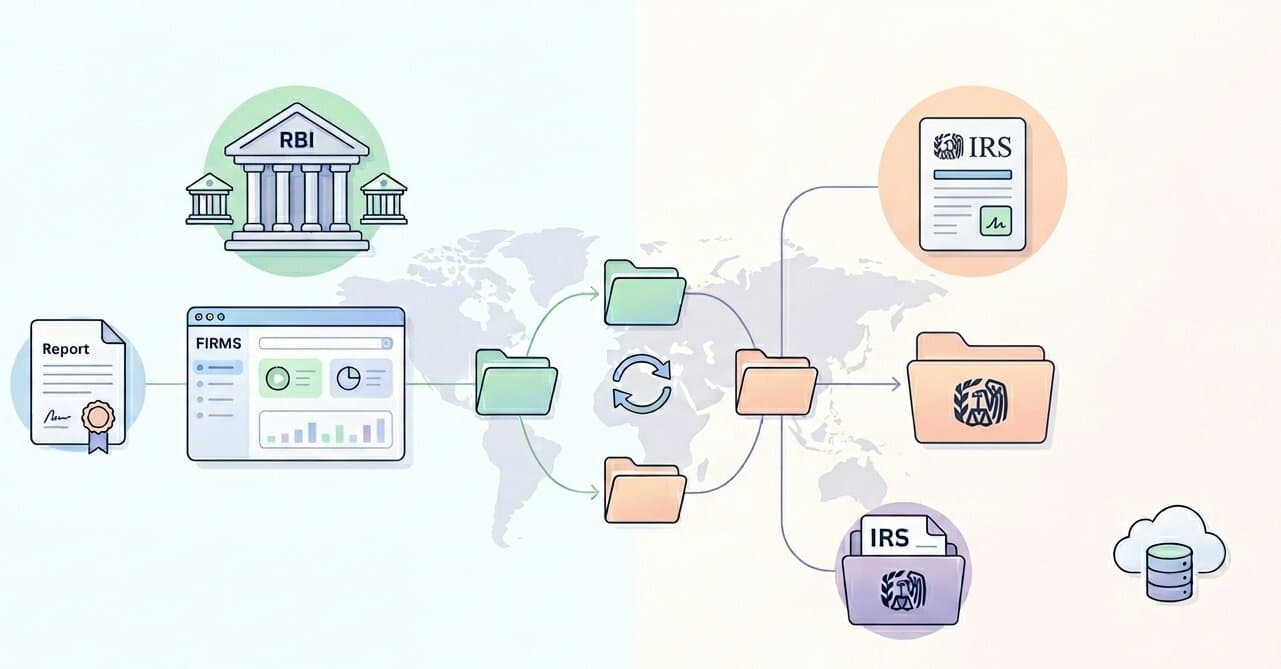
The Annual Performance Report is more than a form. It is one of the datasets the RBI uses to check whether what an Indian investor says about a foreign entity is consistent with everything else on record. That includes the original Form FC, the remittance trail at the AD bank, and the FLA return filed each July.
So an incorrect figure can create a visible mismatch. Net worth that does not tie to the audited balance sheet, an equity amount that differs from remittance records, or a wrong currency can all prompt queries from the bank, and those queries tend to surface at the worst time, usually when you are trying to send money abroad. Treat accuracy as part of your FEMA compliance, not as clerical polish. A report that is only slightly off in year one tends to be carried forward as the comparative in year two, so the error quietly doubles its footprint.
Step One: Work Out What Kind of Error You Actually Have
Not every mistake is handled the same way. Before contacting anyone, sort yours into one of four groups.
A data-entry slip. Wrong unit, misplaced decimal, swapped digits, wrong currency selected, or a mistyped UIN. The underlying accounts are right; only the report is wrong.
A source error. The APR faithfully reflects the financial statements, but the statements themselves were wrong or later restated. This is common when a draft set of accounts is used to meet the deadline, and the signed set differs.
A structural error. Wrong entity, wrong reporting period, or the report filed against the wrong investment line.
A substantive gap. The figure is wrong because a remittance, loan or dividend was never reported correctly in the first place. This is the one to take seriously, because it can move beyond a reporting correction into a contravention that needs its own route.
The first two are routine. The third needs care. The fourth needs advice.
Can an APR Be Revised After Submission?
In practice, yes. Your AD bank makes corrections through its ODI compliance filings on the RBI's online reporting platform. I could not find a separate, published "revised APR" form in the framework. What banks do, and what the professional guidance I reviewed describes, is a fresh submission of the corrected report accompanied by a covering letter that explains what changed and why.
Two cautions. Procedures differ between banks, so call your relationship manager before assembling anything; some will want the correction lodged in a particular format or on a specific portal screen. And do not attempt to correct the record by simply filing next year's APR with adjusted comparatives. That leaves the earlier year wrong on the record and can compound the mismatch.
A Sensible Sequence for Correcting the Filing
Pull the acknowledgement and the filed copy. You need to know exactly what the bank has on record, not what you think you sent.
Reconcile to source documents. Tie each disputed figure back to the audited statements, the remittance advices and the shareholder register of the foreign entity.
Document the error. A one-page note stating the incorrect value, the correct value, the cause, and the date discovered. Banks respond better to a clear explanation than to a bare resubmission.
Speak to the AD bank first. Confirm how they want the revision presented and whether they need board or authorised-signatory confirmation.
Submit the corrected report with the covering letter. Keep the new acknowledgement alongside the old one.
Check related filings. If the wrong figure was also fed into the FLA return, correct that too.
When the Root Cause Is the Audit
Sometimes the APR is not wrong at all; the audit changed. This happens more than people expect. Auditors adjust for a late invoice, a provision or a related-party balance, and the signed accounts end up different from the draft used for filing.
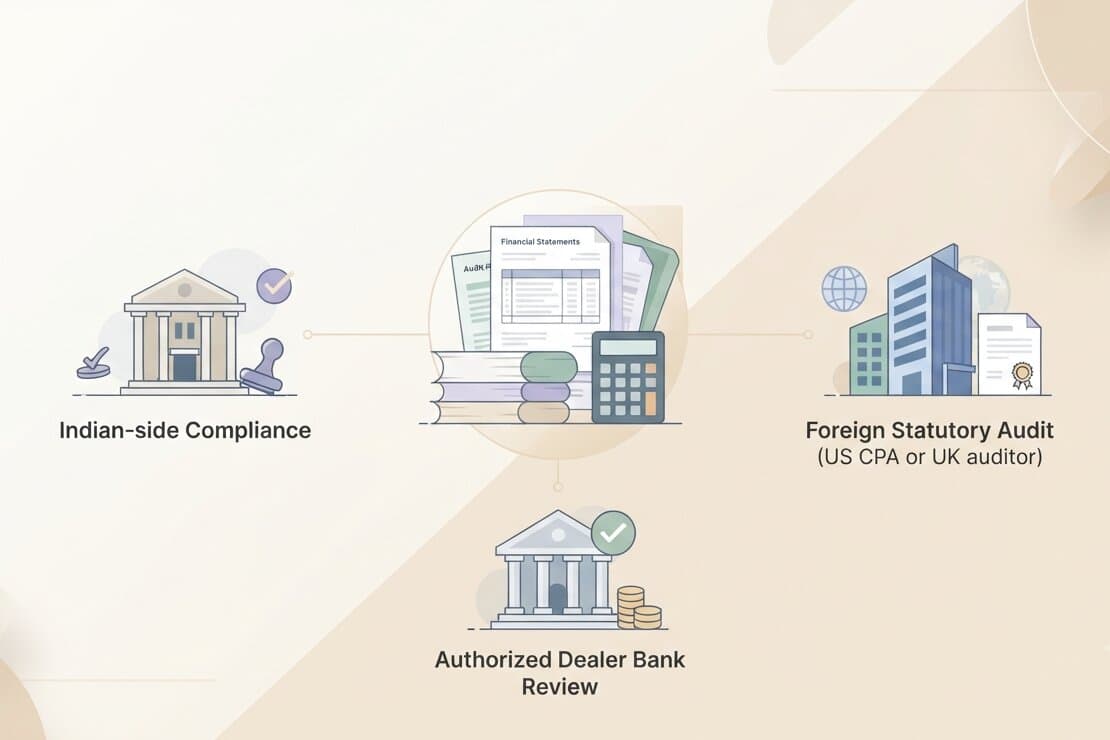
If the APR was prepared on a draft, the honest position is that it needs revising to match the final audited statements. This is where the quality of the audit of the foreign subsidiary of an Indian company matters. A clean process fixes the audit dates and the sign-off before the APR is prepared, so the two never diverge. If you are in the messy version, get the auditor's final report and any signed management representation, then rebuild the APR figures from those.
The UK Angle: Reissued Reports and Restated Accounts
UK subsidiaries produce their own version of this problem. Suppose a UK company's accounts were audited and signed, then later restated because of a correction under UK GAAP. The auditor issues a revised report, and Companies House may need the accounts refiled under the voluntary revision provisions of the Companies Act 2006.
If you relied on the original audit for your APR audit package, the numbers you submitted are now stale. Ask your UK auditor for APR filing to confirm in writing whether the revised report supersedes the earlier one, and to give you the date, the standards applied, and a clear statement of what changed. That paper trail is what the AD bank will want to see beside your covering letter.
Avoid the shortcut of asking an Indian accountant to "adjust" the figures. The RBI requirement for a controlled foreign entity is an audit in the jurisdiction where it operates, and a home-country tweak does not satisfy it.
Will a Correction Attract a Late Fee or Penalty?
This is the question everyone asks, and the honest answer is that it depends on the facts and on the bank.
The Late Submission Fee framework applies to delay: a flat ₹7,500 per delayed APR, available for delays up to three years from the due date. A voluntary correction of a report that was filed on time is not, on its face, a late filing. Many practitioners treat it accordingly, but I would not assume it. Ask the AD bank how they will classify the revision before you file, and get the answer by email.
Two situations change the picture. If the corrected report is submitted well after the due date and the bank treats the original as defective, you may be pushed towards regularising through the late submission route. And if the "error" reveals an unreported transaction, you are no longer dealing with a form fix. You are dealing with a possible contravention, and compounding under FEMA may become the correct channel. The penalty ceiling for a quantifiable contravention is up to three times the amount involved, although outcomes for reporting lapses are typically much lower.
The Evidence File Worth Keeping
Whatever the correction, assemble a single folder that a regulator or a due-diligence team could read cold:
The original APR and its acknowledgment
The corrected APR and its acknowledgement
The covering letter and the internal error note
The final audited statements and audit report
Remittance advices and share certificates that support equity figures
Email confirmation from the AD bank on how the revision was treated
Acquirers and lenders reviewing your RBI reporting requirements history rarely object to a documented correction. They do object to inconsistencies nobody can explain.
Preventing the Next Wrong Figure
The Hyderabad exporter made three changes. First, a three-way tie-out before submission: audited financials, remittance and Form FC records, and the APR draft must agree line by line. Second, a maker-and-checker rule, so the person keying the data is never the person approving it. Third, a written convention on units and currency, stated at the top of every working file, which would have caught their thousand-versus-million slip.
Add one more habit: never file on unsigned accounts. Waiting a week for the signed audit report costs far less than correcting a filing later.
The Bottom Line
A wrong figure in an APR is fixable, usually without drama, if you find it yourself, explain it clearly, and route it through your AD bank. The costly version is the one that sits unnoticed until a payment is waiting on it. Reconcile now, correct properly, and keep the paper.