.svg)
.svg)
.svg)
How Accorp Actually Runs an APR Audit: The CPA Engagement Process, Step by Step
APR audit for overseas subsidiaries: see key steps, auditor requirements, 60–90 day timelines, reconciliation, CA review, and AD Bank submission.

Accorp Compliance Team
Our team of compliance experts specializes in PCI DSS, SOC 2, and other security frameworks to help businesses achieve and maintain compliance.
Most APR content explains what RBI wants and when it's due. Almost none explain what happens between "you have a foreign subsidiary" and "your AD Bank has an audited APR in hand." That gap — the actual audit engagement — is where the real work, and the real delays, happen.
Why the Audit, Not the Form, Is the Real Bottleneck
The filing itself (Form ODI Part II, AD Bank submission) takes an afternoon once you have what you need. What actually takes 2–3 months is getting the foreign subsidiary's financials audited by a qualified professional in that country. Companies that plan around December 31 as a single event, instead of the finish line of a longer process, are the ones who scramble.
Step One: Confirm What's Actually Required
Two questions decide scope: does the Indian parent control the foreign entity, and does the host country's own law require an APR audit for an entity this size? A US C-Corp, UK Ltd, and Singapore Pte Ltd each carry different local thresholds. Getting this right upfront avoids both under-preparing (rejected APR) and over-preparing (paying for an audit nobody required).
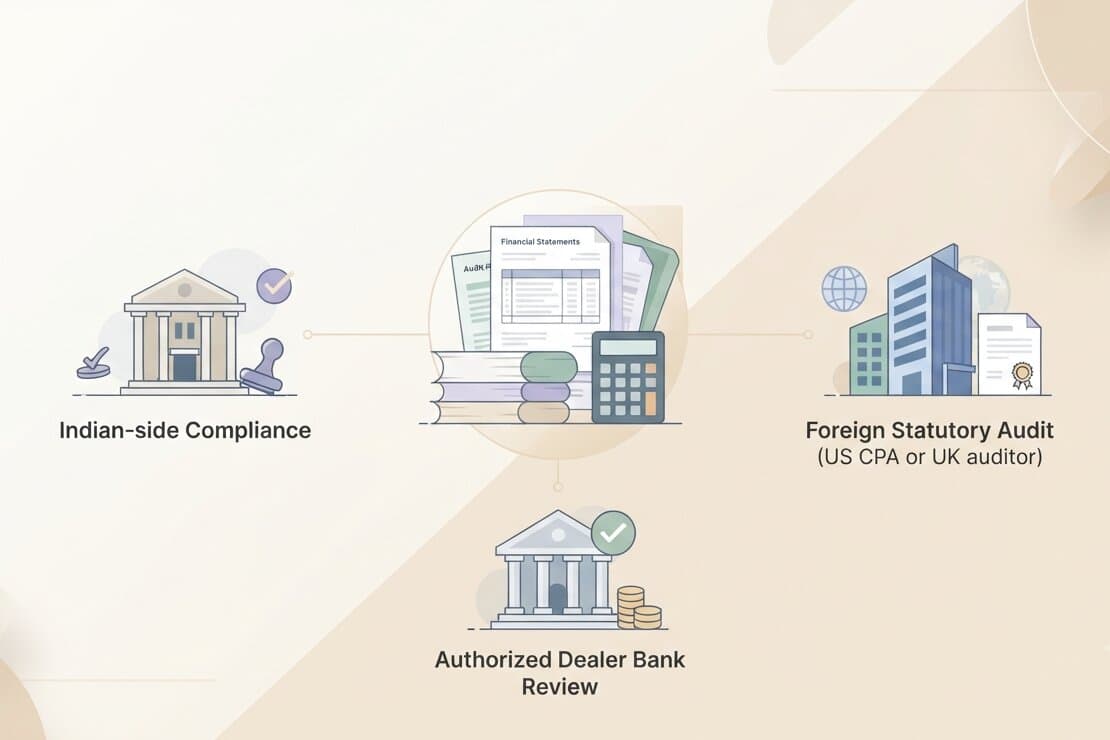
Step Two: Match the Right Auditor to the Right Jurisdiction
A US subsidiary needs a licensed US CPA. A UK entity needs ICAEW/ACCA. A Singapore entity needs ISCA certification. AD Banks specifically check for these credentials — the wrong signature sends the whole submission back. Companies with subsidiaries in multiple countries are managing multiple separate engagements, not one.
This is usually the step that eats the most time for companies going it alone — finding a licensed CPA in the US, then separately sourcing a UK auditor, then a Singapore one, each a fresh vendor relationship with no shared context between them. Accorp Partners keeps licensed CPA and auditor teams in-house across the US, UK, and Singapore, so this matching step happens immediately rather than becoming its own weeks-long search.
Step Three: The Actual APR Audit Timeline
Once engaged, a proper APR audit runs 60–90 days — reviewing statements, testing transactions, issuing a formal opinion a bank will accept without pushback. Starting in November for a December 31 deadline is almost always too late; foreign auditors have their own busy seasons and don't bend for an Indian filing date.
What Slows This Down Most
The single biggest delay isn't the auditor's workload — it's document requests sitting unanswered on the client's end. A CPA asking for one clarification and waiting days for a reply is what regularly turns a 60-day engagement into 90+.
Step Four: Reconcile Against ODI Records
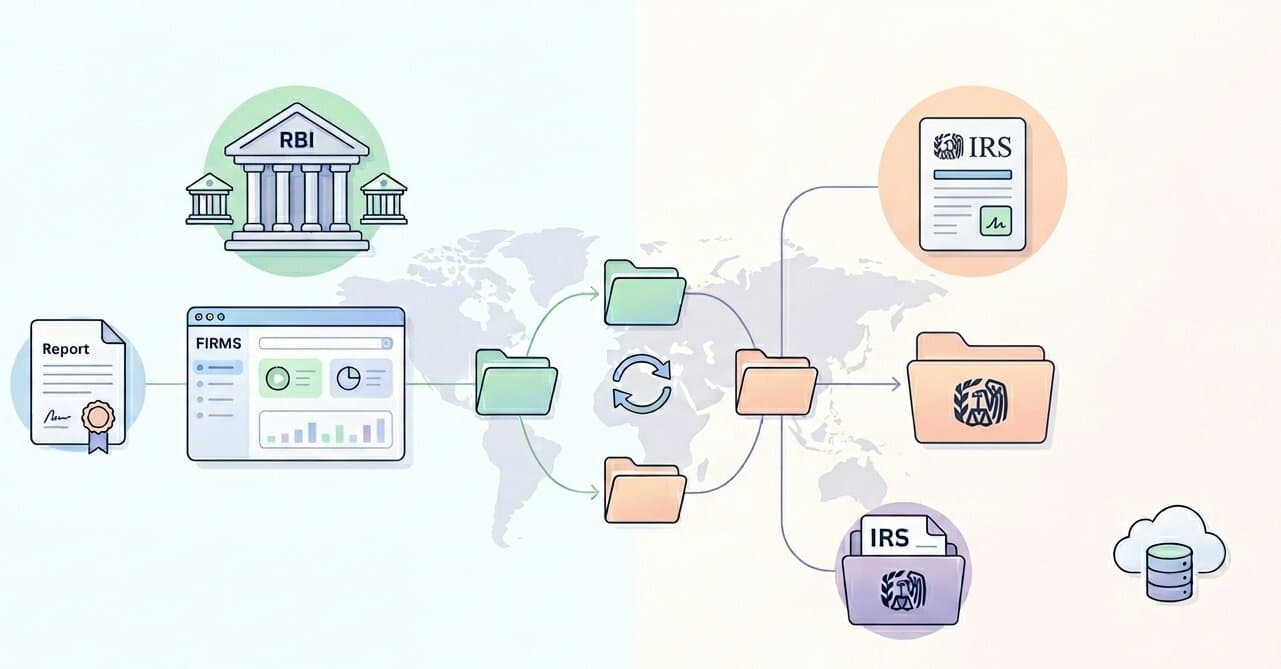
Audited numbers get checked against original investment records — amount invested, shareholding, loans or guarantees. A drifted shareholding percentage or an undocumented intercompany loan is exactly what triggers AD Bank queries later.
Step Five: Indian CA Review
Even after the foreign audit, an Indian CA reviews the full package to confirm it satisfies RBI's specific expectations — not just the host country's accounting standards, which aren't identical to what FEMA compliance requires.
Step Six: Build the Final Dossier
Audited statements, auditor certification, investment documentation, explanatory notes — assembled as one complete package. Clean, complete submissions move through AD Bank review in days; fragmented ones come back with follow-up requests.
Multi-Jurisdiction Cases Need Coordination, Not Just Vendors
Two subsidiaries in two countries need someone tracking both engagements against the same deadline — not two auditors working in isolation who never talk to each other. This is exactly where having the CPA and the India-side filing team under one roof avoids gaps between vendors — since Accrp's in-house auditors across jurisdictions already work within the same engagement, reconciliation and coordination happen internally instead of over email chains between firms that have never spoken before.
A Realistic Timeline, Worked Backwards
Submission buffer: 2–3 weeks. Reconciliation + CA review: ~1 week. The APR audit itself: 60–90 days. That puts the latest safe start date around early-to-mid September.
If You're Starting Late
Still possible, but every step needs to move with urgency and active coordination between auditor, CA, and AD Bank — not passive email chains. This is usually the point where companies decide they want one team running the whole engagement, from selecting the right CPA to final submission, instead of chasing three parties through December.
Getting this right isn't about beating one deadline — it's the same clock, every year, for as long as the overseas investment stays active.
Frequently Asked Questions
Q1. Do we still need an audit if our subsidiary is small?
It depends on two things — how much control the Indian parent has, and whether the host country's own law requires an audit at that size. Thresholds differ across the US, UK, and Singapore, so this needs to be confirmed upfront.
Q2. We have subsidiaries in two countries — do we need separate auditors for each?
Yes. Each jurisdiction has its own licensing requirement — a US CPA, UK ICAEW/ACCA, Singapore ISCA. AD Banks check these credentials specifically, and the real challenge is coordinating both engagements against one deadline, not just hiring two auditors.
Q3. It's already November and our audit hasn't started — is it too late?
Not too late, but tight. The audit alone takes 60–90 days, plus reconciliation, CA review, and a submission buffer. Every step needs to move with urgency from here, not sit in slow email chains.