.svg)
.svg)
.svg)
How to Choose a US CPA for RBI APR Compliance (5 Red Flags to Avoid)
Choose the right US CPA for APR filing in India, with key red flags, cross-border audit factors, timelines, and coordination tips for compliance.

Accorp Compliance Team
Our team of compliance experts specializes in PCI DSS, SOC 2, and other security frameworks to help businesses achieve and maintain compliance.
Choosing the right US CPA is one of the most consequential decisions in the entire APR process, yet it often gets the least attention. Businesses tend to focus their planning on RBI's deadline and the Statutory Auditor's certification, while treating the selection of the overseas auditor as a formality. In practice, the quality of the US CPA engaged for the overseas subsidiary audit determines how smoothly every later stage of APR filing India proceeds.
This article outlines what to look for in a US CPA for APR filing, and more importantly, the red flags that indicate a firm is not equipped to support cross-border compliance work.
Why the Right US CPA Matters Beyond the US Audit
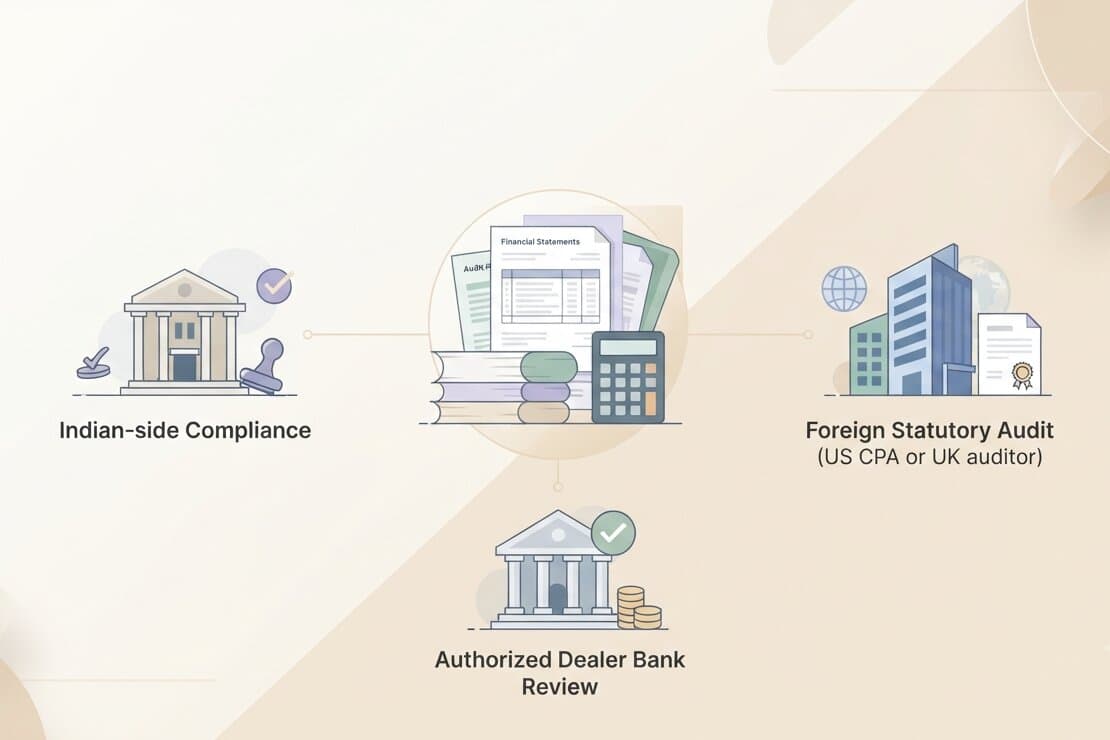
A US CPA's engagement doesn't end with producing GAAP-compliant financial statements. Those statements become the foundation the Statutory Auditor in India relies on to certify Form ODI Part II. If the underlying audit is incomplete, delayed, or structured in a way that doesn't translate well into RBI's reporting format, the impact is felt much later — usually as a query from the AD bank or a certification delay on the India side.
This is why selecting a US CPA is not simply a US compliance decision. It directly affects foreign subsidiary audit compliance and the reliability of the entire filing chain.
What to Look for in a US CPA for APR Filing
Before getting into red flags, it helps to be clear on what a well-suited CPA actually brings to this specific engagement:
Experience auditing entities with foreign parent companies, not just domestic US clients
Familiarity with how audited financials need to be structured to support overseas investment compliance
A track record of working to fixed external deadlines, since RBI's December 31 date leaves little room for flexibility
Willingness to coordinate directly with the Indian Statutory Auditor when clarifications are needed
With this baseline in mind, the following red flags are worth watching for during the selection process.
Red Flag 1: No Prior Experience with Cross-Border Reporting
A CPA who has only worked with domestic US clients may produce technically accurate financial statements that are still difficult to reconcile against Form ODI Part II. Cross-border engagements require an understanding of what the Indian side ultimately needs — not just US GAAP compliance in isolation.
During initial conversations, it's worth asking directly whether the firm has handled audits for entities whose parent company files ODI compliance reports. Vague or evasive answers on this point are usually a sign the firm hasn't worked in this space before.
Red Flag 2: Unclear or Unrealistic Timelines
RBI reporting requirements operate on a fixed annual deadline, and the overseas audit needs to be completed with enough buffer for reconciliation and certification afterwards. A CPA who cannot commit to a clear timeline — or who treats the engagement with the same flexibility as a routine annual audit with no external deadline — introduces risk into the rest of the process.
This is particularly important because delays at the audit stage compress every subsequent step, including the Statutory Auditor's review and final AD bank submission.
Red Flag 3: Limited Communication with the Indian Side
Some CPAs prefer to complete their engagement independently and hand over a finished report without further interaction. For most US-only audits, this is standard. For subsidiary compliance reporting tied to APR filing, it creates a problem because reconciliation questions often arise only after the Indian Statutory Auditor reviews the figures.
A CPA unwilling to answer follow-up questions or provide clarifications during certification is likely to become a bottleneck exactly when time is already tight.
Red Flag 4: Generic Financial Statements Not Structured for Reconciliation
Financial statements prepared purely for US tax or internal purposes don't always map cleanly onto what's needed for foreign investment reporting. A CPA unfamiliar with this requirement may produce statements that require significant rework before they can be reconciled against RBI's expected figures — net worth, investment value, repatriated dues, and so on.
Asking upfront whether the CPA has experience preparing statements specifically for parent-company regulatory filings, rather than only for US-facing purposes, helps avoid this issue.
Red Flag 5: No Understanding of FEMA-Linked Obligations
While a US CPA is not expected to be an expert in Indian law, a basic awareness of why the audit is being conducted — to support FEMA compliance and ODI reporting for an Indian parent — makes a meaningful difference. CPAs who show no interest in understanding this context often treat the engagement as a standard annual audit, missing details that matter specifically for international business compliance, such as consistent treatment of intercompany transactions or investment movements year over year.
How These Red Flags Show Up in Practice
Most of these issues don't appear as obvious problems at the start of an engagement. They surface gradually — a missed intermediate deadline, a report that needs multiple rounds of clarification, or a CPA who is unreachable when the Statutory Auditor has a question during certification. By the time these patterns become visible, there is often little runway left before the RBI deadline, which is why evaluating a CPA properly before engagement matters more than trying to manage these issues mid-process.
Questions Worth Asking Before Engagement
A short set of direct questions can surface most of these red flags early:
Have you audited entities with an Indian parent company before?
Can you commit to a completion date that leaves time for reconciliation and certification in India?
Are you available to answer follow-up questions from our Statutory Auditor if needed?
How do you typically structure financial statements for regulatory reporting to a foreign parent?
Answers that are specific and confident are a reasonable indicator of experience. Vague or generalized responses are worth treating as a caution sign.
Why This Choice Affects the Whole Filing Cycle
Because this engagement repeats every year as part of annual compliance for foreign subsidiaries, choosing the right US CPA once tends to pay off across multiple filing cycles, while a poor initial choice often means repeating the same difficulties annually. A properly scoped, cross-border-aware CPA engagement is one of the most effective ways to keep the broader APR audit process predictable rather than reactive.
Conclusion
Selecting a US CPA is not a minor administrative step in the APR process — it shapes how smoothly every later stage unfolds, from reconciliation to Statutory Auditor certification to final submission. Businesses that evaluate CPA firms against cross-border experience, realistic timelines, and willingness to coordinate with the Indian side are far better positioned to complete their APR filing for foreign subsidiaries without the avoidable delays that come from choosing the wrong fit.