Reverse Flip to India: What Happens to ODI, APR and the UIN When Your US Parent Moves Home
Understand how a reverse flip to India affects ODI, APR, UIN, foreign investment reporting, and annual compliance for foreign subsidiaries.

Accorp Compliance Team
Our team of compliance experts specializes in PCI DSS, SOC 2, and other security frameworks to help businesses achieve and maintain compliance.
Many Indian-founded startups establish a parent company in the United States to access international investors, expand globally, or simplify fundraising. However, as business priorities evolve, some companies choose to move their holding structure back to India. This restructuring is commonly known as a reverse flip.
While a reverse flip can simplify operations and align a company with its primary market, it also raises important regulatory questions. What happens to the existing overseas investment structure? Does the company need to review its Overseas Direct Investment (ODI) reporting? What happens to the Annual Performance Report (APR) and the Unique Identification Number (UIN) associated with an overseas investment?
The answers depend on how the restructuring is executed, the entities involved, and the applicable Indian foreign exchange regulations. Understanding these implications is essential for maintaining annual compliance for foreign subsidiaries and avoiding reporting gaps during a cross-border restructuring.
What Is a Reverse Flip to India?
A reverse flip is a corporate restructuring in which a business moves its parent or holding company structure from a foreign jurisdiction, such as the United States, to India.
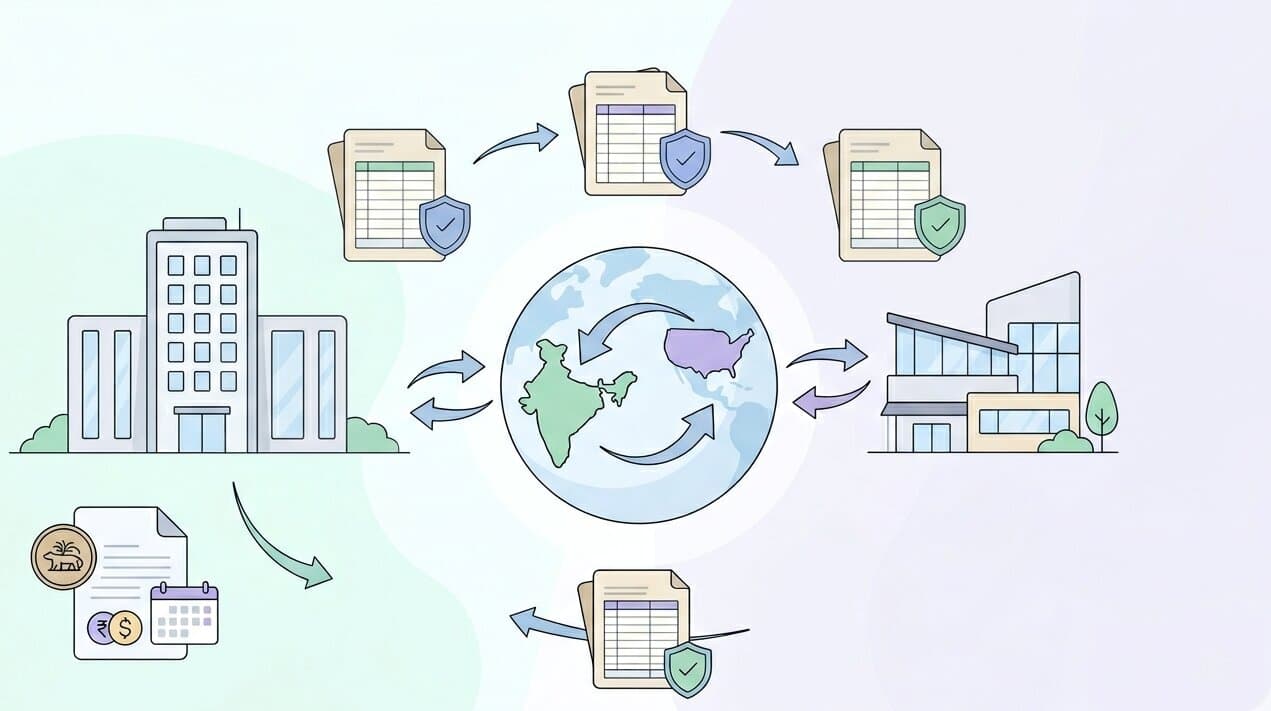
For example, an Indian-founded business may initially operate through an Indian subsidiary owned by a US parent company. Following a reverse flip, the Indian entity may become the ultimate holding company, while the former US parent becomes a subsidiary, is merged into the Indian company, or is otherwise restructured.
The transaction may involve a share swap, merger, transfer of shares, or another legally permitted arrangement.
However, a reverse flip is not simply a change of address or a domestic incorporation exercise. Depending on its structure, it can affect foreign investment, ownership records, and regulatory filings under India's foreign exchange framework.
Before implementing the transaction, businesses should assess the implications under the Foreign Exchange Management Act (FEMA), the applicable RBI regulations, and other relevant corporate and tax requirements.
How Does a Reverse Flip Affect ODI, APR and UIN?
Three important terms to understand when reviewing overseas investment compliance are ODI, APR, and UIN.
1. Overseas Direct Investment (ODI)
Overseas Direct Investment refers to qualifying investment by an Indian resident or an Indian entity in a foreign entity, subject to the applicable FEMA framework.
A reverse flip can change the ownership relationship between an Indian company and its foreign parent. Depending on the resulting structure, the transaction may create, modify, or eliminate an overseas investment relationship.
For example, if an Indian company acquires shares in its former US parent as part of a restructuring, the transaction may need to be assessed under the Overseas Investment Rules, Regulations, and Directions. Whether the acquisition qualifies as ODI, and whether it is permissible, depends on the facts and the applicable regulatory provisions.
Companies should review:
· The existing overseas investment structure and reporting history.
· The proposed transfer, merger, share swap, or acquisition.
· Applicable approval, pricing, valuation, and reporting requirements.
· Whether the resulting ownership structure creates a new or continuing overseas investment relationship.
2. Annual Performance Report (APR)
The Annual Performance Report is a reporting requirement associated with certain overseas investments under India's overseas investment framework.
Where an Indian resident or entity holds reportable ODI in a foreign entity, an APR may be required for the relevant reporting period, subject to applicable exemptions and conditions.
A reverse flip can affect APR obligations if the transaction changes the Indian investor's ownership, the status of the foreign entity, or the nature of the overseas investment.
Before concluding that an APR is no longer necessary, the company should establish:
· Whether the overseas investment existed during the reporting period.
· Whether the Indian investor continues to hold a reportable interest in the foreign entity.
· Whether the foreign entity has been merged, dissolved, sold, or otherwise restructured.
· Whether any pending APRs or other regulatory filings remain outstanding.
· Whether the relevant AD bank requires supporting documents to update or close the investment records.
The reporting position should be evaluated for each relevant financial year. A completed reverse flip should not be treated as automatic evidence that all historical APR obligations have been fulfilled.
For companies managing APR filing for foreign subsidiaries, maintaining a clear record of the restructuring date, transaction documents, ownership changes, and regulatory acknowledgements can help establish the correct filing position.
3. Unique Identification Number (UIN)
A Unique Identification Number is associated with the reporting of an overseas investment through the applicable RBI and authorised dealer bank processes.
The UIN helps identify the relevant overseas investment record. It should not be confused with a company's incorporation number, tax identification number, or registration number.
When a reverse flip changes the ownership structure, the company should review the existing UIN and its associated reporting records.
The appropriate treatment may depend on whether the original overseas investment continues, is transferred, is disposed of, or ceases to exist following the restructuring.
Companies should coordinate with their authorised dealer (AD) bank to determine:
· Whether the existing UIN remains relevant to the investment record.
· Whether the transaction requires updated reporting or supporting documentation.
· Whether disposal, restructuring, or closure-related filings are applicable.
· Whether outstanding reporting requirements must be completed before the records can be updated or closed.
A Reverse Flip Can Change the Compliance Structure
The implications of a reverse flip depend on the structure before and after the transaction.
Consider a simplified example:
Before the reverse flip
· An Indian operating company is owned by a US holding company.
· The US holding company has overseas investors.
· The group has historical cross-border investment and reporting records.
After the reverse flip
· An Indian company becomes the ultimate holding company.
· The US entity may become a subsidiary, be merged into another entity, or cease to exist.
· Ownership, investment reporting, and statutory obligations may change.
These changes require more than an organisational chart update. The business should identify which entities remain active, which investment relationships continue, and which filings may be affected.
The relevant compliance review may include FEMA reporting, corporate filings, tax implications, valuation requirements, and any conditions attached to the restructuring.
What Happens to Annual Compliance for Foreign Subsidiaries?
A reverse flip may alter the group's foreign subsidiary structure, but it does not necessarily eliminate every overseas compliance obligation.
If the US entity continues to operate as a subsidiary of the Indian parent, the group may still need to assess its financial reporting, tax filings, corporate maintenance, and applicable overseas investment reporting requirements.
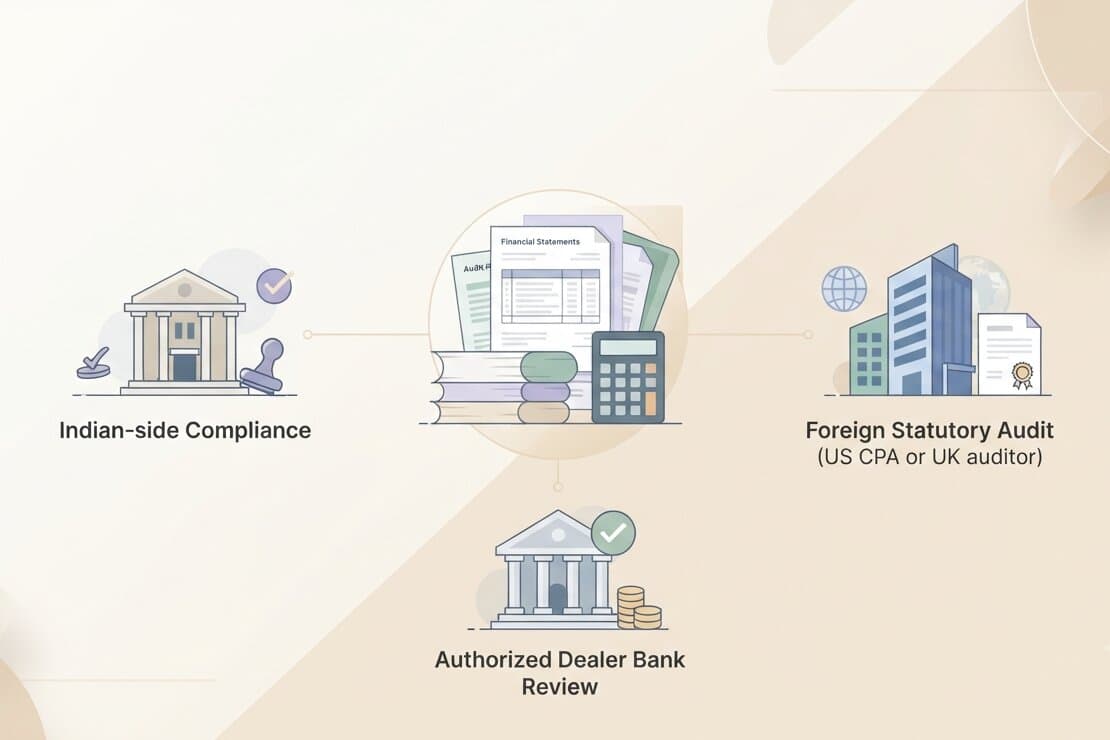
A structured review should cover the following areas.
Overseas investment reporting
Identify existing ODI records, UIN references, reporting acknowledgements, and any outstanding filings. Determine which records require updates because of the restructuring.Annual Performance Report requirements
Review APR obligations for each relevant reporting period. Establish whether the reporting entity continues to hold a reportable overseas investment and whether any historical filings remain pending.Overseas subsidiary audit
Assess whether the US entity remains subject to statutory audit, financial statement preparation, tax reporting, or other local obligations. These requirements depend on the entity's legal status, jurisdiction, size, and applicable exemptions.
An overseas subsidiary audit should also consider whether the restructuring has changed the reporting period, ownership disclosures, related-party transactions, or the basis on which financial information is consolidated.Corporate and tax compliance
Review the required filings in India and the United States, including any merger, share transfer, dissolution, or ownership-related filings. Consider the tax consequences of the transaction before implementation.Records and supporting documentation
Maintain executed agreements, valuation reports, board approvals, shareholding records, regulatory submissions, and correspondence with the AD bank. These documents help establish the transaction's legal and reporting treatment.
Together, these steps support effective foreign subsidiary audit compliance during and after the restructuring.
Foreign Investment Reporting: Common Mistakes to Avoid
Businesses undertaking a reverse flip should be particularly careful about the following issues.
1. Assuming all overseas reporting ends after the restructuring
A change in the holding structure does not automatically extinguish obligations relating to earlier reporting periods.
2. Treating the UIN as an entity registration number
The UIN relates to the relevant overseas investment reporting record. Its treatment must be assessed in the context of the investment transaction.
3. Overlooking pending APR filings
Historical reporting requirements should be reviewed independently of the proposed or completed restructuring.
4. Ignoring the AD bank's role
The authorised dealer bank is an important point of coordination for applicable overseas investment reporting, supporting documents, and record updates.
5. Reviewing Indian compliance without considering the US entity
The former US parent may continue to exist and retain its own corporate, tax, and financial reporting responsibilities.
6. Starting the restructuring without a compliance assessment
The permissibility, reporting requirements, valuation, tax treatment, and corporate approvals should be evaluated before implementing the transaction.
A Practical Compliance Checklist for a Reverse Flip
Before and after completing a reverse flip, companies should consider the following checklist:
· ☐ Map the existing and proposed ownership structures.
· ☐ Identify all Indian and foreign entities involved in the transaction.
· ☐ Compile historical ODI filings, UIN references, and reporting acknowledgements.
· ☐ Review APR requirements for all relevant reporting periods.
· ☐ Determine the treatment of existing overseas investment records.
· ☐ Coordinate with the AD bank regarding applicable reporting and record updates.
· ☐ Assess corporate approvals, valuation, tax, and FEMA requirements.
· ☐ Review continuing audit and annual compliance obligations for the US entity.
· ☐ Maintain supporting documents and evidence of completed filings.
· ☐ Document the post-restructuring compliance responsibilities of each entity.
The checklist should be tailored to the transaction rather than treated as a universal list of mandatory filings. Specific requirements will depend on the legal structure and applicable regulations.
How Accorp Partners Can Support Cross-Border Compliance
Cross-border restructurings require coordination between corporate, tax, financial reporting, and regulatory compliance workstreams.
Accorp Partners supports businesses with audit, taxation, and compliance-related services, including assistance with financial reporting reviews, audit readiness, and compliance documentation.
For businesses planning a reverse flip, a structured review can help identify reporting gaps, organise supporting records, and clarify the compliance work that needs to be addressed with the relevant legal, tax, and authorised dealer bank professionals.
The objective is to ensure that the restructuring is evaluated as a complete compliance exercise, rather than as a standalone corporate transaction.
Conclusion
A reverse flip to India can change the ownership and reporting structure of a business, but the implications for ODI, APR, and UIN depend on the transaction's specific facts. Companies should review existing overseas investment records, determine the status of historical APR obligations, and confirm the appropriate treatment of UIN-linked records with their authorised dealer bank.
At the same time, businesses must consider whether the former US parent continues to have independent corporate, tax, audit, or reporting responsibilities. A well-documented compliance review can help reduce reporting gaps and support a smoother transition to the new structure.
For businesses planning a reverse flip, addressing these questions early can make the restructuring more organised and help maintain annual compliance for foreign subsidiaries.
Frequently Asked Questions
1. Does a reverse flip automatically cancel an existing ODI UIN?
No. A reverse flip does not automatically cancel or replace a UIN. The appropriate treatment depends on the overseas investment, the restructuring mechanism, and the applicable RBI and AD bank processes.
2. Is APR filing required after a reverse flip to India?
It depends on whether a reportable overseas investment continues to exist, the relevant reporting period, and applicable exemptions or conditions. Historical APR obligations should be reviewed even if the ownership structure has changed.
3. Does a reverse flip eliminate overseas subsidiary audit requirements?
Not necessarily. If the US entity continues to exist, it may remain subject to applicable local audit, financial reporting, tax, and corporate compliance requirements.
4. What documents should companies review before a reverse flip?
Companies should review ownership records, ODI filings, UIN references, APR submissions, transaction agreements, valuation reports, corporate approvals, and relevant AD bank correspondence.
5. Who should be involved in reviewing foreign investment reporting?
The company's finance and compliance teams should coordinate with qualified FEMA and tax advisers, legal counsel, and the authorised dealer bank to determine the applicable requirements for the proposed transaction.